- Company Articles
- Products and Technology
- Product knowledge
- Three Way Aluminum Pipe Joints for 3C Assembly Lines: Enhancing Flexibility

Three Way Aluminum Pipe Joints for 3C Assembly Lines: Enhancing Flexibility
Related Product
Three Way Aluminum Pipe Joint
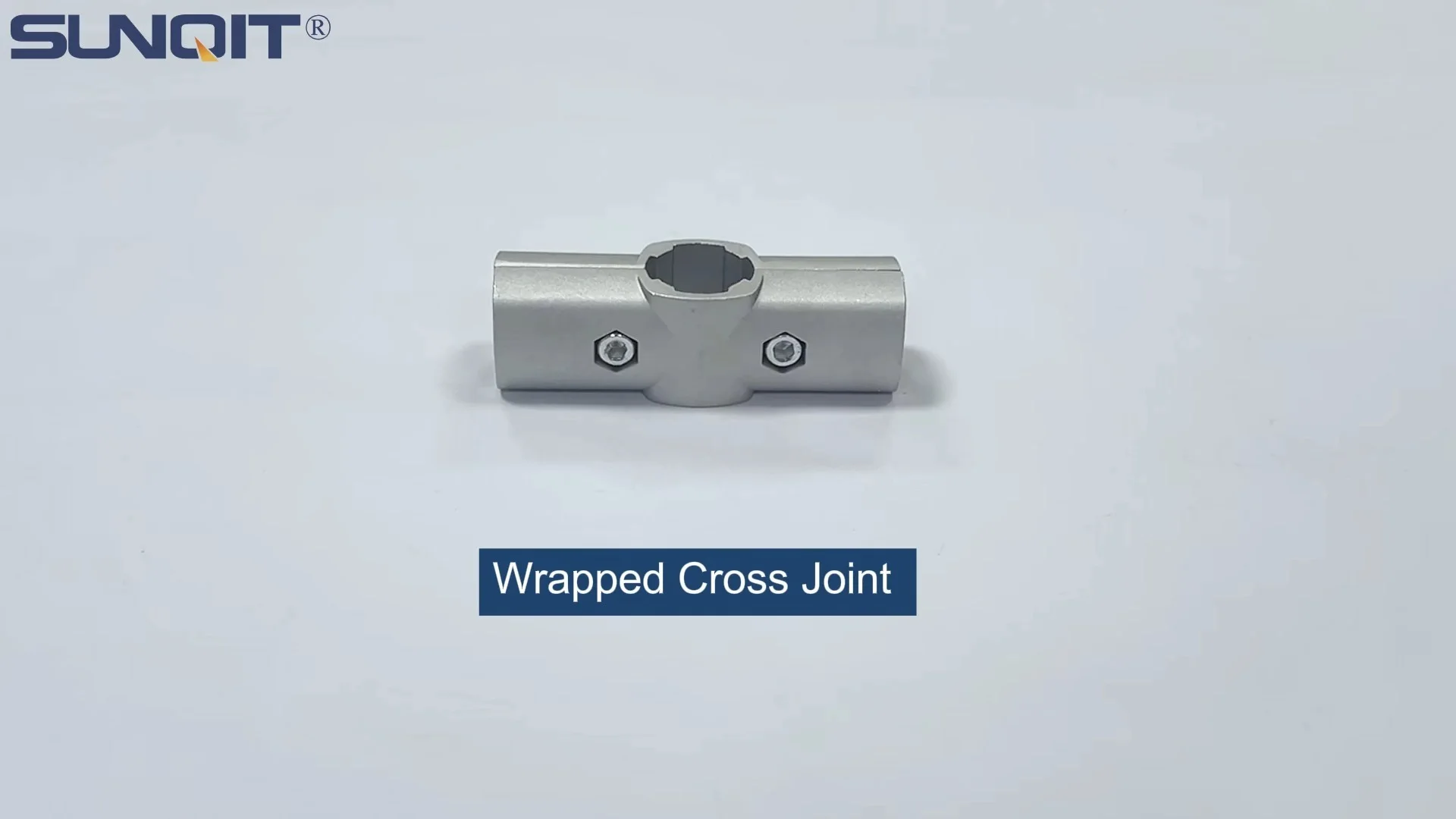
Aluminum 3 way pipe joint for 28mm aluminum pipe connection in 3 direction.
The Fast-Paced World of 3C Assembly Lines
Walk into any modern 3C manufacturing plant—short for Consumer Electronics, where smartphones, laptops, tablets, and wearables come to life—and you'll immediately sense the urgency. Assembly lines hum with precision, workers and robots collaborate in sync, and every station feels like a well-choreographed scene. But here's the catch: this "well-choreographed" dance isn't set in stone. In fact, it's constantly changing. New product models launch every few months, component sizes shrink or expand, and consumer demands shift overnight. For manufacturers, this means one thing: assembly lines can't afford to be rigid. They need to bend, adapt, and reconfigure—quickly, cost-effectively, and without disrupting production. Stagnation isn't just inefficient; it's a death sentence in an industry where being first to market often means the difference between success and obscurity.
So, what's the biggest challenge facing 3C assembly lines today? It's the tension between stability and adaptability. On one hand, you need structures that can withstand the daily grind—workbenches that hold heavy tools, flow racks that support stacks of components, and trolleys that glide smoothly across factory floors. On the other hand, these structures need to transform when a new product rolls in. A workbench designed for assembling 6-inch smartphones might need to shrink for a 5-inch model, or a flow rack built for laptop batteries might need extra levels for smaller camera modules. Traditional solutions—like welded steel frames or fixed wooden benches—simply can't keep up. They're durable, yes, but reconfiguring them means bringing in welders, cutting metal, or building entirely new structures from scratch. That's time-consuming, expensive, and a nightmare for lean manufacturing goals.
The Backbone of Flexible Assembly: Aluminum Extrusion Profile Systems
Enter aluminum extrusion profile systems—the unsung heroes of modern 3C manufacturing. If you've ever wondered how factories manage to retool their lines in days instead of weeks, look no further than these sleek, modular structures. Made by forcing heated aluminum through a die to create uniform, T-slot profiles, these pipes are lightweight, strong, and infinitely customizable. But what truly makes them game-changers is their modularity. Unlike traditional materials, aluminum extrusion profiles aren't meant to be permanent. They're designed to connect, disconnect, and reconnect—thanks to a range of clever accessories and joints. This modularity aligns perfectly with the principles of lean systems, where waste reduction and workflow optimization are paramount. No more overbuilding structures that will be obsolete in six months; instead, you build exactly what you need, when you need it, and repurpose it later.
Think of aluminum extrusion profiles as the building blocks of a factory's "flexibility toolkit." They form the skeleton of workbenches, flow racks, conveyor systems, and even mobile trolleys. But a skeleton is only as good as its joints. That's where the real magic happens. And among all the joints available, one stands out for its versatility in 3C assembly: the three way aluminum pipe joint. This small but mighty component is the reason aluminum systems can transform from a simple workbench into a multi-tiered flow rack or a mobile testing station—all with minimal effort.
Spotlight on Three Way Aluminum Pipe Joints: The Unsung Heroes of Flexibility
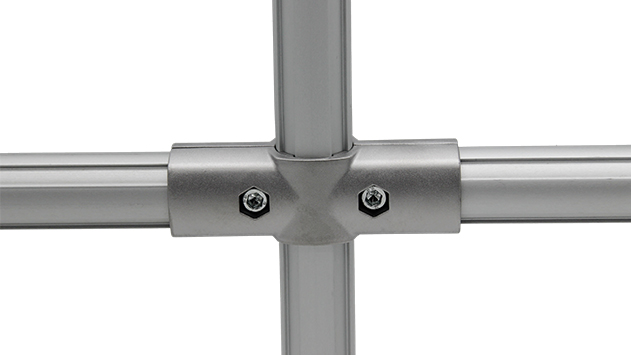
At first glance, a three way aluminum pipe joint might not look like much. It's a compact, often silver or black component with three openings, designed to connect three aluminum extrusion profiles at once. But don't let its simplicity fool you. This joint is the linchpin of modular assembly, turning basic pipes into dynamic, reconfigurable structures. Let's break down why it's so essential.
Design That Puts Flexibility First
Three way aluminum pipe joints are engineered with one goal in mind: to make connection and reconfiguration effortless. Most feature a T-slot design that aligns with the grooves in aluminum extrusion profiles, allowing for secure attachment with bolts or screws. Some are fixed, holding profiles at a 90-degree angle for stable structures like workbench frames. Others are swivel or rotatory, letting profiles pivot—perfect for adjustable shelving or angled flow racks. The key is that they don't require specialized tools. A standard hex key or wrench is all you need to tighten or loosen them, putting control directly in the hands of line workers, not just maintenance teams.
Strength Without the Weight
3C assembly lines deal with precision components, but that doesn't mean structures are lightweight. Workbenches hold heavy tools, flow racks stack boxes of circuit boards, and mobile trolleys carry loads of finished products. Three way aluminum joints are built to handle this. Made from high-grade aluminum alloy (often 6063-T5, known for its strength and corrosion resistance), they can support significant weight without bending or warping. Yet, unlike steel joints, they add minimal heft to the overall structure, keeping aluminum systems lightweight and easy to maneuver—a critical feature when you need to move a workbench or reposition a flow rack across the factory floor.
Reusability: The Green (and Cost-Effective) Advantage
In traditional manufacturing, reconfiguring a line often meant cutting, welding, or discarding old structures—wasting materials and money. Three way aluminum joints eliminate this waste. When a product line ends, you don't throw away the workbench or flow rack; you disassemble it. Loosen the joints, separate the profiles, and reuse both components to build something new. This reusability isn't just good for the planet (hello, sustainability goals); it's a huge cost-saver. Over time, the ability to repurpose materials can cut equipment costs by 30% or more, according to industry estimates. For 3C manufacturers operating on tight margins, that's a game-changer.

How Three Way Joints Transform 3C Assembly Workflows
Enough theory—let's get practical. How do three way aluminum pipe joints actually make a difference on the factory floor? Let's look at three common scenarios where they shine: workbenches, flow racks, and mobile trolleys.
Workbenches: From Static Tables to Dynamic Command Centers
A workbench in a 3C plant isn't just a table. It's a command center where workers solder tiny circuit boards, test touchscreens, or assemble camera modules. These tasks demand precision, and the workbench needs to adapt to the task at hand. For example, soldering might require a lower surface height to reduce arm strain, while testing larger devices might need extra shelving for tools. With three way joints, building a customizable workbench is straightforward.
Start with a base frame: connect four aluminum extrusion profiles using three way joints to form a rectangle (the legs). Then, add a top shelf by connecting horizontal profiles to the legs with more three way joints. Need a second shelf for tools? Attach vertical profiles to the frame using three way joints, then add a horizontal profile between them. Want to tilt the top surface for better visibility? Use swivel three way joints that let the top pivot. When the product line changes, loosen the joints, adjust the height or add/remove shelves, and tighten them back up. No welding, no waiting for a carpenter—just a few minutes of work, and the workbench is ready for the next task.
Flow Racks: Keeping Components Moving, Without the Rigidity
Flow racks are the backbone of material handling in 3C plants. These sloped racks use gravity to move components—like phone cases, batteries, or screws—from storage to assembly stations, ensuring workers always have parts within arm's reach. The problem with traditional flow racks? They're often built with fixed angles and shelves, making it hard to adjust for different component sizes. A rack designed for 6-inch phone cases might be too steep for smaller smartwatch bands, causing them to slide too fast and risk damage.
Three way aluminum joints solve this by letting manufacturers tweak the angle and layout of flow racks. By connecting aluminum extrusion profiles at different angles using adjustable three way joints, you can fine-tune the slope—steeper for heavier components, gentler for lighter ones. Need to add a third shelf for new parts? Attach vertical profiles to the existing rack with three way joints, then add horizontal profiles for the new shelf. The result? A flow rack that adapts to your components, not the other way around. This flexibility reduces downtime, minimizes component damage, and keeps production flowing smoothly.
Mobile Trolleys: Taking Flexibility on the Go
In large 3C plants, moving components from one end of the factory to another can be a logistical headache. Enter mobile trolleys—sturdy, wheeled structures that carry parts, tools, or even (semi-finished products) between stations. But not all trolleys are created equal. Traditional steel trolleys are heavy and fixed; if you need to carry taller components, you're out of luck. Aluminum trolleys with three way joints, however, are a different story.
Build the trolley frame with aluminum extrusion profiles and three way joints for stability, then add casters (wheels) to the base. Need to increase the height? Use three way joints to stack vertical profiles. Want to add dividers to separate different components? Attach horizontal profiles using three way joints to create compartments. When the job is done, disassemble the trolley and reuse the profiles and joints to build a new one. It's mobility with adaptability—exactly what 3C plants need to keep components moving efficiently.

Comparing Traditional vs. Three Way Aluminum Joints: A Closer Look
Still not convinced three way aluminum joints are worth the switch? Let's compare them to two common alternatives: traditional steel welded joints and plastic joints. The difference in flexibility, cost, and efficiency is striking.
| Feature | Traditional Steel Welded Joints | Plastic Joints | Three Way Aluminum Pipe Joints |
|---|---|---|---|
| Installation Time | Hours (requires welding equipment and skilled labor) | Minutes (snap-on design, but less secure) | Minutes (hand-tightened with basic tools) |
| Reconfiguration | Nearly impossible (permanent welds; must be cut and rewelded) | Possible, but plastic weakens with repeated use | Easy (loosen bolts, adjust, retighten; no material damage) |
| Weight | Heavy (adds bulk to structures) | Light, but less durable | Lightweight (keeps structures maneuverable) |
| Durability | High (but prone to rust in humid factories) | Low (cracks under heavy loads or temperature changes) | High (aluminum resists corrosion; joints withstand repeated use) |
| Cost Over Time | High (frequent replacement of entire structures) | Medium (low upfront cost, but frequent replacement of joints) | Low (one-time purchase; reusable for years) |
| Compatibility with Lean Systems | Poor (creates waste through permanent structures) | Fair (some flexibility, but limited lifespan) | Excellent (reduces waste; aligns with lean principles of adaptability) |
Beyond the Joint: Aluminum Profile Accessories That Boost Flexibility
Three way aluminum pipe joints are powerful on their own, but they're even better when paired with the right aluminum profile accessories. These add-ons turn basic aluminum systems into fully functional, tailor-made solutions for 3C assembly lines. Let's explore a few must-haves:
Casters and Wheels: Mobility for a Dynamic Factory
Add casters to the base of an aluminum frame (connected via three way joints, of course), and suddenly your stationary workbench becomes a mobile workstation. Lockable casters keep it steady during use, while unlocking them lets you roll it to wherever it's needed next—perfect for teams collaborating on different parts of the assembly line.
Roller Tracks and Guides: Smoother Material Flow
Pair three way joints with roller tracks (like plastic or aluminum guide rails) on flow racks, and components glide even more smoothly. These tracks reduce friction, ensuring parts move at a consistent speed—critical for delicate 3C components that can't afford jostling.
End Caps and Rubber Strips: Protecting Components and Workers
Aluminum extrusion profiles have sharp edges, which can scratch components or injure workers. End caps (snapped onto profile ends) and rubber strips (inserted into T-slots) add a protective barrier, making structures safer and more component-friendly.
Real-World Impact: How One 3C Manufacturer Cut Downtime by 60%
Let's put this all into context with a hypothetical but realistic example. Imagine a mid-sized 3C manufacturer that produces smartwatches. Every six months, they launch a new model with updated features—a larger screen, new sensors, or a slimmer design. In the past, reconfiguring their assembly line for the new model took 2 weeks. Workers had to disassemble old steel workbenches, wait for welders to build new ones, and adjust flow racks by hand. Downtime cost them roughly $100,000 per week in lost production.
Then, they switched to aluminum extrusion profiles and three way joints. For their latest model launch, here's what happened: instead of building new workbenches, they reconfigured existing ones by adjusting three way joints—lowering heights for the new slimmer watch cases and adding tool shelves. Flow racks were tweaked by changing the angle of profiles using adjustable three way joints, ensuring new smaller components moved smoothly. The entire reconfiguration took 3 days instead of 2 weeks. Downtime costs dropped to $30,000, and the line was ready to start production ahead of schedule. For a company operating on tight margins, that's a $170,000 savings—all thanks to the flexibility of three way aluminum joints.
Future Trends: Three Way Joints in the Age of Smart Factories
As 3C manufacturing moves toward smart factories—where IoT sensors, AI, and automation take center stage—aluminum extrusion systems and three way joints will only grow more important. Imagine workbenches equipped with sensors that track tool usage, their aluminum frames housing wiring channels (thanks to T-slot profiles) for easy connectivity. Or flow racks with adjustable three way joints that automatically tilt based on real-time production data, optimizing component flow to reduce bottlenecks. The modularity of aluminum systems makes them perfect for integrating new technology—no need to rebuild structures; just add sensors or smart accessories to existing profiles via three way joints.
Sustainability is another trend driving adoption. With pressure to reduce waste, manufacturers are prioritizing reusable materials. Aluminum is 100% recyclable, and three way joints ensure profiles can be repurposed indefinitely. This not only cuts costs but also aligns with consumer demands for eco-friendly production—a win-win for brands and the planet.
Conclusion: Flexibility Isn't Optional—It's Everything
In the 3C industry, where change is the only constant, flexibility isn't a luxury. It's the foundation of competitiveness. Aluminum extrusion profiles and three way aluminum pipe joints provide that flexibility, turning rigid assembly lines into dynamic, adaptable ecosystems. They let manufacturers build what they need, when they need it, and reconfigure it when the next big thing comes along—all without breaking the bank or wasting time.
So, the next time you unbox a new smartphone or laptop, take a moment to appreciate the invisible infrastructure that helped build it. Behind that sleek device is a factory floor full of aluminum structures, held together by three way joints—small components with a big impact. They may not get the glory, but they're the reason your favorite gadgets get from design to your hands faster, better, and more affordably than ever before. In the world of 3C manufacturing, flexibility wins—and three way aluminum pipe joints are the key to that victory.