- Company Articles
- Products and Technology
- Product knowledge
- Three Way Aluminum Pipe Joints for Flexible Workstations: A Lean Production Essential

Three Way Aluminum Pipe Joints for Flexible Workstations: A Lean Production Essential
Related Product
Three Way Aluminum Pipe Joint
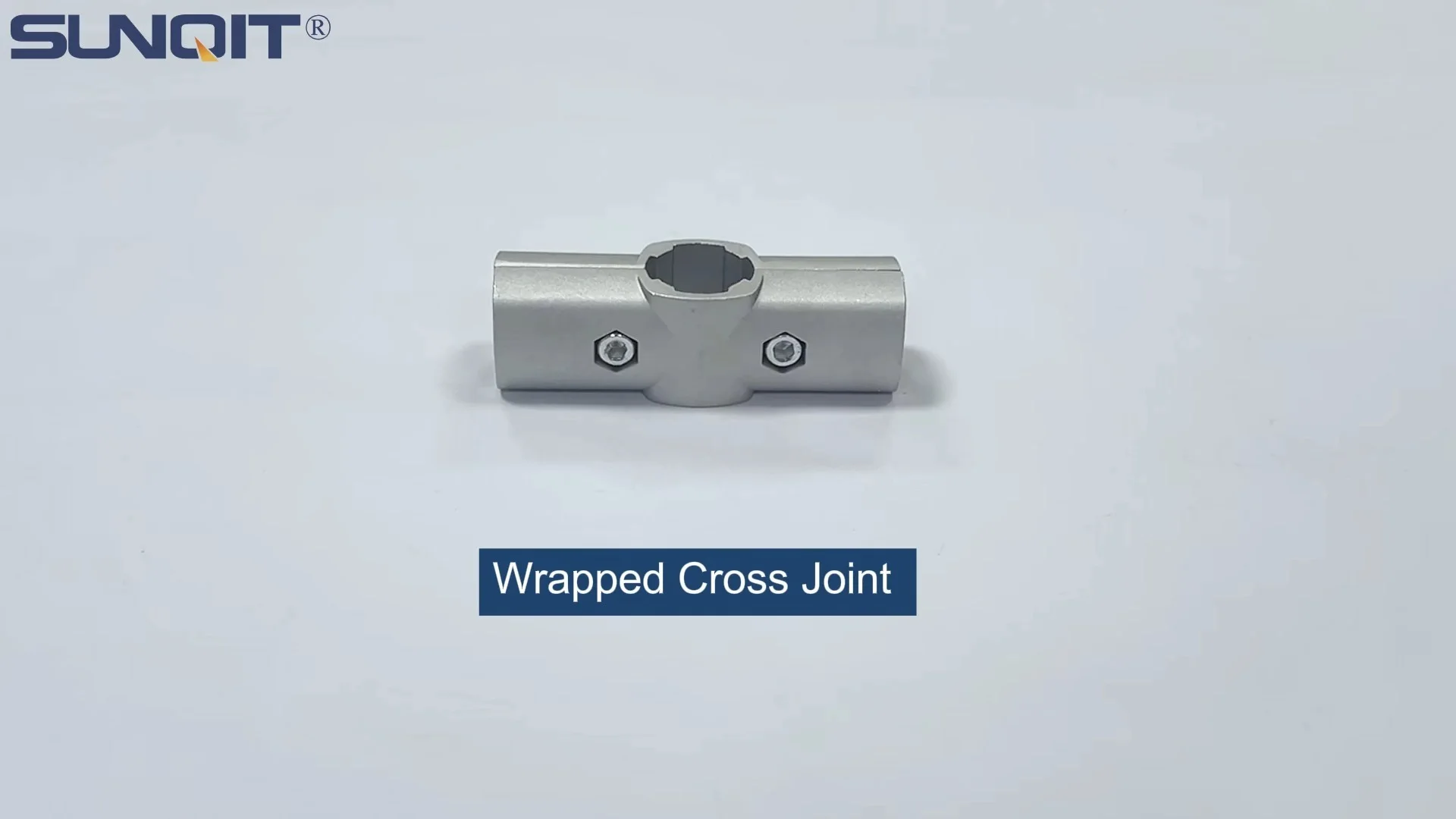
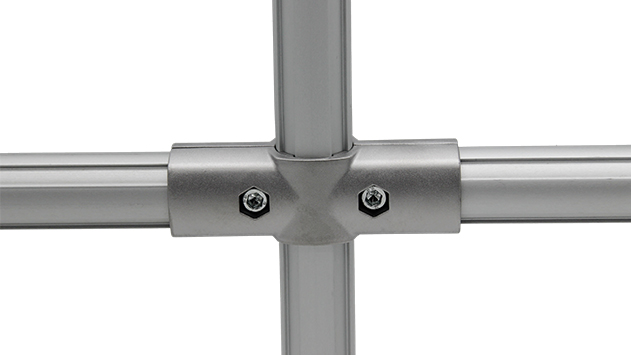
Aluminum 3 way pipe joint for 28mm aluminum pipe connection in 3 direction.
Walk into any modern manufacturing facility, and you'll notice a quiet revolution happening on the shop floor. Gone are the days of clunky, immovable workbenches bolted to the ground, or material racks that take a team of workers and hours of effort to reconfigure. Instead, there's a new rhythm—workstations that shift and adapt like living organisms, flow racks that adjust to changing production needs in minutes, and assembly lines that feel less like rigid machines and more like collaborative spaces designed around people. At the heart of this transformation? A small but mighty component: the three way aluminum pipe joint. In this article, we'll explore how these unassuming connectors are redefining lean systems, empowering teams to build flexible workstations, and why they've become an indispensable tool for anyone serious about optimizing production flow.
The Problem with Rigidity: Why Traditional Workstations Fail
Before diving into the solution, let's talk about the problem. For decades, production facilities relied on fixed workstations and material handling systems. Picture a typical electronics assembly line from the 2000s: heavy steel workbenches with built-in shelves, each bolted to the concrete floor. If a new product came in with slightly different dimensions, workers would either—cramming components into spaces they weren't designed for—or spend an entire weekend with wrenches and welding torches, reconfiguring the line. By the time they finished, the product design might have changed again, leaving them back at square one.
This rigidity wasn't just inconvenient; it was costly. Downtime during reconfigurations ate into production hours. Workers grew frustrated, knowing their time was better spent building products than breaking down and rebuilding workbenches. And worst of all, it stifled innovation—teams hesitated to experiment with new workflows because the cost of failure (in time and labor) was too high. Lean manufacturing, with its focus on eliminating waste and continuous improvement, demands agility. But how do you build agility into a system that's literally set in stone?
Enter the Three Way Aluminum Pipe Joint: A Small Part with a Big Impact
The three way aluminum pipe joint isn't just another piece of hardware. It's a design philosophy made tangible. At its core, it's a connector that allows aluminum profile tubes to be joined at (you guessed it) three different angles—typically 90 degrees, but often adjustable—creating sturdy, modular structures that can be assembled, disassembled, and reconfigured with minimal effort. Think of it as the Lego brick of industrial manufacturing: simple, versatile, and infinitely adaptable.
But what makes these joints so special? Let's break it down. Unlike traditional steel joints, which require welding or heavy bolts, three way aluminum pipe joints use a combination of internal locking mechanisms and set screws. This means you can assemble a basic workstation in under an hour with nothing more than a hex key. Need to add a shelf? Just slide a new aluminum profile into the joint, tighten the screw, and you're done. Want to reposition the entire structure? Loosen the joints, adjust the pipes, and retighten. No sparks, no heavy lifting, no waiting for a maintenance crew.
And let's not overlook the material: aluminum. Lightweight yet surprisingly strong, aluminum profiles reduce the physical strain on workers who need to move or adjust workstations. They're also resistant to corrosion, making them suitable for everything from cleanrooms to warehouse environments. When paired with aluminum profile accessories like casters, roller tracks, or shelf brackets, these joints become the building blocks of a fully customizable lean system.
Key Features of Three Way Aluminum Pipe Joints
To understand why these joints have become a staple in lean production, let's look at their standout features:
1. Unmatched Flexibility
The "three way" design isn't just about connecting three pipes—it's about enabling endless configurations. Whether you're building a simple workbench, a multi-tiered flow rack, or a mobile turnover trolley, these joints let you adjust angles and add components on the fly. A workstation that assembles smartphones today can be retooled tomorrow to handle larger tablets, simply by extending the aluminum profiles or adding a new shelf via the joint.
2. Tool-Free (or Minimal-Tool) Assembly
Gone are the days of hunting for a wrench set or waiting for a welder. Most three way aluminum pipe joints use a standard hex key (Allen wrench) for tightening, and some even feature quick-release levers for ultra-fast adjustments. This reduces setup time from days to hours, and in some cases, minutes. For small manufacturers with limited staff, this is a game-changer—no more pulling workers off the line to handle reconfigurations.
3. Strength Without the Weight
Aluminum's strength-to-weight ratio is legendary, and these joints leverage that perfectly. A well-built aluminum profile structure with three way joints can support hundreds of pounds—enough for heavy tools, bins of components, or even small machinery. Yet, the entire structure remains light enough for two workers to move with ease, especially when equipped with casters (another common aluminum profile accessory).
4. Compatibility with Lean Principles
Lean system thinking revolves around eliminating waste: waste of time, waste of space, waste of effort. Three way aluminum pipe joints attack all three. By reducing setup time, they cut down on downtime (time waste). Their modular design means you only use the space you need, avoiding bulky, underutilized structures (space waste). And because they're so easy to adjust, workers can tailor their workstations to their specific tasks, reducing unnecessary movement and fatigue (effort waste).

From Joints to Systems: Building Flexible Workstations and Flow Racks
A single three way aluminum pipe joint is useful, but when combined with aluminum profiles, casters, roller tracks, and other accessories, it becomes part of a complete lean solution. Let's explore two of the most common applications: workbenches and flow racks.
Workbenches: Customizable to Every Task
The humble workbench is the heart of any production line. It's where workers spend most of their day, so its design directly impacts productivity and morale. Traditional workbenches are one-size-fits-all—too tall for some, too short for others, with shelves placed where they're convenient for the designer, not the user.
With three way aluminum pipe joints, workbenches become personalizable. Need a taller surface for standing work? Use longer aluminum profiles. Prefer a lower bench for detailed assembly? Shorten the legs. Add a side shelf for tools by attaching a pipe to the joint, or install a roller track along the back to slide components into place. Some workers even add small drawers or monitor mounts—all connected via the same joints. The result? A workstation that fits the worker, not the other way around.
Take, for example, a workbench configured with a single deck (without casters) for precision assembly. The frame is built using aluminum profiles and three way joints, with a wooden or aluminum honeycomb panel top for stability. If the team switches to a larger product, they can quickly add an extension by attaching new profiles to the existing joints, or even split the bench into two smaller workstations if the line needs to be rebalanced.
Flow Racks: Keeping Materials Moving
Flow racks are critical for maintaining a smooth production flow, ensuring materials are always within reach of workers. Traditional flow racks are often fixed in size—if you start using larger bins, you're out of luck. But with three way aluminum pipe joints, flow racks become dynamic.
Imagine a material rack with three rows and three floors, built using aluminum profiles and three way joints. Each level is equipped with plastic roller track guide rails (yellow or grey, depending on the facility's color-coding system) to let bins slide forward as the front one is emptied. If the team starts receiving materials in taller bins, they can adjust the height of each shelf by loosening the joints, moving the aluminum profiles up or down, and retightening. No need to buy a new rack—just reconfigure the existing one.
Even better, these racks can be mobile. Add casters to the base (connected via, you guessed it, three way joints), and suddenly you can move the entire rack to where it's needed most—whether that's beside a new assembly line or into a storage area during a deep clean. This flexibility ensures that space is always used efficiently, a cornerstone of lean system management.

How Three Way Aluminum Pipe Joints Support Lean Systems
Lean manufacturing isn't just about cutting costs—it's about creating value for customers while respecting the people who create that value. Three way aluminum pipe joints align with this philosophy in ways that go beyond mere functionality.
Empowering Workers to Own Their Space
One of the most powerful aspects of modular workstations is the sense of ownership they foster. When workers can adjust their environment to fit their needs, they feel valued and respected. A study by the Manufacturing Performance Institute found that facilities with customizable workstations reported 23% higher employee satisfaction and 18% fewer errors. Why? Because when you're not fighting against a poorly designed workspace, you can focus on doing your best work.
Reducing Waste Through Adaptability
Lean systems aim to eliminate seven types of waste, and three way aluminum pipe joints tackle several:
- Transportation: Mobile workstations and flow racks reduce the need to carry materials long distances.
- Inventory: Smaller, adjustable flow racks prevent overstocking by limiting storage space to what's needed.
- Motion: Custom workstations minimize unnecessary reaching, bending, or walking.
- Waiting: Quick reconfigurations mean less downtime when production needs change.
Scaling Without Overspending
For small to medium manufacturers, scaling production can be risky—investing in new equipment that might become obsolete if demand shifts. Three way aluminum pipe joints mitigate this risk. Instead of buying a new workstation for a temporary project, you can reconfigure an existing one. When the project ends, disassemble it and reuse the components elsewhere. This "build-as-you-go" approach keeps capital costs low and flexibility high.
Comparing Joints: Why Aluminum Three Way Joints Outshine the Rest
Not all joints are created equal. To understand why three way aluminum pipe joints are the top choice for lean systems, let's compare them to two common alternatives: traditional steel joints and plastic connectors.
| Feature | Three Way Aluminum Pipe Joint | Traditional Steel Joint | Plastic Connector |
|---|---|---|---|
| Material | Aluminum alloy | Mild steel | ABS plastic |
| Weight | Lightweight (100-200g per joint) | Heavy (500-800g per joint) | Very light (50-100g per joint) |
| Load Capacity | High (up to 200kg per joint) | Very high (up to 500kg per joint) | Low (up to 50kg per joint) |
| Installation Time | 5-10 minutes per joint (hex key only) | 30-60 minutes per joint (welding/bolting required) | 5-10 minutes per joint (snap-fit or screws) |
| Reconfigurability | Excellent (unlimited reconfigurations) | Poor (welded joints can't be adjusted) | Good (limited by plastic fatigue) |
| Cost (per joint) | Moderate ($5-$15) | High ($15-$30, plus labor) | Low ($2-$8) |
| Best For | Lean systems, flexible workstations, flow racks | Heavy-duty, fixed structures | Light-duty, temporary setups |
The table tells the story: aluminum joints strike the perfect balance between strength, flexibility, and cost. Steel joints are strong but rigid and expensive. Plastic connectors are cheap but lack durability. For lean systems that need to adapt without sacrificing reliability, three way aluminum pipe joints are the clear winner.
Real-World Impact: A Case Study
Case Study: Precision Electronics Manufacturer Cuts Downtime by 40%
A mid-sized electronics manufacturer in the Midwest was struggling with frequent product changes. Their production line, built with fixed steel workbenches and flow racks, required 8-12 hours of downtime every time they switched between products. Workers were frustrated, and the company was losing out on rush orders due to the slow reconfiguration process.
The solution? They invested in a modular system built around aluminum profiles and three way aluminum pipe joints. Within a week, they'd replaced their fixed workbenches with adjustable ones and reconfigured their flow racks using roller tracks and plastic guide rails. The results were immediate:
- Downtime between product changes dropped from 12 hours to just 4.5 hours—a 62.5% reduction.
- Worker satisfaction scores increased by 35%, with comments like, "I finally feel like the workstation works for me, not against me."
- The company was able to take on 20% more rush orders, boosting quarterly revenue by $120,000.
"We used to dread product changes," said the plant manager. "Now, we see them as an opportunity to optimize. The three way joints made it so easy to adjust the line that we actually look forward to trying new configurations."
Installation Tips: Getting the Most Out of Your Three Way Aluminum Pipe Joints
Ready to start building with three way aluminum pipe joints? Here are some tips to ensure a smooth, successful setup:
1. Start with a Plan (But Stay Flexible)
Sketch out your desired structure before you start—measure the space, note the height and width you need, and list any accessories (casters, shelves, etc.). But remember, the beauty of these joints is adaptability—if something doesn't work, you can always adjust later.
2. Use the Right Tools
Most joints require a hex key (Allen wrench) in a specific size (usually 5mm or 6mm). Keep a few spares handy—they're easy to misplace on a busy shop floor. For larger projects, a cordless driver with a hex bit can speed up assembly.
3. Don't Over-Tighten
Aluminum is strong, but it can strip if you over-tighten the set screws. Tighten until the joint is secure, then give it a quarter-turn more—no need to crank it with all your strength.
4. Test Load Capacity Before Full Use
Before loading a new structure with heavy materials, test it with lighter weights first. Gradually increase the load to ensure the joints and profiles can handle it.
5. Label Components for Quick Reconfigurations
If you plan to reconfigure often, label the pipes and joints with numbers or colors (e.g., "Shelf A – Front Left"). This makes it easier to remember where each piece goes when taking the structure apart and rebuilding.
The Future of Lean Systems: Where Three Way Aluminum Pipe Joints Are Headed
As manufacturing continues to evolve—with trends like Industry 4.0, small-batch production, and human-centric design—three way aluminum pipe joints are evolving too. Here's what to watch for:
Smart Joints with Integrated Sensors
Imagine joints that can detect when a structure is overloaded, or when a set screw is loosening, and send alerts to a maintenance app. While still in development, some manufacturers are experimenting with embedding microchips into aluminum joints to monitor structural health in real time.
Eco-Friendly Materials
Sustainability is becoming a key concern for manufacturers. Look for three way aluminum pipe joints made from recycled aluminum, or with coatings that reduce friction and extend lifespan—minimizing waste and lowering environmental impact.
Customizable Joints for Niche Applications
As more industries adopt lean principles—from healthcare to food processing—we'll see specialized joints designed for specific environments. For example, stainless steel swivel roller balls for cleanrooms, or heat-resistant joints for high-temperature manufacturing.
Conclusion: Building a Leaner, More Human Production Line
At the end of the day, lean manufacturing isn't just about efficiency—it's about people. It's about creating systems that respect the skills and needs of the workers who power them. Three way aluminum pipe joints embody this philosophy. They're not just tools for building structures; they're tools for building better workplaces—places where flexibility, adaptability, and human potential are prioritized.
Whether you're a small startup looking to optimize your first production line or a large manufacturer aiming to stay competitive in a fast-changing market, three way aluminum pipe joints offer a path forward. They're proof that sometimes, the smallest components can make the biggest difference. So the next time you walk through a manufacturing facility, take a closer look at the workbenches and flow racks. Chances are, you'll spot those unassuming aluminum joints—quietly revolutionizing how we build, work, and innovate.