- Company Articles
- Products and Technology
- Product knowledge
- Three Way Aluminum Pipe Joints for Small-Batch Production: Flexibility on Demand

Three Way Aluminum Pipe Joints for Small-Batch Production: Flexibility on Demand
Related Product
Three Way Aluminum Pipe Joint
Aluminum 3 way pipe joint for 28mm aluminum pipe connection in 3 direction.
The Small-Batch Manufacturing Challenge: Rigidity vs. Adaptability
Walk into any small-batch production facility—whether it's a custom electronics workshop crafting prototype circuit boards, a boutique furniture maker assembling artisanal tables, or a local bakery supplying specialty pastries to cafes—and you'll notice a common theme: chaos, but controlled chaos. These operations thrive on variety, short runs, and the ability to pivot at a moment's notice. One week, they might be ramping up to fulfill a rush order for 500 units; the next, they're scaling back to produce 50 highly customized pieces for a niche client. In this world, rigidity is the enemy.
Traditional manufacturing setups, built around fixed conveyor belts, welded steel workbenches, and immovable material racks, were designed for mass production—where consistency and volume reign supreme. But small-batch producers don't have that luxury. Their biggest struggle? Adapting their workspace and equipment to meet constantly changing needs without breaking the bank or sacrificing efficiency. A workbench that's perfect for assembling small components one month might be too low, too narrow, or too cluttered to handle larger parts the next. A material rack that once held 10 types of screws might suddenly need to store bulky plastic molds. And when space is tight—which it almost always is in small facilities—every square foot counts.
This is where the concept of "flexibility" stops being a buzzword and becomes a survival skill. Small-batch manufacturers need tools and systems that can evolve with their projects, that don't require a team of engineers to reconfigure, and that won't drain their limited budgets. Enter the unsung hero of adaptable manufacturing: the three way aluminum pipe joint. It's a simple component, but when paired with aluminum pipes, profiles, and accessories, it transforms how small facilities design, build, and rebuild their production environments.
What Are Three Way Aluminum Pipe Joints, Anyway?
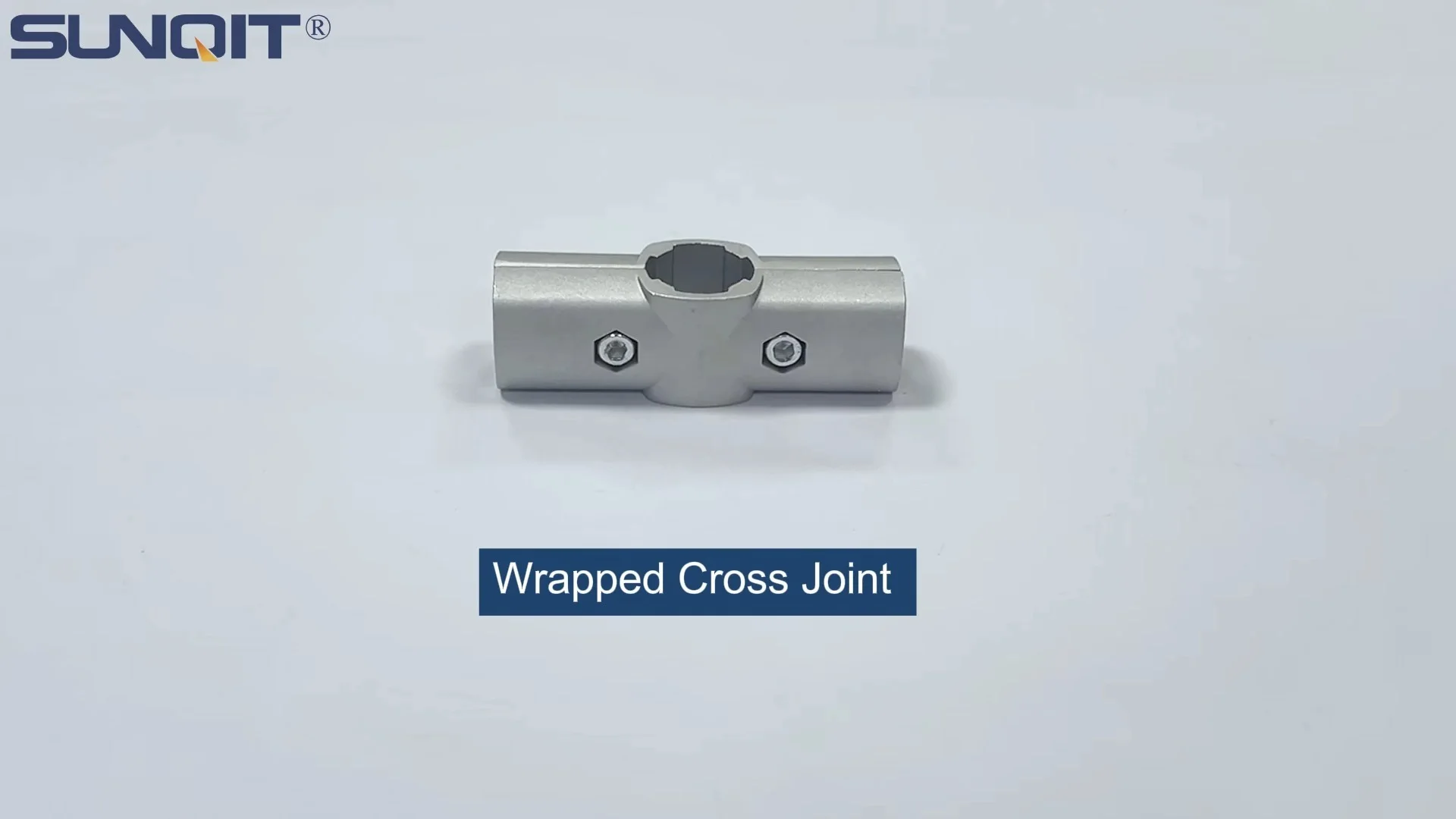
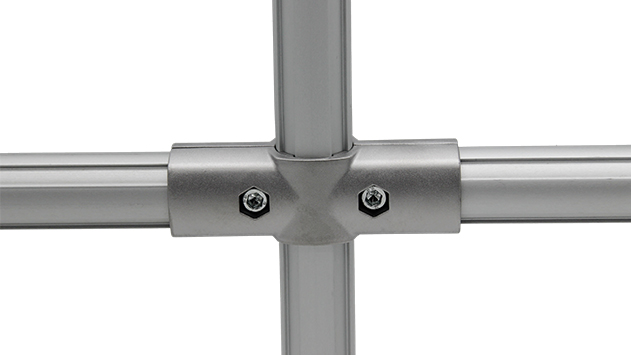
At first glance, a three way aluminum pipe joint might seem unremarkable—a small, angular piece of metal with threaded holes or slots. But its design is deceptively clever. These joints are engineered to connect three aluminum pipes or profiles at 90-degree angles, forming stable, load-bearing structures without the need for welding, drilling, or specialized tools. Think of them as the building blocks of a modular system: with a few joints, some aluminum pipes, and basic hand tools, you can construct everything from workbenches and material racks to production line dividers and mobile trolleys.
Most three way aluminum pipe joints are made from high-grade aluminum alloy, chosen for its winning combination of strength, lightness, and corrosion resistance. Unlike steel, which is heavy and prone to rust in humid workshops, aluminum keeps structures lightweight enough to move (with the addition of caster wheels) but sturdy enough to support daily use—whether that's holding 50kg of electronic components on a workbench or 100kg of raw materials on a material rack. The joints themselves often feature internal threading or quick-connect mechanisms, allowing pipes to be secured with simple bolts or even just a firm twist, depending on the design.
But what truly sets these joints apart is their compatibility with a vast ecosystem of aluminum profile accessories. Need to add a shelf to your workbench? Slide an aluminum profile into the joint and secure it with a bracket. Want to create a smooth material flow system? Attach plastic roller track guide rails (yellow or grey, depending on your facility's color coding) to the pipes using roller track placon mounts. Need mobility? Screw on caster wheels with caster accessories like mounting plates. This interoperability turns a handful of joints and pipes into a versatile toolkit that can solve almost any spatial or functional challenge in a small-batch setup.
Why Small-Batch Producers Can't Afford to Ignore Three Way Aluminum Pipe Joints
To understand the value of three way aluminum pipe joints, let's break down the benefits they bring to small-batch production—benefits that directly address the industry's biggest pain points.
1. Modularity: Build, Break, Rebuild—No Welding Required
In traditional manufacturing, changing a workbench's height or reconfiguring a material rack meant calling in a welder or carpenter, waiting days (or weeks) for the job to be done, and paying premium rates for custom work. With three way aluminum pipe joints, reconfiguration is a do-it-yourself project. Suppose your team needs a taller workbench to assemble larger products. Simply loosen the bolts on the joints, adjust the pipes to the new height, and retighten—done in 15 minutes, not 15 days. When the project ends, take the structure apart, pack the pipes and joints in a storage bin, and reuse them for the next project.
This modularity is a game-changer for facilities with limited space. A single set of pipes and joints can serve as a workbench in January, a material rack in February, and a mobile trolley in March. There's no need to store multiple fixed structures "just in case"—your equipment adapts to your needs, not the other way around.
2. Speed: From Idea to Implementation in Hours, Not Weeks
Small-batch production runs are often time-sensitive. A client might need a prototype within days, or a sudden spike in demand might require adding a temporary assembly line overnight. Three way aluminum pipe joints eliminate the delays of traditional construction. Since there's no welding, cutting, or painting involved, even a novice can assemble a basic structure (like a simple workbench) in under an hour. More complex setups, such as a multi-tiered material rack with roller tracks, might take half a day—but that's still exponentially faster than waiting for a custom steel rack to be fabricated and delivered.
Consider this scenario: A medical device manufacturer receives an urgent order for 200 custom sensor housings. Their existing assembly line is maxed out, so they need a temporary workbench with integrated storage for small parts. Using three way joints, aluminum pipes, an aluminum honeycomb panel for the work surface, and a few plastic bins attached with brackets, they can build the workbench in the morning and start production by lunch. No downtime, no missed deadlines.
3. Cost-Effectiveness: Invest Once, Reuse Forever
Small-batch producers operate on tight margins, so every dollar counts. Fixed equipment—like custom steel workbenches or welded material racks—represents a significant upfront cost, and when your needs change (which they always do), that equipment becomes obsolete. Three way aluminum pipe joints flip the script: instead of buying a new workbench every time your production needs shift, you reuse the same pipes and joints. The initial investment in a set of joints, pipes, and basic accessories might cost more than a single cheap plywood workbench, but over time, the savings add up. A $500 modular system that can be reconfigured 10 times is far cheaper than buying 10 $200 fixed workbenches—and it takes up less storage space, too.
Additionally, aluminum's durability means the system will last for years. Even with regular disassembly and reassembly, the joints won't strip, the pipes won't bend (under normal use), and the whole setup will withstand the wear and tear of daily workshop life. When parts do wear out—say, a caster wheel breaks or a roller track guide rail cracks—replacement is cheap and easy. Just swap out the damaged accessory, not the entire structure.
4. Safety: Lightweight, Stable, and ESD-Friendly
Small workshops often struggle with safety hazards, from heavy equipment that's hard to move (increasing injury risk) to static electricity damaging sensitive electronics. Three way aluminum pipe joints address both issues. Aluminum structures are lightweight, so even a fully loaded mobile trolley can be pushed by one person without straining. The joints' secure connections prevent wobbling or collapsing, reducing the risk of accidents from falling materials. For electronics manufacturers, many aluminum components (including some three way joints and ESD workbench surfaces) are conductive, helping to dissipate static electricity and protect sensitive parts from ESD damage—a critical feature in industries like semiconductor or circuit board production.

From Joints to Systems: Real-World Applications in Small-Batch Production
Three way aluminum pipe joints don't work in isolation—they're the glue that holds together complete lean system solutions. Let's explore how they're used in four common small-batch production scenarios, paired with other key components like aluminum profiles, roller tracks, and workbenches.
Workbenches: The Heart of the Workshop
Every production facility needs workbenches, but not all workbenches are created equal. A three way aluminum pipe joint system lets you build workbenches tailored to your exact needs. For example, a "Workbench E (single deck-without caster)" might be perfect for a stationary assembly station, but add caster wheels, and it becomes a mobile workbench that can be rolled to different parts of the shop. Need extra storage? Attach aluminum guide rails to the sides to hang tools, or add a lower shelf using parallel aluminum joints. Working with ESD-sensitive components? Top the bench with an ESD workbench surface and ground the aluminum frame to dissipate static.
One furniture maker we worked with uses three way joints to build adjustable-height workbenches. Their team of six assemblers has different height preferences (ranging from 75cm to 90cm), so each workbench is customized to the user. When a new employee joins, they simply adjust the pipes in the joints to the new height—no need to buy a new bench. And when they switch from assembling chairs (which require a lower bench for seating) to tables (which need a higher surface for standing work), the same benches are reconfigured in minutes.
Material Racks: Organized Storage That Grows With You
Material storage is a constant challenge in small facilities. Too much storage space wasted on unused racks; too little, and parts get scattered, slowing down production. Three way aluminum pipe joints solve this with customizable material racks, like the "Material Rack B (3 row and 3 floor)" but adjustable to fit your inventory. Need to store small boxes? Set the shelves 30cm apart. Switching to larger components? Widen the spacing to 60cm. Add swivel roller balls (1 inch or 0.5 inch, depending on box size) to the shelves for easy sliding, or plastic roller track guide rails to create a gravity-fed system where materials roll forward as the front ones are used.
A local electronics distributor uses such a system for their inventory of capacitors, resistors, and diodes. Their material rack, built with three way joints and aluminum pipes, has 10 shelves—each adjustable. When they start stocking larger power supplies, they remove every other shelf to make space, then add them back when the power supply order is fulfilled. The rack also has caster wheels, so it can be rolled out of the way during peak production, then rolled back when parts need to be restocked.
Production Flow Systems: Smooth Material Movement Without the Cost of Conveyors
In mass production, conveyor belts handle material flow, but they're expensive and fixed in place—overkill for small batches. Three way aluminum pipe joints offer a budget-friendly alternative: roller tracks. By attaching roller track guide rails (yellow for high-visibility paths, grey for secondary areas) to aluminum pipes using roller track placon mounts, you can create custom flow systems that move parts from one workstation to the next. For example, a 40 steel roller track with black ESD wheels might carry circuit boards between assembly and testing stations, while a 38 aluminum roller track with yellow wheels moves plastic housings to the packaging area.
A toy manufacturer we spoke to uses this setup for their small-batch "custom doll" line. They built a U-shaped roller track system using three way joints, aluminum pipes, and plastic roller track guide rails. Each station (design, sewing, painting, packaging) has a section of the track, and dolls in progress glide along the rollers from one station to the next. When they switch to making action figures (which are heavier), they swap the plastic rollers for steel ones—no need to replace the entire system.
Mobile Trolleys: Taking Production Where It Needs to Go
Small-batch production often requires materials or work-in-progress to move between areas: from the warehouse to the workshop, from assembly to quality control, or from packaging to shipping. Mobile trolleys, built with three way aluminum pipe joints, caster wheels, and aluminum profiles, make this easy. These trolleys can be as simple as a flat platform with sides or as complex as multi-tiered carts with tool holders and ESD mats.
A bakery in the city uses such trolleys to move dough from the mixing area to the oven. Their trolleys, built with aluminum pipes and three way joints, have a heat-resistant aluminum honeycomb top and caster wheels with brakes. When they're not in use, the trolleys fold flat (thanks to rotating joints) and store in a closet—saving precious floor space. During peak holiday seasons, they build extra trolleys using spare pipes and joints, then disassemble them when demand drops.
Case Study: How a Small Auto Parts Shop Cut Costs by 40% With Three Way Aluminum Pipe Joints
AutoParts Pro, a family-owned shop in Ohio, specializes in custom exhaust systems for classic cars. With just 5 employees and a 500 sq ft workshop, space and budget were always tight. Their biggest challenge? They used to buy pre-made steel workbenches and material racks, which cost $800–$1,200 each and couldn't be changed. When a client ordered a batch of exhaust pipes for 1965 Mustangs (longer than their usual projects), their existing workbench was too short, and they had to rent a larger bench for $200/week.
In 2023, they switched to a three way aluminum pipe joint system. They purchased 20 joints, 40ft of aluminum pipe, 2 aluminum honeycomb panels, caster wheels, and roller track accessories—total cost: $1,500. With this, they built:
- A 1.8m workbench (adjustable height: 75cm–100cm)
- A 3-tier material rack (adjustable shelf spacing: 30cm–60cm)
- A mobile trolley with roller tracks for moving exhaust pipes
The results? They eliminated the need to rent equipment, saving $800/year. They reconfigured the workbench 12 times in 12 months to fit different projects, and the material rack was adjusted to store everything from small brackets to large mufflers. Best of all, when they needed extra space for a big order, they disassembled the material rack, stored the parts, and reassembled it when the order was done. Total savings in the first year: $6,000—40% of their previous equipment costs.

Traditional vs. Modular: A Side-by-Side Comparison
| Feature | Traditional Fixed Structures (Steel/Wood) | Three Way Aluminum Pipe Joint Systems |
|---|---|---|
| Assembly Time | 8–12 hours (requires welding/carpentry) | 1–2 hours (basic tools only) |
| Customization | Difficult/expensive (requires redesign) | Easy (on-site adjustments with joints) |
| Cost (10-year lifespan) | $5,000–$10,000 (multiple fixed structures) | $2,000–$3,000 (single modular system) |
| Space Efficiency | Poor (permanent, takes up space when unused) | Excellent (disassembles for storage) |
| Weight | Heavy (50–100kg per workbench) | Light (15–30kg per workbench, mobile with casters) |
| Durability | High (but rusts/deteriorates over time) | High (aluminum resists corrosion, joints don't loosen with use) |
| Safety | Risk of injury (heavy, hard to move; sharp edges from welding) | Low risk (lightweight, smooth edges, stable joints) |
Choosing the Right Three Way Aluminum Pipe Joints: Key Considerations
Not all three way aluminum pipe joints are created equal. To get the most out of your modular system, keep these factors in mind when shopping:
Pipe Compatibility
Joints are designed for specific pipe diameters. Most small-batch facilities use 28mm or 30mm aluminum pipes, but double-check the joint specifications to ensure a snug fit. Mismatched pipes and joints will lead to wobbly structures.
Load Capacity
Joints have different weight limits—usually 50kg, 100kg, or 150kg per connection. If you're building a material rack for heavy parts, opt for heavy-duty joints with reinforced threading.
Accessory Compatibility
Ensure the joints work with the accessories you need: roller track placon mounts, caster wheels, aluminum guide rails, etc. Most reputable suppliers (like lean system suppliers or aluminum profile suppliers) list compatible accessories on their websites.
Ease of Use
Look for joints with tool-free or quick-connect designs if you'll be reconfiguring often. Some joints require only a hex key, while others can be tightened by hand—ideal for teams without dedicated maintenance staff.
Final Thoughts: Flexibility Isn't Optional Anymore
Small-batch production is the future of manufacturing. Consumers want custom products, startups need agile production to test ideas, and local businesses are thriving by serving niche markets. In this world, rigidity is a death sentence. Three way aluminum pipe joints aren't just tools—they're enablers. They let small producers do more with less: less space, less money, less time wasted on fixed equipment that can't keep up.
Whether you're building a workbench, a material rack, or a complete production flow system, these joints offer a simple, scalable solution. They turn your workshop into a blank canvas, where every day brings a new configuration, a new project, and new opportunities. And in the end, that's what small-batch production is all about: adapting, innovating, and thriving in a world that demands flexibility.
So, the next time you're staring at a cluttered workshop or struggling to fit a new project into your existing setup, remember: the solution might be as simple as a few pipes, a handful of joints, and a little creativity. After all, in small-batch manufacturing, the most powerful tool isn't the machine—it's the ability to change.