- Company Articles
- Products and Technology
- Product knowledge
- Three Way Aluminum Pipe Joints for Temporary Production Lines: Quick Setup and Teardown

Three Way Aluminum Pipe Joints for Temporary Production Lines: Quick Setup and Teardown
Related Product
Three Way Aluminum Pipe Joint
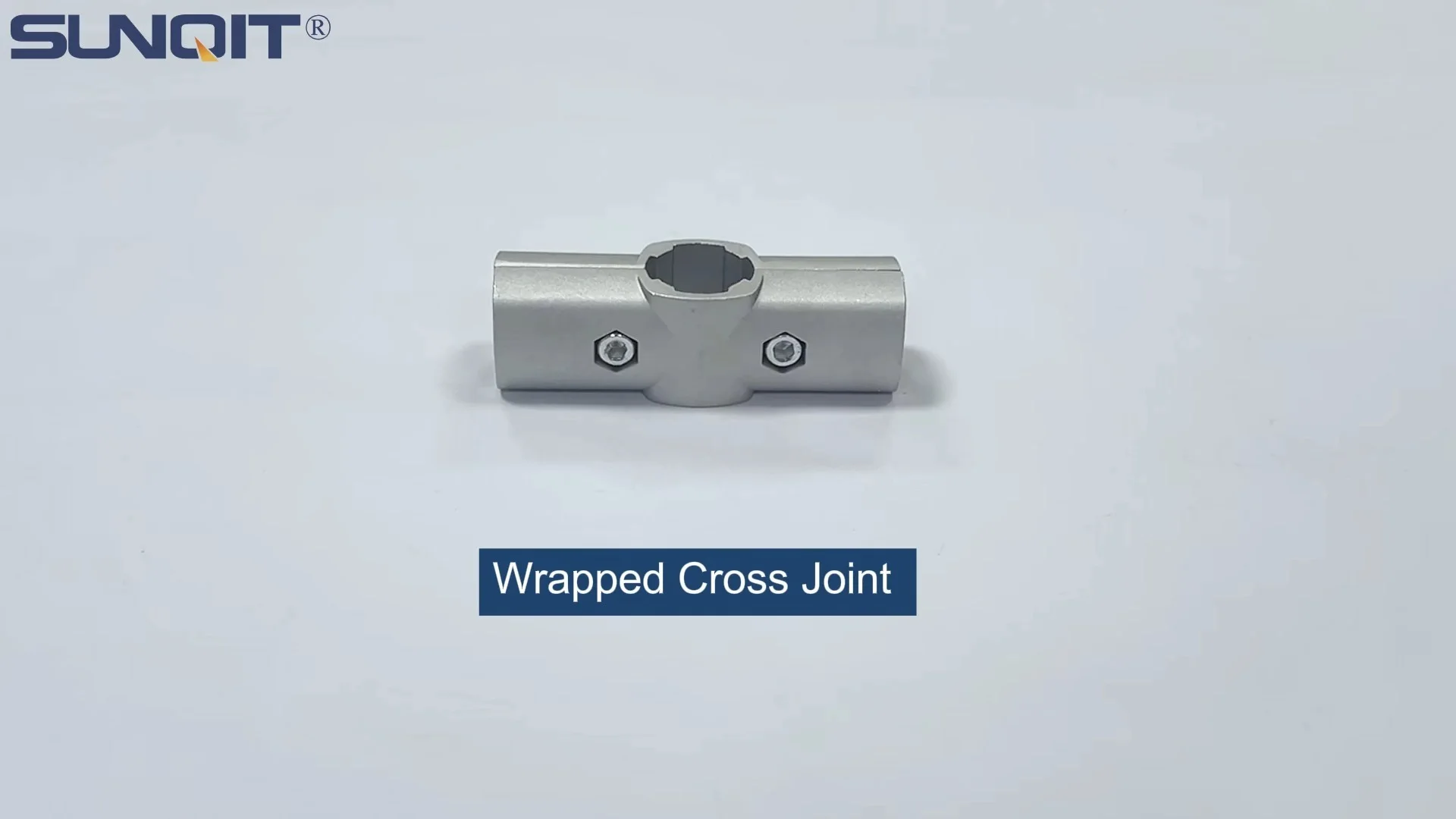
Aluminum 3 way pipe joint for 28mm aluminum pipe connection in 3 direction.
Imagine walking into a small manufacturing workshop on a Monday morning. The team is buzzing—orders are up, a seasonal rush is here, and they need to add two more production lines by the end of the week to keep up. The problem? Their current setup is built with rigid steel frames, welded together and bolted to the floor. Tearing it down would take days, and building new lines from scratch would mean hiring contractors and spending thousands on custom equipment. Sound familiar? For many small and medium-sized businesses, the struggle to adapt to changing production needs is real. But what if there was a way to build, reconfigure, and dismantle production lines in hours instead of weeks? Enter the unsung hero of flexible manufacturing: the three way aluminum pipe joint.
In this article, we're diving deep into how three way aluminum pipe joints are revolutionizing temporary production lines. We'll explore their design, their seamless integration with aluminum profiles, and how they empower teams to build everything from workbenches to roller conveyors in a fraction of the time. Whether you're a manufacturer scaling for a short-term project, a startup testing a new product line, or a warehouse needing to rearrange workflows seasonally, these small but mighty components could be the key to unlocking agility in your operations. Let's start by understanding why temporary production lines matter—and why traditional solutions often fall short.
The Hidden Costs of Rigid Production Lines
Temporary production lines aren't just a "nice-to-have"—they're a lifeline for businesses navigating uncertainty. Think about a bakery gearing up for the holiday season, a furniture maker fulfilling a bulk order for a hotel chain, or a tech startup prototyping a new device. In each case, the goal is simple: increase output quickly without sinking money into permanent infrastructure that might sit idle once the demand fades. But traditional manufacturing equipment—steel workbenches, fixed conveyor belts, bolted-down racks—was never designed for this kind of flexibility.
Let's break down the pain points. First, time . Building a traditional temporary line often involves cutting steel pipes, welding joints, and securing everything with heavy-duty bolts. Even a small line might take a team of two workers 3-4 days to assemble. If the project timeline is tight (and when isn't it?), that delay can mean missing deadlines or rushing production, leading to errors. Then there's cost . Welding equipment, custom-cut steel, and labor add up fast. And once the project ends, that steel frame becomes a problem—storing it takes up valuable space, and selling it often means taking a loss. Finally, adaptability is nonexistent. If mid-project you realize the workbench is too low or the conveyor needs to curve, modifying a welded steel setup requires cutting and rewelding, which is both time-consuming and risky for structural integrity.
This is where lean system principles collide with reality. Lean manufacturing is all about eliminating waste—whether it's time, materials, or space. But rigid temporary lines are a masterclass in waste: wasted time on setup, wasted money on one-off equipment, and wasted space storing unused frames. What businesses need is a solution that aligns with lean goals—something that's quick to assemble, easy to modify, and reusable. Enter three way aluminum pipe joints and aluminum profiles.
What Makes Three Way Aluminum Pipe Joints Different?
At first glance, a three way aluminum pipe joint might look like a simple piece of hardware. It's a small, lightweight component, usually made from high-grade aluminum alloy, designed to connect three aluminum pipes at (you guessed it) three different angles—typically 90°, 45°, and 180°, though some models offer adjustable angles. But its simplicity is deceptive. This little joint is the linchpin of a modular system that transforms how temporary production lines are built.
Let's start with the material: aluminum. Unlike steel, aluminum is lightweight (about 1/3 the weight of steel) but surprisingly strong, with a tensile strength that rivals many low-carbon steels. This makes it easy for a single worker to handle pipes and joints without heavy lifting equipment. Aluminum is also resistant to corrosion, which is a boon for environments like food processing or warehouses with high humidity. And because it's non-magnetic and non-sparking, it's safe for use in industries where electrical hazards or sensitive equipment are present.
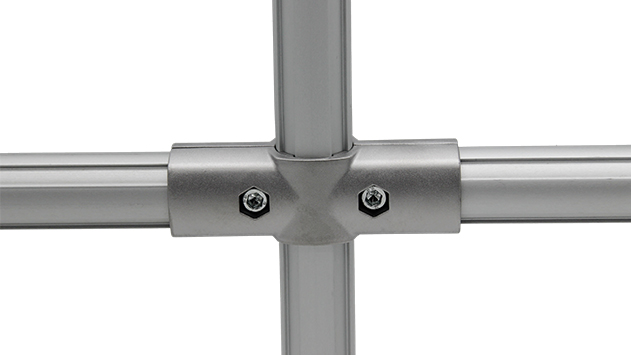
But the real magic is in the joint's design. Most three way aluminum pipe joints feature a clamping mechanism—often a set of screws or levers—that tightens around the aluminum pipes. This means no welding, no drilling, and no special tools beyond a basic hex key or screwdriver. You simply slide the pipes into the joint, tighten the screws, and the connection is secure. Need to adjust the angle? Loosen the screws, reposition the pipes, and retighten. It's that simple. This adjustability is a game-changer for temporary lines, where layouts often need tweaking as production ramps up.
Another key feature is compatibility. Three way aluminum pipe joints are designed to work seamlessly with standard aluminum profiles—hollow tubes or T-slot profiles that come in various lengths and diameters. Aluminum profiles are like the building blocks of the system: they're strong enough to support tools, materials, and even heavy workpieces, but light enough to carry and cut to length with basic equipment (a miter saw or pipe cutter works fine). Together, the joints and profiles form a modular system where almost any configuration is possible—from simple workbenches to complex roller conveyors.
Aluminum Profiles: The Perfect Partner for Joints
You can't talk about three way aluminum pipe joints without talking about aluminum profiles—they're the dynamic duo of flexible manufacturing. Aluminum profiles are extruded aluminum shapes, typically with hollow centers or T-slots (longitudinal grooves) that allow accessories like brackets, shelves, and panels to be attached without drilling. They come in standard sizes—common widths include 20mm, 30mm, 40mm, and 80mm—and lengths up to 6 meters, though they can be easily cut to custom lengths on-site.
Why are they ideal for temporary lines? Let's count the ways. First, strength-to-weight ratio . Aluminum profiles are strong enough to support heavy loads—for example, a 40mm x 40mm T-slot profile can easily hold 50kg per linear meter—while being light enough for one person to carry a 2-meter length. This makes on-site assembly a breeze, even for small teams. Second, versatility . The T-slots (if using T-slot profiles) mean you can add or remove accessories like tool hooks, bins, or LED lights in seconds, using T-nuts and bolts that slide into the slots. No need to drill holes or weld brackets—just position, tighten, and go. Third, durability . Aluminum profiles are anodized, a process that creates a hard, corrosion-resistant surface that stands up to scratches, chemicals, and daily wear and tear. This means they'll look and perform like new even after multiple assemblies and disassemblies.
For temporary production lines, the combination of three way joints and aluminum profiles is unbeatable. Let's say you need a workbench. You start with four vertical aluminum profiles (the legs), connect them at the top with horizontal profiles using three way joints, add a shelf halfway up with more joints, and top it off with a wooden or aluminum honeycomb panel. Total assembly time? Less than an hour, even if you've never done it before. Need to adjust the height? Loosen the joints, slide the legs up or down, and retighten. Want to add a side shelf for tools? Attach another profile to the leg using a three way joint. When the project ends, disassemble the whole thing in 20 minutes, stack the profiles and joints in a corner, and reuse them for the next project.

From Box to Production: Setting Up a Temporary Line in Hours
Let's walk through a real-world example to see how three way aluminum pipe joints and aluminum profiles transform setup time. Imagine a small electronics manufacturer that needs to assemble 500 custom circuit boards for a client in two weeks. Their existing line can handle 200 units, so they need to add a temporary second line. Let's see how they'd do it with traditional steel vs. aluminum joints.
| Task | Traditional Steel Setup | Aluminum Joint & Profile Setup |
|---|---|---|
| Designing the layout | 2 hours (needs engineer to calculate load-bearing) | 30 minutes (using modular templates; no engineering needed) |
| Cutting materials | 4 hours (steel pipes cut to custom lengths with industrial saw) | 1 hour (aluminum profiles cut with miter saw; pre-cut options available) |
| Assembling the frame | 8 hours (welding joints; 2 workers) | 2 hours (hand-tightening three way joints; 1 worker) |
| Adding work surfaces & tools | 3 hours (drilling holes for shelves; mounting tools) | 1 hour (sliding T-nuts into profiles; attaching accessories) |
| Testing & adjustments | 2 hours (re-welding if unstable; repainting cut steel) | 30 minutes (loosening/tightening joints to adjust height/angle) |
| Total Time | 19.5 hours (2.5 days) | 5 hours (same day) |
The aluminum setup takes less than a quarter of the time, and that's with one worker. Let's dive into the aluminum process step by step to see how it works:
Step 1: Plan the Layout (30 Minutes)
The team starts by measuring the available space—a 10ft x 6ft area near their existing line. They need a workbench for two assemblers, a roller conveyor to feed components from the warehouse, and a small material rack to hold PCBs and parts. Using a free online modular design tool (many aluminum profile suppliers offer these), they drag and drop components: two workbenches (each 5ft long), a 10ft roller conveyor, and a 3-tier material rack. The tool automatically suggests the right profile sizes (40mm x 40mm for the workbench legs, 30mm x 30mm for the conveyor frame) and the number of three way joints needed (12 joints for the workbenches, 8 for the conveyor, 6 for the rack).
Step 2: Gather Materials (1 Hour)
The manufacturer orders a "temporary line kit" from their aluminum profile supplier, which includes pre-cut aluminum profiles, three way joints, casters (for mobility), a roller track (for the conveyor), workbench tops (aluminum honeycomb panels), and basic tools (hex keys, a rubber mallet). The kit arrives the next day—no need to source individual parts.
Step 3: Assemble the Workbenches (1 Hour)
For each workbench: Attach four 3ft aluminum profile legs to a 5ft horizontal profile using three way joints (one joint at each corner). Tighten the joint screws with a hex key—no need to overtighten; the aluminum's friction holds everything secure. Add a middle shelf by connecting two horizontal profiles between the legs using more three way joints. Place the honeycomb panel on top and secure it with T-slot bolts (slid into the profiles' T-slots). Add casters to the bottom of the legs for mobility (just twist them into the leg ends—no tools needed). Repeat for the second workbench.
Step 4: Build the Roller Conveyor (1.5 Hours)
The conveyor frame is a simple rectangle: two 10ft aluminum profiles (sides) connected by 2ft cross-braces (using three way joints) every 2ft for stability. Then, they attach roller track (plastic roller track guide rail yellow, from the keywords list) to the side profiles using T-slot brackets. The roller track is pre-assembled—just snap it into the brackets. Finally, add casters to the bottom so the conveyor can be positioned between the warehouse and the workbenches.
Step 5: Set Up the Material Rack (1 Hour)
The 3-tier rack uses vertical aluminum profiles (6ft tall) connected by horizontal shelves (4ft long) at 2ft intervals, using three way joints. Each shelf is a sheet of plywood cut to size, secured to the profiles with T-slot bolts. The team adds label holders to each shelf (attached via T-slots) to organize parts. By noon, the entire line is assembled and ready for testing.
Step 6: Test and Adjust (30 Minutes)
The assemblers stand at the workbenches—they notice the height is perfect, but the conveyor is slightly too low. No problem: the team loosens the three way joints holding the conveyor legs, raises the frame by 2 inches, retightens the joints, and tests again. Done. Total setup time: 4.5 hours. They start production that afternoon, two days ahead of schedule.

Teardown and Reuse: The Gift That Keeps Giving
The beauty of three way aluminum pipe joints doesn't end when production stops—it's just beginning. When the 500 circuit boards are assembled, the manufacturer doesn't need the temporary line anymore. Teardown takes less than an hour: one worker loosens the joint screws with a hex key, pulls apart the profiles, stacks them in a storage bin, and sweeps the area. The total space taken up by stored components? A 2ft x 2ft bin—compare that to a welded steel frame, which would need a 5ft x 10ft corner of the warehouse.
Three months later, the manufacturer lands a new client needing custom sensors. This time, they need a testing station with a tilted workbench and a small conveyor to move finished sensors to packaging. They pull out the stored profiles and three way joints, reconfigure them into the new layout, and add a few new parts (a tilt-adjustable joint and a shorter roller track). Total cost for the new line? $200 for the new joint and track—compared to $2,000 for a custom steel setup. Over time, this reusability turns the initial investment into a long-term asset.
Even better, aluminum profiles and joints age well. Unlike steel, they don't rust or degrade if stored properly. After five years of being assembled, disassembled, and reassembled, they'll still look and function like new. This durability is a huge win for lean systems, where reducing waste includes minimizing the need to replace equipment.
Aligning with Lean Systems: Reducing Waste, Boosting Efficiency
At its core, lean system thinking is about creating value for customers while eliminating waste—whether that waste is time, materials, space, or labor. Three way aluminum pipe joints and aluminum profiles embody lean principles in every way:
Eliminating Setup Waste
Traditional setup's long lead times are a form of "waiting waste"—time where workers and space are idle. Aluminum joints cut setup time by 70-80%, turning waiting into production. In our earlier example, the manufacturer started production two days early, generating extra revenue and avoiding rush fees.
Reducing Inventory Waste
Instead of stockpiling custom steel frames for "just in case" scenarios, businesses can stock a few standard aluminum profiles and joints. One set of components can be reconfigured into a workbench, a conveyor, a rack, or a trolley—eliminating the need to store multiple single-use tools.
Minimizing Transportation Waste
Aluminum's lightweight nature means temporary lines can be built on-site, reducing the need to transport heavy equipment. Even better, mobile setups (with casters) can be moved around the facility as needed—no more wasting time walking between fixed workstations.
Avoiding Overprocessing Waste
Welding, painting, and custom fabrication are all forms of overprocessing—unnecessary steps that add cost without value. Aluminum joints require none of these; they're ready to use out of the box, and adjustments take minutes, not hours.
For small manufacturers, this alignment with lean systems isn't just about efficiency—it's about survival. In a market where customers demand shorter lead times and smaller batches, the ability to pivot quickly can mean the difference between landing a contract and losing it to a competitor with more flexible operations.
Beyond the Factory: 5 Surprising Uses for Three Way Aluminum Joints
Three way aluminum pipe joints aren't limited to electronics or manufacturing—their flexibility makes them useful in almost any industry. Here are a few unexpected applications:
1. Retail Pop-Up Shops
A clothing brand launching a seasonal pop-up store needs attractive, modular displays that can be set up in a mall space in one day. Using three way joints and aluminum profiles, they build clothing racks, shelving units, and even a checkout counter. When the pop-up ends, they disassemble everything and reuse the components for a trade show booth.
2. Restaurant Kitchens
A busy restaurant needs extra prep space during weekend brunch rushes. They assemble a temporary workbench with aluminum profiles and three way joints, add a cutting board top, and roll it into place with casters. After brunch, they store it until next weekend—no more cluttered counters during slow hours.
3. Medical Labs
A research lab needs a custom workstation to hold microscopes, test tubes, and a centrifuge for a six-month project. They use aluminum profiles and three way joints to build a height-adjustable bench with built-in cable management (using T-slots to route wires). When the project ends, the bench is reconfigured into a storage rack for lab supplies.
4. Schools and Makerspaces
A high school robotics club needs workbenches for building competition robots. With aluminum joints and profiles, students can design and assemble their own workbenches, then reconfigure them into robot testing stands mid-season. It's a hands-on lesson in engineering and flexibility.
5. Event Production
A concert venue needs temporary barricades, stage risers, and merchandise booths for a music festival. Aluminum joints and profiles are lightweight enough to carry through crowded backstage areas, quick to assemble, and sturdy enough to handle crowds. After the event, everything breaks down into bins for the next show.
Choosing the Right Three Way Aluminum Pipe Joints: What to Look For
Not all three way aluminum pipe joints are created equal. To get the most out of your temporary line, look for these key features when shopping:
Material Quality
Opt for joints made from 6061 or 6063 aluminum alloy—these are the industry standards for strength and corrosion resistance. Avoid cheap zinc or plastic joints; they'll warp or break under heavy loads.
Clamping Mechanism
Look for joints with cam levers or hex socket screws . Cam levers allow tool-free tightening (great for quick adjustments), while hex screws offer more precise torque for heavy loads. Avoid joints with plastic clamping components—aluminum or steel clamps are more durable.
Angle Flexibility
Some three way joints are fixed at 90° angles, while others are adjustable (0° to 180°). If you need to build curved conveyors or angled workbenches, adjustable joints are worth the extra cost.
Profile Compatibility
Make sure the joint fits your aluminum profiles. Most joints are sized for specific profile diameters (e.g., 28mm, 30mm, 40mm). Check the supplier's specs to avoid mismatched parts.
Accessory Compatibility
Look for joints that work with common accessories: casters, roller track, shelves, and panels. Some suppliers offer "joint kits" that include compatible screws, T-nuts, and end caps—these simplify ordering.
Supplier Support
Choose a supplier that offers design tools, assembly guides, and responsive customer service. A good supplier will help you calculate the number of joints and profiles needed, and troubleshoot if something doesn't fit.
The Future of Temporary Production: Flexible, Lean, and Aluminum
In a world where business needs change overnight, rigidity is the enemy. Temporary production lines shouldn't be a source of stress—they should be a source of opportunity. Three way aluminum pipe joints and aluminum profiles turn that opportunity into reality, offering a level of flexibility, speed, and cost savings that traditional steel setups can't match.
Whether you're a small manufacturer scaling for a big order, a startup testing a new product, or a business looking to align with lean system principles, these modular components empower you to build, adapt, and grow without being tied down by permanent infrastructure. They're not just tools—they're a mindset shift: production lines that work for you, not the other way around.
So the next time you face a temporary production challenge, ask yourself: Why build something that lasts forever when you can build something that lasts as long as you need it ? With three way aluminum pipe joints, the answer is clear: agility wins.