- Company Articles
- Products and Technology
- Product knowledge
- Three Way Aluminum Pipe Joints in Aerospace Manufacturing: Precision Requirements

Three Way Aluminum Pipe Joints in Aerospace Manufacturing: Precision Requirements
Related Product
Three Way Aluminum Pipe Joint
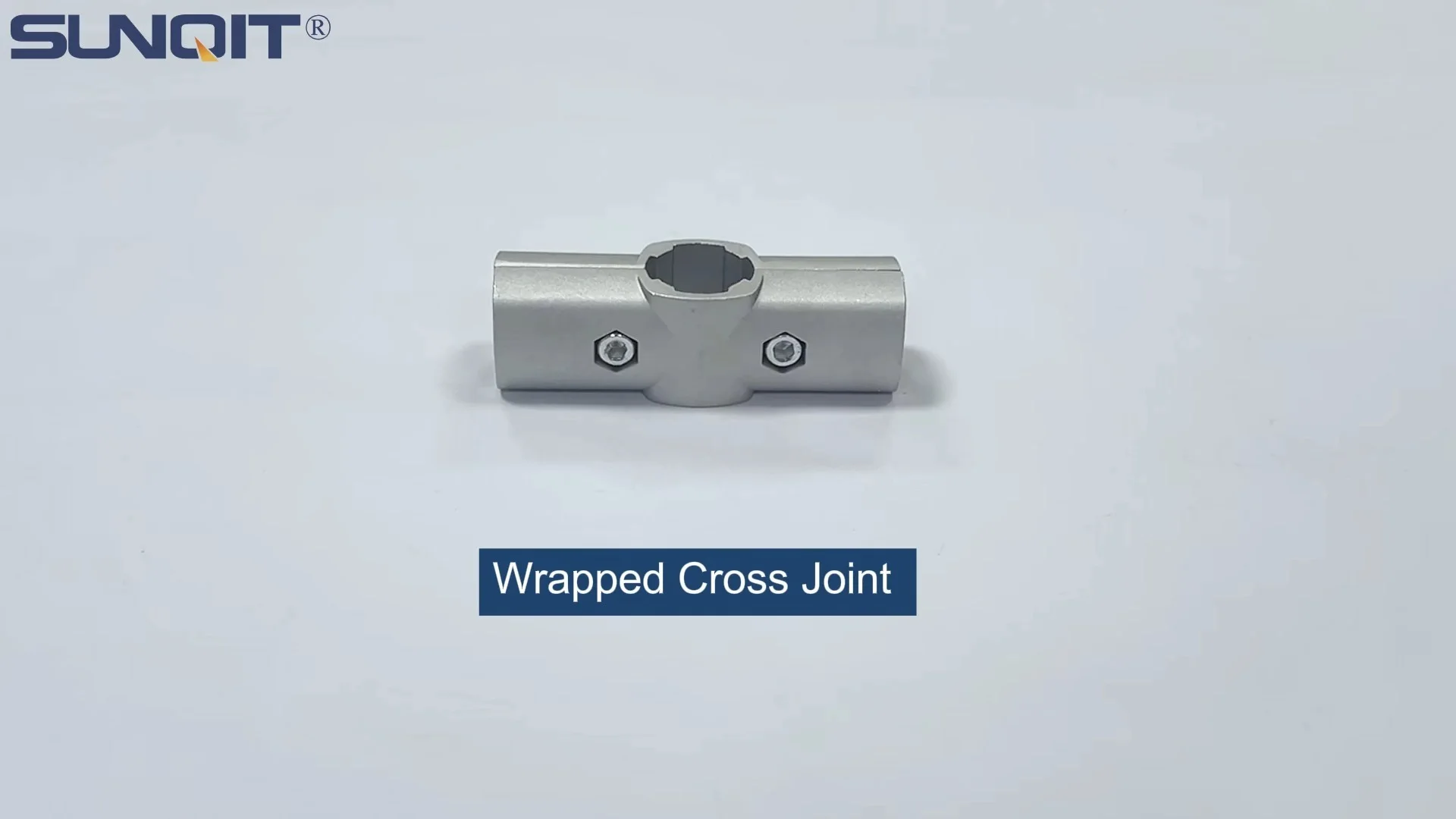
Aluminum 3 way pipe joint for 28mm aluminum pipe connection in 3 direction.
In the high-stakes world of aerospace manufacturing, where a single micron of error can compromise a mission or endanger lives, every component—no matter how small—carries the weight of precision. Among these unsung heroes are three way aluminum pipe joints: unassuming yet critical connectors that form the backbone of assembly lines, workbenches, and lean systems. These joints don't just hold structures together; they enable the adaptability, reliability, and precision that aerospace demands. Let's dive into why these seemingly simple components are indispensable, and how they're engineered to meet the industry's relentless standards.
The Hidden Backbone: What Are Three Way Aluminum Pipe Joints, Anyway?
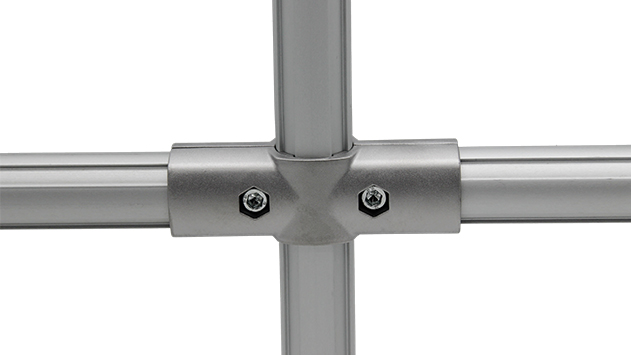
At first glance, a three way aluminum pipe joint might look like little more than a metal connector with three openings. But in reality, it's a feat of engineering designed to solve a specific problem: how to connect three aluminum pipes or profiles at a single junction with uncompromising stability. Think of them as the "cornerstones" of modular structures—whether it's a workbench where engineers assemble avionics, a material rack holding sensitive sensors, or a lean system that streamlines the flow of parts across a factory floor.
Unlike rigid, one-size-fits-all welds, these joints are designed for modularity. They let manufacturers twist, turn, and reconfigure structures with minimal effort, a feature that's invaluable in aerospace. When a production line switches from building jet engine components to satellite parts, the ability to retool workbenches or racks quickly isn't just convenient—it's a competitive advantage. And that flexibility starts with the joint.
Why Aluminum? The Material Science Behind Aerospace's Go-To Choice
Aerospace manufacturing is a masterclass in balancing strength and weight. Every pound saved on the ground translates to fuel efficiency in the air (or thrust efficiency in space). That's where aluminum—specifically aluminum extrusion profiles—shines, and three way aluminum pipe joints are the perfect complement to this material.
Aluminum's high strength-to-weight ratio is legendary, but it's the alloy's other properties that make it ideal for these joints. It resists corrosion, a must in factories where humidity and chemicals are part of daily life. It's also highly malleable, allowing for intricate machining that achieves the tight tolerances aerospace requires. When paired with aluminum extrusion profiles—precision-shaped lengths of aluminum with consistent cross-sections—the joints create a system where every piece fits together like a puzzle, no gaps, no wobbles.
Compare this to traditional steel joints: heavier, prone to rust, and far less forgiving when it comes to reconfiguration. In an industry where every component's weight is calculated down to the gram, aluminum isn't just a choice—it's a necessity. And three way joints maximize this advantage by distributing stress evenly across connected aluminum profiles, ensuring the entire structure remains stable even under the weight of heavy tools or delicate aerospace parts.
Precision Engineering: Tolerances That Measure in Microns
Aerospace doesn't just demand precision—it obsesses over it. For three way aluminum pipe joints, that means tolerances so tight they're measured in microns (one micron is 0.001 millimeters, about 1/25th the width of a human hair). Why? Because when you're building a workbench where a technician will mount a laser gyroscope with sub-millimeter accuracy, the last thing you need is a joint that shifts under load or vibrates during use.
To hit these tolerances, manufacturers use advanced machining techniques like CNC (Computer Numerical Control) milling. Each joint's threads, openings, and contact surfaces are carved with computer-guided precision, ensuring that when it's screwed onto an aluminum profile, there's zero play between the two. Even the angle of the three openings is calibrated to within 0.1 degrees—critical for ensuring that structures like material racks stand perfectly vertical, preventing parts from sliding or tipping.
But precision isn't just about fit; it's about durability. Aerospace production lines run 24/7, with constant vibration from machinery and repeated stress from workers adjusting tools or moving parts. Three way aluminum pipe joints are tested to withstand millions of cycles of stress without deforming. Some are even treated with anodization—a process that adds a protective oxide layer—to scratch resistance and prevent wear over time. After all, a joint that loosens after six months of use isn't just inefficient; it's a safety hazard.

From Workbenches to Lean Systems: Real-World Applications in Aerospace
Three way aluminum pipe joints don't exist in a vacuum—they're part of larger systems that keep aerospace factories running. Let's look at two key applications where their impact is most felt: workbenches and lean systems.
Workbenches: The "Command Centers" of Assembly
Walk into any aerospace manufacturing facility, and you'll find workbenches everywhere—each tailored to a specific task. There's the ESD (Electrostatic Discharge) workbench where sensitive circuit boards are assembled, the heavy-duty bench for mounting engine components, and the modular bench that can be reconfigured for prototyping new parts. What ties them all together? Three way aluminum pipe joints.
Take the ESD workbench, for example. To protect components from static electricity, the bench's surface must be grounded, and its frame must be stable enough to support anti-static mats, tool organizers, and overhead lighting. Three way joints connect the aluminum profile legs, crossbars, and shelves, ensuring the bench doesn't wobble when a technician leans on it. They also allow for easy addition of accessories—like a side rack for holding blueprints or a lower shelf for storing tools—without compromising the bench's integrity.
In one case study, a leading aerospace manufacturer switched from wooden workbenches to aluminum profile benches using three way joints. The result? A 30% reduction in setup time when retooling for new projects, and a 50% drop in workplace injuries from unstable surfaces. The joints made it possible to add adjustable height mechanisms and ergonomic tool holders, reducing strain on workers. Sometimes, the smallest components make the biggest difference in daily operations.
Lean Systems: Streamlining Production, One Joint at a Time
Aerospace manufacturing thrives on lean principles—eliminating waste, optimizing flow, and maximizing efficiency. Three way aluminum pipe joints are the "building blocks" of lean systems, enabling everything from gravity-fed material racks to mobile carts that deliver parts exactly where they're needed.
Consider a flow rack, a staple in lean environments. These racks use inclined shelves with rollers to let parts "flow" to the front as they're used, reducing the need for workers to bend or reach. The frame of that flow rack? Built with aluminum profiles connected by three way joints. The joints allow manufacturers to customize the rack's height, width, and number of shelves to fit specific parts—whether it's small fasteners for a drone or large brackets for a commercial airliner. And if production needs change, the rack can be disassembled and rebuilt in hours, not days.
Another example is the turnover trolley, a mobile cart used to transport parts between stations. Its frame, often made of lightweight aluminum profiles, relies on three way joints to connect the base, sides, and handle. The joints ensure the trolley can carry heavy loads without flexing, while the aluminum keeps it light enough for a single worker to push. In a factory where time is measured in seconds, that mobility translates to faster production cycles and happier teams.

Traditional vs. Three Way Aluminum Joints: A Clear Winner for Aerospace
To truly appreciate three way aluminum pipe joints, it helps to compare them to the alternatives. Let's break down how they stack up against traditional steel joints and welded connections in key areas that matter for aerospace:
| Feature | Traditional Steel Joints | Three Way Aluminum Pipe Joints |
|---|---|---|
| Weight | Heavy (increases fatigue for workers moving carts/racks) | Up to 40% lighter (easier to handle, reduces strain) |
| Precision Tolerance | ±0.5mm (prone to play/wobble in structures) | ±0.05mm (micron-level fit for stable assemblies) |
| Corrosion Resistance | Poor (requires painting/coating; rusts over time) | Excellent (naturally resistant; anodized options for extra protection) |
| Modularity | Rigid (welded or bolted permanently; hard to reconfigure) | Highly modular (easily disassembled/rebuilt for new tasks) |
| Cost Over Time | Higher (needs frequent replacement due to rust/wear) | Lower (durable, reusable, and requires minimal maintenance) |
The verdict? For aerospace, three way aluminum pipe joints aren't just better—they're essential. Their lightweight design cuts down on worker fatigue, their precision ensures assembly accuracy, and their modularity keeps production lines agile. When you're building something as complex as a rocket or a commercial jet, you can't afford to compromise on the components that hold your operation together.
Quality Control: Because "Good Enough" Isn't in Aerospace's Vocabulary
Aerospace doesn't just demand precision—it demands proof. That's why three way aluminum pipe joints undergo rigorous quality control (QC) before they ever reach a factory floor. From raw material inspection to final testing, every step is documented to meet standards like AS9100, the global quality management system for aerospace.
It starts with the aluminum itself. Suppliers test each batch of aluminum alloy for composition, ensuring it meets the exact mix of elements (like copper, magnesium, and zinc) that give it strength and corrosion resistance. A single batch with impurities is rejected—no exceptions. Then, during machining, samples from each production run are checked with coordinate measuring machines (CMMs), which use lasers to map the joint's dimensions with sub-micron accuracy. If even one opening is out of spec by 0.01mm, the entire batch is quarantined for rework.
But QC doesn't stop at the factory gate. Aerospace manufacturers often audit their joint suppliers, checking everything from machining processes to employee training. Some even require traceability: a unique serial number on each joint that links back to its raw material batch, machining date, and QC results. In the unlikely event of a failure, this traceability helps pinpoint the root cause—critical for preventing future issues.
Challenges and Innovations: The Future of Three Way Aluminum Joints
No technology is static, and three way aluminum pipe joints are no exception. As aerospace pushes the boundaries of what's possible—think hypersonic jets, reusable rockets, and deep-space satellites—joints must evolve too. Let's look at the challenges driving innovation:
Challenge 1: Even Lighter, Even Stronger Alloys – As aircraft and rockets aim for greater fuel efficiency, every gram counts. Suppliers are experimenting with new aluminum-lithium alloys, which are 10% lighter and 20% stronger than traditional aluminum. The catch? These alloys are harder to machine, requiring sharper tools and slower speeds to maintain precision. Joint manufacturers are investing in diamond-coated cutting tools and AI-powered machining software to keep up.
Challenge 2: Smart Joints for Smart Factories – The rise of Industry 4.0 (smart manufacturing) is bringing sensors to every corner of the factory. Some companies are now embedding tiny strain sensors into three way joints, allowing operators to monitor real-time stress levels. If a joint starts to loosen or fatigue, the sensor sends an alert—preventing failures before they happen. It's like giving the joint a "voice" to say, "Hey, I need attention!"
Challenge 3: Sustainability – Aerospace is under growing pressure to reduce its carbon footprint. Aluminum is already 100% recyclable, but joint manufacturers are finding ways to cut waste during production. Some are using 3D printing to create near-net-shape joints, reducing the amount of material that ends up as scrap. Others are switching to renewable energy in their factories, ensuring that the joints themselves have a smaller environmental impact.
Wrapping Up: The Quiet Power of Precision
Three way aluminum pipe joints may not get the same attention as a jet engine or a satellite dish, but they're just as vital to aerospace's success. They're a reminder that innovation often lives in the details—the connectors, the fasteners, the components that work behind the scenes to make the extraordinary possible. For every astronaut who relies on a rocket to reach orbit, for every engineer who needs a stable workbench to build the future, these joints are there—quietly, reliably, precisely doing their job.
As aerospace continues to reach for the stars, one thing is clear: the demand for better, stronger, more adaptable three way aluminum pipe joints will only grow. And for the manufacturers who build them, that's a challenge worth embracing. After all, in an industry where the sky isn't the limit—it's just the beginning—precision matters. And these joints? They're precision personified.