- Company Articles
- Products and Technology
- Product knowledge
- Three Way Aluminum Pipe Joints in Home Appliance Manufacturing Workstations

Three Way Aluminum Pipe Joints in Home Appliance Manufacturing Workstations
Related Product
Three Way Aluminum Pipe Joint
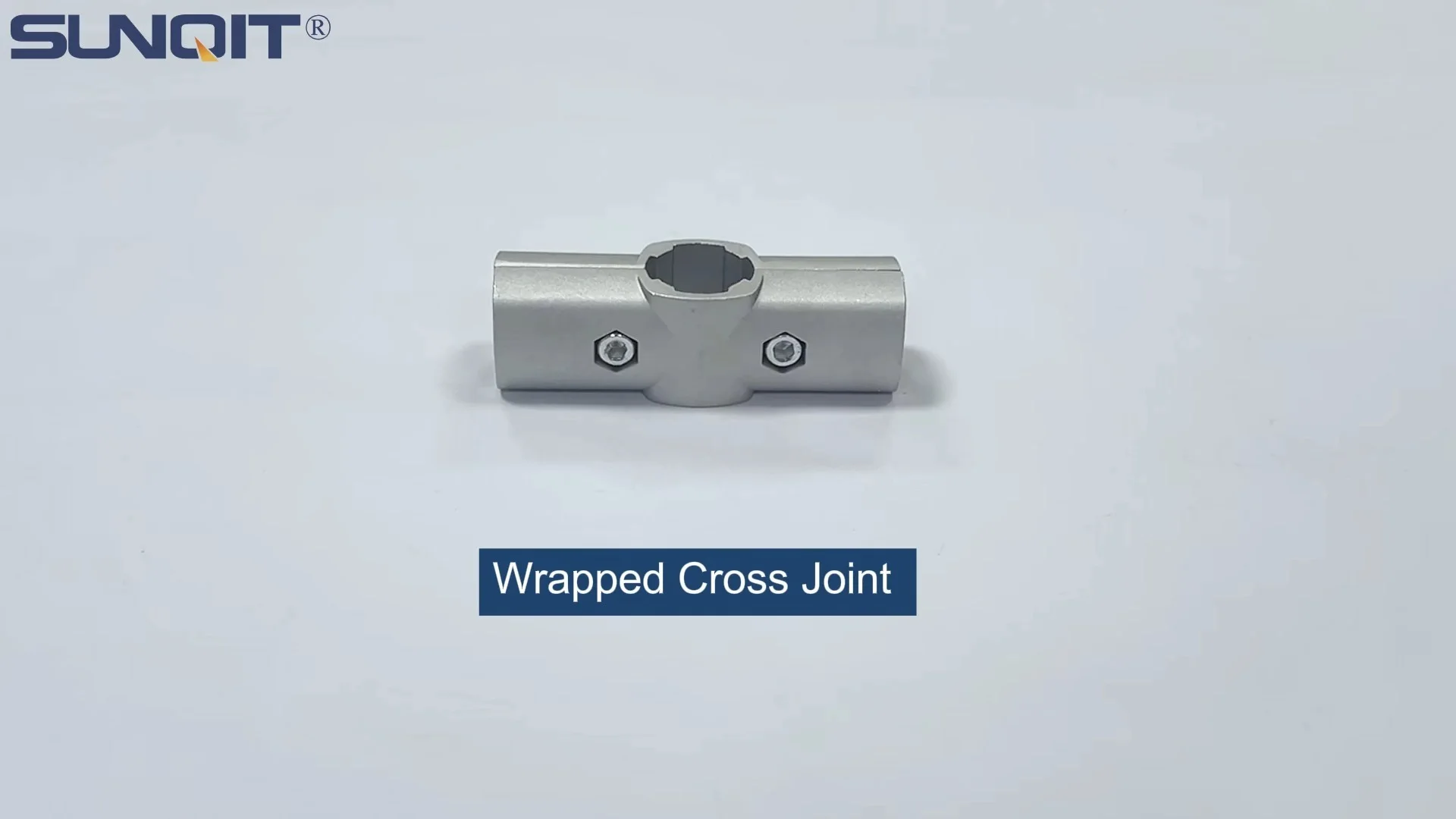
Aluminum 3 way pipe joint for 28mm aluminum pipe connection in 3 direction.
Walk into any modern home appliance manufacturing plant, and you'll likely be struck by the rhythm of assembly lines: robots precision-placing components, workers seamlessly fitting parts into place, and materials gliding along tracks toward their next destination. But behind this seemingly effortless flow lies a critical challenge: how to design workstations that can keep up with the industry's relentless pace of change. Today's consumers demand appliances that are smarter, more energy-efficient, and often customized—think smart refrigerators with touchscreens or washing machines with app-controlled cycles. To meet these demands, manufacturers can't rely on rigid, one-size-fits-all workstations. They need setups that are flexible, durable, and easy to reconfigure. Enter the unsung hero of this adaptability: the three way aluminum pipe joint. In this article, we'll explore how these small but mighty components are transforming home appliance manufacturing workstations, making them leaner, more efficient, and ready for whatever the future of home appliances brings.
What Are Three Way Aluminum Pipe Joints?
At first glance, a three way aluminum pipe joint might seem like a simple piece of hardware—and in many ways, that's part of its appeal. But don't let its simplicity fool you. These joints are engineered to solve a complex problem: how to connect aluminum pipes or profiles at multiple angles quickly and securely, without the need for welding, drilling, or specialized tools. Let's break down their design and functionality.
Three way aluminum pipe joints, as the name suggests, are connectors designed to join three aluminum pipes or profiles together at a single point. They're typically made from high-grade aluminum alloy, chosen for its winning combination of strength, lightweight properties, and resistance to corrosion—key traits in a manufacturing environment where exposure to oils, coolants, and humidity is common. Unlike traditional steel joints, which can be heavy and prone to rust, aluminum joints add minimal weight to structures while standing up to daily wear and tear.
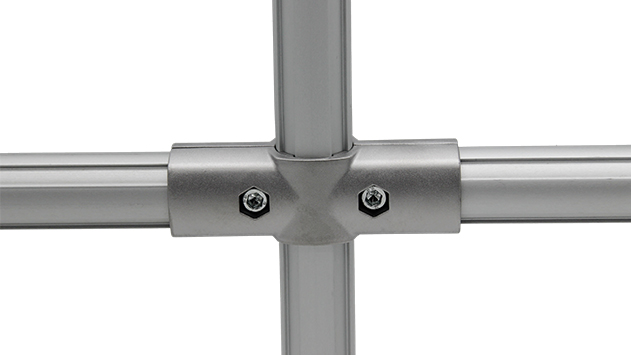
The magic of these joints lies in their modular design. Most feature a central hub with three openings (or "ports"), each sized to fit standard aluminum pipes or profiles (like the 2020, 3030, or 4040 aluminum profiles widely used in manufacturing). The openings are often lined with internal threads or grooves that allow pipes to be inserted and secured with a simple setscrew or bolt—no welding torches or drill presses required. This tool-free assembly is a game-changer for plant managers and workers alike: if a workstation needs to be adjusted, a team can disassemble and reassemble the structure in minutes, not hours.
But three way joints aren't one-trick ponies. Depending on the specific model, they can accommodate different angles between the connected pipes. Some are fixed at 90-degree angles, ideal for building square or rectangular frames (think the legs and shelves of a workbench). Others are adjustable, allowing pipes to be set at 45 degrees, 135 degrees, or even custom angles—perfect for creating sloped surfaces, triangular supports, or curved sections in material racks. This versatility makes them suitable for a wide range of applications, from simple shelving units to complex assembly line structures.
Why Three Way Aluminum Pipe Joints Matter in Home Appliance Manufacturing
In home appliance manufacturing, where every second of downtime or inch of wasted space eats into profitability, three way aluminum pipe joints deliver tangible benefits that traditional workstation components simply can't match. Let's dive into the key reasons these joints have become indispensable in modern plants.
Flexibility to Adapt to Changing Production Needs
Home appliance models rarely stay the same for long. A manufacturer might produce a standard dishwasher for six months, then switch to a larger, feature-packed model to compete in the premium market. With traditional steel workstations—welded together and bolted to the floor—reconfiguring for a new model meant bringing in a crew to cut, weld, and repaint, a process that could take days and cost thousands of dollars. Three way aluminum pipe joints eliminate this hassle.
Imagine a workstation used to assemble microwave doors. When the product line switches to a larger door design, the existing workbench is suddenly too narrow. With three way joints, workers can simply loosen the setscrews, add an extra section of aluminum profile between two joints, and retighten—expanding the bench width by 12 inches in under an hour. No need to order a new bench or hire contractors. This flexibility isn't just about saving time; it's about staying competitive in an industry where speed to market can make or break a product launch.
Durability Without the Weight
Manufacturing workstations take a beating. They support heavy tools, bear the weight of raw materials, and endure constant movement as workers load and unload parts. A flimsy joint could lead to wobbling structures, damaged components, or even safety hazards. Three way aluminum pipe joints are built to handle this stress. Aluminum alloys like 6061-T6, commonly used in these joints, offer tensile strength comparable to mild steel but at roughly one-third the weight. This means structures built with aluminum joints are strong enough to support heavy loads (think a workbench holding a 500-pound testing machine) but light enough for workers to reposition without mechanical assistance.
Corrosion resistance is another durability win. In plants where stainless steel appliances are manufactured, or where coolants are used to prevent overheating in machinery, metal components are at risk of rust. Aluminum joints, however, form a natural oxide layer that protects against corrosion, ensuring they maintain their strength and appearance for years—unlike steel joints, which often require regular painting or coating to prevent rust.
Cost-Effectiveness Over the Long Run
At first glance, three way aluminum pipe joints might seem pricier than basic steel clamps or welded connections. But when you factor in their lifespan and reusability, they're a cost-saving investment. Welded steel structures are essentially disposable; once you cut or weld them, they can't be easily repurposed. Aluminum joints, by contrast, are reusable. If a workstation is no longer needed, the joints can be disassembled, cleaned, and used to build a new structure—whether it's a material rack, a turnover trolley, or a temporary assembly station. This reusability reduces waste and lowers the need to purchase new components for every production change.
Labor costs are another area where aluminum joints shine. Welding a steel frame requires skilled labor and specialized equipment, driving up assembly costs. Three way aluminum joints, on the other hand, can be assembled by any worker with basic training. A team of two can build a custom workbench from scratch in under two hours, compared to half a day for a welded steel equivalent. Over time, these labor savings add up, making aluminum joints a budget-friendly choice for manufacturers of all sizes.
Integration with Key Workstation Components
Three way aluminum pipe joints don't work in isolation. Their true power comes from how seamlessly they integrate with other essential workstation components, turning individual parts into cohesive, functional systems. Let's explore how they pair with three critical elements: aluminum profiles, workbenches, and roller tracks.
Aluminum Profiles: The Backbone of Modular Workstations
If three way aluminum pipe joints are the "connectors," then aluminum profiles are the "bones" of modular workstations. Aluminum profiles—extruded lengths of aluminum with T-slots or grooves along their sides—are the building blocks used to create frames, shelves, rails, and supports. And three way joints are the perfect partners for these profiles.
Most aluminum profiles are designed with standardized dimensions, such as 3030 (30mm x 30mm) or 4040 (40mm x 40mm), making them compatible with a wide range of joints and accessories. When paired with three way aluminum pipe joints, these profiles become infinitely configurable. For example, a 4040 aluminum profile can be cut to length, inserted into a three way joint, and secured with a setscrew to form the corner of a workbench frame. Add another profile and joint, and suddenly you've got a shelf. Need a cross-brace for stability? Just add a third profile connected via the joint's third port. This modularity means manufacturers can design workstations tailored to their exact needs—no more settling for off-the-shelf solutions that waste space or lack functionality.
Building Adaptable Workbenches
Workbenches are the heart of any assembly workstation, and three way aluminum pipe joints are revolutionizing how they're designed and used. Traditional workbenches are often heavy, fixed-height, and built to last decades—great for stability, but terrible for adaptability. A workbench that's perfect for assembling small parts like oven knobs might be useless when the line switches to larger components like refrigerator doors.
With three way aluminum joints and aluminum profiles, workbenches become dynamic tools that grow and change with production needs. Let's take a concrete example: a workbench used to assemble control panels for smart washing machines. The panel components are small, so the bench needs a flat surface, a shelf for tools, and a light fixture overhead. Using three way joints, the frame is built from 3030 aluminum profiles, with joints connecting the legs, shelf supports, and light fixture mount. When the production line shifts to larger dryer control panels, workers can adjust the bench in three ways: raise the height by swapping out leg profiles for longer ones, widen the surface by adding a crossbar and extra profile section (connected via three way joints), or add a second shelf for larger tools—all without replacing the entire bench.
Even better, these workbenches can be customized with accessories that snap into the T-slots of the aluminum profiles: tool hooks, bin holders, or even ESD (electrostatic discharge) mats for sensitive electronic components. And if the bench is no longer needed for control panels? Disassemble it, and use the joints and profiles to build a material rack or a mobile cart—no waste, no extra cost.
Streamlining Material Flow with Roller Tracks
In home appliance manufacturing, efficient material flow is critical. Parts need to move from storage to assembly stations, and finished components need to move to testing or packaging—all without bottlenecks or delays. Roller tracks, which use a series of wheels or rollers to let materials glide smoothly, are a common solution. But traditional roller tracks are often fixed in place, making it hard to reroute them when production lines change. Three way aluminum pipe joints solve this by making roller tracks modular and reconfigurable.
Roller tracks are typically built from aluminum guide rails (like the aluminum guide rail A or B from our keyword list) and roller wheels, mounted on a frame of aluminum profiles. Three way joints play a key role in building this frame, allowing for quick adjustments to the track's direction, height, or length. For example, if a new assembly step requires parts to be diverted to a quality control station, workers can use three way joints to add a 90-degree branch to the existing roller track—no need to install an entirely new track. The joints connect the new rail to the main track, ensuring alignment and smooth material flow.
This flexibility is especially valuable in lean manufacturing systems, where minimizing waste (including time wasted on material handling) is a top priority. By using three way joints to build and adjust roller tracks, manufacturers can ensure materials move directly to where they're needed, when they're needed—reducing the time workers spend walking to retrieve parts and cutting down on unnecessary inventory buildup.

Supporting Lean Manufacturing Systems
Lean manufacturing isn't just a buzzword; it's a philosophy centered on eliminating waste in all forms—whether that's wasted time, materials, space, or effort. And three way aluminum pipe joints are quietly becoming a cornerstone of lean systems in home appliance manufacturing. Here's how they support key lean principles:
- Reducing Downtime Waste: In lean terms, "downtime waste" refers to time lost when production stops for reconfigurations, repairs, or setup changes. Traditional workstations, with their welded or bolted frames, can take hours or even days to reconfigure. Three way aluminum joints cut this downtime to minutes. For example, when a dishwasher manufacturer switches from a standard model to a compact version, the assembly line's material racks need to be narrowed to fit smaller parts. With aluminum joints, the racks are disassembled, adjusted, and reassembled in under an hour—keeping production on track.
- Minimizing Space Waste: Lean systems prioritize using space efficiently. Fixed workstations often take up more space than necessary because they're built for worst-case scenarios (e.g., a bench that's 6 feet wide "just in case" a large part comes through). Modular workstations built with three way joints can be sized to fit current needs, freeing up floor space for other uses—like adding a new assembly cell or expanding storage. When needs grow, the workstation can expand into the available space, rather than requiring a costly facility expansion.
- Eliminating Overproduction Waste: Overproduction—making more parts than needed—is a major lean waste. Modular workstations help prevent this by allowing manufacturers to scale production up or down quickly. For example, if demand for a particular refrigerator model spikes, three way joints can be used to build additional temporary assembly stations in days, rather than weeks. When demand drops, those stations are disassembled, and components are reused elsewhere—no idle workstations taking up space.

Traditional Joints vs. Three Way Aluminum Pipe Joints: A Comparison
To truly appreciate the impact of three way aluminum pipe joints, it helps to see how they stack up against traditional alternatives like welded steel joints and plastic connectors. The table below compares key factors that matter most in home appliance manufacturing:
| Factor | Traditional Welded Steel Joints | Plastic Connectors | Three Way Aluminum Pipe Joints |
|---|---|---|---|
| Flexibility | Extremely low. Once welded, joints cannot be adjusted or reused without cutting. | Moderate. Can be disassembled but may wear out after repeated use. | High. Tool-free assembly allows quick reconfiguration; joints are reusable indefinitely. |
| Durability | High strength but prone to rust in humid environments; heavy weight adds stress to structures. | Low to moderate. Susceptible to cracking under heavy loads or exposure to chemicals. | High. Aluminum alloy resists corrosion and wear; lightweight design reduces structural stress. |
| Assembly Time | Long. Requires skilled welders and curing time; typically takes hours per joint. | Short. Tool-free, but may require glue or adhesives for strength, adding setup time. | Very short. insert pipe, tighten setscrew, and done—minutes per joint, no special skills needed. |
| Cost Over Time | High. Initial welding costs + replacement costs when reconfiguration is needed. | Low upfront, but high long-term. Frequent replacement due to wear and tear. | Moderate upfront, low long-term. Reusable joints eliminate replacement costs; reduces downtime waste. |
| Safety | Risk of burns during welding; sharp edges from cutting/welding. | Risk of breakage under load, leading to structural collapse. | Low risk. No heat or sharp tools needed; secure setscrew design prevents sudden disassembly. |
Real-World Success: A Case Study
To put all this into perspective, let's look at a real-world example of how three way aluminum pipe joints transformed a home appliance manufacturing line. Meet GreenHome Appliances, a mid-sized manufacturer specializing in energy-efficient refrigerators and ovens. In 2023, GreenHome faced a problem: their production line for smart refrigerators was struggling to keep up with demand, and reconfiguring workstations for new models was taking up to two full days—costing them an estimated $15,000 in downtime per changeover.
GreenHome's old workstations were built with welded steel frames and fixed roller tracks. When the company launched a new line of compact refrigerators for small apartments, the existing workbenches were too tall, the roller tracks too wide, and the material racks too deep. The maintenance team had to cut steel frames, weld new joints, and repaint structures—all while the line sat idle. Workers were frustrated, and deadlines were slipping.
In early 2024, GreenHome switched to a modular system built around three way aluminum pipe joints, aluminum profiles, and roller tracks. The results were striking:
- Faster Changeovers: Reconfiguring workstations for the compact refrigerator line took just 4 hours instead of 2 days. Workers used three way joints to adjust bench heights, narrow roller tracks, and shorten material racks—all without welding or cutting.
- Reduced Labor Costs: The maintenance team, which previously spent 16 hours per changeover, now spends 4 hours—freeing them up to focus on other tasks like equipment repairs and safety inspections.
- Improved Worker Satisfaction: Employees reported less fatigue, as the adjustable workbenches reduced bending and reaching. The lighter, more organized workstations also made it easier to keep tools and parts within arm's reach, cutting down on wasted movement.
- Scalability: When demand for the compact refrigerators spiked during the back-to-school season, GreenHome built three additional assembly stations in under a week using reused joints and profiles from the old line—no new steel purchases required.
Today, GreenHome estimates that the switch to three way aluminum pipe joints has saved them over $100,000 in downtime and labor costs alone. And that's not counting the long-term savings from reusing components and avoiding future workstation replacements.
Best Practices for Using Three Way Aluminum Pipe Joints
While three way aluminum pipe joints are designed to be user-friendly, getting the most out of them requires some planning and care. Here are a few best practices to ensure your modular workstations are safe, durable, and effective:
Design with Future Changes in Mind
When building a workstation with three way joints, ask: "How might this need to change in 6 months? A year?" Leave extra space in the design for adding shelves, extending roller tracks, or raising/lowering surfaces. For example, if you're building a material rack, use longer aluminum profiles than you currently need—you can always cut them down later, but you can't easily extend them if you skimp on length now.
Choose the Right Joint for the Job
Not all three way aluminum pipe joints are created equal. Some are designed for light-duty use (e.g., holding tools), while others are reinforced for heavy loads (e.g., supporting a 200-pound workbench top). Check the manufacturer's load ratings before purchasing, and opt for joints with reinforced hubs or thicker walls if you're building structures that will bear significant weight.
Train Teams on Proper Assembly
Tool-free assembly is a plus, but it's still important to train workers on how to properly secure joints. A setscrew that's too loose can lead to wobbling structures; one that's overtightened can strip the threads or crack the joint. Provide simple guidelines: hand-tighten until resistance is felt, then give an extra quarter-turn. Regularly inspect joints for looseness, especially in high-vibration areas like near conveyor belts.
Invest in Quality Accessories
Three way joints work best when paired with high-quality aluminum profiles and accessories. Cheap, poorly extruded profiles may have uneven T-slots, making it hard to secure joints properly. Similarly, low-grade setscrews can rust or strip, compromising the joint's hold. Stick with reputable suppliers who specialize in modular aluminum systems—your workstation's longevity depends on it.
Conclusion: The Future of Manufacturing Workstations
In the fast-evolving world of home appliance manufacturing, adaptability isn't just a nice-to-have—it's a survival skill. Consumers want appliances that reflect their unique needs, and manufacturers need workstations that can keep up with those demands without sacrificing efficiency, safety, or cost-effectiveness. Three way aluminum pipe joints may be small components, but they're playing a big role in making this adaptability possible.
By combining the strength of aluminum with modular, tool-free design, these joints are transforming rigid workstations into dynamic, ever-evolving systems. They're reducing downtime, cutting costs, and making it easier for manufacturers to embrace lean principles and respond to market changes. Whether it's building a custom workbench for assembling smart oven controls or reconfiguring a roller track to speed up refrigerator door production, three way aluminum pipe joints are proving that sometimes, the smallest innovations make the biggest impact.
As home appliances continue to get smarter and more diverse, the workstations that build them will need to be smarter, too. And with three way aluminum pipe joints leading the way, the future of manufacturing looks flexible, efficient, and ready for whatever comes next.