- Company Articles
- Products and Technology
- Product knowledge
- Three Way Aluminum Pipe Joints in Lean Manufacturing: Reducing Waste Through Reusability

Three Way Aluminum Pipe Joints in Lean Manufacturing: Reducing Waste Through Reusability
Related Product
Three Way Aluminum Pipe Joint
Aluminum 3 way pipe joint for 28mm aluminum pipe connection in 3 direction.
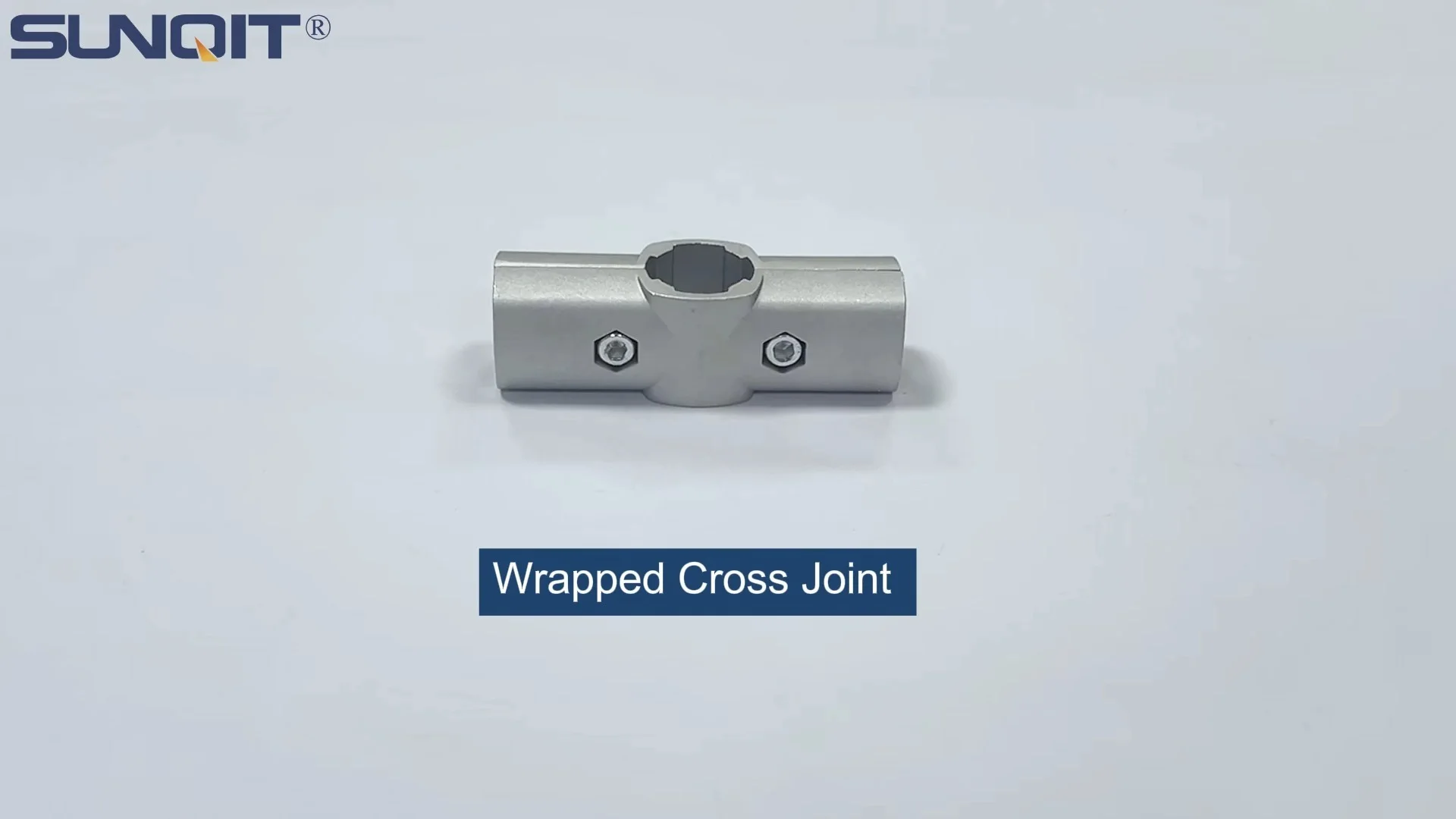
In the world of manufacturing, where every second and every resource counts, the difference between success and stagnation often lies in the smallest components. While large machinery and high-tech systems grab headlines, it's the unassuming parts—like the three way aluminum pipe joint—that quietly drive efficiency, flexibility, and sustainability. In lean manufacturing, where the core mission is to eliminate waste and maximize value, these modular connectors have emerged as unsung heroes, enabling businesses to build, adapt, and reuse with unprecedented ease. Let's dive into how three way aluminum pipe joints are transforming lean systems, one reconfigurable workbench, flow rack, and conveyor at a time.
Understanding Lean Manufacturing: The Quest to Eliminate Waste
Before we explore the role of three way aluminum pipe joints, it's critical to ground ourselves in the principles of lean manufacturing. Born from the Toyota Production System (TPS) in the mid-20th century, lean is more than a methodology—it's a mindset centered on delivering value to customers while minimizing waste, or "muda" in Japanese. TPS identifies seven core types of waste: overproduction, waiting, transportation, defects, inventory, motion, and overprocessing. Lean systems aim to root out these inefficiencies, creating processes that are faster, more cost-effective, and more responsive to change.
Traditionally, manufacturing setups relied on rigid, fixed structures: welded steel workbenches, bolted-down flow racks, and custom-built conveyors. While these systems might work for static production lines, they become liabilities in today's fast-paced market, where product cycles shrink and customer demands shift overnight. A fixed workbench designed for a specific product, for example, becomes obsolete when a new model is introduced, leading to "defect waste" (unused equipment) and "inventory waste" (storing outdated structures). This is where modular solutions—powered by components like three way aluminum pipe joints—step in to rewrite the rules.
Three Way Aluminum Pipe Joints: The Building Blocks of Modularity
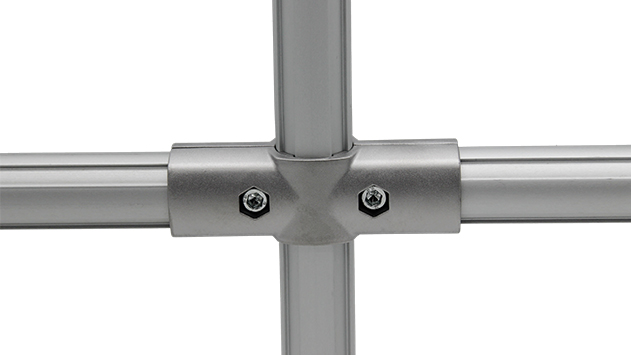
At first glance, a three way aluminum pipe joint might seem simple: a small, lightweight connector designed to join aluminum profile pieces at 90-degree angles. But its simplicity is its strength. Unlike traditional welded or bolted joints, these connectors are engineered for flexibility: they attach to aluminum profile via T-slots, using screws or bolts that can be tightened or loosened in minutes. This modular design transforms aluminum pipes and profiles into a "Lego-like" system, where structures can be assembled, disassembled, and reassembled with minimal effort.
The magic lies in the material and the mechanics. Aluminum, known for its strength-to-weight ratio and corrosion resistance, ensures durability without the bulk of steel. The three way joint itself—often made from die-cast aluminum or reinforced plastic—features precision-engineered slots that align with the T-slots on aluminum profile, creating a secure connection that holds under pressure but releases quickly when adjustments are needed. Whether you're building a workbench, a flow rack, or a section of conveyor, these joints act as the linchpin, turning static materials into dynamic, adaptable tools.
Reusability: The Key to Waste Reduction
In lean manufacturing, reusability is not just a buzzword—it's a cornerstone of waste reduction. Every time a component can be repurposed instead of scrapped, a business cuts down on "inventory waste" (storing new parts), "transportation waste" (shipping replacements), and "overprocessing waste" (manufacturing new items from raw materials). Three way aluminum pipe joints excel here, enabling a circular approach to production setups.
Consider a typical scenario: A electronics manufacturer needs to retool a production line for a new smartphone model. With traditional steel workbenches, this would mean disassembling the old benches (often cutting welded parts), scrapping the steel, and ordering custom new benches—wasting time, materials, and money. With aluminum profile and three way joints, however, the process is. The team can loosen the joints, disassemble the workbench, and reuse the aluminum pipes and panels to build a new configuration tailored to the new phone's assembly needs. The three way joints themselves? They're reused, too, connecting the same pipes in a new layout. No scrap, no wait for new parts—just a quick reconfiguration.
This reusability extends beyond workbenches. Flow racks, which store and transport parts along production lines, often need to adapt to different part sizes or volumes. With three way joints, a flow rack designed for large automotive components can be reconfigured into a smaller rack for electronics by adjusting the spacing of the aluminum profile shelves. Similarly, conveyors built with aluminum roller tracks and three way joints can be extended, shortened, or rerouted by simply detaching and reattaching sections—no need for new conveyor belts or custom metalwork.

Traditional vs. Modular: A Waste Comparison
| Feature | Traditional Fixed Structures (Steel/Welded) | Aluminum Pipe Joint Systems |
|---|---|---|
| Waste Generation | High: Welded parts are often scrapped when reconfiguring; excess material from custom cuts. | Low: Components (aluminum profile, joints) are reused; minimal scrap from adjustments. |
| Reusability | Low: Fixed design limits repurposing; disassembly often damages components. | High: Joints enable easy disassembly; aluminum profile and parts can be reconfigured indefinitely. |
| Setup Time | Long: Requires custom fabrication, welding, and painting (days to weeks). | Short: Assembled with hand tools; basic structures built in hours. |
| Cost Over Time | High: Frequent replacement of outdated structures; ongoing material and labor costs. | Low: Initial investment offset by reusability; minimal replacement costs. |
| Flexibility | Low: Unable to adapt to new products or production changes. | High: Reconfigurable for new tasks, part sizes, or production volumes. |
Case Study: How XYZ Manufacturing Cut Waste by 40% with Aluminum Pipe Joints
To see the impact of three way aluminum pipe joints in action, let's look at XYZ Manufacturing, a mid-sized automotive parts supplier. In 2022, XYZ was struggling with rising waste costs: their rigid steel workbenches and flow racks were constantly being scrapped when production lines changed, leading to $120,000 annually in material waste and $80,000 in downtime for retooling.
The solution? A switch to aluminum profile and three way joint systems. XYZ invested in a modular setup, replacing steel workbenches with aluminum workbenches assembled using three way joints, and converting fixed flow racks into adjustable aluminum flow racks. Within six months, the results were striking:
- Waste Reduction: Scrapped material dropped by 40%, saving $48,000 annually. The team reused 85% of old aluminum profile and joints when reconfiguring setups.
- Downtime Cut: Retooling a production line, which once took 3 days, now took 8 hours—saving $60,000 in lost productivity.
- Employee Engagement: Workers reported higher satisfaction, as they could adjust their own workbenches for comfort and efficiency using the joints.
"The three way joints were a game-changer," said Maria Gonzalez, XYZ's Production Manager. "Last month, we launched a new brake caliper model, and instead of ordering new racks, we just reconfigured the old ones with the same joints. It's like having a manufacturing toolkit that grows with us."

Beyond Waste Reduction: The Ripple Effects of Modularity
While waste reduction is the star benefit, three way aluminum pipe joints deliver value across multiple lean pillars. Let's explore a few:
Agility in a Fast-Changing Market
Today's consumers demand customization, and manufacturers must keep pace. A modular system with three way joints allows businesses to pivot quickly. For example, a furniture manufacturer can switch from producing dining chairs to office chairs by reconfiguring their assembly workbench with the same aluminum profile and joints—no need for new equipment. This agility reduces "overproduction waste" by ensuring production lines only make what's needed, when it's needed.
Sustainability: A Greener Bottom Line
Reusability isn't just good for the budget—it's good for the planet. Aluminum is 100% recyclable, and while recycling is better than scrapping, reusing aluminum profile and joints avoids the energy-intensive recycling process altogether. According to the Aluminum Association, recycling aluminum saves 95% of the energy required to produce new aluminum from bauxite ore. By reusing three way joints and aluminum pipes, manufacturers shrink their carbon footprint while meeting ESG goals.
Empowering Teams to Innovate
Lean manufacturing thrives on employee input—frontline workers often have the best ideas for improving processes. Three way joints make it easy for teams to experiment: a line worker noticing inefficiencies in a flow rack can loosen the joints, adjust the shelf height, and test the new setup in minutes. This empowerment reduces "motion waste" (workers moving unnecessarily) and fosters a culture of continuous improvement.
Overcoming Challenges: Addressing Common Concerns
Adopting any new system comes with questions, and modular aluminum joints are no exception. Let's tackle two common concerns:
Initial Cost vs. Long-Term ROI
Critics sometimes note that aluminum profile and three way joints have a higher upfront cost than basic steel or wood. While true, the long-term savings erase this gap. A $500 aluminum workbench with joints might cost twice as much as a $250 wooden bench, but the aluminum bench can be reused 10 times over, while the wooden one will splinter and need replacement in 2 years. XYZ Manufacturing, for example, recouped their initial investment in 14 months through waste and downtime savings.
Durability: Can Aluminum Compete with Steel?
Aluminum is lighter than steel, but modern aluminum alloys (like those used in profile) are surprisingly strong—often strong enough for most manufacturing tasks. For heavy-duty applications (e.g., lifting 500+ lbs), manufacturers can opt for thicker aluminum profile or reinforced joints. In most cases, though, the tradeoff between weight and durability is worth it: lighter structures are easier to reconfigure, reducing "motion waste" for workers.
Conclusion: Small Joints, Big Impact on Lean Systems
In the grand scheme of lean manufacturing, three way aluminum pipe joints are small, but their impact is monumental. By enabling reusability, they turn static production lines into dynamic ecosystems where waste is minimized, value is maximized, and adaptability is second nature. From the workbench where components are assembled to the flow rack that feeds parts to the conveyor that moves products to market, these joints are the silent enablers of a leaner, greener, and more profitable future.
As manufacturers continue to navigate uncertainty, one thing is clear: the businesses that thrive will be those that build not just products, but systems that can evolve. And at the heart of those systems? The humble three way aluminum pipe joint—proof that in lean manufacturing, the smallest components often deliver the biggest returns.