- Company Articles
- Products and Technology
- Product knowledge
- Three Way Aluminum Pipe Joints in Mechanical Manufacturing: Supporting Heavy Loads

Three Way Aluminum Pipe Joints in Mechanical Manufacturing: Supporting Heavy Loads
Related Product
Three Way Aluminum Pipe Joint
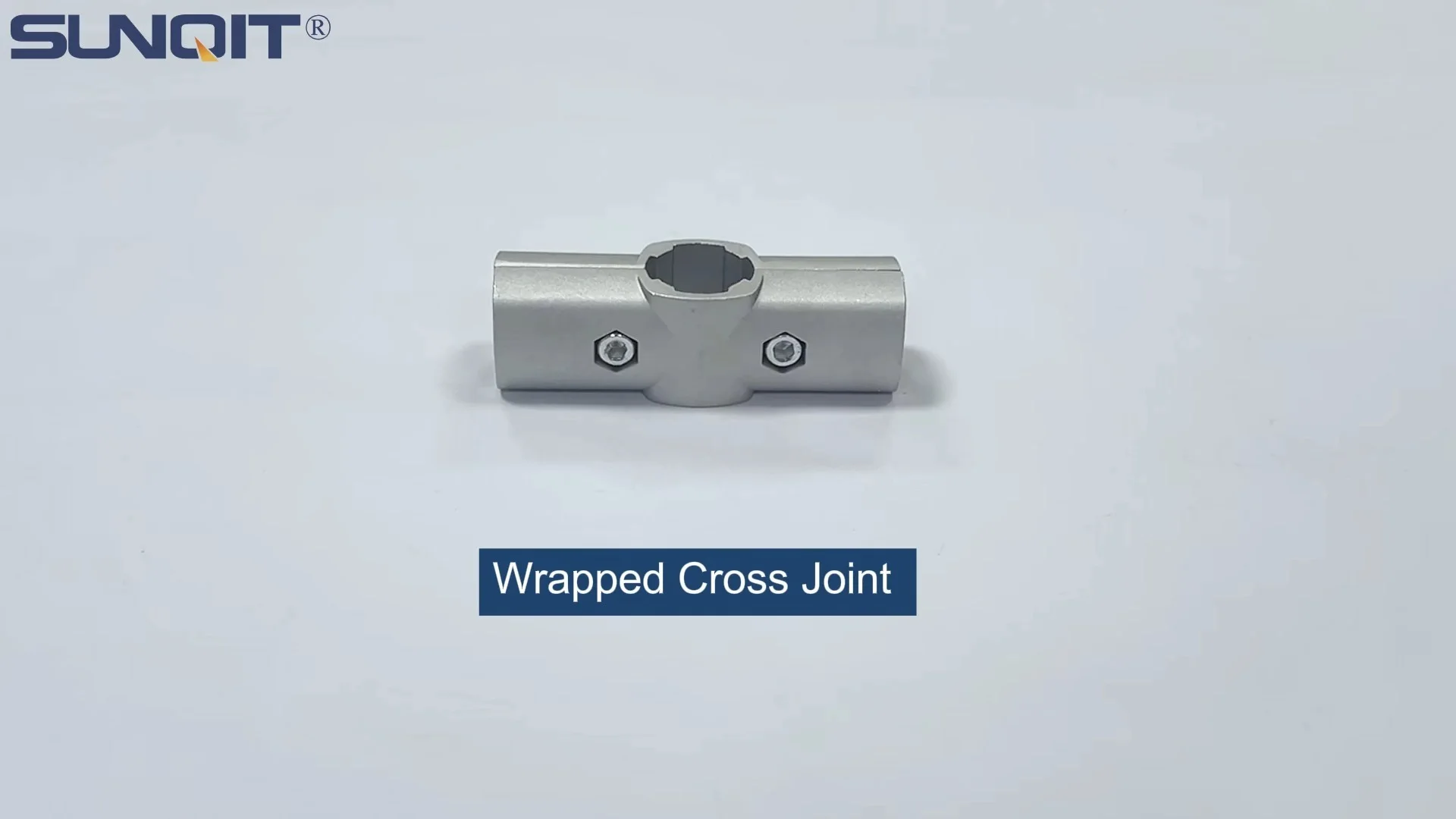
Aluminum 3 way pipe joint for 28mm aluminum pipe connection in 3 direction.
Introduction: The Unsung Heroes of Factory Floors
Walk into any bustling manufacturing plant, and your eyes might be drawn to the big machines—the robotic arms assembling smartphones, the conveyor belts zipping products along, the towering racks stacked with materials. But if you look closer, there's a quieter hero holding everything together: the joints. Not the kind in your knees or elbows, but the small, unassuming connectors that link pipes, tubes, and profiles into sturdy workbenches, material racks, and production lines. In particular, three way aluminum pipe joints have become indispensable in modern mechanical manufacturing, quietly shouldering heavy loads day in and day out while keeping operations running smoothly.
Imagine a scenario many factory managers know all too well: A critical workbench in the assembly line suddenly wobbles under the weight of tools and components. A quick inspection reveals the culprit—a flimsy plastic joint that's cracked under pressure. The line grinds to a halt. Technicians scramble to replace the joint, but downtime eats into deadlines, and frustration mounts. Now, picture the same scenario with a three way aluminum pipe joint. The workbench stands firm, the joint unyielding even as workers pile on additional equipment. No delays, no stress—just a seamless workflow. That's the difference a reliable joint makes.
In this article, we'll dive deep into the world of three way aluminum pipe joints. We'll explore how they're designed, why aluminum (especially aluminum extrusion profile) is the material of choice, how they support heavy loads, and where you'll find them hard at work in factories. We'll also compare them to other joint types, share tips for installation and maintenance, and even discuss how to choose the right supplier for your needs. By the end, you'll understand why these small but mighty components are the backbone of efficient, durable manufacturing systems.
What Are Three Way Aluminum Pipe Joints, Anyway?
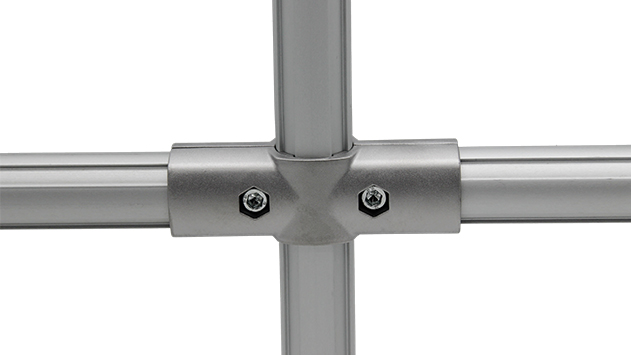
Let's start with the basics. A three way aluminum pipe joint is exactly what it sounds like: a connector made from aluminum that joins three pipes or tubes at once. Unlike two-way joints, which connect two pipes in a straight line or at a right angle, three way joints add a third arm, allowing for the creation of more complex, multi-directional structures. Think of them as the "T-junctions" of the manufacturing world, but with the versatility to handle angles beyond 90 degrees, depending on the design.
Beyond the Basics: Design Variations
Not all three way joints are created equal. Some are fixed, meaning the angles between the three arms are set (like a perfect T-shape at 90 degrees), while others are swivel or adjustable, letting workers pivot pipes into custom angles during assembly. There are also "internal rotation" joints, which allow one arm to rotate independently of the others—a handy feature for systems that need to adapt to moving parts, like conveyor belts or adjustable workbenches.
Real-World Example:
A car parts manufacturer needed a material rack that could hold heavy engine components while allowing easy access from three sides. By using adjustable three way aluminum joints, they built a rack with horizontal and vertical pipes branching out in three directions, creating shelves that workers could reach from the front, left, and right. The joints kept the structure stable even when loaded with 50kg components per shelf.
The key here is that three way joints are modular. They're designed to work with standard aluminum pipes or aluminum profiles—hollow tubes with grooves (called T-slots) that let you slide in bolts, brackets, or other aluminum pipe accessories to secure the joint in place. This modularity is a game-changer for manufacturers, who can quickly assemble, disassemble, or reconfigure structures without welding or specialized tools. Need to expand a workbench? Just add a few more pipes and joints. Want to repurpose a material rack into a trolley? Swap out fixed joints for swivel ones and add casters. It's like building with industrial-grade Legos, but for grown-ups.
The Science of Strength: How Aluminum Extrusion Profile Makes All the Difference
Now, you might be wondering: Why aluminum? And why extrusion? Let's break it down. Aluminum is lightweight, which is a big plus when you're building large structures—no one wants to wrestle with heavy steel pipes all day. But it's also surprisingly strong, especially when shaped into profiles through extrusion.
Aluminum Extrusion: Turning Raw Aluminum into Engineering Marvels
Aluminum extrusion is a manufacturing process where raw aluminum is heated until it's malleable, then forced through a die (a metal mold) to create a specific cross-sectional shape. For three way joints, the die might be designed to create a T-shape with three hollow arms, each with T-slots along the inside. This process ensures that the joint has a consistent thickness and structure, with no weak spots—unlike cast joints, which can have air bubbles or inconsistencies that lead to cracks under pressure.
The result? A joint that's both strong and lightweight. Aluminum has a high strength-to-weight ratio, meaning it can support heavy loads without adding unnecessary bulk. For example, a standard three way aluminum joint (made from 6063 aluminum alloy, a common choice for extrusions) can typically support loads of 200-300kg per arm, depending on the pipe diameter and wall thickness. Compare that to a plastic joint of the same size, which might max out at 50kg before bending or breaking, and you see why aluminum is the go-to material for heavy-duty applications.
Corrosion Resistance: A Bonus for Factory Environments
Factories are tough places for metal. Oil, grease, water, and chemicals can all cause rust or corrosion, weakening joints over time. Aluminum, however, forms a natural oxide layer when exposed to air—a thin, protective film that prevents further corrosion. This makes three way aluminum joints ideal for humid environments (like food processing plants) or areas with frequent cleaning (like pharmaceutical labs). Some manufacturers even anodize their joints—an electrolytic process that thickens the oxide layer—for extra protection, making them nearly impervious to rust.

Supporting Heavy Loads: The Engineering Behind the Strength
So, how exactly do these joints support all that weight? It's a mix of smart engineering and material science. Let's take a closer look at the load-bearing mechanics.
Distributing Weight Evenly: The Key to Avoiding Stress Points
When you attach three pipes to a joint, the weight from each pipe (and whatever's on it) transfers to the joint. A well-designed three way joint distributes this weight evenly across all three arms and into the base structure (like the floor or a larger frame). For example, if a vertical pipe is holding a 100kg load, the joint will spread that weight to the two horizontal pipes, which then transfer it to the floor via the workbench legs. No single part of the joint takes the full brunt of the load, reducing the risk of bending or breaking.
The T-slots in the aluminum profile play a big role here. When you insert a bolt through the slot and tighten it against the pipe, it creates a friction fit that locks the pipe and joint together. The more bolts you use (within reason), the more evenly the load is distributed. Some joints even have reinforced corners or thicker walls at the intersection of the three arms—the "heart" of the joint—since that's where stress is highest.
Testing to the Limit: How Manufacturers Ensure Load Capacity
Reputable suppliers don't just guess at how much weight their joints can hold—they test them rigorously. In labs, joints are subjected to static loads (weight that stays in place, like a stack of boxes) and dynamic loads (weight that moves, like parts sliding down a conveyor). Engineers measure how much the joint bends under pressure and at what point it finally fails. The results are then used to set safety ratings, ensuring that real-world users never exceed the joint's limits.
For example, a supplier might test a fixed three way joint with 25mm diameter aluminum pipes and find it can handle 250kg of static load before deforming. They'll then recommend a "safe working load" of 150kg—well below the failure point—to account for unexpected stress, like a worker accidentally dropping a tool on the structure.

Where You'll Find Them: Common Applications in Manufacturing
Three way aluminum pipe joints are everywhere in manufacturing, though you might not notice them at first glance. Here are some of the most common places they shine:
Workbenches: The Workhorses of the Factory Floor
Workbenches are where the magic happens—assembly, testing, packaging, you name it. They need to support tools, parts, and sometimes even workers leaning on them. Three way joints are the backbone of sturdy workbenches, connecting vertical legs to horizontal rails and shelves. Take the "Workbench E (Single Deck—Without Caster)" from many suppliers: it uses three way joints to attach the tabletop frame to the legs, and additional joints to add lower shelves for storing tools. Even without casters, the jointed frame stays stable under 300kg of weight.
Material Racks and Trolleys: Moving Heavy Loads Safely
Material racks, like the "Material Rack B (3 Row and 3 Floor)," rely on three way joints to create vertical supports and horizontal shelves. Each shelf is held up by joints that connect the vertical posts to the horizontal pipes, ensuring the rack doesn't sway when loaded with heavy boxes or components. Trolleys, too, use three way joints to build frames that can carry loads while rolling smoothly on casters—no more wobbly carts tipping over in the aisle.
Conveyor Systems: Keeping Production Flowing
Conveyors move products from one station to the next, and their frames need to be both strong and flexible. Three way joints help build the supports for roller tracks (like the "40 Steel Roller Track" or "38 Aluminum Roller Track"), ensuring the track stays level even when loaded with boxes. Adjustable joints let workers angle the track slightly downward for gravity-fed systems, where products slide from one end to the other without motors.
Three Way Aluminum Joints vs. the Competition: Why Aluminum Wins
To really appreciate three way aluminum joints, let's compare them to other common joint types: stainless steel, plastic, and welded steel.
| Feature | Three Way Aluminum Joint | Stainless Steel Joint | Plastic Joint | Welded Steel Joint |
|---|---|---|---|---|
| Load Capacity (per arm) | 150-300kg (safe working load) | 200-400kg | 30-80kg | 300-500kg |
| Weight | Light (e.g., 200g for a small joint) | Heavy (e.g., 500g for the same size) | Lightest (e.g., 100g) | Heaviest (integral to the structure) |
| Corrosion Resistance | High (natural oxide layer; anodizable) | Very High | High (but prone to UV damage) | Low (rusts without coating) |
| Ease of Assembly | High (modular; no welding) | Medium (heavier, but still modular) | High (snap-on or bolt-on) | Low (requires welding equipment) |
| Cost | Moderate | High | Low | High (labor + materials) |
| Reusability | High (easily disassembled and reconfigured) | High | Medium (can crack if over-tightened) | Low (welded joints are permanent) |
As the table shows, aluminum joints strike a sweet spot: they're strong enough for most heavy-duty applications, lightweight for easy handling, corrosion-resistant, and affordable. Stainless steel might be stronger, but it's heavier and pricier—overkill for many systems. Plastic is cheap but too weak for heavy loads. Welded steel is strong but permanent, making it hard to reconfigure when your needs change. For most manufacturers, aluminum three way joints offer the best balance of performance and practicality.
Installation & Maintenance: Keeping Your Joints in Top Shape
Even the best joints won't perform well if they're installed incorrectly or neglected. Here's how to get the most out of your three way aluminum pipe joints.
Installation Tips: Measure Twice, Tighten Once
1.
Align Pipes Properly:
Before tightening the bolts, make sure all three pipes are straight and seated fully into the joint. A misaligned pipe will put extra stress on the joint, reducing its load capacity.
2. Don't Over-Tighten: Aluminum is strong, but it can strip if you crank the bolts too hard. Use a torque wrench to follow the supplier's recommended torque settings (usually around 20-30 Nm for M8 bolts).
3. Use the Right Accessories: Pair joints with compatible aluminum pipe accessories, like T-slot bolts, washers, and end caps. Using cheap or ill-fitting accessories can weaken the connection.
4. Test Before Full Load: After assembly, do a "stress test" by gradually adding weight to the structure. If the joints flex or the pipes wiggle, double-check the tightness and alignment.
2. Don't Over-Tighten: Aluminum is strong, but it can strip if you crank the bolts too hard. Use a torque wrench to follow the supplier's recommended torque settings (usually around 20-30 Nm for M8 bolts).
3. Use the Right Accessories: Pair joints with compatible aluminum pipe accessories, like T-slot bolts, washers, and end caps. Using cheap or ill-fitting accessories can weaken the connection.
4. Test Before Full Load: After assembly, do a "stress test" by gradually adding weight to the structure. If the joints flex or the pipes wiggle, double-check the tightness and alignment.
Maintenance: A Little Care Goes a Long Way
1.
Clean Regularly:
Wipe joints with a damp cloth to remove oil, dust, or chemicals. For stubborn grime, use a mild detergent—avoid harsh solvents that can damage the aluminum's oxide layer.
2. Check for Loose Bolts: Vibrations from machinery can loosen bolts over time. Inspect joints monthly and retighten as needed.
3. replace Damaged Joints: If a joint is bent, cracked, or the T-slots are stripped, replace it immediately. A damaged joint is a weak link that can compromise the entire structure.
4. Lubricate Moving Parts: For swivel or adjustable joints, apply a small amount of silicone lubricant to the pivot points to keep them moving smoothly.
2. Check for Loose Bolts: Vibrations from machinery can loosen bolts over time. Inspect joints monthly and retighten as needed.
3. replace Damaged Joints: If a joint is bent, cracked, or the T-slots are stripped, replace it immediately. A damaged joint is a weak link that can compromise the entire structure.
4. Lubricate Moving Parts: For swivel or adjustable joints, apply a small amount of silicone lubricant to the pivot points to keep them moving smoothly.
Choosing the Right Supplier: It's About More Than Price
Now that you know all about three way aluminum pipe joints, how do you find a supplier you can trust? It's tempting to go with the cheapest option, but remember: these joints are supporting your equipment, your workers, and your productivity. A low-quality joint could cost you far more in downtime and repairs than you saved upfront.
What to Look for in a Supplier
1.
Quality Certifications:
Look for suppliers with ISO 9001 certification, which ensures they follow strict quality control processes. This means their joints are tested, consistent, and reliable.
2. Material Transparency: Reputable suppliers will tell you exactly what grade of aluminum they use (e.g., 6061 or 6063 alloy) and provide test reports for load capacity. Avoid suppliers who can't or won't share this info.
3. Range of Accessories: A good supplier should offer not just joints, but all the aluminum pipe accessories you need—bolts, brackets, end caps, and even custom parts. This saves you time and ensures compatibility.
4. Customer Support: What if you need help designing a structure or troubleshooting a joint issue? Choose a supplier with responsive technical support, whether via phone, email, or video chat.
5. Lead Times: Manufacturing waits for no one. Ask about lead times for standard and custom joints to avoid production delays.
2. Material Transparency: Reputable suppliers will tell you exactly what grade of aluminum they use (e.g., 6061 or 6063 alloy) and provide test reports for load capacity. Avoid suppliers who can't or won't share this info.
3. Range of Accessories: A good supplier should offer not just joints, but all the aluminum pipe accessories you need—bolts, brackets, end caps, and even custom parts. This saves you time and ensures compatibility.
4. Customer Support: What if you need help designing a structure or troubleshooting a joint issue? Choose a supplier with responsive technical support, whether via phone, email, or video chat.
5. Lead Times: Manufacturing waits for no one. Ask about lead times for standard and custom joints to avoid production delays.
Case Study:
A electronics manufacturer ordered three way joints from a budget supplier to save costs. Within a month, several joints cracked under the weight of circuit board assemblies. When they contacted the supplier for help, they got no response. Frustrated, they switched to a supplier with ISO certification and 24/7 support. The new joints held up, and the supplier even sent a technician to help reinforce the existing structures. The upfront cost was higher, but the savings in downtime and repairs made it worth it.
Future Innovations: What's Next for Three Way Aluminum Joints?
The world of manufacturing is always evolving, and three way aluminum pipe joints are no exception. Here are a few trends to watch:
Smart Joints: Sensors for Predictive Maintenance
Imagine joints embedded with tiny sensors that measure strain, temperature, and vibration. These "smart joints" could send real-time data to a factory's management system, alerting workers when a joint is under too much stress or starting to fail. This predictive maintenance would prevent breakdowns before they happen.
3D-Printed Custom Joints
While most joints are extruded, 3D printing is opening up new possibilities for custom designs. Manufacturers could soon order three way joints with unique angles or integrated features (like built-in cable clips) printed on-demand, reducing lead times for specialized projects.
Eco-Friendly Materials
Suppliers are exploring recycled aluminum alloys for joints, reducing the environmental impact of production. Some are also developing biodegradable lubricants and coatings for joints, making the entire system more sustainable.
Conclusion: Small Joints, Big Impact
Three way aluminum pipe joints might not grab headlines, but they're the unsung heroes of modern manufacturing. By combining the strength of aluminum extrusion profile, modular design, and smart engineering, they support heavy loads, enable flexible production systems, and keep factories running efficiently. Whether you're building a workbench, a material rack, or a conveyor system, choosing the right three way joint can mean the difference between a structure that lasts for years and one that fails when you need it most.
So, the next time you walk through a factory, take a moment to look at the joints holding everything together. Chances are, many of them are three way aluminum joints—quietly doing their job, supporting the heavy loads that keep our economy moving. And if you're in the market for new manufacturing equipment, remember: don't overlook the small stuff. Sometimes, the strongest systems start with the strongest joints.