- Company Articles
- Products and Technology
- Product knowledge
- Three Way Lean Pipe Joint Chrome: Common Sizes for Standard Lean Pipe Systems

Three Way Lean Pipe Joint Chrome: Common Sizes for Standard Lean Pipe Systems
Related Product
Three Way Lean Pipe Joint Chrome
Three way lean pipe joint for 3 pcs 28MM lean pipe connection in straight angle, which used widely in workbench, flow rack, hand trolley frame connection.
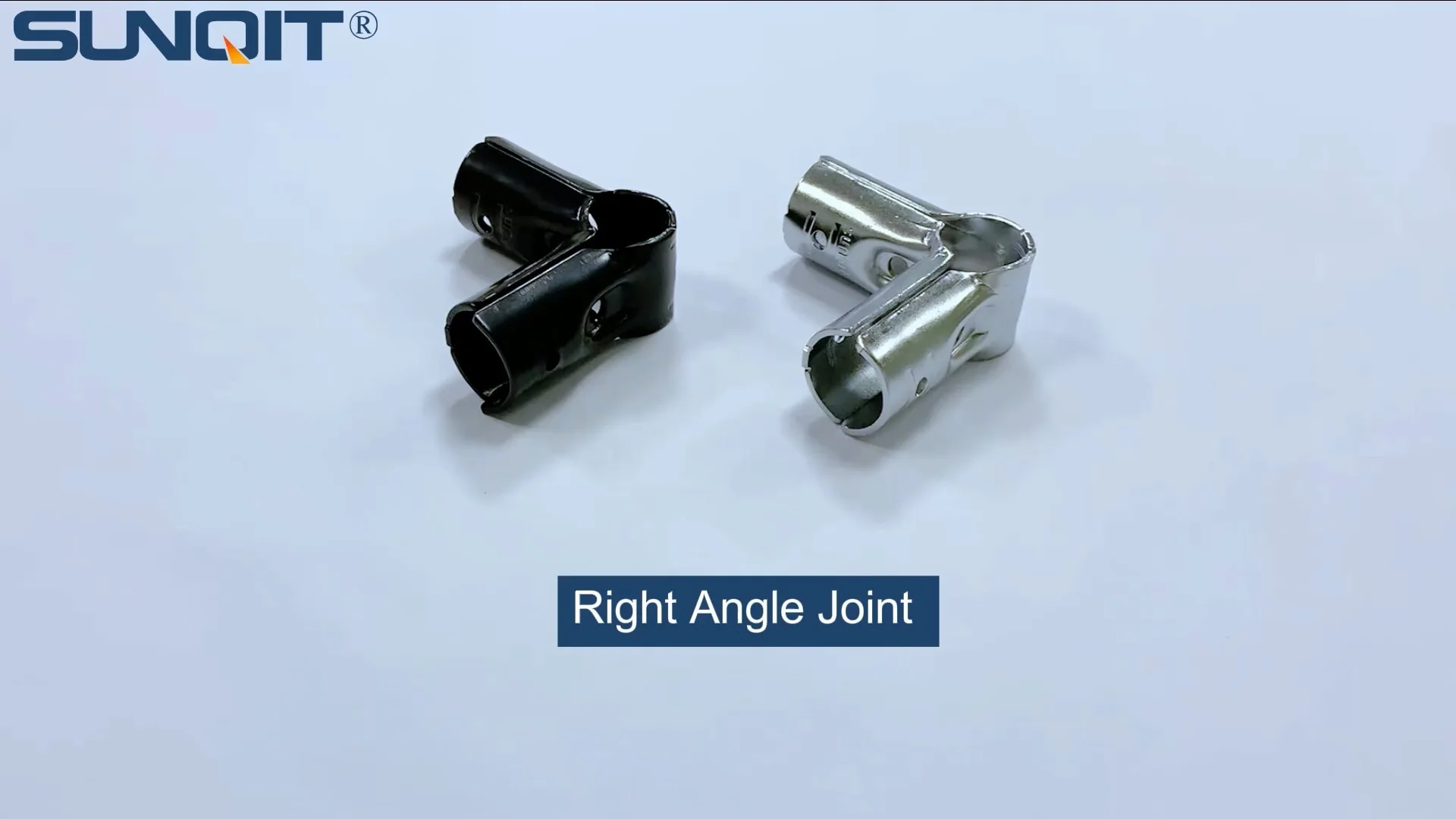
In the world of lean manufacturing, where every second counts and waste is the enemy, the unsung heroes often aren't the flashy machines or high-tech software. More often, they're the small, sturdy components that hold everything together—quietly ensuring production lines flow smoothly, workbenches stay stable, and material handling feels effortless. One such hero? The three way lean pipe joint chrome . It might not grab headlines, but without it, the flexible, adaptable structures that define modern lean systems would simply fall apart.
Whether you're building a custom workbench for an electronics assembly line, a flow rack for just-in-time material delivery, or a turnover trolley to move parts across the factory floor, this joint is the linchpin. It connects three lean pipes at precise angles, turning simple tubes into robust, reconfigurable frameworks. And that chrome coating? It's not just for show. It adds a layer of durability that makes these joints indispensable in busy industrial settings. But to truly leverage their power, you need to understand their sizes—how they pair with standard lean pipes, what load they can handle, and which applications they're best suited for. Let's dive in.
What Is a Three Way Lean Pipe Joint Chrome, Anyway?
First, let's break down the basics. A three way lean pipe joint is a connector designed to join three lean pipes (or tubes) at various angles—most commonly 90°, 45°, or 180°, though some designs allow for adjustable angles. Unlike fixed brackets or welded joints, these components are modular, meaning you can assemble, disassemble, and reconfigure them without specialized tools. That's a game-changer for lean environments, where production needs shift constantly.
The "chrome" in the name refers to the finishing process. Chrome plating isn't just about aesthetics (though that shiny silver finish does make work areas look more professional). It's a functional choice: chrome resists corrosion, stands up to oils and chemicals common in factories, and wipes clean easily—critical for maintaining hygiene in industries like food processing or pharmaceuticals. It also adds hardness to the joint, reducing wear and tear from frequent assembly/disassembly.
But why three way? Think about it: when building a structure, you rarely need to connect only two pipes. A workbench might have vertical supports, horizontal rails, and a crossbar for stability—that's three pipes meeting at a single point. A material rack might have a vertical post, a horizontal beam for shelves, and a diagonal brace to prevent sway. The three way joint simplifies these connections, eliminating the need for multiple brackets or complex machining.
Standard Lean Pipe Systems: The Foundation for Joint Sizing
To understand three way joint sizes, we first need to talk about the pipes they connect. Lean pipe systems—whether used for workbenches, flow racks, or conveyors—typically rely on standardized pipe diameters. This standardization ensures compatibility across components, so a joint from one supplier works with a pipe from another (assuming both follow industry norms). The most common pipe diameters in lean manufacturing are:
- 28mm (1.1 inches): The workhorse of lean systems. Used for lightweight to medium-duty applications like workbenches, small material trolleys, and simple flow racks. Often made of steel with a PE coating (to prevent scratches on sensitive parts) or stainless steel for corrosion resistance.
- 30mm (1.18 inches): Slightly thicker, designed for heavier loads. Found in industrial material racks, heavy-duty workbenches, and automated conveyor systems. Stainless steel is common here, especially in wet or high-sanitation environments.
- 40mm (1.57 inches): Less common but critical for extra-heavy applications, like large turnover racks or structural supports in assembly lines. Often paired with aluminum or stainless steel pipes for maximum strength.
These pipes are the "bones" of lean systems, and the three way joints are the "joints" that let those bones move and adapt. So, it follows that three way lean pipe joint sizes are engineered to match these standard pipe diameters. A joint designed for 28mm pipe won't fit a 30mm pipe, and vice versa—misalignment here can lead to wobbly structures, safety risks, and wasted time.

Common Sizes of Three Way Lean Pipe Joint Chrome
Now, let's get to the heart of the matter: the sizes themselves. While there are custom options, most lean system supplier s stock three standard sizes, each tailored to the pipe diameters above. Below is a breakdown of the most common options, along with their uses, load capacities, and compatibility.
| Joint Size (Inner Diameter, mm) | Compatible Pipe Diameter (mm) | Typical Load Capacity (Per Joint, kg) | Common Applications | Material & Chrome Thickness |
|---|---|---|---|---|
| 28mm | 28mm (PE coated lean pipe, stainless steel pipe series) | 50–80 kg | Workbenches, small flow racks, handheld trolleys, ESD workstations | Malleable iron core, 0.05–0.1mm chrome plating |
| 30mm | 30mm (stainless steel pipe series, aluminum lean pipe) | 80–120 kg | Heavy-duty workbenches, 3-row material racks, roller track supports, conveyor frames | Malleable iron core, 0.1–0.15mm chrome plating |
| 40mm | 40mm (stainless steel pipe series, aluminum extrusion profile) | 120–200 kg | Large turnover racks, structural supports, automated conveyor systems | Cast iron core, 0.15–0.2mm chrome plating |
Deep Dive: 28mm Three Way Joints
The 28mm joint is the most widely used in lean systems, and for good reason. It pairs with 28mm PE coated lean pipes—affordable, lightweight, and easy to handle. These joints are perfect for applications where flexibility and cost-efficiency matter most. For example, a small electronics manufacturer might use 28mm joints to build an ESD workstation: vertical pipes for height, horizontal pipes for the work surface frame, and a third pipe for a tool rack above the bench. Since electronics assembly lines often reconfigure for new product models, the ability to take apart the joint, adjust the pipe lengths, and reassemble in minutes is invaluable.
Load capacity here ranges from 50–80 kg per joint, which is more than enough for most workbench setups (a typical workbench top weighs 10–15 kg, plus tools and parts). And because the pipes are PE coated, the chrome joint won't scratch the pipe surface during assembly—a must when handling delicate components like circuit boards.
Deep Dive: 30mm Three Way Joints
Step up to 30mm, and you're entering medium-to-heavy-duty territory. These joints pair with 30mm stainless steel pipes (part of the stainless steel pipe series ) or aluminum lean pipes, which are thicker and stiffer than 28mm options. Think about a material rack with three rows and three floors (like "Material Rack B" in many supplier catalogs)—each shelf needs to hold boxes of parts, and the vertical supports must bear the weight of all three levels. A 30mm joint, with its 80–120 kg capacity, ensures the rack stays stable even when fully loaded.
Another common use? Roller track systems. Roller tracks (used for gravity-fed flow racks) rely on a frame of horizontal and vertical pipes. The three way joints here connect the vertical supports, the horizontal rails that hold the roller track, and the diagonal braces that keep the whole structure from tipping when heavy boxes slide down. Chrome plating is especially important here: roller tracks are often in high-traffic areas, and the joint needs to resist scuffs from forklifts or pallet jacks.
Deep Dive: 40mm Three Way Joints
At 40mm, we're talking heavy lifting. These joints are built for industrial-strength applications, pairing with 40mm stainless steel pipes or aluminum extrusion profiles (thick, rigid aluminum rails used in structural frames). Imagine a large turnover trolley used to move engine components in an automotive plant—each trolley might weigh 150 kg empty, plus 200 kg of parts. The vertical supports, horizontal handles, and base rails all meet at 40mm three way joints, which need to handle that total 350 kg load without bending or slipping.
These joints are also common in automated systems, like conveyor frames. Conveyors vibrate during operation, and the constant motion can loosen weaker joints. The 40mm joint, with its cast iron core and thick chrome plating, stays tight even under vibration, reducing maintenance downtime.

Factors That Influence Joint Size Selection
Choosing the right three way joint size isn't just about matching pipe diameter. You also need to consider:
1. Load Requirements
Start with the math: how much weight will the joint actually bear? It's not just the static weight of the structure, but dynamic forces too. A trolley that's pushed across a factory floor experiences sudden jolts (dynamic load), which can double the stress on joints compared to a stationary workbench (static load). As a rule of thumb, choose a joint with a load capacity 20–30% higher than your maximum expected load to account for these surprises.
2. Pipe Material
PE coated lean pipes are lighter than stainless steel, so a 28mm PE pipe might pair with a 28mm joint for a workbench, but a 28mm stainless steel pipe (heavier and stiffer) could handle more weight with the same joint. Aluminum lean pipes, while lightweight, are often thicker-walled than steel pipes, so they might use 30mm joints even for medium loads, as aluminum's flexibility requires a tighter fit to prevent wobble.
3. Environmental Conditions
In humid or corrosive environments (like coastal factories or chemical plants), stainless steel pipe series are a must—and their thicker walls might require a slightly larger joint. For example, a 28mm stainless steel pipe with a 1.5mm wall thickness has an outer diameter of ~31mm, so it would need a 30mm joint, not a 28mm one. Always check pipe outer diameter (OD) vs. joint inner diameter (ID) when using non-PE coated pipes.
4. Reconfigurability Needs
Will you need to take the structure apart often? Smaller joints (28mm) are easier to handle and adjust, making them better for frequently reconfigured setups. Larger joints (40mm) are sturdier but heavier, so they're better for permanent or semi-permanent structures.
Compatibility with Other Components
A three way joint doesn't work in isolation—it's part of a ecosystem of lean components. To ensure your system works smoothly, check compatibility with:
- Lean pipe clamps: If you're adding accessories like tool holders or shelf brackets, the joint should leave enough space for clamps to attach to the pipe. A 28mm joint, for example, might work with a "Lean Pipe Clamp B" (a common accessory), but a 40mm joint might require a larger clamp.
- Roller track connectors: If building a flow rack, the joint should align with roller track guide rails (like the yellow or grey plastic guide rails in many systems). Misaligned joints can cause rollers to bind, slowing material flow.
- Casters: Trolleys use casters (wheels) attached to the base frame. The three way joints at the base must be positioned to leave room for caster mounting plates—otherwise, the caster might hit the joint when turning.
The best way to avoid compatibility issues? Buy components from the same lean system supplier . Reputable suppliers design their joints, pipes, and accessories to work together seamlessly, saving you the headache of measuring and testing combinations.
Real-World Example: Building a Workbench with Three Way Joints
Let's put this all together with a practical example. Suppose you're tasked with building a single-deck workbench (like "Workbench E" in supplier catalogs) for an electronics assembly line. The specs: 1200mm long, 600mm deep, 800mm high, with no casters (stationary). It needs to hold a 50 kg assembly fixture, plus tools and parts (another 30 kg), totaling 80 kg.
Step 1: Choose pipe diameter. For 80 kg total load, 28mm PE coated lean pipe is sufficient (lightweight, easy to assemble, and gentle on sensitive electronics). Step 2: select joint size. 28mm pipe pairs with 28mm three way joints (load capacity 50–80 kg—perfect for our 80 kg max load). Step 3: Plan the frame. The workbench will have four vertical legs (28mm pipes), two horizontal rails along the top (front and back), two horizontal rails along the bottom (for stability), and crossbars between the legs. At each corner, a three way joint connects the vertical leg, top rail, and bottom rail.
Result? A sturdy, lightweight workbench that can be assembled in under an hour (no welding!), and reconfigured later if the assembly line needs to expand. The chrome joints resist fingerprints (important for electronics, where oils can damage components) and wipe clean easily, keeping the work area tidy.
Choosing a Reputable Lean System Supplier
Even the best joint design fails if the manufacturing is shoddy. When sourcing three way lean pipe joint chrome, look for a lean system supplier that:
- Tests load capacities: Reputable suppliers publish load test data (not just estimates) for each joint size. Ask for certificates or test reports.
- Uses high-quality materials: Malleable iron or cast iron cores (not cheap plastic or low-grade steel) and thick chrome plating (0.05mm minimum for 28mm joints).
- Offers consistent sizing: A 28mm joint from one batch should fit a 28mm pipe from another batch. Inconsistent sizing leads to loose connections.
- Provides technical support: If you're unsure whether to use 28mm or 30mm, a good supplier will help you calculate load requirements and recommend the right size.
Avoid "bargain" joints—they might save you $5 upfront, but a failed joint could lead to a collapsed workbench, damaged parts, or even worker injuries. The cost of replacing a $5 joint is trivial compared to the cost of downtime or a safety incident.
Maintenance Tips for Long-Lasting Joints
Chrome joints are durable, but they still need care to maximize lifespan:
- Keep them clean: Wipe joints with a damp cloth weekly to remove dust, oil, or debris. For sticky residue, use a mild detergent (avoid harsh chemicals that can strip chrome).
- Check tightness: Tighten the set screws (the small screws that secure the joint to the pipe) monthly, especially in high-vibration applications like conveyors.
- replace worn parts: If the chrome plating chips (exposing the iron core), replace the joint immediately—exposed iron will rust, weakening the joint.
- Lubricate moving parts: Some three way joints have rotating components (like internal rotary aluminum joints). Apply a drop of machine oil to these parts quarterly to prevent seizing.
Conclusion: The Right Joint Size = Smoother, Safer, More Efficient Operations
The three way lean pipe joint chrome might be small, but its impact on your lean system is huge. Choosing the right size—whether 28mm for a workbench, 30mm for a material rack, or 40mm for heavy-duty trolleys—ensures your structures are stable, adaptable, and built to last. It reduces waste (no more overbuying oversized joints or replacing undersized ones), improves safety (no wobbly workbenches or collapsing racks), and keeps your production line flowing like it should.
So next time you're planning a lean project, don't overlook this humble connector. Take the time to calculate loads, check pipe diameters, and partner with a trusted lean system supplier . Your team, your bottom line, and your peace of mind will thank you.