- Company Articles
- Products and Technology
- Product knowledge
- Three Way Lean Pipe Joint Chrome: Compatibility with Lean Management Accessories

Three Way Lean Pipe Joint Chrome: Compatibility with Lean Management Accessories
Related Product
Three Way Lean Pipe Joint Chrome
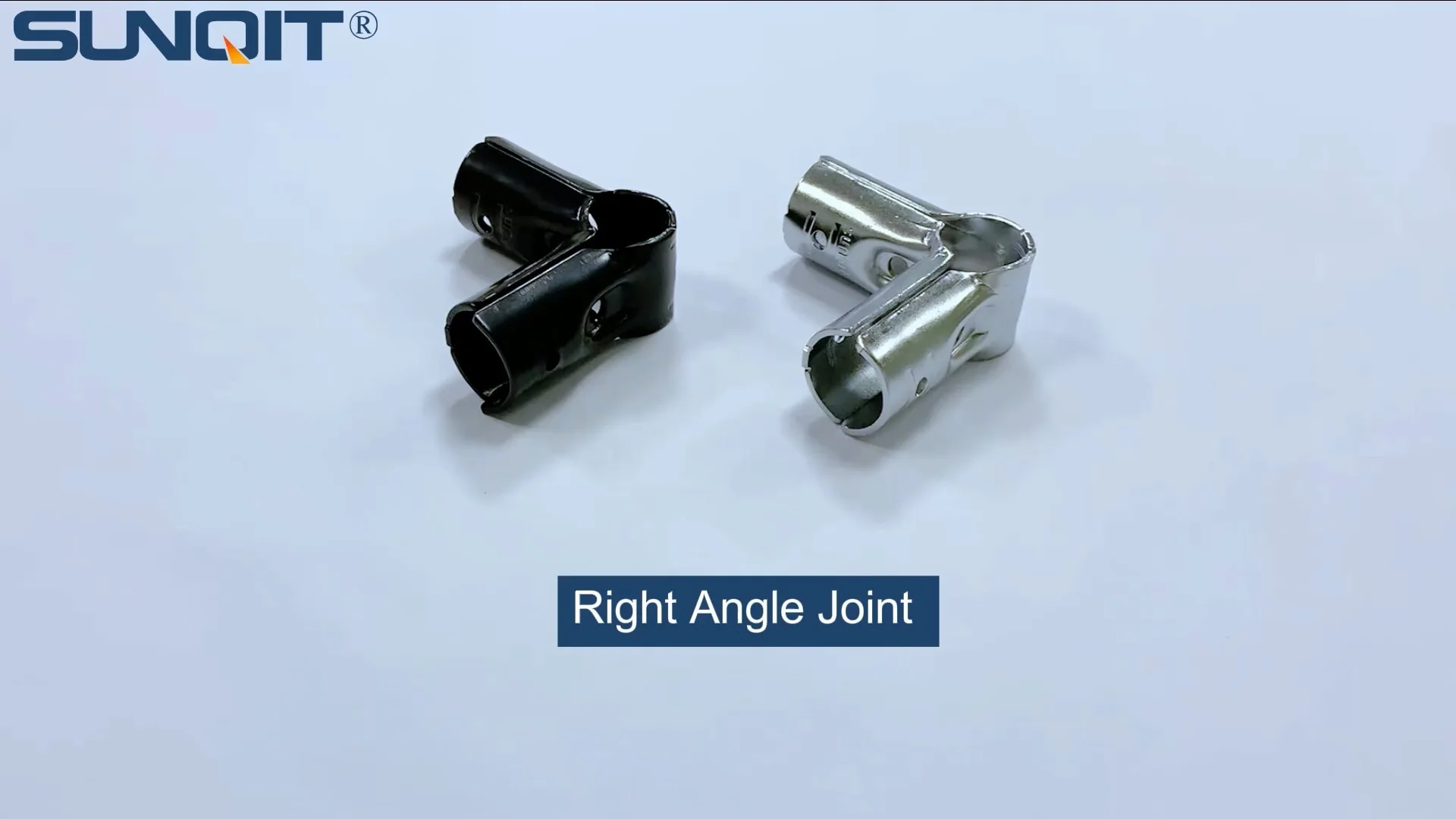
Three way lean pipe joint for 3 pcs 28MM lean pipe connection in straight angle, which used widely in workbench, flow rack, hand trolley frame connection.
Walk into any well-run manufacturing plant, warehouse, or assembly line, and you'll notice something subtle but powerful: everything has a place, and everything moves with purpose. There's no wasted space, no unnecessary steps, and no piles of materials gathering dust. This isn't magic—it's lean management in action. At the heart of this efficiency lies a network of physical tools: workbenches that adapt to tasks, flow racks that keep materials within arm's reach, and conveyors that carry products seamlessly from one station to the next. But what holds all these tools together? Often, it's the small, unassuming components that don't get the spotlight—like the three way lean pipe joint chrome.
In the world of lean systems, every part matters. A flimsy connector can throw off an entire workstation's stability; a misaligned joint can slow down material flow to a crawl. That's why choosing the right components isn't just about cost—it's about investing in the foundation of your operation's efficiency. Today, we're diving deep into one such component: the three way lean pipe joint chrome. We'll explore what makes it unique, how it plays well with other lean accessories, and why it's become a go-to choice for teams serious about building durable, flexible, and waste-free workspaces.
The Backbone of Lean Systems: Why Every Component Counts
Before we zoom in on the three way joint, let's take a step back and remember what lean management is all about. At its core, lean is a philosophy centered on
eliminating waste
—whether that's wasted time, wasted space, or wasted effort. To do that, lean operations rely on physical infrastructure that's
adaptable
(can change with shifting needs),
sturdy
(won't break down mid-task), and
connected
(components work together seamlessly).
Think about a typical workbench in a electronics factory. It needs to hold tools, circuit boards, and testing equipment—all while keeping the workspace organized. If the workbench is too rigid, workers might have to stretch or bend awkwardly to reach materials, wasting time and increasing fatigue. If it's too flimsy, it might wobble, risking damage to delicate components. Now, imagine that same workbench is part of a larger system: parts arrive via a flow rack on one side, get assembled on the bench, then move to a conveyor belt on the other side. For this to work, the workbench, flow rack, and conveyor must align perfectly—no gaps, no missteps.
This is where connectors like the three way lean pipe joint chrome come in. They're the "glue" that holds lean systems together, allowing teams to build custom setups without needing specialized tools or permanent installations. Unlike fixed metal frames or welded structures, lean pipe systems (often called "flexible pipe systems") use pipes and joints to create everything from workbenches to material racks—all of which can be disassembled, reconfigured, or expanded as needs change. And at the center of many of these configurations? The three way joint.
Meet the Three Way Lean Pipe Joint Chrome: A Closer Look
Let's start with the basics: What exactly is a three way lean pipe joint chrome? In simple terms, it's a small, usually metal component designed to connect three lean pipes at once. Picture a T-junction, but with three openings (or "ports") that allow pipes to intersect at 90-degree angles (or sometimes other angles, depending on the design). Its primary job? To create stable, secure connections between pipes, enabling the construction of multi-dimensional structures—like the corners of a workbench, the shelves of a flow rack, or the supports of a conveyor frame.
Design That Prioritizes Functionality
At first glance, the three way joint might seem simple, but its design is surprisingly thoughtful. Most models are made from a durable steel core, which is then coated in chrome—a process that adds both protection and a polished finish. The three ports are sized to fit standard lean pipe diameters (often 28mm or 30mm, though this can vary by supplier), with internal threading or a clamping mechanism that locks pipes in place. Some joints even have built-in set screws or levers, making it easy to tighten or loosen connections without welding or drilling.
Why three ports? Because lean systems rarely move in straight lines. A workbench, for example, needs vertical supports (legs), horizontal rails (to hold the tabletop), and maybe side rails (to attach tool holders or bins). A three way joint lets you connect all three directions in one spot, reducing the number of components needed and creating a cleaner, more stable structure. Without it, you'd need multiple two-way joints or angled brackets, which can add bulk and weaken the overall setup.
The Chrome Advantage: Durability Meets Longevity
Now, let's talk about that chrome coating. Why chrome? For starters, chrome is incredibly resistant to corrosion. In manufacturing environments—where spills, humidity, or chemicals might be present—this is a game-changer. A chrome-plated joint won't rust or degrade over time, even with daily exposure to moisture or oils. That means fewer replacements, less maintenance, and a longer lifespan for your entire lean system.
Chrome also adds a layer of hardness to the joint. Steel is strong, but chrome plating makes the surface more scratch-resistant and less likely to wear down from friction (like when pipes are inserted or adjusted). This is especially important in high-traffic areas, where joints might be bumped, moved, or reconfigured regularly. And let's not forget aesthetics: chrome gives the joint a sleek, professional look, which might seem minor, but can boost morale in a workspace. A clean, well-maintained area feels more intentional—and that can make workers feel more valued.
But durability isn't just about the coating. The best three way lean pipe joint chrome models are made from high-quality steel, with thick walls that can support heavy loads. A good rule of thumb: look for joints that can handle at least 50kg of weight per connection (though some heavy-duty models can support much more). This ensures that even when you stack materials on a flow rack or place heavy equipment on a workbench, the joints won't bend or fail.

Compatibility 101: How This Joint Plays Well with Others
A great joint is only as good as its ability to work with other lean accessories. After all, you don't just need to connect pipes—you need to connect pipes to workbenches, flow racks, conveyors, and more. The three way lean pipe joint chrome shines here, thanks to its versatile design and standard sizing. Let's break down how it pairs with some of the most common lean accessories.
1. Lean Pipe: The Foundation of Customization
Let's start with the obvious partner: lean pipe (also called "lean tube"). Lean pipes are the building blocks of flexible systems—hollow metal pipes (usually steel) that come in various lengths and diameters. They're lightweight, strong, and easy to cut to size, making them ideal for building custom structures. And the three way joint? It's designed specifically to work with these pipes.
Most three way joints are sized to fit standard lean pipe diameters (like 28mm), with a snug, friction-based fit that's reinforced by set screws. This means you can slide a pipe into each port, tighten the screws, and have a rock-solid connection in minutes—no welding, no drilling, no hassle. What's more, because the joint is chrome-plated (and the pipes are often powder-coated or galvanized), the two materials work well together, resisting corrosion even when in constant contact.
Example: Imagine you need to build a simple material rack for storing boxes in a warehouse. You could use 28mm lean pipes for the vertical supports and horizontal shelves, connecting them with three way joints at each corner. The joints would hold the vertical pipes (legs) and horizontal pipes (shelves) together, creating a sturdy, multi-level rack. If later you need to add a fourth shelf or widen the rack, you can simply loosen the joints, adjust the pipes, and retighten—no need to buy a whole new rack.
2. Workbenches: Building Stability from the Ground Up
Workbenches are the heart of many lean operations—where assembly, testing, or packaging happens. A good workbench needs to be stable (no wobbling), adjustable (height, width, or accessories), and durable (able to withstand daily use). The three way lean pipe joint chrome is a key player here, often used to build the frame of the workbench itself.
Let's take a common setup: a single-deck workbench without casters (sometimes called "Workbench E" in supplier catalogs). The frame might consist of four vertical pipes (legs), connected by horizontal pipes along the top (to support the tabletop) and bottom (for stability). At each corner, a three way joint would connect the vertical leg to the top and bottom horizontal pipes, creating a square or rectangular frame. Additional three way joints might be added along the sides to attach tool rails, bins, or overhead shelves.
What makes the three way joint so useful here? Stability. By connecting three pipes at once, it distributes weight evenly across the frame, preventing the workbench from leaning or twisting. And because the joint is adjustable, you can tweak the height of the workbench by adding or removing pipe sections—no need for custom-cut legs. For example, if a worker needs a taller bench to stand at, you could add a short pipe segment between the leg and the joint, raising the entire frame by a few inches.
Case Study: A Small Electronics Workshop Upgrades Its Workbenches
A local electronics repair shop was struggling with cluttered, fixed-height workbenches. Workers often had to hunch over to repair small circuit boards, leading to fatigue, and tools were scattered across the table, wasting time. The shop decided to switch to lean pipe workbenches using three way lean pipe joint chrome. They built frames with adjustable heights (using extra pipe segments and joints) and added side rails with tool hooks. Within a week, workers reported less back pain, and tool retrieval time dropped by 20%. Best of all, when the shop expanded to repair larger devices, they simply reconfigured the benches by loosening the joints and adding wider tabletop supports—no new workbenches needed.
A local electronics repair shop was struggling with cluttered, fixed-height workbenches. Workers often had to hunch over to repair small circuit boards, leading to fatigue, and tools were scattered across the table, wasting time. The shop decided to switch to lean pipe workbenches using three way lean pipe joint chrome. They built frames with adjustable heights (using extra pipe segments and joints) and added side rails with tool hooks. Within a week, workers reported less back pain, and tool retrieval time dropped by 20%. Best of all, when the shop expanded to repair larger devices, they simply reconfigured the benches by loosening the joints and adding wider tabletop supports—no new workbenches needed.
3. Flow Racks: Keeping Materials Moving Smoothly
Flow racks (also called "material racks") are another staple of lean operations. They're designed to hold materials (like boxes, bins, or parts) in a way that allows gravity to move them forward—so the next part is always ready, and workers don't have to reach or bend to grab what they need. A typical flow rack might have multiple levels (or "floors") and rows, with roller tracks (or "roller balls") that let materials glide smoothly. And to build these racks, you guessed it—three way joints are essential.
Let's say you're building a "Material Rack B" (a common model with 3 rows and 3 floors). The frame would need vertical supports, horizontal beams to separate the floors, and cross-braces for stability. Three way joints would connect the vertical supports to the horizontal beams at each corner, creating the skeleton of the rack. Then, along the horizontal beams, you'd attach roller tracks (like 1-inch swivel roller balls or plastic roller track guide rails) to create the "flow" surface. The joints ensure that the beams are level and secure, so the roller tracks don't sag—critical for keeping materials moving evenly.
One of the biggest advantages of using three way joints in flow racks is flexibility. If you need to add a fourth floor later, you can simply insert new vertical pipes and horizontal beams, connecting them with more three way joints. Or, if you switch to larger bins that need wider shelves, you can adjust the spacing between vertical supports by adding longer pipe segments. This adaptability is why lean operations love flow racks built with lean pipe and three way joints—they grow with your needs.
4. Conveyor Systems: Connecting the Dots in Material Flow
Conveyors are the arteries of many lean operations, moving products from one station to the next without manual lifting or carrying. While some conveyors are large, fixed systems, lean operations often use smaller, flexible conveyors built with lean pipe and roller tracks. And again, the three way lean pipe joint chrome plays a key role in supporting these setups.
For example, a small roller conveyor might consist of a frame (built with lean pipes and three way joints) and a series of roller tracks (like 40 steel roller track or aluminum guide rails) mounted on top. The joints connect the vertical legs of the frame to the horizontal supports that hold the roller tracks, ensuring the entire conveyor is level and stable. If the conveyor needs to turn a corner, three way joints can help create angled supports, keeping the roller tracks aligned smoothly.
What's special about using three way joints here? Precision. Conveyors rely on even spacing and alignment to prevent products from jamming or tipping. A misaligned roller track can bring an entire line to a halt. The three way joint's tight, adjustable fit ensures that every pipe and track is in the right place—no guesswork, no wobbly supports. And if you need to extend the conveyor later (say, to add a new assembly station), you can simply add more pipe sections and joints, matching the existing frame's height and alignment perfectly.

The Compatibility Table: How It Stacks Up Against Common Accessories
| Accessory Type | Compatibility Level | Key Benefit | Example Use Case |
|---|---|---|---|
| Lean Pipe (28mm/30mm) | Excellent | Snug, adjustable fit; no welding needed | Building workbench frames or vertical supports |
| Workbench Components (tabletops, tool rails) | Very Good | Stable base for attaching accessories; easy height adjustment | Adding side tool rails to a single-deck workbench |
| Flow Rack Shelves & Roller Tracks | Excellent | Even weight distribution; supports multi-level designs | Constructing a 3-row, 3-floor material rack with swivel roller balls |
| Conveyor Roller Tracks (steel/aluminum) | Very Good | Precise alignment; stable support for smooth material flow | Building a small roller conveyor for PCB assembly |
| Caster Wheels (for mobile setups) | Good | Can connect to pipe legs to add mobility; requires caster mounting plates | Turning a fixed workbench into a mobile trolley |
Beyond Compatibility: Maintenance and Longevity Tips
Now that we've covered how the three way lean pipe joint chrome works with other accessories, let's talk about keeping it (and your entire lean system) in top shape. Like any component, joints need a little care to last—and with proper maintenance, they can keep your lean system running smoothly for years.
Cleaning the Chrome Coating
Chrome is resistant to rust, but it can still get dirty—especially in dusty or oily environments. Wipe joints down regularly with a soft, damp cloth to remove grime. For stubborn spots, use a mild soap (avoid abrasive cleaners, which can scratch the chrome). Dry thoroughly afterward to prevent water spots.
Checking Tightness
Over time, the set screws on three way joints can loosen—especially if the structure is moved or bumped often. Every few months (or more frequently for high-use setups), give the joints a quick check: use a hex key (or the tool that came with the joint) to tighten any loose screws. This prevents pipes from slipping and keeps structures stable.
Replacing Worn Parts
Even the best joints can wear out eventually. If you notice cracks in the steel, peeling chrome, or screws that won't tighten, it's time to replace the joint. Don't wait— a damaged joint can compromise the entire structure, risking injury or damage to materials.
Choosing the Right Supplier: Why Quality Matters
Not all three way lean pipe joint chrome products are created equal. A cheap, poorly made joint might save you a few dollars upfront, but it could cost you in the long run—through frequent replacements, unstable structures, or even accidents. When shopping for joints, look for suppliers who:
-
Use high-quality materials:
Steel cores with thick walls (at least 1.5mm) and genuine chrome plating (not just a paint finish).
- Test for durability: Suppliers who can provide load capacity ratings or certification (like ISO standards) are more likely to deliver reliable products.
- Offer a range of sizes: Ensure the joint fits your lean pipe diameter (most commonly 28mm or 30mm).
- Have good customer reviews: Look for feedback from other lean operations—did the joints hold up over time? Was customer service helpful?
- Test for durability: Suppliers who can provide load capacity ratings or certification (like ISO standards) are more likely to deliver reliable products.
- Offer a range of sizes: Ensure the joint fits your lean pipe diameter (most commonly 28mm or 30mm).
- Have good customer reviews: Look for feedback from other lean operations—did the joints hold up over time? Was customer service helpful?
Remember, your lean system is only as strong as its weakest component. Investing in quality three way joints is an investment in efficiency, safety, and peace of mind.
Conclusion: Small Joint, Big Impact
The three way lean pipe joint chrome might not be the most glamorous part of a lean system, but it's undeniably one of the most important. It's the quiet workhorse that turns simple pipes into custom workbenches, flow racks, and conveyors—all of which are designed to make work easier, faster, and more efficient. Its compatibility with lean pipe, workbenches, flow racks, and conveyors makes it a versatile tool for any lean operation, while its chrome coating ensures it can stand up to the demands of busy factories and warehouses.
So the next time you walk through a lean workspace, take a moment to look at the joints holding everything together. Chances are, you'll spot a three way lean pipe joint chrome—and now you'll know just how much work it's doing behind the scenes. Because in lean management, the smallest components often make the biggest difference.