- Company Articles
- Products and Technology
- Product knowledge
- Three Way Lean Pipe Joint Chrome: Flexibility in Reconfigurable Production Lines

Three Way Lean Pipe Joint Chrome: Flexibility in Reconfigurable Production Lines
Related Product
Three Way Lean Pipe Joint Chrome
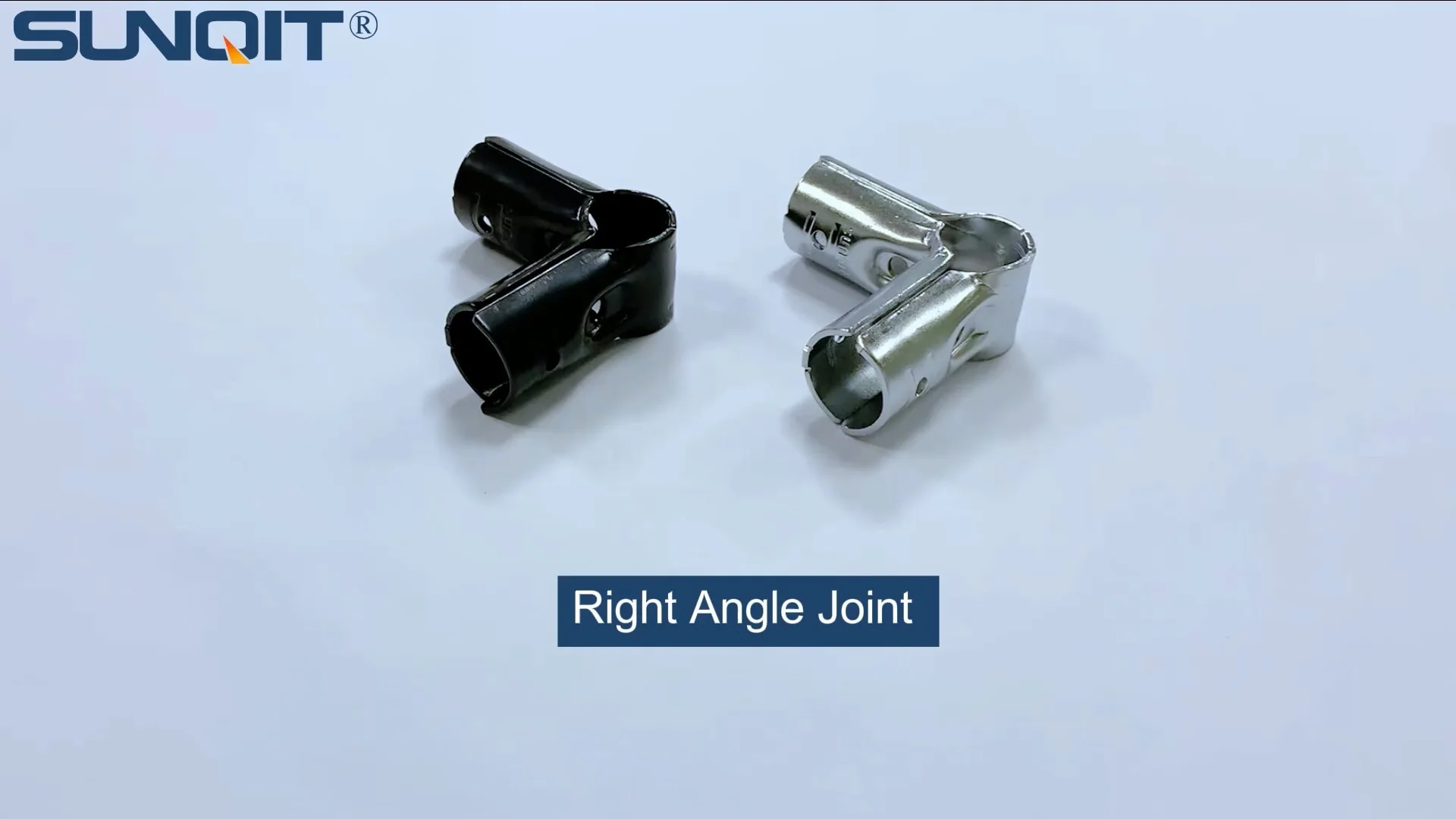
Three way lean pipe joint for 3 pcs 28MM lean pipe connection in straight angle, which used widely in workbench, flow rack, hand trolley frame connection.
The Shifting Landscape of Modern Manufacturing
Walk into any manufacturing facility today, and you'll likely notice a stark difference from a decade ago. The hum of assembly lines remains, but the rigidity of fixed workstations and welded steel frames is fading. In its place, there's a quiet adaptability—lines that reconfigure overnight for a new product, workbenches that expand or shrink with demand, and material racks that shift to accommodate seasonal inventory. This transformation isn't just about keeping up with trends; it's about survival. In an era of short product lifecycles, mass customization, and unpredictable market swings, manufacturers can no longer afford to be tied to inflexible infrastructure. The key to staying competitive lies in one word: flexibility. And at the heart of that flexibility? Often, it's the small, unassuming components that hold everything together—like the three way lean pipe joint chrome.
For years, the manufacturing industry operated on a "set it and forget it" model. A production line was built, optimized for a specific product, and expected to run for years, if not decades. But today, that model is obsolete. Consider the electronics sector, where a new smartphone model renders its predecessor's assembly line irrelevant in months. Or the automotive industry, where electric vehicles demand entirely different production flows than gas-powered cars. Even consumer goods, from apparel to home appliances, now require frequent line adjustments to meet shifting consumer preferences. In this environment, the ability to reconfigure a production line quickly isn't a luxury—it's a necessity. And that's where lean systems come into play, offering a framework for efficiency, waste reduction, and, crucially, adaptability.
Lean systems, rooted in the Toyota Production System's principles of "just-in-time" production and continuous improvement, have long been celebrated for their ability to eliminate waste. But what many overlook is that lean isn't just a philosophy; it's a physical ecosystem built on modular, reusable tools. At the core of this ecosystem are lean pipes—lightweight, durable tubes—and the joints that connect them. These unassuming components are the building blocks of reconfigurable production lines, and among them, the three way lean pipe joint chrome stands out as a workhorse, enabling the kind of flexibility modern manufacturers crave.
For years, the manufacturing industry operated on a "set it and forget it" model. A production line was built, optimized for a specific product, and expected to run for years, if not decades. But today, that model is obsolete. Consider the electronics sector, where a new smartphone model renders its predecessor's assembly line irrelevant in months. Or the automotive industry, where electric vehicles demand entirely different production flows than gas-powered cars. Even consumer goods, from apparel to home appliances, now require frequent line adjustments to meet shifting consumer preferences. In this environment, the ability to reconfigure a production line quickly isn't a luxury—it's a necessity. And that's where lean systems come into play, offering a framework for efficiency, waste reduction, and, crucially, adaptability.
Lean systems, rooted in the Toyota Production System's principles of "just-in-time" production and continuous improvement, have long been celebrated for their ability to eliminate waste. But what many overlook is that lean isn't just a philosophy; it's a physical ecosystem built on modular, reusable tools. At the core of this ecosystem are lean pipes—lightweight, durable tubes—and the joints that connect them. These unassuming components are the building blocks of reconfigurable production lines, and among them, the three way lean pipe joint chrome stands out as a workhorse, enabling the kind of flexibility modern manufacturers crave.
Understanding Lean Systems: More Than Just a Philosophy
Before diving into the specifics of the three way lean pipe joint chrome, it's important to ground ourselves in what a lean system truly is. Too often, lean is reduced to buzzwords like "kaizen" or "5S," but at its core, it's a holistic approach to creating value by minimizing waste. Developed in the 1950s by Toyota, the system was born from the need to do more with less—less space, less inventory, less time. Today, its principles (value, value stream, flow, pull, and perfection) guide everything from factory floors to supply chains. But here's the critical point: lean can't exist in the abstract. To turn its principles into action, manufacturers need tangible tools that embody its ethos. And that's where lean pipe systems shine.
A lean pipe system is exactly what it sounds like: a modular structure built using lightweight pipes (typically 28mm in diameter) and connecting joints. These systems can be configured into workbenches, flow racks, material trolleys, assembly lines, and more. Unlike traditional welded steel structures, they're designed to be assembled, disassembled, and reconfigured with minimal effort. This modularity aligns perfectly with lean's focus on "flow"—ensuring materials and products move through the production process without unnecessary delays—and "pull," where production is driven by customer demand rather than forecasts. When demand changes, the system changes with it.
But a lean system is only as flexible as its components. Pipes provide the structure, but joints are the unsung heroes that enable reconfiguration. They're the reason a workbench can be extended by adding a few pipes and joints overnight, or a flow rack can be repurposed to hold larger parts next month. And among the many types of joints available—two-way, four-way, swivel, fixed—the three way lean pipe joint chrome is particularly versatile. Its ability to connect three pipes at once opens up a world of configurations, making it indispensable for building complex yet adaptable structures.
A lean pipe system is exactly what it sounds like: a modular structure built using lightweight pipes (typically 28mm in diameter) and connecting joints. These systems can be configured into workbenches, flow racks, material trolleys, assembly lines, and more. Unlike traditional welded steel structures, they're designed to be assembled, disassembled, and reconfigured with minimal effort. This modularity aligns perfectly with lean's focus on "flow"—ensuring materials and products move through the production process without unnecessary delays—and "pull," where production is driven by customer demand rather than forecasts. When demand changes, the system changes with it.
But a lean system is only as flexible as its components. Pipes provide the structure, but joints are the unsung heroes that enable reconfiguration. They're the reason a workbench can be extended by adding a few pipes and joints overnight, or a flow rack can be repurposed to hold larger parts next month. And among the many types of joints available—two-way, four-way, swivel, fixed—the three way lean pipe joint chrome is particularly versatile. Its ability to connect three pipes at once opens up a world of configurations, making it indispensable for building complex yet adaptable structures.

Why Flexibility Matters: The Cost of Rigidity
To appreciate the value of the three way lean pipe joint chrome, let's first consider the cost of rigidity. Imagine a mid-sized electronics manufacturer that produces smart home devices. Six months ago, they invested in a custom welded steel workbench for assembling their best-selling smart speaker. Today, they've launched a new, larger smart display that requires more workspace and different tool placement. The old workbench is too small, and modifying it would mean cutting and rewelding steel—a process that takes days, costs thousands of dollars, and halts production. In contrast, a lean pipe workbench built with three way joints could be reconfigured in hours: add a few extension pipes, adjust the shelf height, and lock everything into place with new joints. The difference? Days of downtime vs. a single evening of retooling.
Rigidity also hurts in less obvious ways. Fixed structures often lead to "workaround waste"—employees adding temporary shelves, stacking boxes on the floor, or walking extra steps because the existing layout doesn't support the current workflow. Over time, these inefficiencies add up. A study by the Lean Enterprise Institute found that companies with rigid production lines spend up to 30% more on labor and material handling than those with flexible systems. And when demand drops, fixed infrastructure becomes a liability—you can't shrink a welded frame, so you're stuck paying for space and equipment you don't use.
Reconfigurable systems, by contrast, turn these challenges into opportunities. They allow manufacturers to:
- Scale up or down quickly: Add workstations during peak seasons and disassemble them when demand wanes.
- Customize on the fly: Adjust workbench heights for ergonomic needs, or reposition roller tracks to speed up material flow.
- Test new layouts: Experiment with production flows without committing to permanent changes.
- Reduce waste: Eliminate the need for storage of redundant fixed equipment—joints and pipes can be reused in new configurations.
The three way lean pipe joint chrome is a linchpin of this flexibility. By enabling connections between three pipes, it simplifies the creation of multi-angled structures—think of a T-shaped workbench with a side shelf, or a flow rack with vertical supports and horizontal roller tracks. Without it, building such structures would require multiple two-way joints, increasing complexity and weakening the overall stability. With it, manufacturers can build smarter, stronger, and more adaptable systems.
Rigidity also hurts in less obvious ways. Fixed structures often lead to "workaround waste"—employees adding temporary shelves, stacking boxes on the floor, or walking extra steps because the existing layout doesn't support the current workflow. Over time, these inefficiencies add up. A study by the Lean Enterprise Institute found that companies with rigid production lines spend up to 30% more on labor and material handling than those with flexible systems. And when demand drops, fixed infrastructure becomes a liability—you can't shrink a welded frame, so you're stuck paying for space and equipment you don't use.
Reconfigurable systems, by contrast, turn these challenges into opportunities. They allow manufacturers to:
- Scale up or down quickly: Add workstations during peak seasons and disassemble them when demand wanes.
- Customize on the fly: Adjust workbench heights for ergonomic needs, or reposition roller tracks to speed up material flow.
- Test new layouts: Experiment with production flows without committing to permanent changes.
- Reduce waste: Eliminate the need for storage of redundant fixed equipment—joints and pipes can be reused in new configurations.
The three way lean pipe joint chrome is a linchpin of this flexibility. By enabling connections between three pipes, it simplifies the creation of multi-angled structures—think of a T-shaped workbench with a side shelf, or a flow rack with vertical supports and horizontal roller tracks. Without it, building such structures would require multiple two-way joints, increasing complexity and weakening the overall stability. With it, manufacturers can build smarter, stronger, and more adaptable systems.

Meet the Three Way Lean Pipe Joint Chrome: Design and Functionality
So, what exactly is a three way lean pipe joint chrome? At first glance, it's a small, cylindrical component, roughly the size of a tennis ball, with three openings spaced evenly around its body. But its simplicity is deceptive. Let's break down its design and why it works so well.
Material and Durability: Most three way lean pipe joints are made from high-grade steel, then chrome-plated for added durability. Chrome plating serves two key purposes: it resists corrosion, making the joint suitable for humid or dusty factory environments, and it reduces friction, making assembly and disassembly smoother. Unlike plastic joints, which can crack under heavy loads, or unplated steel joints, which rust over time, chrome-plated steel joints are built to last. A well-maintained three way lean pipe joint chrome can withstand years of repeated assembly, disassembly, and heavy use—critical for manufacturers who rely on their systems to handle daily wear and tear.
Design for Versatility: The three openings in the joint are typically sized to fit standard lean pipes, which are usually 28mm (1.1 inches) in diameter—the industry standard for lean systems. What sets the three way joint apart is its ability to connect pipes at various angles. While some joints are fixed (e.g., a 90-degree two-way joint), many three way joints are swivel-capable, allowing pipes to be positioned at 30°, 45°, 90°, or any angle in between. This flexibility means the same joint can be used to build a T-shaped shelf, a Y-shaped support beam, or a diagonal brace for added stability.
Tool-Free Assembly: Perhaps the most user-friendly feature of the three way lean pipe joint chrome is its tool-free (or minimal-tool) assembly. Unlike welded joints, which require specialized equipment and skills, these joints use a simple locking mechanism—often a hex bolt or a cam lever. To attach a pipe, you insert it into the joint, tighten the bolt with a wrench (or even just a screwdriver for lever-style joints), and the joint's internal grip tightens around the pipe, creating a secure hold. Disassembly is just as easy: loosen the bolt, pull out the pipe, and reuse the joint elsewhere. This simplicity is a game-changer for manufacturers with limited maintenance staff or tight deadlines.
Compatibility: The three way lean pipe joint chrome isn't a one-trick pony. It works seamlessly with other lean system components, from standard steel lean pipes to aluminum profile accessories and roller track systems. Want to add a roller track to a flow rack? Connect the track's support pipes using three way joints. Need to mount a tool holder to a workbench? Use a three way joint to create a sturdy overhang. This compatibility ensures that manufacturers aren't locked into a single brand or system—they can mix and match components to suit their needs.
Material and Durability: Most three way lean pipe joints are made from high-grade steel, then chrome-plated for added durability. Chrome plating serves two key purposes: it resists corrosion, making the joint suitable for humid or dusty factory environments, and it reduces friction, making assembly and disassembly smoother. Unlike plastic joints, which can crack under heavy loads, or unplated steel joints, which rust over time, chrome-plated steel joints are built to last. A well-maintained three way lean pipe joint chrome can withstand years of repeated assembly, disassembly, and heavy use—critical for manufacturers who rely on their systems to handle daily wear and tear.
Design for Versatility: The three openings in the joint are typically sized to fit standard lean pipes, which are usually 28mm (1.1 inches) in diameter—the industry standard for lean systems. What sets the three way joint apart is its ability to connect pipes at various angles. While some joints are fixed (e.g., a 90-degree two-way joint), many three way joints are swivel-capable, allowing pipes to be positioned at 30°, 45°, 90°, or any angle in between. This flexibility means the same joint can be used to build a T-shaped shelf, a Y-shaped support beam, or a diagonal brace for added stability.
Tool-Free Assembly: Perhaps the most user-friendly feature of the three way lean pipe joint chrome is its tool-free (or minimal-tool) assembly. Unlike welded joints, which require specialized equipment and skills, these joints use a simple locking mechanism—often a hex bolt or a cam lever. To attach a pipe, you insert it into the joint, tighten the bolt with a wrench (or even just a screwdriver for lever-style joints), and the joint's internal grip tightens around the pipe, creating a secure hold. Disassembly is just as easy: loosen the bolt, pull out the pipe, and reuse the joint elsewhere. This simplicity is a game-changer for manufacturers with limited maintenance staff or tight deadlines.
Compatibility: The three way lean pipe joint chrome isn't a one-trick pony. It works seamlessly with other lean system components, from standard steel lean pipes to aluminum profile accessories and roller track systems. Want to add a roller track to a flow rack? Connect the track's support pipes using three way joints. Need to mount a tool holder to a workbench? Use a three way joint to create a sturdy overhang. This compatibility ensures that manufacturers aren't locked into a single brand or system—they can mix and match components to suit their needs.
Benefits of the Three Way Lean Pipe Joint Chrome: Beyond Flexibility
While flexibility is the three way lean pipe joint chrome's biggest selling point, its benefits extend far beyond reconfigurability. Let's explore how it adds value to lean systems in tangible ways:
Durability That Reduces Long-Term Costs: Chrome plating isn't just about shine—it's about longevity. In a factory setting, joints are exposed to oils, coolants, dust, and occasional impacts. Unplated steel joints rust; plastic joints degrade. Chrome-plated steel resists all of these, meaning fewer replacements over time. A manufacturer might pay slightly more for a chrome joint upfront than a plastic one, but over five years, the savings from not replacing corroded or broken joints add up significantly.
Strength for Heavy-Duty Applications: Lean systems aren't just for light assembly. They're used in automotive plants to hold engines, in warehouses to store heavy parts, and in distribution centers to support conveyor systems. The three way lean pipe joint chrome, made from high-strength steel, can handle these loads. Most models are rated to support up to 500kg per joint when properly installed—more than enough for even heavy workbenches or material racks. This strength gives manufacturers confidence that their systems won't fail under stress.
Ease of Use That Empowers Teams: One of lean's core principles is empowering frontline workers to identify and solve problems. If reconfiguring a workbench requires calling in a maintenance team with welding equipment, employees are less likely to suggest improvements. But with three way joints, any team member can adjust the layout—no special training needed. This democratization of reconfiguration leads to more frequent optimizations, as workers tailor their spaces to their needs. A line operator might notice that moving a shelf up by 10cm reduces bending; with a few joints and pipes, they can make that change before their next shift.
Consistency Across Systems: Standardization is key to lean manufacturing. When all joints fit the same pipes and use the same locking mechanism, there's no guesswork. A three way lean pipe joint chrome from one supplier works with pipes from another, and the tools needed to tighten them (a hex wrench, for example) are universal. This consistency reduces errors, speeds up assembly, and makes it easier to train new staff. It also means manufacturers can source components from multiple suppliers, avoiding supply chain bottlenecks.
Durability That Reduces Long-Term Costs: Chrome plating isn't just about shine—it's about longevity. In a factory setting, joints are exposed to oils, coolants, dust, and occasional impacts. Unplated steel joints rust; plastic joints degrade. Chrome-plated steel resists all of these, meaning fewer replacements over time. A manufacturer might pay slightly more for a chrome joint upfront than a plastic one, but over five years, the savings from not replacing corroded or broken joints add up significantly.
Strength for Heavy-Duty Applications: Lean systems aren't just for light assembly. They're used in automotive plants to hold engines, in warehouses to store heavy parts, and in distribution centers to support conveyor systems. The three way lean pipe joint chrome, made from high-strength steel, can handle these loads. Most models are rated to support up to 500kg per joint when properly installed—more than enough for even heavy workbenches or material racks. This strength gives manufacturers confidence that their systems won't fail under stress.
Ease of Use That Empowers Teams: One of lean's core principles is empowering frontline workers to identify and solve problems. If reconfiguring a workbench requires calling in a maintenance team with welding equipment, employees are less likely to suggest improvements. But with three way joints, any team member can adjust the layout—no special training needed. This democratization of reconfiguration leads to more frequent optimizations, as workers tailor their spaces to their needs. A line operator might notice that moving a shelf up by 10cm reduces bending; with a few joints and pipes, they can make that change before their next shift.
Consistency Across Systems: Standardization is key to lean manufacturing. When all joints fit the same pipes and use the same locking mechanism, there's no guesswork. A three way lean pipe joint chrome from one supplier works with pipes from another, and the tools needed to tighten them (a hex wrench, for example) are universal. This consistency reduces errors, speeds up assembly, and makes it easier to train new staff. It also means manufacturers can source components from multiple suppliers, avoiding supply chain bottlenecks.
Real-World Applications: How Manufacturers Use Three Way Joints
To see the three way lean pipe joint chrome in action, let's look at some common applications across industries:
1. Lean Pipe Workbenches with Customizable Layouts Workbenches are the backbone of any assembly line, and their design directly impacts productivity. A typical lean pipe workbench might start as a simple rectangle, but with three way joints, it can evolve into a multi-functional station. For example, a electronics manufacturer assembling circuit boards might add a side shelf using three way joints to hold tools, a overhead rack for component bins, and a lower shelf for finished products—all in one structure. When the next product requires more table space, the side shelf can be removed, and the overhead rack repositioned, all by reconfiguring the joints.
2. Flow Racks for Just-In-Time Material Delivery Flow racks are essential for "kanban" systems, where materials are delivered to the line exactly when needed. They use gravity or roller tracks to feed parts to workers, reducing the need for manual handling. Building a flow rack with three way joints allows for adjustable shelf heights and widths. For instance, a automotive parts supplier might use three way joints to connect vertical support pipes to horizontal roller tracks, creating a rack with three levels. If they start producing larger parts, they can remove a level, adjust the remaining tracks with new joints, and the rack is ready in hours.
3. Material Handling Trolleys for Flexible Transport Trolleys are critical for moving materials between stations, but their size and capacity need to change with the load. A three way joint makes it easy to build a trolley that expands: add a few cross-pipes and joints, and suddenly it can carry larger bins. Some manufacturers even build "convertible" trolleys—during the day, they're used to transport parts; at night, they're disassembled into pipe sections and stored, freeing up floor space.
4. Assembly Line Cells for Mixed-Model Production Mixed-model production—building multiple product variants on the same line—is a hallmark of modern manufacturing. To do this, lines need cells that can switch between products quickly. Three way joints enable the creation of modular cells: a base frame with interchangeable work surfaces, tool holders, and material racks. When switching from Product A to Product B, workers swap out the surfaces and reposition the racks using joints, rather than rebuilding the entire cell.
1. Lean Pipe Workbenches with Customizable Layouts Workbenches are the backbone of any assembly line, and their design directly impacts productivity. A typical lean pipe workbench might start as a simple rectangle, but with three way joints, it can evolve into a multi-functional station. For example, a electronics manufacturer assembling circuit boards might add a side shelf using three way joints to hold tools, a overhead rack for component bins, and a lower shelf for finished products—all in one structure. When the next product requires more table space, the side shelf can be removed, and the overhead rack repositioned, all by reconfiguring the joints.
2. Flow Racks for Just-In-Time Material Delivery Flow racks are essential for "kanban" systems, where materials are delivered to the line exactly when needed. They use gravity or roller tracks to feed parts to workers, reducing the need for manual handling. Building a flow rack with three way joints allows for adjustable shelf heights and widths. For instance, a automotive parts supplier might use three way joints to connect vertical support pipes to horizontal roller tracks, creating a rack with three levels. If they start producing larger parts, they can remove a level, adjust the remaining tracks with new joints, and the rack is ready in hours.
3. Material Handling Trolleys for Flexible Transport Trolleys are critical for moving materials between stations, but their size and capacity need to change with the load. A three way joint makes it easy to build a trolley that expands: add a few cross-pipes and joints, and suddenly it can carry larger bins. Some manufacturers even build "convertible" trolleys—during the day, they're used to transport parts; at night, they're disassembled into pipe sections and stored, freeing up floor space.
4. Assembly Line Cells for Mixed-Model Production Mixed-model production—building multiple product variants on the same line—is a hallmark of modern manufacturing. To do this, lines need cells that can switch between products quickly. Three way joints enable the creation of modular cells: a base frame with interchangeable work surfaces, tool holders, and material racks. When switching from Product A to Product B, workers swap out the surfaces and reposition the racks using joints, rather than rebuilding the entire cell.
Comparing Joints: Why Three Way Chrome Stands Out
The three way lean pipe joint chrome isn't the only joint on the market. Let's compare it to other common types to see why it's often the top choice for reconfigurable systems:
The table tells a clear story: while other joints have their uses, the three way lean pipe joint chrome strikes the perfect balance of versatility, strength, and durability. It's not the cheapest option, but it's the most cost-effective over time—especially for manufacturers that value adaptability.
| Joint Type | Number of Connections | Material | Key Use Case | Limitations vs. Three Way Chrome |
|---|---|---|---|---|
| Two-Way Fixed Joint | 2 | Steel/Plastic | Straight lines or 90° corners | Can't connect three pipes; requires multiple joints for complex structures |
| Four-Way Cross Joint | 4 | Steel | Grid-like structures (e.g., shelving units) | Bulkier; harder to use in tight spaces; overkill for most three-pipe connections |
| Plastic Swivel Joint | 2-3 | Polypropylene | Light-duty assembly (e.g., small parts sorting) | Not durable for heavy loads; degrades in harsh environments |
| Three Way Lean Pipe Joint Chrome | 3 | Chrome-Plated Steel | Complex, adaptable structures (workbenches, flow racks, trolleys) | Slightly higher cost than plastic; minimal limitations for most lean applications |
The table tells a clear story: while other joints have their uses, the three way lean pipe joint chrome strikes the perfect balance of versatility, strength, and durability. It's not the cheapest option, but it's the most cost-effective over time—especially for manufacturers that value adaptability.
Case Study: How a Medical Device Manufacturer Cut Downtime by 75% with Three Way Joints
To put the three way lean pipe joint chrome's impact into perspective, let's look at a real-world example. A mid-sized medical device manufacturer in the Midwest produces surgical instruments and diagnostic tools. Three years ago, their production lines were a mix of welded steel workbenches and fixed material racks. When they launched a new line of minimally invasive surgical tools—smaller, more delicate, and requiring specialized assembly—they faced a problem: the existing workbenches were too large, and the racks couldn't hold the new, smaller component bins.
Their first solution? Hire a contractor to cut and reweld the workbenches. The process took three days, cost $12,000, and forced them to shift production to a backup line, which slowed output by 50%. Six months later, they introduced another new tool, and the cycle repeated. Frustrated, they turned to lean systems, investing in a set of lean pipes and three way lean pipe joint chrome.
The results were immediate. Their new lean pipe workbench, built with three way joints, could be reconfigured in-house. When the next product launch came, the team disassembled the old layout, added extension pipes for the new tool's larger assembly area, and reconnected everything with new three way joints—all in four hours, with no contractor costs. Downtime dropped from three days to half a shift. Over two years, they estimate the joints saved them $85,000 in contractor fees and lost production alone.
But the benefits went beyond cost. Employees, now empowered to adjust their workbenches, began suggesting improvements: raising shelves to reduce bending, adding side racks for frequently used tools, and angling roller tracks to speed up material flow. Productivity increased by 15%, and employee satisfaction scores rose—proof that flexibility isn't just good for the bottom line; it's good for people too.
Their first solution? Hire a contractor to cut and reweld the workbenches. The process took three days, cost $12,000, and forced them to shift production to a backup line, which slowed output by 50%. Six months later, they introduced another new tool, and the cycle repeated. Frustrated, they turned to lean systems, investing in a set of lean pipes and three way lean pipe joint chrome.
The results were immediate. Their new lean pipe workbench, built with three way joints, could be reconfigured in-house. When the next product launch came, the team disassembled the old layout, added extension pipes for the new tool's larger assembly area, and reconnected everything with new three way joints—all in four hours, with no contractor costs. Downtime dropped from three days to half a shift. Over two years, they estimate the joints saved them $85,000 in contractor fees and lost production alone.
But the benefits went beyond cost. Employees, now empowered to adjust their workbenches, began suggesting improvements: raising shelves to reduce bending, adding side racks for frequently used tools, and angling roller tracks to speed up material flow. Productivity increased by 15%, and employee satisfaction scores rose—proof that flexibility isn't just good for the bottom line; it's good for people too.
The Future of Manufacturing: Adaptability as Standard
As manufacturing continues to evolve, one thing is clear: adaptability will no longer be a competitive advantage—it will be a requirement. The rise of Industry 4.0, with its smart factories and connected systems, only amplifies this need. Smart sensors and AI can optimize production flows, but they can't reconfigure a welded steel workbench. That still requires human ingenuity—and the right tools.
The three way lean pipe joint chrome, while simple, is a cornerstone of this adaptive future. It embodies the lean principle of "perfection"—the idea that systems should always be improving. With each reconfiguration, each new joint added, the system gets better, more aligned with value, and more responsive to change. It's a small part, but it's a reminder that innovation in manufacturing often happens at the component level.
Looking ahead, we can expect even more advances in lean system components. Joints may integrate with smart sensors to monitor load levels or wear, alerting maintenance teams before failure. Materials may become lighter but stronger, further reducing setup time. But the core value of the three way lean pipe joint chrome—its ability to connect, adapt, and endure—will remain. Because no matter how smart factories get, they'll still need to change. And change requires flexibility.
The three way lean pipe joint chrome, while simple, is a cornerstone of this adaptive future. It embodies the lean principle of "perfection"—the idea that systems should always be improving. With each reconfiguration, each new joint added, the system gets better, more aligned with value, and more responsive to change. It's a small part, but it's a reminder that innovation in manufacturing often happens at the component level.
Looking ahead, we can expect even more advances in lean system components. Joints may integrate with smart sensors to monitor load levels or wear, alerting maintenance teams before failure. Materials may become lighter but stronger, further reducing setup time. But the core value of the three way lean pipe joint chrome—its ability to connect, adapt, and endure—will remain. Because no matter how smart factories get, they'll still need to change. And change requires flexibility.
Conclusion: The Joint That Keeps Manufacturing Moving
In the grand scheme of manufacturing, the three way lean pipe joint chrome is easy to overlook. It's not as flashy as a robotic arm or as high-tech as a 3D printer. But without it, the flexible, adaptable production lines of today wouldn't exist. It's a testament to the power of simplicity: a well-designed, durable component that solves a critical problem—how to build systems that can keep up with a changing world.
For manufacturers, the message is clear: flexibility isn't optional. And when building a flexible system, the choice of joints matters. The three way lean pipe joint chrome offers the durability to last, the strength to perform, and the versatility to adapt. It's an investment in the future—one that pays dividends every time the market shifts, a new product launches, or a team finds a better way to work.
So the next time you walk through a manufacturing facility and see a workbench that seems to "fit" perfectly, or a flow rack that looks like it was built just for the parts on it, take a closer look. Chances are, there's a three way lean pipe joint chrome holding it all together—quietly, reliably, and ready for whatever comes next.
For manufacturers, the message is clear: flexibility isn't optional. And when building a flexible system, the choice of joints matters. The three way lean pipe joint chrome offers the durability to last, the strength to perform, and the versatility to adapt. It's an investment in the future—one that pays dividends every time the market shifts, a new product launches, or a team finds a better way to work.
So the next time you walk through a manufacturing facility and see a workbench that seems to "fit" perfectly, or a flow rack that looks like it was built just for the parts on it, take a closer look. Chances are, there's a three way lean pipe joint chrome holding it all together—quietly, reliably, and ready for whatever comes next.