- Company Articles
- Products and Technology
- Product knowledge
- Three Way Lean Pipe Joint Chrome for Heavy-Duty Material Racks: What to Consider

Three Way Lean Pipe Joint Chrome for Heavy-Duty Material Racks: What to Consider
Related Product
Three Way Lean Pipe Joint Chrome
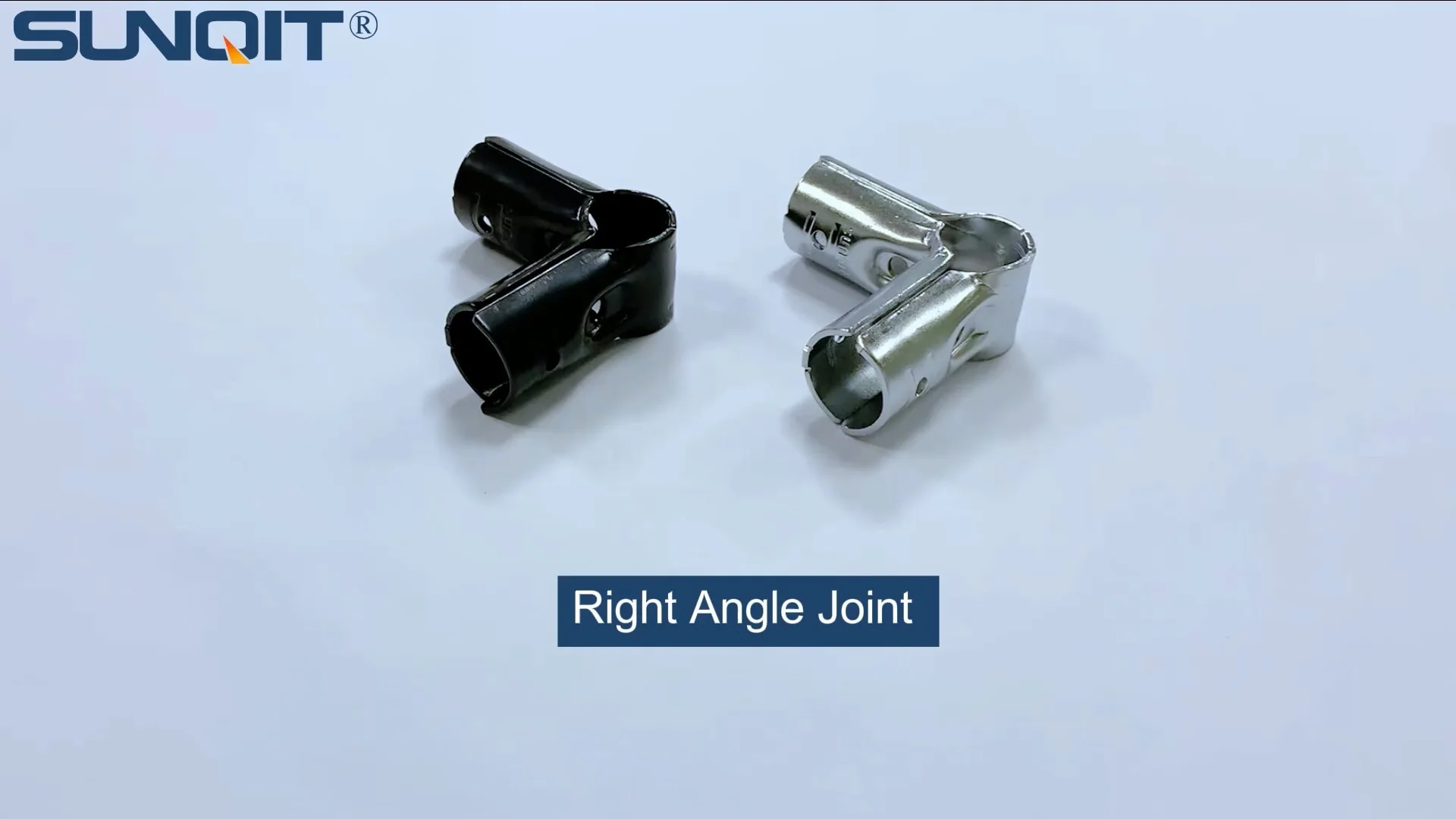
Three way lean pipe joint for 3 pcs 28MM lean pipe connection in straight angle, which used widely in workbench, flow rack, hand trolley frame connection.
Introduction: The Backbone of Heavy-Duty Material Racks
Walk into any busy warehouse, manufacturing plant, or distribution center, and you'll likely spot rows of material racks standing tall, holding everything from raw components to finished products. These racks aren't just metal structures—they're the unsung heroes of efficient operations, keeping spaces organized, products accessible, and workflows moving. But what makes a material rack truly reliable, especially when it's tasked with supporting heavy loads day in and day out? The answer often lies in the smallest, yet most critical, components: the joints that hold everything together.
For heavy-duty applications, where racks might bear hundreds of kilograms of weight or withstand constant movement of goods, choosing the right joint isn't just a matter of convenience—it's a safety and efficiency imperative. Enter the
three way lean pipe joint chrome
: a specialized component designed to connect lean pipes at multiple angles, providing the stability and strength needed for robust material handling systems. Whether you're building a multi-tiered storage rack, a custom workbench, or a dynamic flow rack, this joint plays a pivotal role in ensuring your structure can handle the demands of your operation.
In this article, we'll dive deep into what makes the three way lean pipe joint chrome a standout choice for heavy-duty material racks. More importantly, we'll break down the key factors you need to consider when selecting and using these joints—from load capacity to supplier reliability—to ensure your racks are not just functional, but built to last. Because when it comes to material handling, cutting corners on components like joints can lead to wobbly racks, damaged inventory, or worse, safety hazards. Let's get started.
Understanding the Three Way Lean Pipe Joint Chrome: What Sets It Apart?
Before we jump into considerations, let's make sure we're all on the same page about what a three way lean pipe joint chrome actually is. At its core, it's a connector designed to join three lean pipes (or "lean tubes") at a single point, typically forming a T-shape or Y-shape. This design allows for the creation of multi-directional structures—think the corners of a rack, the junctions of a workbench frame, or the supports of a flow rack where items slide from one level to another.
What makes the "chrome" version special? Chrome plating isn't just for aesthetics (though it does give the joint a sleek, professional look). Chrome adds a layer of protection to the underlying metal (usually steel), making the joint highly resistant to corrosion, rust, and wear. This is a game-changer in environments where moisture, chemicals, or frequent cleaning are part of the daily routine—like food processing facilities, automotive plants, or outdoor storage areas. Unlike uncoated steel joints, which might start showing signs of rust after a few months in humid conditions, a chrome-plated joint can stand up to years of use without degradation.
But durability isn't the only benefit. These joints are engineered for strength. The three-way design distributes weight evenly across the connected pipes, reducing stress on any single point. This is crucial for heavy-duty material racks, where uneven weight distribution (say, a pallet loaded with heavier items on one side) can lead to bending or collapse. A well-made three way lean pipe joint chrome is typically rated to handle loads ranging from 300kg to over 800kg per connection, depending on the specific model and pipe thickness—a range that covers most industrial needs.
Another key advantage is versatility. Lean pipe systems are beloved for their flexibility; they can be easily assembled, disassembled, and reconfigured as your needs change. The three way chrome joint fits right into this ethos. Most models use a simple bolt-and-nut mechanism or a clamp-style design, allowing teams to adjust angles or add/remove pipes without welding or specialized tools. This flexibility is a boon for operations that frequently adapt to new products, seasonal demand spikes, or layout changes.
So, to sum up: the three way lean pipe joint chrome is a durable, corrosion-resistant, high-load connector that enables the creation of strong, flexible material racks. Now, let's explore what you need to keep in mind when choosing and using these joints for your heavy-duty applications.

Key Considerations When Choosing Three Way Lean Pipe Joint Chrome
Selecting the right three way lean pipe joint chrome isn't a one-size-fits-all decision. Your operation's unique needs—from the weight of the items you're storing to the environment in which the rack will live—will dictate which joint is best. Below are the critical factors to evaluate before making a purchase.
1. Load Capacity: Know Your Weight Limits
The first question you should ask is:
How much weight will this joint actually need to support?
It's tempting to assume "heavier is better," but overspecifying can lead to unnecessary costs, while underspecifying is a recipe for disaster.
Start by calculating the maximum load your rack will bear. This includes not just the weight of the items on the shelves, but also dynamic forces—like the impact of loading/unloading with a forklift or pallet jack, or the vibration from nearby machinery. For example, a rack storing 50kg boxes on three shelves might seem like it needs to handle 150kg, but if those boxes are dropped onto the shelves (even accidentally), the joint could experience sudden spikes in force. Always factor in a safety margin—most experts recommend adding 20-30% to your calculated static load to account for these dynamic stresses.
Once you have your total load estimate, check the joint's specifications. Reputable manufacturers will clearly list the maximum load capacity per connection point. For three way joints, this capacity is often split across the three pipes, so pay attention to whether the rating is per arm or total. A joint rated for 600kg total might only support 200kg per pipe, which matters if you're using two pipes for vertical support and one for a horizontal shelf.
Don't forget to consider the lean pipes themselves. Even the strongest joint can't compensate for weak pipes. If you're using lightweight aluminum lean pipe, for instance, the pipe might bend before the joint fails. Ensure your pipes (and their thickness) are compatible with the joint's load rating. Most suppliers will provide guidance on pipe-joint pairings, so don't hesitate to ask for recommendations.
2. Material Compatibility: Pipes, Accessories, and Beyond
Your three way lean pipe joint chrome doesn't exist in a vacuum—it's part of a system that includes lean pipes, shelves, casters, and other accessories. For the entire structure to work seamlessly, everything needs to play well together.
Let's start with the pipes. Lean pipes come in various materials: steel (often powder-coated), aluminum, and stainless steel. Chrome joints are typically designed for steel pipes, but many are compatible with aluminum or stainless steel if the diameter matches. Most lean pipes have a standard outer diameter (OD) of 28mm or 30mm, but double-check that the joint's inner diameter (ID) aligns with your pipe size. A joint meant for 28mm pipes will be loose on 30mm pipes, leading to instability.
Next, consider the accessories you'll be adding to your rack. Will you include a flow rack section with roller tracks? Or a lean pipe workbench attached to the rack for packing stations? These additions may require additional joints or clamps, which need to fit with your three way chrome joint. For example, a roller track connector might need to bolt onto the same pipe as your three way joint, so ensure there's enough space and that the bolt holes align.
Material compatibility also extends to environmental factors. If you're using aluminum lean pipe in a humid area, the chrome joint's corrosion resistance will help, but you'll still want to ensure the aluminum itself is treated (anodized or powder-coated) to prevent oxidation. Similarly, if your rack will hold food-grade products, you might opt for stainless steel pipes with chrome joints to meet hygiene standards—both materials are easy to clean and resistant to bacterial growth.
The bottom line: map out your entire rack system (pipes, accessories, shelves) before choosing a joint, and verify compatibility with each component. A quick call to your
lean system supplier
can save you from headaches down the line.
3. Environmental Conditions: Chrome's Role in Harsh Settings
Where will your heavy-duty material rack live? A dry, climate-controlled warehouse? A damp, dusty factory floor? A refrigerated storage unit? The environment has a huge impact on how well your three way lean pipe joint chrome will perform over time.
Chrome plating is a star in corrosive environments. If your operation involves exposure to water, chemicals, or salt (like near coastal areas or in marine facilities), a chrome joint is far more reliable than a standard steel joint. The chrome layer acts as a barrier, preventing moisture and corrosive agents from reaching the underlying metal. For example, in a car wash facility's storage room, where racks hold cleaning chemicals and water is constantly in the air, a non-chrome joint might start rusting within months. A chrome joint, however, can stay rust-free for years with minimal maintenance.
Temperature extremes are another factor. Chrome can withstand both high and low temperatures, but the underlying joint material (usually steel) may expand or contract. If your rack is in a foundry with temperatures exceeding 50°C (122°F) or a freezer at -20°C (-4°F), check that the joint's material and plating are rated for those conditions. Some low-quality chrome platings can crack or peel under extreme thermal stress, so this is where choosing a reputable supplier matters.
Dust and debris are less obvious but still important. In a woodworking shop or a construction materials warehouse, fine particles can build up in the joint's threads or moving parts, making it harder to adjust or causing premature wear. Look for joints with sealed or covered adjustment mechanisms, or plan for regular cleaning to keep debris at bay.
To sum up: assess your environment's moisture, temperature, and debris levels, and choose a three way lean pipe joint chrome that's built to thrive in those conditions. When in doubt, ask your supplier for test data or case studies from similar environments.
4. Assembly and Flexibility: Ease of Use Matters
Even the strongest joint is only as good as its assembly. A joint that's difficult to install or adjust can slow down setup, increase labor costs, and lead to mistakes (like overtightened bolts that crack the pipe). Here's what to look for in terms of assembly and flexibility:
- Tool Requirements: Does the joint require specialized tools, or can it be tightened with a standard wrench or Allen key? Most modern lean pipe joints use common tools, but some older or proprietary designs may need custom equipment. If your team works in the field or has limited tool access, opt for a joint that's tool-friendly.
- Adjustability: Can the joint's angles be (fine-tuned) after assembly? For example, if you need a shelf to slope slightly for a flow rack, can the joint accommodate a 5° or 10° angle adjustment? Some three way joints are fixed at 90° angles, while others allow for 360° rotation or incremental angle changes. Choose based on whether your rack design is static or needs to adapt over time.
- Reusability: If you need to disassemble and rebuild the rack later, will the joint hold up? Clamp-style joints can sometimes wear out after multiple tighten/loosen cycles, while bolt-on designs tend to be more reusable. If flexibility is a priority (e.g., seasonal businesses that reconfigure racks annually), prioritize joints with durable, reusable components.
5. Supplier Reliability: Don't Overlook the Source
You could check all the boxes on load capacity, compatibility, and assembly—but if your joint fails because it was poorly manufactured, none of that matters. That's why choosing a reliable
lean system supplier
is just as critical as evaluating the joint itself.
Start by researching the supplier's reputation. Look for reviews from other customers in your industry—do they mention consistent quality, on-time delivery, or helpful customer service? A supplier with a track record in heavy-duty applications (like automotive or aerospace) is more likely to understand your needs than one that primarily serves light-duty retail.
Ask about quality control processes. Does the supplier test each batch of joints for load capacity and corrosion resistance? Do they have certifications like ISO 9001, which ensures consistent manufacturing standards? Reputable suppliers will be happy to share this information; if a supplier hesitates to provide test results or certifications, that's a red flag.
Consider the supplier's range of products. Do they offer not just joints, but also lean pipes, accessories, and even custom design services? A one-stop shop can simplify ordering, ensure compatibility across components, and make troubleshooting easier if issues arise. For example, if you need a replacement joint in a hurry, a supplier with local inventory or fast shipping is invaluable.
Finally, inquire about after-sales support. What happens if a joint fails prematurely? Does the supplier offer a warranty (and what does it cover—defects, labor, replacement parts)? A supplier that stands behind its products with a solid warranty is more likely to prioritize quality in the first place.
In short, your supplier should be a partner, not just a vendor. Take the time to vet them thoroughly—your rack's reliability depends on it.
6. Long-Term Maintenance: Keeping Your Joints (and Racks) in Top Shape
Even the best three way lean pipe joint chrome needs a little TLC to stay in peak condition. Neglecting maintenance can lead to loosened bolts, corroded surfaces, or hidden damage—all of which compromise safety and performance. Here's how to keep your joints (and racks) healthy:
- Regular Inspections: Schedule monthly or quarterly checks (more often for high-traffic racks) to tighten loose bolts, clean debris from joints, and look for signs of wear (e.g., cracks in the chrome plating, bent threads). Assign a team member to document inspections—this helps track trends, like a particular joint that frequently loosens, which might indicate a design flaw or overloading.
- Cleaning: Wipe down chrome joints with a damp cloth to remove dust and grime. For greasy or chemical-exposed environments, use a mild detergent (avoid abrasive cleaners, which can scratch the chrome). In highly corrosive settings, consider applying a thin layer of anti-rust spray (compatible with chrome) as an extra precaution.
- Replacement Parts: Keep a small stock of spare joints, bolts, and nuts on hand. If a joint shows signs of damage (e.g., stripped threads), replace it immediately—don't wait for it to fail. Your supplier should be able to provide replacement parts quickly, so confirm lead times upfront.

Real-World Applications: How the Three Way Lean Pipe Joint Chrome Solves Problems
To put these considerations into context, let's look at a few real-world scenarios where the three way lean pipe joint chrome made a tangible difference for operations.
Scenario 1: Automotive Manufacturing Plant
A large automotive parts manufacturer needed to build heavy-duty racks to store engine blocks, each weighing 150kg. The plant's environment is humid, with occasional exposure to oil and coolant spills. They opted for three way lean pipe joint chrome paired with 2.0mm stainless steel pipes (for extra strength) and a flow rack section at the bottom for smaller components. The chrome joints prevented rust from coolant spills, while their 600kg total load capacity easily supported the engine blocks. The flexibility of the joints allowed the team to adjust shelf heights as new engine models were introduced, avoiding the need to buy new racks. Scenario 2: Food Distribution Warehouse
A food distributor required racks for frozen and refrigerated storage, where temperatures range from -10°C to 4°C and humidity is high. They chose chrome-plated joints to resist condensation-related rust and paired them with aluminum lean pipes (to reduce weight and avoid corrosion). The joints' easy assembly made it possible to reconfigure racks seasonally (adding more shelves for holiday inventory), and regular wipe-downs with mild soap kept the chrome surfaces clean and compliant with food safety standards. Scenario 3: Electronics Assembly Facility
An electronics plant needed static-safe lean pipe workbenches and material racks to handle sensitive components. They selected three way lean pipe joint chrome with conductive plating (to dissipate static) and paired them with ESD (electrostatic discharge) lean pipes. The joints' precise angle adjustments allowed the team to tilt workbench surfaces slightly for better ergonomics, while the chrome plating ensured durability in a cleanroom environment where daily wipe-downs are mandatory. In each case, the key was matching the joint's features (corrosion resistance, load capacity, flexibility) to the operation's specific challenges. By considering the factors we've outlined, these teams avoided common pitfalls and built racks that supported their goals.
A large automotive parts manufacturer needed to build heavy-duty racks to store engine blocks, each weighing 150kg. The plant's environment is humid, with occasional exposure to oil and coolant spills. They opted for three way lean pipe joint chrome paired with 2.0mm stainless steel pipes (for extra strength) and a flow rack section at the bottom for smaller components. The chrome joints prevented rust from coolant spills, while their 600kg total load capacity easily supported the engine blocks. The flexibility of the joints allowed the team to adjust shelf heights as new engine models were introduced, avoiding the need to buy new racks. Scenario 2: Food Distribution Warehouse
A food distributor required racks for frozen and refrigerated storage, where temperatures range from -10°C to 4°C and humidity is high. They chose chrome-plated joints to resist condensation-related rust and paired them with aluminum lean pipes (to reduce weight and avoid corrosion). The joints' easy assembly made it possible to reconfigure racks seasonally (adding more shelves for holiday inventory), and regular wipe-downs with mild soap kept the chrome surfaces clean and compliant with food safety standards. Scenario 3: Electronics Assembly Facility
An electronics plant needed static-safe lean pipe workbenches and material racks to handle sensitive components. They selected three way lean pipe joint chrome with conductive plating (to dissipate static) and paired them with ESD (electrostatic discharge) lean pipes. The joints' precise angle adjustments allowed the team to tilt workbench surfaces slightly for better ergonomics, while the chrome plating ensured durability in a cleanroom environment where daily wipe-downs are mandatory. In each case, the key was matching the joint's features (corrosion resistance, load capacity, flexibility) to the operation's specific challenges. By considering the factors we've outlined, these teams avoided common pitfalls and built racks that supported their goals.
Common Mistakes to Avoid
Even with careful planning, it's easy to make missteps when selecting three way lean pipe joint chrome. Here are the most common mistakes and how to steer clear of them:
- Underestimating Load: Assuming "close enough" is good enough for load capacity. Always calculate the maximum possible load (including dynamic forces) and choose a joint with a safety margin. A 500kg joint might handle 450kg in theory, but over time, the stress can lead to failure.
- Ignoring Material Compatibility: Mixing and matching pipes and joints from different suppliers without checking diameters or material specs. This can lead to loose connections or incompatible threads. Stick to one supplier or confirm cross-compatibility upfront.
- Skipping Supplier Vetting: Choosing the cheapest joint without researching the supplier's quality. A $5 joint might save money now, but if it fails in six months, the cost of replacing racks or fixing damage will far exceed the initial savings.
- Overlooking Assembly Training: Assuming anyone can assemble the rack. Even simple joints require proper torque (overtightening can crack pipes; undertightening leads to instability). Train your team on assembly best practices or have the supplier provide on-site guidance.
- Forgetting Maintenance: Installing the rack and never inspecting it again. Regular checks are the only way to catch loose bolts or early signs of wear before they become major issues.
Conclusion: Invest in the Right Joint for Long-Term Success
The three way lean pipe joint chrome is more than just a connector—it's a foundation for your heavy-duty material racks, impacting everything from safety to efficiency to adaptability. By taking the time to consider load capacity, material compatibility, environmental conditions, assembly ease, supplier reliability, and maintenance, you'll ensure that your racks are built to last and support your operation's growth.
Remember, the best joint is the one that fits your unique needs. What works for a small warehouse might not be right for a large manufacturing plant, and vice versa. By partnering with a trusted
lean system supplier
, asking the right questions, and avoiding common mistakes, you'll be well on your way to creating material racks that are strong, flexible, and ready to handle whatever your business throws at them.
So, whether you're building a new rack system or upgrading an existing one, don't overlook the power of a well-chosen joint. It's the small component that makes a big difference.