- Company Articles
- Products and Technology
- Product knowledge
- Three Way Lean Pipe Joint Chrome for Medical Device Assembly: Compliance & Safety

Three Way Lean Pipe Joint Chrome for Medical Device Assembly: Compliance & Safety
Related Product
Three Way Lean Pipe Joint Chrome
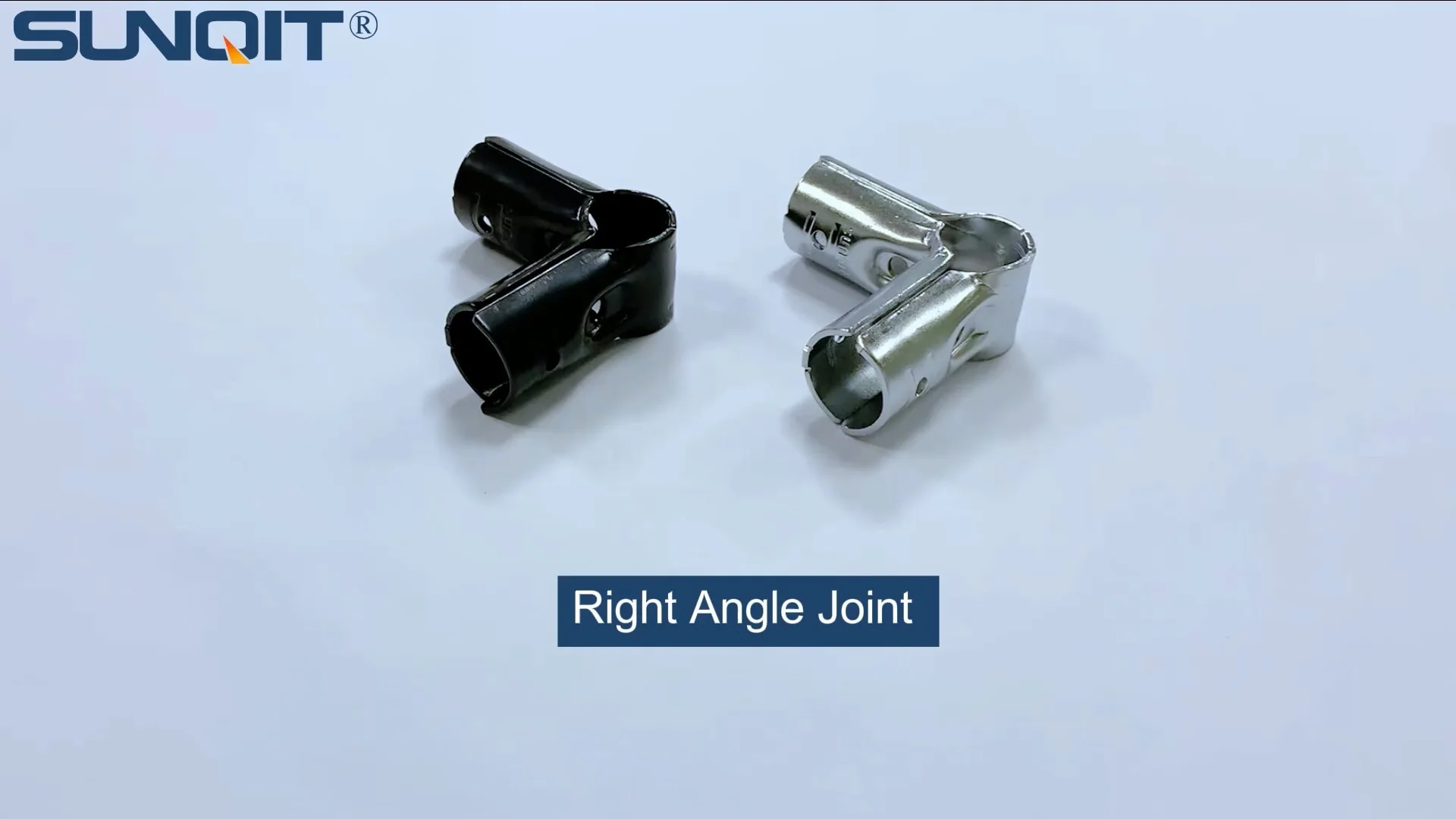
Three way lean pipe joint for 3 pcs 28MM lean pipe connection in straight angle, which used widely in workbench, flow rack, hand trolley frame connection.
In the world of medical device assembly, where precision isn't just a goal but a life-saving necessity, every component in the production line carries immense weight. A single misalignment, a weak connection, or a material that fails to meet strict standards can compromise not just the efficiency of the workflow but, more critically, the safety of the end-users—patients, healthcare providers, and medical staff. This is where lean manufacturing principles meet healthcare's uncompromising demands, and at the heart of this intersection lies a yet indispensable component: the three way lean pipe joint chrome.
Medical device assembly lines are complex ecosystems. They require flexibility to adapt to evolving product designs, durability to withstand rigorous daily use, and compliance with a maze of regulations—from ISO 13485 to FDA 21 CFR Part 820. Enter the lean system: a methodology built on eliminating waste, streamlining processes, and fostering continuous improvement. But lean systems are only as strong as their components, and when it comes to building modular, compliant workstations and material flow systems, the three way lean pipe joint chrome emerges as a quiet hero. Let's dive into why this small but mighty part is becoming a cornerstone of safe, efficient medical device manufacturing.
Lean Systems: The Backbone of Modern Medical Manufacturing
Lean manufacturing isn't new, but its application in medical device assembly has transformed how teams approach production. In an industry where every second counts and errors can have life-altering consequences, lean principles—like optimizing workflow, reducing unnecessary movement, and minimizing waste—are game-changers. Unlike traditional rigid production lines, lean systems thrive on adaptability. Medical device manufacturers often shift between producing different tools, from surgical instruments to diagnostic equipment, each with unique assembly requirements. A one-size-fits-all setup simply won't cut it.
This is where modularity becomes key. Lean systems built with components like lean pipe workbenches, adjustable material racks, and flexible conveyor systems allow teams to reconfigure their workspace in hours, not weeks. But none of this flexibility works without reliable connectors. Joints are the glue that holds lean setups together, and in medical environments, they need to do more than just "hold." They need to meet strict compliance standards, resist contamination, and support the ergonomic needs of workers who spend hours assembling delicate devices.
Enter the three way lean pipe joint chrome. Designed to connect three lean pipes at once, this joint isn't just a connector—it's a facilitator of modular precision. Whether you're building a custom lean pipe workbench for assembling pacemakers or a material flow rack for transporting sterile components, this joint ensures that every angle, every height, and every connection is consistent and secure. But why chrome? In medical settings, where cleanliness is non-negotiable, chrome plating offers a smooth, non-porous surface that resists corrosion, repels bacteria, and wipes clean easily—critical for maintaining sterile production environments.
Compliance: Meeting the Strictest Standards in Healthcare
In medical device manufacturing, compliance isn't optional—it's the foundation of trust. Regulatory bodies like the FDA and ISO don't just check the final product; they scrutinize every step of the production process, including the tools and components used to build it. A single non-compliant part in the assembly line can lead to production halts, product recalls, or even legal repercussions. For manufacturers, this means choosing components that don't just "work" but are proven to meet industry standards.
The three way lean pipe joint chrome is engineered with compliance in mind. Let's break down the key standards it addresses:
ISO 13485: Quality Management for Medical Devices
ISO 13485 isn't just about "quality"—it's about consistent quality. This standard requires manufacturers to document and control every aspect of production, from component sourcing to final assembly. For lean pipe joints, this means traceability (knowing where materials come from), durability (ensuring joints don't degrade over time), and reproducibility (consistent performance across batches). Chrome-plated three way joints excel here: their manufacturing process is tightly controlled, with materials tested for strength and corrosion resistance, and each joint is inspected to ensure it meets dimensional accuracy standards. This traceability gives medical device manufacturers the documentation they need to pass ISO audits with confidence.
FDA 21 CFR Part 820: Current Good Manufacturing Practice (cGMP)
The FDA's cGMP regulations are all about minimizing risk. For medical devices, this includes preventing contamination, ensuring process control, and maintaining product integrity. Three way lean pipe joint chrome supports cGMP in several ways. First, its smooth chrome surface is non-reactive, meaning it won't leach chemicals or particles into the environment—a critical feature when assembling devices that will enter the human body. Second, the joint's design eliminates crevices where dust, bacteria, or lubricants could accumulate, reducing the risk of cross-contamination. Finally, its modularity allows manufacturers to reconfigure workspaces quickly, which is essential for segregating production lines (e.g., separating sterile and non-sterile assembly areas) to meet cGMP's strict spatial requirements.
ESD Protection: Safeguarding Sensitive Electronics
Many medical devices, from MRI machines to insulin pumps, rely on delicate electronics. Static electricity can damage these components, leading to malfunctions or even patient harm. That's where ESD (Electrostatic Discharge) protection comes in. While ESD workstations are the frontline defense, the components that build those workstations matter too. Chrome-plated lean pipe joints, when paired with conductive lean pipes, help dissipate static charges safely, preventing them from reaching sensitive devices. This integration with ESD workstations ensures that every part of the assembly line—from the workbench surface to the material racks—is part of a unified ESD protection system, reducing the risk of costly (and dangerous) static-related failures.

Safety: Protecting Workers and Patients Alike
Compliance keeps regulators happy, but safety keeps people safe. In medical device assembly, safety has two sides: protecting the workers who build the devices and protecting the patients who use them. The three way lean pipe joint chrome plays a role in both.
Ergonomics: Reducing Worker Strain
Medical device assembly is often repetitive work, and repetitive motion injuries (RMIs) are a real risk for workers. Adjustable lean pipe workbenches, built with three way joints, allow teams to customize height, angle, and layout to fit each worker's needs. For example, a technician assembling small catheters might need a lower work surface to reduce eye strain, while someone handling larger surgical tools might need a higher bench to avoid hunching. The three way joint's ability to connect pipes at 90°, 45°, or even custom angles makes this adjustability possible. Unlike fixed joints, which lock workers into rigid setups, these chrome joints let teams tweak workstations on the fly, reducing the risk of back pain, carpal tunnel, and other RMIs. When workers are comfortable, they're more focused—and fewer mistakes mean safer devices for patients.
Durability: Withstanding the Rigors of Production
Medical device production lines run long hours, and lean systems are no exception. A joint that loosens or breaks mid-shift can disrupt production, but in a medical context, it could do worse: a falling material rack might damage sterile components, or a wobbly workbench could lead to assembly errors. The three way lean pipe joint chrome is built to withstand this pressure. Made from high-grade steel with a chrome plating that adds an extra layer of strength, these joints resist bending, cracking, and wear even under heavy loads. Unlike plastic or low-grade metal joints, which might degrade after months of use, chrome-plated steel joints maintain their integrity for years, ensuring that workstations and racks stay stable and secure.
Contamination Control: Keeping Production Sterile
In cleanrooms and sterile production areas, contamination is the enemy. Even a tiny particle or microbe can render a medical device unsafe for use. The three way lean pipe joint chrome's smooth, non-porous surface is a contamination fighter. Unlike joints with rough edges or crevices, which trap dust and bacteria, chrome-plated joints are easy to clean with disinfectants like isopropyl alcohol or hydrogen peroxide. This is especially important in environments where production lines switch between different devices—cleaning the joint takes seconds, reducing downtime between batches and lowering the risk of cross-contamination.

Why Three Way Lean Pipe Joint Chrome Stands Out: A Comparison
Not all lean pipe joints are created equal. To understand why three way lean pipe joint chrome is the preferred choice for medical device assembly, let's compare it to traditional alternatives:
| Feature | Traditional Plastic Joints | Unplated Steel Joints | Three Way Lean Pipe Joint Chrome |
|---|---|---|---|
| Compliance with ISO 13485/FDA | Often lacks traceability; may off-gas chemicals | May corrode; hard to clean thoroughly | Full traceability; chrome plating meets biocompatibility standards |
| ESD Protection | Poor conductivity; static buildup risk | Moderate conductivity; prone to rust affecting performance | Excellent conductivity when paired with lean pipe; rust-resistant |
| Durability | Weak under heavy loads; prone to cracking | Strong but corrosion-prone in humid/cleanroom environments | High tensile strength; chrome plating resists corrosion and wear |
| Cleanability | Porous surface traps contaminants; hard to disinfect | Rough edges and rust pockets harbor bacteria | Smooth, non-porous surface; wipes clean with standard disinfectants |
| Modularity | Limited angle options; may loosen over time | Fixed angles; difficult to reconfigure | 360° rotation; easy to adjust and reposition without tools |
As the table shows, three way lean pipe joint chrome outperforms alternatives in every category that matters for medical device assembly: compliance, safety, durability, and flexibility. For manufacturers, this translates to fewer headaches, fewer regulatory issues, and a production line that adapts as quickly as their needs do.
Integration with Other Lean Components
A great component is even better when it plays well with others. The three way lean pipe joint chrome isn't just a standalone part—it integrates seamlessly with other lean system components, creating a cohesive, compliant production ecosystem. Let's look at a few key pairings:
Lean Pipe Workbench: The Heart of Assembly
The lean pipe workbench is where the magic happens. Whether it's assembling a pacemaker or testing a diagnostic sensor, workers rely on workbenches to be stable, adjustable, and clean. Three way lean pipe joint chrome is the backbone of these workbenches, connecting vertical pipes (for height) and horizontal pipes (for width) to create a sturdy frame. Add a stainless steel tabletop (from the stainless steel pipe series) for chemical resistance, and you've got a workstation that meets ISO 13485 standards for cleanliness and durability. The joint's modularity also means you can add accessories like tool holders, LED task lights, or ESD wrist strap connectors—all without compromising the bench's structural integrity.
Stainless Steel Pipe Series: For Ultra-Sterile Environments
In environments like cleanrooms or surgical device production lines, even chrome-plated steel might not be enough. That's where the stainless steel pipe series comes in. Stainless steel is inherently corrosion-resistant and non-reactive, making it ideal for use with harsh disinfectants or in high-humidity settings. Three way lean pipe joint chrome pairs perfectly with stainless steel pipes, creating a system that's both strong and sterile. The chrome plating on the joint matches the stainless steel's clean aesthetic, and together, they form a setup that's easy to sanitize and built to last in the most demanding medical environments.
ESD Workstation: Protecting Sensitive Electronics
For assembling devices with circuit boards or microchips, an ESD workstation is a must. These workstations include conductive mats, wrist straps, and grounding cables to dissipate static. Three way lean pipe joint chrome, when used with conductive lean pipes, acts as an extension of the ESD system, ensuring that the entire workstation frame is grounded. This prevents static from building up in the pipes or joints, which could otherwise discharge into sensitive components. It's a small detail, but it's the difference between a functional device and one that fails during testing—or worse, in a patient's body.
The Bottom Line: Safety, Compliance, and Peace of Mind
In medical device assembly, every component matters. From the smallest screw in a surgical tool to the joint that holds the assembly line together, each part plays a role in ensuring patient safety and regulatory compliance. The three way lean pipe joint chrome isn't just a connector—it's a commitment to those principles. It's designed to meet the strictest standards (ISO 13485, FDA 21 CFR Part 820), protect against contamination and static, and support the workers who build life-saving devices.
For manufacturers, choosing the right components isn't just about "checking a box." It's about building a production line that's efficient, adaptable, and trustworthy . When you use three way lean pipe joint chrome, you're not just buying a part—you're investing in peace of mind. You're ensuring that your assembly line can adapt to new device designs, pass regulatory audits with ease, and keep your team safe and productive. And in an industry where the stakes are life and death, that's invaluable.
So, whether you're a small contract manufacturer or a global medical device giant, don't overlook the power of a reliable joint. The three way lean pipe joint chrome might be small, but its impact on compliance, safety, and efficiency is enormous. After all, in healthcare, the details aren't just details—they're everything.