- Company Articles
- Products and Technology
- Product knowledge
- Three Way Lean Pipe Joint Chrome: Imported vs. Domestic Options

Three Way Lean Pipe Joint Chrome: Imported vs. Domestic Options
Related Product
Three Way Lean Pipe Joint Chrome
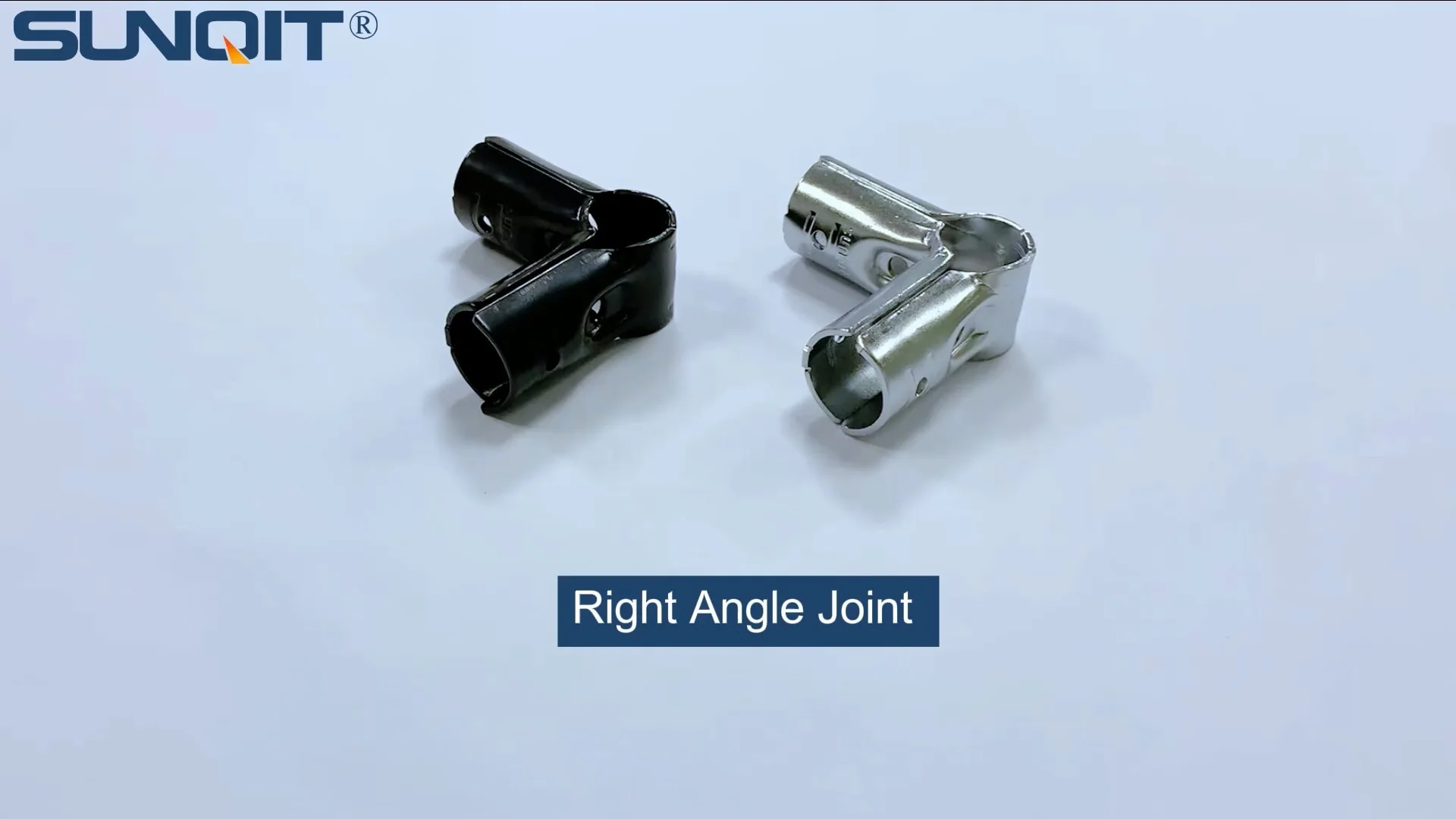
Three way lean pipe joint for 3 pcs 28MM lean pipe connection in straight angle, which used widely in workbench, flow rack, hand trolley frame connection.
1. The Backbone of Lean Systems
Walk into any modern manufacturing facility, and you'll likely see a symphony of moving parts: conveyor belts gliding, workbenches organized with precision, and material racks holding components exactly where they need to be. What you might not notice, though, is the quiet hero holding it all together—the three way lean pipe joint chrome. These unassuming connectors are the backbone of lean systems, the invisible force that turns simple pipes into flexible, efficient workspaces. Whether you're building a flow rack for assembly lines or a custom workstation for electronics testing, the right joint can mean the difference between a production line that hums and one that sputters. Today, we're diving deep into the world of three way lean pipe joint chrome, pitting imported options against domestic innovations to help you decide which is right for your lean journey.
2. What is a Three Way Lean Pipe Joint Chrome?
Let's start with the basics. A three way lean pipe joint chrome is a specialized connector designed to join three lean pipes at various angles (typically 90°, 45°, or 180°), forming the structural framework of lean manufacturing setups. Think of it as the "cornerstone" of modular systems—without it, you can't build the racks, trolleys, or workbenches that make lean production possible. But what sets the "chrome" variant apart? Chrome plating isn't just for shine; it's a functional choice. Chrome adds a hard, corrosion-resistant layer to the joint, protecting it from the wear and tear of factory floors, spills, and constant handling. It also creates a smooth surface that resists rust, ensuring the joint stays tight and reliable even in humid or messy environments. For workers who interact with these structures daily, a durable joint means fewer breakdowns, less time spent on repairs, and a safer workspace overall.

3. The Rise of Imported Options: A Legacy of Precision
For decades, imported three way lean pipe joint chrome dominated the market, especially in industries where precision was non-negotiable—automotive, aerospace, and medical device manufacturing, to name a few. Countries like Germany and Japan led the charge, bringing decades of engineering expertise to the table. These imported joints were (and still are) known for their meticulous manufacturing processes: tight tolerances, high-grade steel alloys, and rigorous quality control. Many imported options adhere to international standards like ISO 9001, ensuring consistency batch after batch.
Take, for example, a German-made three way joint. It might start with cold-drawn steel, which is stronger and more uniform than hot-rolled alternatives. Then, it undergoes a multi-step chrome plating process—acid cleaning, nickel undercoating, and finally, hard chrome plating—to reach a thickness of 15-20 microns (that's 0.015mm, but trust us, it makes a difference in durability). The result? A joint that can withstand up to 500kg of load without bending and resist 500+ hours of salt spray testing (a common measure of corrosion resistance). Imported suppliers often partner with global lean pipe suppliers, offering a "one-stop shop" for pipes, joints, and accessories, which appeals to large manufacturers with complex supply chains.
Take, for example, a German-made three way joint. It might start with cold-drawn steel, which is stronger and more uniform than hot-rolled alternatives. Then, it undergoes a multi-step chrome plating process—acid cleaning, nickel undercoating, and finally, hard chrome plating—to reach a thickness of 15-20 microns (that's 0.015mm, but trust us, it makes a difference in durability). The result? A joint that can withstand up to 500kg of load without bending and resist 500+ hours of salt spray testing (a common measure of corrosion resistance). Imported suppliers often partner with global lean pipe suppliers, offering a "one-stop shop" for pipes, joints, and accessories, which appeals to large manufacturers with complex supply chains.

4. Domestic Innovations: Bridging the Gap
But here's the thing: domestic manufacturers aren't sitting idle. Over the past 15 years, they've made significant strides, closing the gap between imported quality and local affordability. How? By investing in advanced machinery, adopting international manufacturing standards, and leveraging local supply chains to cut costs. Today, a domestic three way lean pipe joint chrome might use similar steel alloys as its imported counterpart, but with a focus on optimizing production for regional needs. For example, Chinese manufacturers have become leaders in domestic production, using automated CNC machines to achieve tight tolerances and in-house plating facilities to control chrome quality.
Domestic joints also benefit from shorter supply chains. Instead of waiting 8-12 weeks for a shipment from Europe, a U.S.-based factory can get domestic joints in 3-5 days. This agility is a game-changer for small to mid-sized businesses (SMBs) that need to adapt quickly to changing production demands. Plus, domestic manufacturers often offer more customization—if you need a joint with a unique angle or a modified load capacity, they can tweak the design without the lead time of an imported order. It's a shift from "one-size-fits-all" to "built for your workflow."
Domestic joints also benefit from shorter supply chains. Instead of waiting 8-12 weeks for a shipment from Europe, a U.S.-based factory can get domestic joints in 3-5 days. This agility is a game-changer for small to mid-sized businesses (SMBs) that need to adapt quickly to changing production demands. Plus, domestic manufacturers often offer more customization—if you need a joint with a unique angle or a modified load capacity, they can tweak the design without the lead time of an imported order. It's a shift from "one-size-fits-all" to "built for your workflow."
5. Head-to-Head Comparison: Imported vs. Domestic
To really understand the differences, let's put imported and domestic three way lean pipe joint chrome side by side. The table below breaks down key factors like material quality, cost, and lead time—everything you need to make an informed choice.
| Criteria | Imported Three Way Lean Pipe Joint Chrome | Domestic Three Way Lean Pipe Joint Chrome |
|---|---|---|
| Material Quality | High-grade cold-drawn steel; consistent alloy composition. | Locally sourced steel (often hot-rolled, but improving); some use cold-drawn for premium lines. |
| Chrome Plating Thickness | 15-20 microns; multi-layer plating (nickel undercoat + hard chrome). | 10-15 microns; single-layer chrome plating (some premium lines match imported thickness). |
| Load Capacity | Typically 400-500kg per joint. | 300-450kg per joint (premium domestic lines reach 500kg). |
| Cost | 30-50% higher than domestic; includes shipping, tariffs, and import fees. | More budget-friendly; no import fees, lower shipping costs. |
| Lead Time | 8-12 weeks (ocean freight) or 2-3 weeks (air freight, at a premium). | 1-3 weeks (local production + ground shipping). |
| Certifications | ISO 9001, DIN, or JIS certifications common. | ISO 9001 increasingly common; some lack international certifications but meet local standards. |
| Customization | Limited; requires large minimum orders (500+ units). | Flexible; small minimum orders (50-100 units) for custom angles or finishes. |
6. Real-World Applications: When to Choose Which?
Numbers tell part of the story, but real-world use cases bring it to life. Let's look at two scenarios where the choice between imported and domestic mattered.
Case Study 1: Automotive Plant Opts for Imported Joints
A major automotive manufacturer in Michigan needed to build a new assembly line for electric vehicle (EV) batteries. The line would operate 24/7, with heavy battery packs (400kg each) moving along flow racks supported by three way joints. The plant manager prioritized longevity—"We can't afford downtime; a single joint failure could halt production for hours." They chose imported joints, citing the higher load capacity and 500-hour salt spray resistance (critical in the humid factory environment). The upfront cost was higher, but over the 10-year expected lifespan of the line, the reduced maintenance made it worthwhile.
Case Study 2: Small Electronics Workshop Goes Domestic
A small electronics workshop in Texas specializes in custom circuit board assembly. Their needs are different: frequent reconfigurations (they switch between 3-4 product lines monthly) and lighter loads (PCBs weigh 1-2kg). For them, lead time and cost were key. "We can't wait 12 weeks for joints when a client needs a new workstation next month," said the workshop owner. They opted for domestic three way lean pipe joint chrome, which cost 40% less than imported equivalents and arrived in 10 days. The joints handled the light loads easily, and when they needed a custom 60° angle joint for a specialized rack, the domestic supplier delivered 50 units in two weeks—no minimum order required.
7. The Role of Lean Pipe Suppliers in This Decision
Behind every choice between imported and domestic joints is a lean pipe supplier—and their role can't be overstated. Imported suppliers often have global networks, offering a full suite of lean system components (pipes, joints, accessories) that are pre-tested to work together. This is a big plus for large manufacturers that want to avoid compatibility issues. However, their support can feel distant; if you have a problem with a batch, you might be dealing with a customer service team in another time zone.
Domestic suppliers, on the other hand, thrive on proximity. Many have local warehouses, meaning you can pick up joints the same day you order them. They also understand regional needs—for example, a U.S.-based supplier might offer joints with certifications for OSHA compliance, while a Chinese supplier could tailor products for Asia's humidity-prone factories. As one plant supervisor put it: "Our domestic supplier sends a technician to our facility twice a year to check our joints and suggest upgrades. You don't get that with imported options unless you're a multi-million-dollar client."
Domestic suppliers, on the other hand, thrive on proximity. Many have local warehouses, meaning you can pick up joints the same day you order them. They also understand regional needs—for example, a U.S.-based supplier might offer joints with certifications for OSHA compliance, while a Chinese supplier could tailor products for Asia's humidity-prone factories. As one plant supervisor put it: "Our domestic supplier sends a technician to our facility twice a year to check our joints and suggest upgrades. You don't get that with imported options unless you're a multi-million-dollar client."
8. Future Trends: Where Do We Go From Here?
The gap between imported and domestic three way lean pipe joint chrome is narrowing—and fast. Domestic manufacturers are investing in better materials (more cold-drawn steel, higher-quality chrome plating) and adopting AI-driven quality control to match imported precision. Meanwhile, imported suppliers are exploring local partnerships to reduce lead times; some have even opened U.S.-based factories to compete with domestic speed.
Sustainability is another trend shaping the industry. Domestic joints often have a smaller carbon footprint, thanks to shorter shipping distances, while imported suppliers are investing in carbon-neutral shipping and recycled steel. There's also a push for "smart joints"—adding sensors to monitor wear and tear, sending alerts to maintenance teams before a failure occurs. Imagine a joint that tells you, "I'm starting to loosen—tighten me next week!" It sounds like science fiction, but prototypes are already in testing.
Sustainability is another trend shaping the industry. Domestic joints often have a smaller carbon footprint, thanks to shorter shipping distances, while imported suppliers are investing in carbon-neutral shipping and recycled steel. There's also a push for "smart joints"—adding sensors to monitor wear and tear, sending alerts to maintenance teams before a failure occurs. Imagine a joint that tells you, "I'm starting to loosen—tighten me next week!" It sounds like science fiction, but prototypes are already in testing.
9. Conclusion: Making the Right Choice for Your Lean Journey
So, imported or domestic? The answer depends on your unique needs. If you're building a heavy-duty, long-term structure with zero room for error (think automotive or aerospace), imported three way lean pipe joint chrome is likely worth the investment. But if you need flexibility, quick turnaround, or cost savings—and your loads are moderate—domestic options are more than capable.
At the end of the day, both imported and domestic joints share a common goal: to make your lean system work smarter, not harder. The best choice is the one that aligns with your workflow, budget, and vision for the future. And remember—whether you go imported or domestic, a reliable lean pipe supplier will be your greatest ally, guiding you toward the joints that will keep your production line running smoothly for years to come. After all, in lean manufacturing, every detail matters—and that includes the quiet heroes holding it all together.
At the end of the day, both imported and domestic joints share a common goal: to make your lean system work smarter, not harder. The best choice is the one that aligns with your workflow, budget, and vision for the future. And remember—whether you go imported or domestic, a reliable lean pipe supplier will be your greatest ally, guiding you toward the joints that will keep your production line running smoothly for years to come. After all, in lean manufacturing, every detail matters—and that includes the quiet heroes holding it all together.