- Company Articles
- Products and Technology
- Product knowledge
- Three Way Lean Pipe Joint Chrome in 3C Product Testing Workstations

Three Way Lean Pipe Joint Chrome in 3C Product Testing Workstations
Related Product
Three Way Lean Pipe Joint Chrome
Three way lean pipe joint for 3 pcs 28MM lean pipe connection in straight angle, which used widely in workbench, flow rack, hand trolley frame connection.
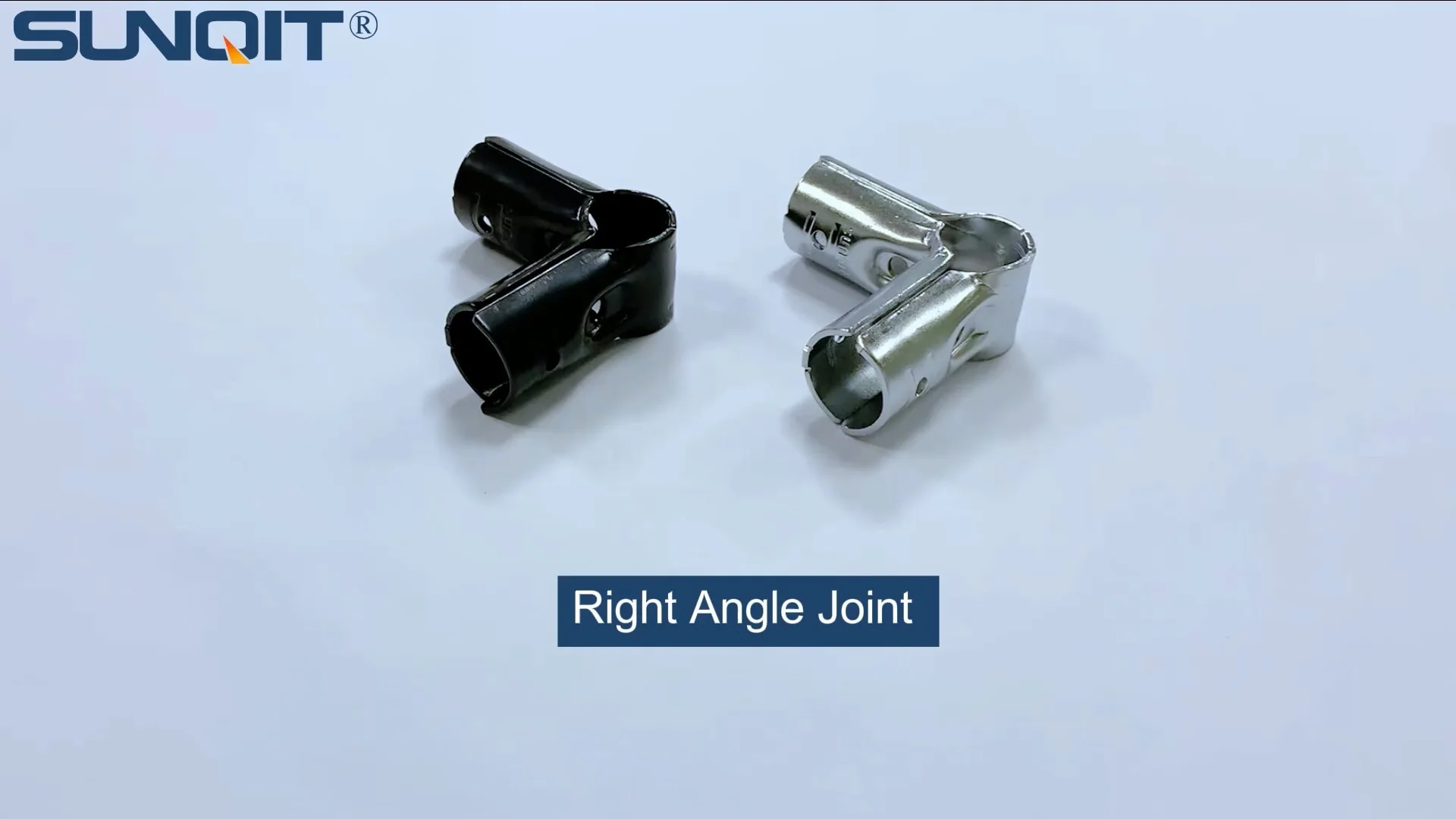
In the fast-paced world of 3C (Computer, Communication, Consumer Electronics) manufacturing, where precision is non-negotiable and product lifecycles shrink by the month, the testing phase stands as a critical gatekeeper. Every smartphone, laptop, or smartwatch that reaches consumers has undergone rigorous testing—from drop tests to signal strength checks, from thermal stability assessments to electrostatic discharge (ESD) resistance. Behind these high-stakes evaluations lies an often-overlooked hero: the testing workstation itself. A well-designed workstation doesn't just hold equipment; it streamlines workflows, minimizes errors, and adapts to the ever-changing needs of 3C product lines. And at the heart of these adaptable workstations? Lean pipe systems, with the three way lean pipe joint chrome emerging as a silent yet indispensable component.
Walk into any modern 3C testing facility, and you'll notice a common theme: flexibility. Testing requirements for a new foldable phone differ drastically from those for a wireless earbud, and workstations must pivot quickly without sacrificing stability or safety. Traditional rigid workbenches, bolted to the floor and hard to reconfigure, simply can't keep up. This is where lean pipe systems shine—and within these systems, the three way lean pipe joint chrome plays a starring role. It's not just a connector; it's a bridge between rigidity and adaptability, a small but mighty part that enables teams to build, modify, and optimize testing setups with ease.
The Backbone of Modern Workstations: Lean Pipe Systems
Before diving into the specifics of the three way lean pipe joint chrome, let's take a step back to understand lean pipe systems themselves. Also known as "flexible pipe systems," these setups are built using lightweight yet durable pipes—typically steel or aluminum—connected by joints. The concept originated from lean manufacturing principles, emphasizing waste reduction, efficiency, and continuous improvement. In 3C testing, where every square inch of workspace matters and downtime translates to lost opportunities, lean pipes have revolutionized how teams design their environments.
What makes lean pipes so valuable? For starters, they're modular. Unlike fixed furniture, lean pipe structures can be disassembled, reconfigured, or expanded in hours, not days. A testing station for a 7-inch tablet can be transformed into one for a 12-inch laptop by simply adjusting pipe lengths and joint positions. They're also cost-effective: instead of investing in new workbenches for each product line, teams reuse pipes and joints, cutting down on capital expenses. And perhaps most importantly, they're customizable. From ESD workstations that protect sensitive microchips from static damage to heavy-duty material racks that hold testing equipment, lean pipe systems adapt to the task at hand.
But none of this flexibility would be possible without reliable joints. Joints are the "hinges" of lean pipe systems, determining how pipes connect, how much weight the structure can bear, and how easily it can be modified. Among the dozens of joint types available—from fixed 90-degree connectors to rotating swivel joints—the three way lean pipe joint chrome has emerged as a favorite in 3C testing environments. Its unique design addresses two key needs: stability for precision testing and versatility for quick reconfiguration.
Spotlight on the Three Way Lean Pipe Joint Chrome: Design and Functionality
At first glance, the three way lean pipe joint chrome might seem like a simple piece of hardware, but its design is a study in practical engineering. As the name suggests, it features three connection points, allowing three lean pipes to intersect at a single joint. This might sound straightforward, but the devil is in the details. Let's break down its anatomy:
- Three Ports: Each port is sized to fit standard lean pipes (often 28mm in diameter, the industry standard for 3C applications). The ports are strategically angled—typically at 90-degree or 135-degree intervals—to accommodate common structural needs, such as building workbench frames, shelf corners, or vertical supports.
- Chrome-Coated Finish: The joint's exterior is coated in chrome, a decision rooted in both functionality and durability. Chrome resists scratches, corrosion, and wear, ensuring the joint maintains its integrity even in high-traffic testing areas where pipes are frequently adjusted.
- Locking Mechanism: Most three way lean pipe joint chrome models use a hex bolt or cam lever to secure pipes in place. Tightening the bolt creates friction between the joint's inner sleeve and the pipe, holding it firmly without welding or drilling. This "tool-less" (or minimal-tool) design is a game-changer for quick adjustments—no need for a wrench or power tools when reconfiguring a workstation.
- Reinforced Construction: The core of the joint is usually made from high-grade steel, heat-treated for strength. Even with its lightweight profile, a quality three way joint can support hundreds of pounds, critical for holding testing equipment like oscilloscopes, thermal chambers, or robotic arms.
What truly sets this joint apart is its ability to balance stability and adaptability. In 3C testing, workstations often need to support heavy gear while remaining easy to tweak. For example, a thermal testing station might require a shelf for a heat gun, a vertical rail for cable management, and a horizontal bar for mounting sensors—all connected at a single corner. The three way joint makes this possible without compromising on rigidity. Unlike some multi-port joints that feel "loose" after repeated adjustments, the chrome-coated version maintains a tight grip, thanks to its precision-machined ports and robust locking mechanism.

Why Chrome? The Hidden Advantages of Chrome-Coated Joints
You might wonder: Why chrome? Why not plastic, painted steel, or another finish? In 3C testing environments, the choice of material and coating isn't arbitrary—it directly impacts performance, safety, and longevity. Chrome-coated joints offer three key advantages that make them indispensable in these settings:
1. Corrosion Resistance for Longevity
3C testing facilities are rarely "clean rooms" in the strictest sense. While they're certainly organized, they're also busy places where spills (of cleaning fluids or coolant), humidity fluctuations, and general wear are part of daily life. Uncoated steel joints would rust over time, weakening the connection and risking contamination from flaking rust particles—an unacceptable hazard when testing sensitive electronics. Chrome plating acts as a barrier, preventing moisture and chemicals from reaching the underlying steel. This means joints stay strong and clean for years, even in high-moisture environments like thermal cycling labs.
2. ESD Compatibility for Sensitive Electronics
Static electricity is the enemy of 3C components. A single electrostatic discharge can fry a microchip, rendering a product useless. That's why ESD workstations are non-negotiable in testing areas. Chrome, being a metal, conducts electricity, which might seem counterintuitive for ESD safety—until you realize that conductivity is actually a benefit here. When integrated into a properly grounded lean pipe system, chrome joints help dissipate static charges away from the workstation, rather than letting them build up. This makes the three way lean pipe joint chrome a safe choice for ESD-sensitive zones, ensuring that even as workstations are reconfigured, static protection remains intact.
3. Low Maintenance and Aesthetic Appeal
Chrome is easy to clean—just a wipe with a damp cloth removes dust, fingerprints, or minor spills. In busy testing facilities, where time is precious, this low-maintenance feature is a boon. Unlike painted joints, which scratch and fade, chrome maintains its shine, contributing to a professional, organized workspace. Aesthetics might seem secondary to functionality, but a clean, well-maintained environment can boost team morale and reduce errors—both critical in high-precision testing scenarios.

Building Better Testing Spaces: Integrating with Lean Pipe Workbenches
Now, let's connect the dots: how does the three way lean pipe joint chrome enhance the functionality of lean pipe workbenches, the workhorses of 3C testing? A typical testing workbench needs to support monitors, testing tools, cable organizers, and sometimes even small fixtures for holding products during evaluation. It also needs to adapt—today's bench for camera lens testing might need a taller shelf tomorrow for a new lighting rig, or a wider surface for a larger prototype.
The three way joint is the key to this adaptability. Consider a basic lean pipe workbench frame: four vertical pipes (legs) connected by horizontal pipes at the top and bottom. To add a shelf halfway up, you'd use four three way joints—one at each leg—connecting the vertical leg to two horizontal pipes (the shelf supports). If later you need to raise the shelf by 6 inches, simply loosen the joints, slide them up, and retighten. No drilling new holes, no replacing parts—just a quick adjustment. For 3C testing teams, this means less time spent reconfiguring and more time focused on the actual testing process.
But it's not just about shelves. Testing often requires custom fixtures: a clamp to hold a phone at a specific angle for drop testing, a rail to guide a thermal probe along a laptop's surface, or a partition to separate different testing zones on the same bench. The three way joint makes these customizations possible. For example, to build a vertical rail for a probe, you'd attach a three way joint to the bench's back rail, add a vertical pipe, and then use another joint to connect a horizontal arm for the probe holder. When the next product comes in with different dimensions, you can reposition the joints to adjust the rail's height or angle in minutes.
ESD workbench setups benefit particularly from this flexibility. ESD mats, grounding straps, and ionizers need to be positioned precisely to protect components. With the three way joint, teams can mount ionizer brackets at the optimal height, run grounding cables along pipe rails secured by joints, and even add adjustable ESD-safe bins for storing test samples—all without compromising the workstation's structural integrity.
Beyond Workbenches: Optimizing Material Flow with Flow Racks
Testing isn't just about the workstation itself; it's about the entire ecosystem—how products move from one test station to the next, how tools and components are stored, and how waste is minimized. This is where flow racks come into play, and again, the three way lean pipe joint chrome proves its worth. Flow racks use gravity to move materials—like test samples, replacement parts, or toolkits—from the "supply" end to the "pick" end, reducing the need for manual lifting and speeding up access.
Building a flow rack with lean pipes requires a sturdy frame with angled rails (for gravity flow) and supports for the roller tracks. The three way joint simplifies this construction by allowing for clean, stable connections between the vertical frame pipes, horizontal crossbars, and angled rail supports. For example, a three way joint can connect a vertical leg, a horizontal beam (to stabilize the rack), and a diagonal pipe that supports the roller track at a 5-degree angle—perfect for smooth material flow. Because the joint is adjustable, teams can tweak the angle of the roller track to accommodate different-sized products: steeper for heavier items like laptops, gentler for lighter items like smartwatch bands.
In a 3C testing line, where hundreds of units might pass through daily, a well-designed flow rack reduces bottlenecks. Test samples move seamlessly from pre-test inspection to the ESD workstation, then to packaging—all guided by roller tracks supported by reliable three way joints. If a new product line requires wider tracks, the joints make it easy to adjust the rack's width without rebuilding it from scratch. This adaptability ensures that material flow keeps pace with testing demands, even as product sizes and volumes change.
How Does It Stack Up? Comparing Joint Types for 3C Testing
Not all lean pipe joints are created equal. To understand why the three way lean pipe joint chrome is a top choice for 3C testing, let's compare it to other common joint types. The table below highlights key differences in design, functionality, and suitability for testing environments:
| Joint Type | Connection Points | Adjustability | Corrosion Resistance | ESD Compatibility | Best For |
|---|---|---|---|---|---|
| Fixed 90-Degree Joint (Non-Chrome) | 2 | Low (angle fixed) | Low (painted steel) | Requires grounding mods | Simple, static workbenches |
| Swivel Joint (Plastic) | 2 | High (rotates 360°) | High (plastic) | Poor (insulator, builds static) | Non-ESD, light-duty setups |
| Three Way Lean Pipe Joint Chrome | 3 | High (adjustable angles) | High (chrome-plated) | Excellent (conductive, grounded) | ESD workstations, flow racks, custom test fixtures |
| Four Way Joint (Steel) | 4 | Medium (fixed angles) | Medium (uncoated steel) | Good (conductive) | Heavy-duty racks, limited adjustability |
The table tells a clear story: the three way lean pipe joint chrome strikes the best balance between adjustability, durability, and safety for 3C testing. Its three connection points reduce the need for multiple joints (simplifying assembly), its chrome coating ensures longevity and ESD compatibility, and its adjustability makes it ideal for the dynamic needs of testing environments. While other joints have their uses, none offer the same all-around performance for 3C applications.
Real-World Impact: A 3C Manufacturer's Success Story
To put this into perspective, let's look at a hypothetical but realistic case study. Imagine a mid-sized 3C manufacturer that produces wireless earbuds and smartwatches. Their testing facility was struggling with inefficiencies: rigid workbenches meant reconfiguring for new product lines took 2-3 days, ESD issues cropped up in humid months, and flow racks frequently jammed due to unstable roller track supports. The team decided to transition to lean pipe systems, with a focus on the three way lean pipe joint chrome.
Within six months, the results were striking:
- Setup Time Reduced by 70%: Reconfiguring a testing line for a new smartwatch model, which once took 3 days, now took just 4 hours. The three way joints allowed teams to adjust workbench heights and flow rack angles in minutes, without specialized tools.
- ESD Failures Dropped to Zero: By using chrome joints in grounded lean pipe systems, static charges were dissipated effectively. Even during humid summer months, there were no reports of ESD-related component damage.
- Flow Rack Reliability Improved: The stable connections provided by three way joints eliminated roller track jams. Material flow speed increased by 20%, reducing bottlenecks between testing stages.
- Cost Savings: By reusing pipes and joints across product lines, the company avoided purchasing new workbenches, saving approximately $40,000 in equipment costs in the first year alone.
While this is a fictional example, it mirrors the outcomes reported by real 3C manufacturers that have adopted lean pipe systems with high-quality joints. The three way lean pipe joint chrome wasn't the only factor, but it was a critical enabler—providing the flexibility, durability, and safety needed to transform the testing workflow.
Working in Harmony: Compatibility with Lean Pipe Accessories
A joint is only as useful as the ecosystem it fits into. The three way lean pipe joint chrome works seamlessly with a range of lean pipe accessories, expanding its functionality even further. Let's explore some key pairings:
Roller Tracks and Connectors
Flow racks and material slides rely on roller tracks to move products smoothly. The three way joint pairs with roller track connectors, which attach the track to the supporting pipes. For example, a "roller track placon mount for aluminum profile flat" can be secured to a pipe via the three way joint, creating a stable base for the track. This compatibility ensures that even custom track configurations—like curved slides or multi-level racks—are easy to build.
Casters and Mobility
Many testing workstations need to be mobile—for example, moving a bench from the ESD zone to a photography area for documentation. Casters (wheels) attach to the bottom of lean pipe frames, and the three way joint helps reinforce the connection between the vertical leg and the caster mounting plate. This ensures the workstation remains stable when rolled, even with heavy testing equipment on top.
Workbench Tops and Shelves
Lean pipe workbenches often feature wooden, metal, or ESD-safe tops. Brackets for these tops can be mounted to pipes using the three way joint, allowing for adjustable shelf heights. For example, a "workbench E (single deck-without caster)" can have its top height adjusted by repositioning the brackets on the three way joints, accommodating testers of different heights or varying equipment needs.
Aluminum Profile Integration
While lean pipes are steel-based, many facilities mix in aluminum profiles for lightweight, high-strength sections (e.g., for mounting monitors or tool holders). The three way lean pipe joint chrome can connect to aluminum profile accessories via adapters, bridging the gap between steel and aluminum components. This hybrid approach combines the best of both worlds: the flexibility of lean pipes with the precision of aluminum profiles.
Looking Ahead: The Future of Lean Pipes in 3C Testing
As 3C products grow more complex—think foldable displays, AI-powered sensors, and miniaturized components—testing demands will only increase. Workstations will need to integrate with automated testing equipment, IoT sensors for real-time monitoring, and even collaborative robots (cobots) that assist with repetitive tasks. Where does the three way lean pipe joint chrome fit into this future?
One trend is the rise of "smart lean systems," where pipes and joints are equipped with RFID tags or QR codes for asset tracking. Imagine scanning a three way joint with a tablet to pull up its assembly history, load capacity, or maintenance schedule—this would streamline facility management and reduce errors. Chrome joints, with their durable surface, are ideal for embedding such tags, as they can withstand the scanning process and daily wear.
Another trend is the push for sustainability. Lean pipe systems already reduce waste by reusing components, but future designs may prioritize recycled steel and eco-friendly chrome plating processes. The three way joint, with its long lifespan, aligns with this goal—reducing the need for frequent replacements and cutting down on landfill waste.
Finally, as testing becomes more data-driven, workstations will need to support additional tech: cable management for IoT sensors, power rails for charging devices, and modular mounts for data loggers. The three way joint's adaptability will be key here, allowing teams to add these features without rebuilding entire workstations. In short, the joint will remain a cornerstone of flexible, future-ready testing environments.
Wrapping Up: The Small Component with a Big Impact
In the grand scheme of 3C manufacturing, the three way lean pipe joint chrome might seem. It's small, often hidden behind pipes or under workbench shelves, and rarely gets the spotlight. But as we've explored, its impact is enormous. It's the reason testing workstations can adapt to new products in hours, not days. It's the barrier that keeps static at bay and protects sensitive components. It's the connector that turns a pile of pipes into a reliable flow rack, a sturdy ESD workstation, or a mobile testing cart.
For 3C manufacturers, where innovation is the lifeblood and precision is the, the three way lean pipe joint chrome is more than a hardware component—it's a strategic asset. It enables teams to stay agile in a competitive market, reduce costs without sacrificing quality, and create testing environments that prioritize both efficiency and safety. As 3C products continue to evolve, one thing is clear: the need for flexible, reliable workstations will only grow, and the three way lean pipe joint chrome will be right there, quietly holding it all together.