- Company Articles
- Products and Technology
- Application Cases
- Three Way Lean Pipe Joint Chrome in Automotive Manufacturing: Case Studies

Three Way Lean Pipe Joint Chrome in Automotive Manufacturing: Case Studies
Related Product
Three Way Lean Pipe Joint Chrome
Three way lean pipe joint for 3 pcs 28MM lean pipe connection in straight angle, which used widely in workbench, flow rack, hand trolley frame connection.
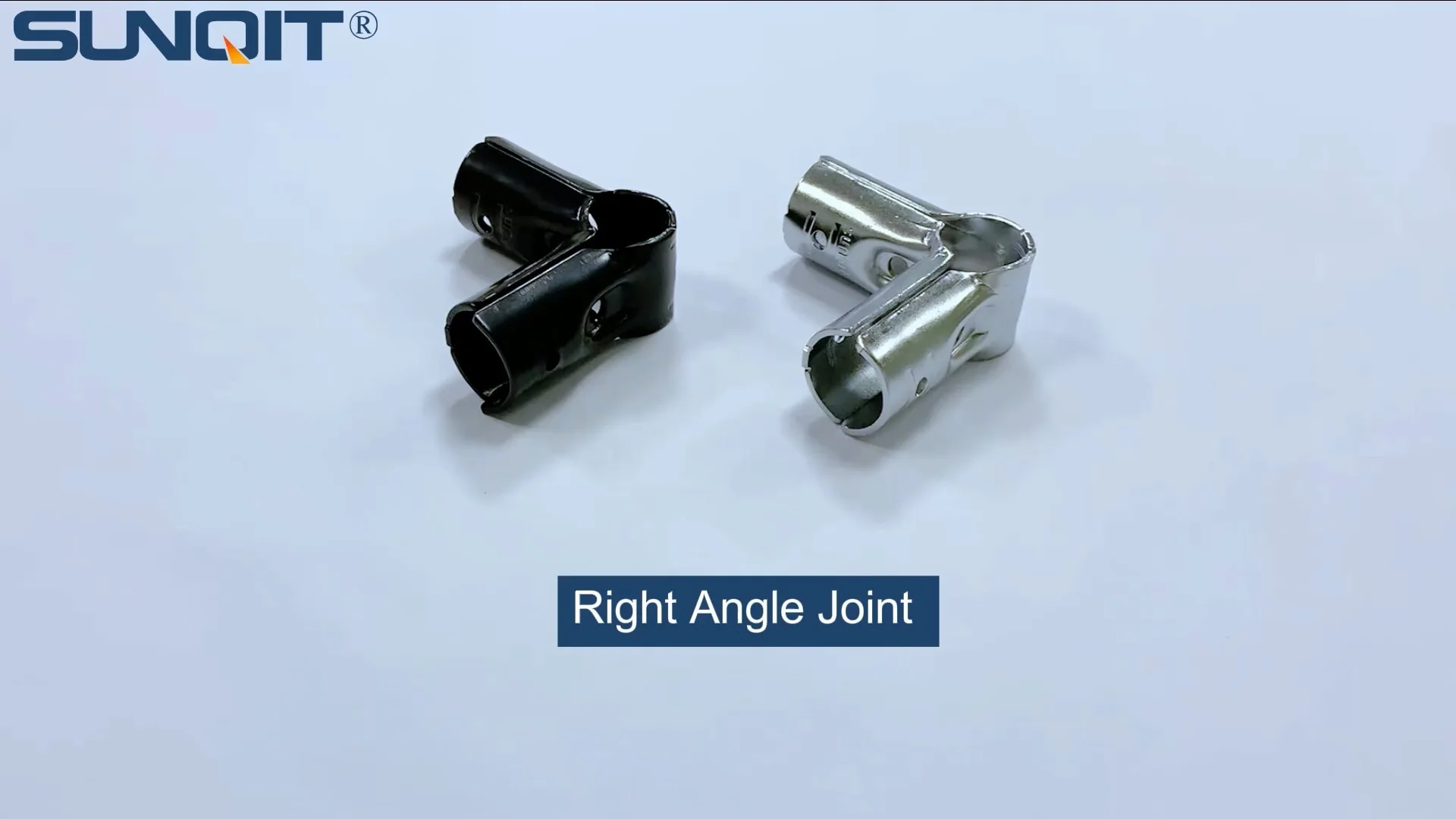
The Automotive Manufacturing Challenge: Flexibility in a Fast-Paced Industry
Automotive manufacturing is a world of constant change. New models roll out annually, consumer demands shift overnight, and production lines must adapt or fall behind. For plant managers and operations teams, the pressure is relentless: How do you build systems that can keep up with design tweaks, varying production volumes, and the ever-present need to cut waste? Enter lean manufacturing—a philosophy built on efficiency, adaptability, and continuous improvement. At the heart of many lean systems lie unassuming but powerful components, and among them, the three way lean pipe joint chrome stands out as a quiet workhorse.
You might not notice it at first glance, but walk through any modern automotive plant, and you'll see its handiwork: in the modular workbenches where technicians assemble intricate wiring harnesses, in the flow racks that glide components to the assembly line, and in the conveyors that adjust seamlessly when a new car model requires a different part sequence. This small, chrome-plated joint is more than just a connector; it's the building block of flexibility. Let's dive into what makes it indispensable, and how real-world automotive manufacturers have leveraged it to transform their operations.
What Is the Three Way Lean Pipe Joint Chrome? A Closer Look
At its core, the three way lean pipe joint chrome is a mechanical connector designed to join lean pipes (often aluminum or steel) at multiple angles—typically 90°, 135°, or 180°—with minimal effort. Its chrome plating isn't just for aesthetics: it adds a layer of durability, resisting corrosion from oils, coolants, and the daily grind of a manufacturing floor. Unlike welded joints or fixed brackets, this joint is designed to be tightened and loosened by hand or with basic tools, making reconfiguration fast and tool-free.
Think of it as the "Lego brick" of lean manufacturing. Pair it with lean pipes, and you can build almost anything: workbenches with adjustable heights, flow racks that expand as inventory grows, or conveyor systems that reroute in an afternoon. For automotive plants, where change is constant, this modularity isn't a luxury—it's a necessity. A single joint might connect a pipe supporting a parts bin today and be repurposed next week to build a temporary workstation for a new model launch. That's the power of lean, distilled into a component small enough to fit in your palm.

Why Chrome? The Practical Benefits in Automotive Environments
Automotive manufacturing floors are tough places for equipment. Oils drip, metal shavings fly, and humidity can swing with the seasons. Unplated steel joints rust; plastic joints crack under heavy loads; even aluminum, while lightweight, can corrode when exposed to certain chemicals. Chrome plating solves these problems. It forms a hard, non-porous barrier that stands up to moisture and industrial fluids, ensuring the joint maintains its grip over years of use. And when it does get dirty? A quick wipe with a cloth is usually enough to keep it functioning smoothly—no need for specialized cleaners or downtime.
Durability aside, chrome-plated joints also offer consistency. In a lean system, every component must work predictably, and these joints deliver: their standardized design means a three way joint from one batch will fit seamlessly with pipes from another, reducing the risk of mismatched parts that slow down assembly. For plant managers, that translates to fewer delays, lower replacement costs, and a system they can rely on when production targets are tight.

Case Study 1: XYZ Motors Reduces Assembly Line Changeover Time by 40%
Background: High Mix, Low Volume Pressures
XYZ Motors, a mid-sized automaker, faced a common challenge: it produced 12 different vehicle models on the same assembly line, each with unique interior components. Every time the line switched from a compact sedan to an SUV, workers spent hours disassembling fixed workbenches and reconfiguring conveyors to accommodate larger parts like dashboard frames and seat brackets. The result? 8–10 hours of downtime per changeover, eating into production capacity and delaying deliveries.
The Problem: Fixed Infrastructure Couldn't Keep Up
Traditional workbenches were bolted to the floor, with shelves and tool holders welded in place. Conveyors used rigid steel frames that required cutting and welding to adjust. "We were stuck in a cycle," recalls Maria Gonzalez, XYZ's Production Manager. "Our engineers would design a new model, and we'd have to rebuild half the line to produce it. By the time we finished, it was almost time to switch again."
The Solution: Lean System with Three Way Chrome Joints
XYZ partnered with a lean pipe supplier to overhaul its interior assembly zone. The centerpiece? Modular workbenches and conveyors built using three way lean pipe joints chrome. Here's how it worked:
- Workbenches: Instead of fixed shelves, workers used joints to attach adjustable bins and tool hooks. When switching to an SUV, they loosened the joints, raised the shelves by 6 inches, and retightened—all in 15 minutes per bench.
- Conveyors: The plant replaced rigid steel conveyors with roller tracks connected by the three way joints. This let them reangle sections to route larger SUV parts around obstacles, without cutting or welding. A 20-foot conveyor section that once took 4 hours to reconfigure now took 45 minutes.
- Flow Racks: Material handlers used joints to adjust shelf heights in flow racks, ensuring parts like seat cushions and door panels slid smoothly to the line, regardless of size.
Results: From Days to Hours
After the overhaul, XYZ's changeover time dropped from 8 hours to just 4.8 hours—a 40% reduction. "We used to schedule one changeover per week because it took so long," Gonzalez says. "Now we can do two, which means we're producing more models without adding shifts. The joints paid for themselves in three months." Perhaps more importantly, employee satisfaction rose: technicians no longer dreaded changeover days, and the flexibility let them suggest small tweaks to the line layout that improved ergonomics and speed.
Case Study 2: AutoParts Inc. Cuts Material Handling Errors by 30% with Flow Racks
Background: A Parts Supplier Struggles with Disorganized Inventory
AutoParts Inc. supplies brake components to major automakers. Its warehouse stored thousands of part variations—from small caliper bolts to large rotor assemblies—and material handlers were struggling to keep up. Parts were often mispicked, leading to delays on the customer's assembly line, and the static steel racks they used couldn't adjust to varying part sizes. "We'd have a rack with 6-inch tall bins for small bolts, and then we'd get a shipment of 2-foot-long rotors—we'd have to stack them on the floor, which led to damage," says Raj Patel, AutoParts' Warehouse Manager.
The Problem: Static Racks = Static Inefficiency
The root issue? The warehouse's fixed racks couldn't adapt. A single rack might have shelves spaced 18 inches apart, but if a new part was 24 inches tall, it either hung over the edge (risking damage) or required a custom rack (costing time and money). Picking errors were common because bins were crammed together, and handlers had to stretch or bend to reach parts, slowing them down.
The Solution: Flow Racks Built on Three Way Joints
Patel's team turned to flow racks constructed with lean pipes and three way lean pipe joints chrome. Here's the transformation:
- Adjustable Shelves: Using the three way joints, each flow rack's shelf height could be adjusted in 2-inch increments. A 24-inch rotor now had its own shelf, while smaller parts sat in tightly spaced bins below—no more wasted space.
- Color-Coded Zones: Joints let them add dividers and label holders, so handlers could quickly spot "sedan parts" vs. "truck parts" at a glance.
- Ergonomic Picking: By angling shelves slightly (using 135° joint angles), parts slid forward as the bin emptied, reducing the need for handlers to reach deep into racks.
Results: Faster, More Accurate Picking
Within six months, material handling errors dropped by 30%, and picking time per order fell by 25%. "We used to have 5-6 mispicks a day; now it's 2-3," Patel notes. "Our customers noticed the difference—one automaker even praised us in their quarterly review for 'consistently on-time, error-free deliveries.'" The flow racks also reduced part damage by 40%, as fragile components like brake pads no longer sat on the floor.
Case Study 3: Precision Automotive Slashes Downtime with Modular Workbenches
Background: A Plant Fighting Downtime During Model Launches
Precision Automotive, a manufacturer of electric vehicle (EV) batteries, faced a unique challenge: EV battery designs evolve rapidly, and each new iteration required its assembly workbenches to be retooled. In 2023, when launching a higher-capacity battery, the plant spent three days shutting down the line to rebuild workbenches with new fixtures—a delay that cost them $150,000 in lost production.
The Problem: Fixed Workbenches = Lost Revenue
Traditional workbenches at Precision were built with welded steel frames and custom-cut wooden tops. To accommodate a new battery design, workers had to remove the wooden tops, weld new brackets, and drill holes for fixtures—all while the line sat idle. "We couldn't afford another three-day shutdown for the next model," says Elena Kim, Precision's Operations Director. "EV demand is exploding, and our customers won't wait."
The Solution: Workbenches That Adapt in Hours, Not Days
Kim's team replaced the fixed workbenches with modular versions built using aluminum lean pipes and three way lean pipe joints chrome. The new workbenches featured:
- Quick-Change Fixtures: Fixtures for holding battery cells were attached via joints, so they could be swapped out in minutes instead of hours.
- Adjustable Heights: Using the joints, workers could raise or lower the bench top by 4 inches to accommodate taller battery packs, improving ergonomics.
- Removable Tool Rails: Rails for power tools and cable management were connected with joints, so they could be repositioned when new tools were added.
Results: From Days to Afternoon Teatime
When Precision launched its next battery model in early 2024, the workbench reconfiguration took just 6 hours—down from 72. "We did it during the night shift, and the line was running again by morning," Kim says. The downtime cost plummeted to $25,000, and the plant avoided missing its delivery deadline. "The joints turned a crisis into a non-event," she adds. "Now, when our engineers sketch a new battery design, they know the workbenches can keep up."
Traditional vs. Lean Pipe Setups: A Comparative Look
Still on the fence about whether three way lean pipe joints chrome are worth the investment? Let's compare traditional manufacturing setups (welded steel, fixed racks) with lean pipe systems using these joints. The numbers speak for themselves:
| Metric | Traditional Setup | Lean Pipe Setup with Three Way Chrome Joints |
|---|---|---|
| Initial Setup Time | 1–2 weeks (requires welding, custom cutting) | 1–3 days (tool-free assembly) |
| Reconfiguration Time | 8–12 hours (requires cutting/welding) | 1–4 hours (hand-tightened joints) |
| Durability (Average Lifespan) | 5–7 years (but difficult to repair) | 7–10 years (joints replaceable individually) |
| Annual Maintenance Cost | $2,000–$3,000 (repairs, repainting rusted parts) | $500–$800 (occasional joint replacement, wiping down chrome) |
| Adaptability to New Models | Low (requires near-complete rebuilds) | High (reconfigure with existing parts) |
Final Thoughts: The Future of Lean in Automotive
As automotive manufacturing races toward electrification and autonomous vehicles, the need for flexibility will only grow. Fixed systems can't keep up with the pace of innovation, but modular lean systems—built on components like the three way lean pipe joint chrome—can. These small, unassuming joints are more than just connectors; they're enablers. They let manufacturers respond to change not with frustration, but with agility. They turn "we can't" into "we can—tomorrow."
So the next time you see a car roll off the assembly line, take a moment to appreciate the unseen: the joints that adjusted, the racks that adapted, and the lean system that made it all possible. In the world of automotive manufacturing, success isn't just about building cars—it's about building systems that can build anything, at any time. And that's where the three way lean pipe joint chrome shines brightest.