- Company Articles
- Products and Technology
- Application Cases
- Three Way Lean Pipe Joint Chrome in Automotive Parts Assembly: Case Examples

Three Way Lean Pipe Joint Chrome in Automotive Parts Assembly: Case Examples
Related Product
Three Way Lean Pipe Joint Chrome
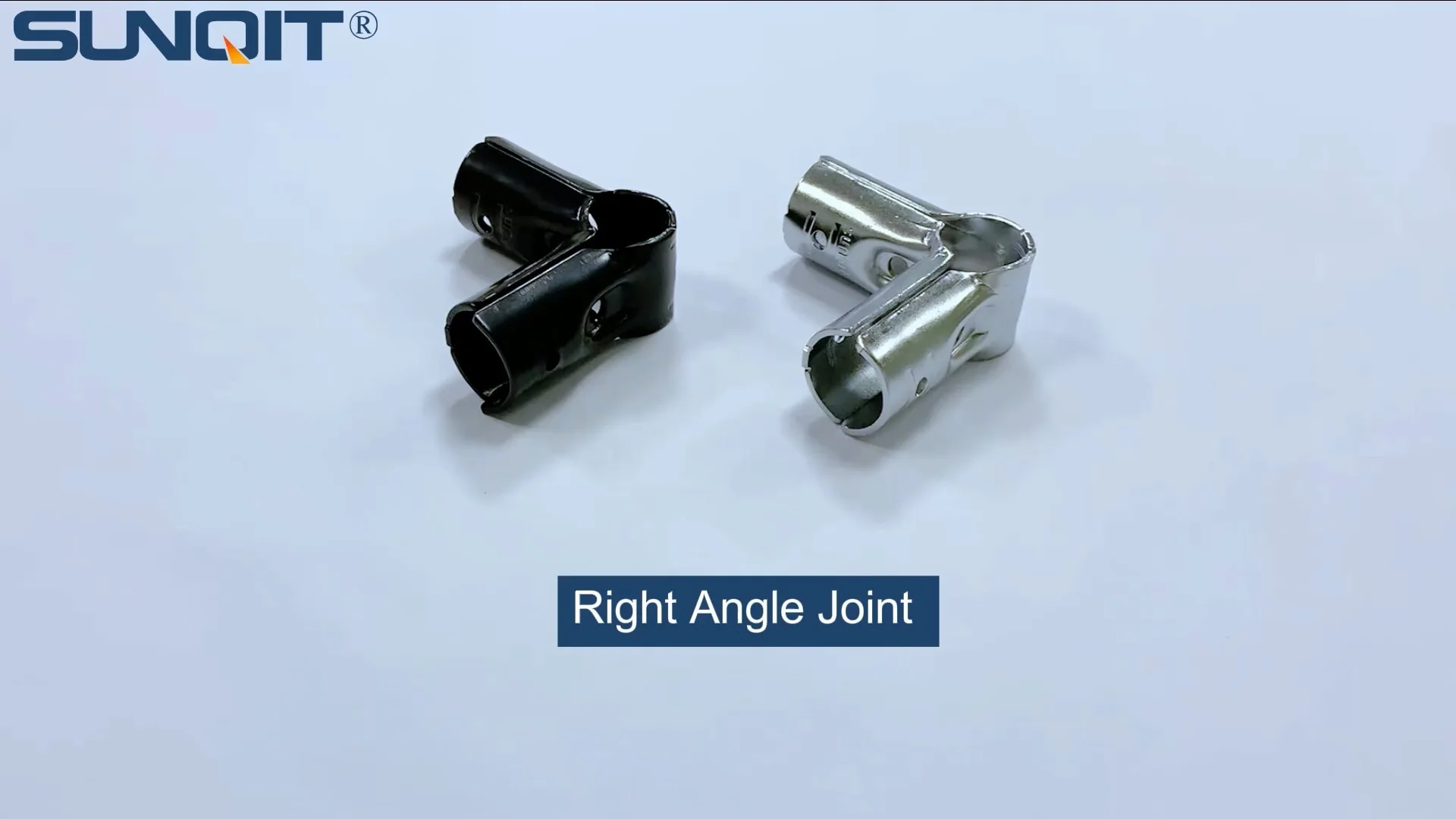
Three way lean pipe joint for 3 pcs 28MM lean pipe connection in straight angle, which used widely in workbench, flow rack, hand trolley frame connection.
The Heartbeat of Automotive Assembly: Why Flexibility Matters
Walk into any modern automotive assembly plant, and you'll feel it immediately—the hum of precision, the rhythm of synchronized movements, and the unspoken pressure to deliver. Every second counts when building cars, trucks, or SUVs, where even a minor delay can ripple into missed deadlines and increased costs. For decades, assembly lines relied on rigid, fixed structures: heavy steel workbenches bolted to the floor, conveyor belts with zero room for adjustment, and material racks that took weeks to reconfigure. But in an industry where consumer demands shift overnight—think electric vehicles one year, hybrid models the next—rigidity has become the enemy.
Enter lean manufacturing. Born from the Toyota Production System, lean principles focus on eliminating waste, streamlining processes, and fostering continuous improvement. At the core of this revolution are modular, adaptable tools that let plants pivot quickly. And among these tools, few components are as unsung yet critical as the Three Way Lean Pipe Joint Chrome . This small but mighty connector is changing how automotive plants build, adjust, and optimize their assembly lines—one joint at a time.
What Is a Three Way Lean Pipe Joint Chrome, Anyway?
Let's start with the basics. A Three Way Lean Pipe Joint Chrome is exactly what it sounds like: a connector designed to join three lean pipes at various angles, all while boasting a durable chrome finish. But to call it "just a connector" would be like calling a piston "just a metal cylinder"—it's the unsung hero that makes the whole system work.
Imagine a T-junction in a pipe system, but with superpowers. This joint isn't limited to 90-degree angles; many models swivel or lock into place, letting engineers create everything from L-shapes to Y-configurations. The chrome coating isn't just for looks, either. In automotive plants—where oil, grease, and occasional spills are par for the course—chrome adds a layer of corrosion resistance, ensuring the joint stays functional for years. It's also easy to wipe clean, which matters in environments where even small debris can jam moving parts.
But the real magic? Its simplicity. No welding, no heavy tools, no specialized training. A worker can twist, lock, and secure three lean pipes in minutes, turning a pile of aluminum or steel tubes into a workbench, a flow rack, or a conveyor support structure. For automotive plants, where change is constant, this speed is game-changing.

Lean Pipe Systems: The Backbone of Modern Assembly Lines
To understand why the Three Way Lean Pipe Joint Chrome matters, we need to zoom out to the bigger picture: lean pipe systems . These systems are built around lightweight, modular pipes (often aluminum or steel) and a variety of joints, brackets, and accessories. Together, they form everything from workstations to material handling racks—all designed to be reconfigured on the fly.
Traditional assembly line setups often required custom-welded steel structures. If a plant wanted to adjust a workbench height to fit a new part, they'd need to call in a welder, wait days (or weeks) for the change, and pay premium prices for the labor. With lean pipe systems, that same adjustment takes an hour: loosen the joints, move the pipes, retighten, and you're done. It's like building with industrial-grade Legos, but for grown-ups solving million-dollar efficiency problems.
In automotive manufacturing, where each model year might require new part sizes, shapes, or assembly steps, this flexibility isn't a luxury—it's survival. Lean pipe systems, anchored by joints like the three-way chrome, let plants adapt without overhauling their entire infrastructure. And that translates to lower costs, faster time-to-market, and happier workers who aren't stuck wrestling with outdated equipment.

Case Study 1: Workbench Reconfiguration at Greenfield Motors
The Problem: Static Workstations Stifle New Model Launches
Greenfield Motors, a mid-sized automaker, faced a classic dilemma in 2023: they needed to ramp up production of their new electric SUV, but their existing workbenches were built for their older gas-powered sedan. The SUV's battery packs were bulkier, requiring wider work surfaces, while its interior panels needed lower workbench heights to reduce worker strain. The old steel workbenches? Bolted to the floor, with no way to adjust width or height without cutting and rewelding.
The timeline was tight: Greenfield had just six weeks to reconfigure 12 assembly stations before the first prototype SUVs rolled through. Welding crews quoted 10 days per station—way too slow. That's when their lean manufacturing consultant suggested a radical idea: scrap the steel and switch to a lean pipe system built around Three Way Lean Pipe Joint Chrome.
The Solution: Modular Workbenches in Days, Not Weeks
Greenfield's team started small: they ordered 200 feet of 28mm aluminum lean pipe, 50 Three Way Lean Pipe Joint Chrome units, and a handful of accessories (casters, adjustable feet, and melamine workbench tops). Within 48 hours, they had their first prototype workbench.
Here's how it worked: Using the three-way chrome joints, they built a frame with adjustable height (thanks to telescoping pipes and locking collars) and variable width (by adding or removing crossbars connected via the three-way joints). The chrome finish meant the joints could handle the occasional battery acid splash without rusting, and the aluminum pipes kept the whole setup lightweight enough for two workers to move—even with a caster-free base.
By the end of the first week, the team had reconfigured all 12 stations. Best of all? When the next model (a compact EV) launches in 2025, they won't need new workbenches—just a few hours with a wrench to adjust the joints and pipes.
The Results: 30% Faster Setup, 25% Less Fatigue
The numbers spoke for themselves. Greenfield cut reconfiguration time from an estimated 120 days (with welding) to just 7 days. Workers reported a 25% reduction in back and shoulder strain, thanks to the adjustable heights. And because the lean pipe workbenches were lighter, the plant saved $12,000 in floor reinforcement costs (no more need for heavy-duty concrete pads).
Case Study 2: Flow Racks That Keep Pace with Mixed-Model Production
The Problem: Bottlenecks in Material Delivery
Midwest Automotive, a tier-1 supplier, produces door panels for three major automakers. Each automaker has its own specs: one wants soft-touch armrests, another requires built-in window switches, and the third insists on recycled-material frames. For years, Midwest used fixed flow racks —angled shelves with roller tracks that let parts "flow" to workers via gravity. But with three distinct door panel types, each with different sizes and weights, the racks became a mess.
The issue? Fixed roller angles. The heavy recycled-material frames needed a steeper incline to flow, while the lightweight soft-touch panels kept jamming on the same slope. Workers spent 20 minutes per shift unjamming parts, and stockouts were common when the wrong panel type was loaded into a rack. Midwest needed flow racks that could adjust angles and shelf heights—without shutting down production.
The Solution: Three Way Joints + Roller Track = Adjustable Flow Racks
Midwest turned to lean pipe again, but this time with a twist: they paired Three Way Lean Pipe Joint Chrome with adjustable roller track sections. Here's the setup:
- A base frame built with lean pipes and three-way joints, allowing for variable width.
- Vertical supports connected via three-way joints, with holes drilled at 2-inch intervals for height adjustment.
- Roller track brackets mounted to the vertical supports, using the three-way joints to angle the tracks anywhere from 5 to 15 degrees.
The chrome joints were key here. Unlike plastic or painted joints, they didn't warp when workers adjusted the angles repeatedly, and the smooth finish prevented snags when sliding roller track brackets into place. Midwest also added small swivel casters (connected via two-way lean pipe joints) to the rack bases, so the entire structure could be rolled out of the way during deep cleaning.
The Results: 25% Fewer Stockouts, 90% Less Jamming
Within a month, Midwest saw dramatic improvements. Unplanned downtime from jams dropped by 90%, and stockouts decreased by 25% because workers could now load the right panel type into the right (angle-adjusted) track. The adjustable heights also meant they could stack more panels per rack—freeing up 15% of floor space for a new quality control station.
Case Study 3: Conveyor Supports That Adapt to EV Battery Production
The Problem: Heavy Batteries, Fragile Conveyors
When East Coast Motors decided to build its first electric truck, they faced a unique challenge: battery packs. These 800-pound units needed to move from the assembly line to the testing area, but their existing conveyor system—designed for 300-pound engine blocks—kept sagging under the weight. Reinforcing the steel conveyor supports would require shutting down the line for two weeks, which East Coast couldn't afford.
The Solution: A Hybrid Conveyor with Lean Pipe Supports
East Coast's engineers proposed a hybrid approach: keep the existing conveyor belt, but replace the steel support frames with a lean pipe system reinforced with Three Way Lean Pipe Joint Chrome. The logic? Steel frames were overkill for light parts but underwhelming for heavy batteries; lean pipe, with its modular joints, could add support exactly where needed.
They built a secondary support structure alongside the conveyor: vertical posts (lean pipe) anchored to the floor, connected via horizontal crossbars (also lean pipe) held in place by Three Way Lean Pipe Joint Chrome. The crossbars supported custom steel brackets that lifted the conveyor belt by 2 inches, reducing sag. The three-way joints allowed the team to add diagonal braces (for stability) and even side rails (to prevent batteries from sliding off).
The Results: Zero Downtime, 100% Uptime
The best part? The entire project was done during night shifts, with zero disruption to daytime production. The lean pipe supports added 400 pounds of capacity per linear foot, and the chrome joints held firm even after 10,000 battery pack cycles. East Coast now uses the same design for their hybrid SUV battery line—proving that the Three Way Lean Pipe Joint Chrome isn't just for small-scale projects.
Traditional vs. Lean Pipe: A Side-by-Side Comparison
| Aspect | Traditional Steel/Welded Systems | Lean Pipe Systems with Three Way Chrome Joints |
|---|---|---|
| Reconfiguration Time | Weeks (requires welding/cutting) | Hours (tools: wrench, hex key) |
| Cost | High (steel, labor, downtime) | 30-50% lower (aluminum/steel pipe, reusable joints) |
| Weight | Heavy (requires forklifts to move) | Lightweight (2-3 workers can reposition) |
| Durability | High, but prone to rust if scratched | High (chrome joints resist corrosion; aluminum/steel pipes withstand wear) |
| Adaptability | Fixed (no changes without rebuilding) | Unlimited (adjust angles, heights, widths in minutes) |
Beyond the Joint: Building a Holistic Lean System
The Three Way Lean Pipe Joint Chrome is powerful, but it's not a standalone solution. To truly transform an assembly line, it needs to work with other lean components. At Greenfield Motors, for example, they paired their lean pipe workbenches with lean pipe and accessories like:
- Caster wheels : For workbenches that need to follow the assembly line (e.g., mobile tool carts).
- Adjustable feet : To level workbenches on uneven factory floors.
- Aluminum honeycomb panels : Lightweight, durable work surfaces that resist dents and scratches.
Midwest Automotive added roller track to their flow racks, turning static shelves into gravity-fed material delivery systems. And East Coast Motors used diagonal braces (connected via three-way joints) to add rigidity to their conveyor supports—proving that the best lean systems are greater than the sum of their parts.
The Future: Where Lean Pipes and Automotive Innovation Meet
As automotive plants shift to electric vehicles, autonomous driving systems, and even 3D-printed parts, the need for flexibility will only grow. Imagine a plant that builds 10 different car models in a single day—each with unique battery layouts, sensor arrays, and interior designs. Fixed structures can't keep up. But a lean system built around modular components like the Three Way Lean Pipe Joint Chrome? That's the future.
Already, we're seeing innovations: aluminum lean pipes with built-in sensors to monitor weight (preventing overloading), and joints with QR codes that link to digital assembly guides. Some suppliers are even experimenting with "smart joints" that adjust angles automatically based on production data. But no matter how fancy the tech gets, the core idea remains the same: build systems that adapt as fast as the industry does.
Final Thoughts: Small Joints, Big Impact
In the grand scheme of automotive manufacturing, the Three Way Lean Pipe Joint Chrome is easy to overlook. It's not as flashy as a robotic arm or as high-tech as a 3D printer. But in the hands of a team committed to lean principles, it becomes a tool for transformation. It turns "we can't" into "we can—by Friday." It turns rigid assembly lines into living, breathing systems that grow with the industry.
So the next time you see a car on the road, take a moment to appreciate the little things—the joints, the pipes, the connectors—that helped build it. And if you're lucky enough to tour an automotive plant? Keep an eye out for those shiny chrome T-junctions. They're not just connecting pipes—they're connecting the past of manufacturing to its future.