- Company Articles
- Products and Technology
- Product knowledge
- Three Way Lean Pipe Joint Chrome in Communication Equipment Manufacturing

Three Way Lean Pipe Joint Chrome in Communication Equipment Manufacturing
Related Product
Three Way Lean Pipe Joint Chrome
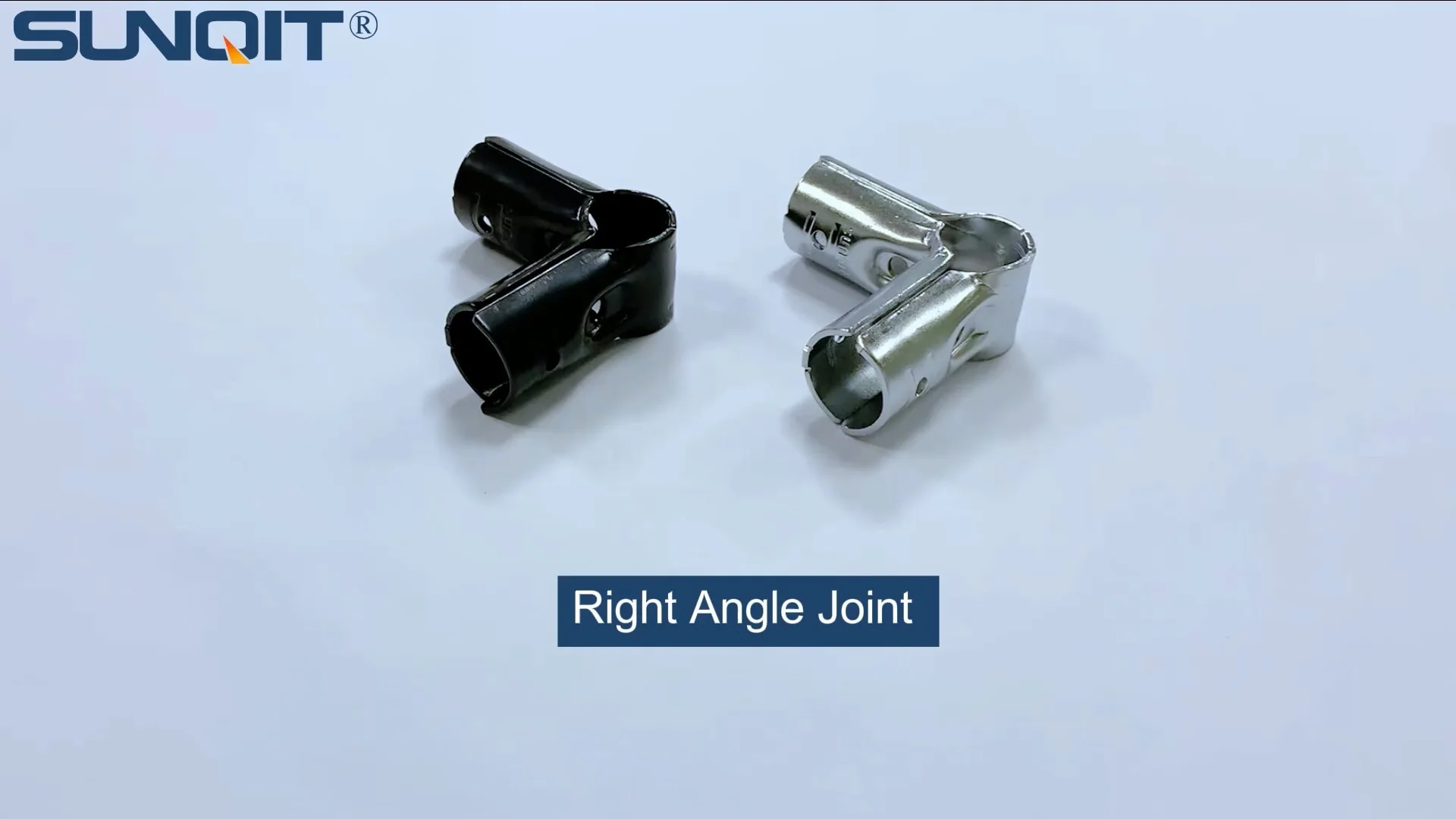
Three way lean pipe joint for 3 pcs 28MM lean pipe connection in straight angle, which used widely in workbench, flow rack, hand trolley frame connection.
The Backbone of Modern Manufacturing: Why Every Component Matters
Walk into any communication equipment manufacturing facility, and you'll be met with a symphony of precision: robotic arms placing microchips, workers hunched over magnifying glasses soldering wires, and conveyor belts gliding with circuit boards destined for routers, modems, or 5G transceivers. In this world, where a single misplaced resistor can derail an entire production run, efficiency isn't just a buzzword—it's the lifeline of the operation. Yet, amidst the high-tech machinery and cutting-edge software, there's an unsung hero holding it all together: the humble lean pipe joint . Specifically, the three way lean pipe joint chrome, a small but mighty component that quietly shapes how production lines are built, adapted, and optimized.
Communication equipment manufacturing is a unique beast. Unlike automotive or consumer goods production, it demands extreme precision (think components smaller than a grain of rice) and rapid adaptation (new 5G standards, miniaturized antennas, and evolving customer specs mean production lines must pivot quickly). This is where lean manufacturing principles shine—and at the heart of lean systems lies the ability to build flexible, modular workspaces. Enter the three way lean pipe joint chrome: a durable, versatile connector that turns basic aluminum or steel pipes into everything from lean pipe workbenches to flow racks, and even custom conveyor systems. It's not just a piece of hardware; it's the glue that turns static production lines into dynamic, responsive ecosystems.
What Is a Three Way Lean Pipe Joint Chrome, Anyway?
Let's start with the basics. A three way lean pipe joint chrome is exactly what it sounds like: a connector designed to join three lean pipes (hollow tubes used in lean manufacturing setups) at various angles—typically 90°, 45°, or 135°—with a chrome-plated finish. But don't let its simplicity fool you. This joint is engineered to solve a critical problem in manufacturing: how to build sturdy, adjustable structures without welding, drilling, or permanently altering materials. Unlike traditional fixed joints, which lock pipes into rigid configurations, the three way chrome joint uses a combination of internal threads, pressure plates, and friction to secure pipes in place—meaning workers can disassemble, reconfigure, and rebuild structures in minutes, not days.
The chrome plating isn't just for aesthetics, either. In communication equipment manufacturing, where moisture, oils, and occasional chemical exposure are part of daily life, corrosion resistance is non-negotiable. Chrome creates a hard, protective layer that stands up to wear and tear, ensuring joints don't degrade over time. This durability is especially important for high-traffic areas like flow racks , where parts are constantly sliding, bumping, and vibrating. A rusted or weakened joint here could lead to collapsed shelves, damaged components, or worse—worker injuries. The three way chrome joint, with its robust plating and precision engineering, eliminates that risk.

Building the Perfect Workspace: From Lean Pipe Workbenches to Flow Racks
Imagine a worker assembling a 5G router. They need their tools within arm's reach, parts organized by size, and a stable surface to prevent static damage to sensitive electronics. Enter the lean pipe workbench —and at its core, the three way lean pipe joint chrome. Unlike generic workbenches, which come in fixed sizes and configurations, a lean pipe workbench built with three way joints is fully customizable. Need a shelf for tools? Add a horizontal pipe using two three way joints. Want a side rail to keep parts from sliding off? Attach a vertical pipe at a 90° angle. Even the height can be adjusted by swapping out pipe lengths—no need to buy a whole new bench when team members of different heights join the line.
But the magic doesn't stop at workbenches. Walk a few steps down the line, and you'll likely encounter flow racks —tilted shelves with roller tracks that let parts "flow" to the assembly station via gravity. These racks are the backbone of just-in-time (JIT) manufacturing, ensuring workers never run out of components and reducing the need for excess inventory. Here, the three way lean pipe joint chrome plays a starring role in two ways: first, by supporting the rack's frame, which must withstand the weight of hundreds of pounds of parts; second, by allowing adjustments to the rack's angle. A steeper tilt might be needed for heavier parts like metal casings, while lighter circuit boards require a gentler slope to avoid damage. With three way joints, changing the angle is as simple as loosening a few bolts, repositioning the pipes, and tightening them back up. No welding, no special tools—just a wrench and a few minutes of work.

The Data Speaks: How Three Way Chrome Joints Outperform Traditional Alternatives
To truly appreciate the impact of the three way lean pipe joint chrome, let's compare it to two common alternatives: plastic lean pipe joints and welded steel joints. The table below breaks down key metrics like durability, adjustability, and cost over time—factors that directly affect communication equipment manufacturing efficiency.
| Feature | Plastic Lean Pipe Joints | Welded Steel Joints | Three Way Lean Pipe Joint Chrome |
|---|---|---|---|
| Durability | Prone to cracking under heavy loads; degrades in high heat or chemical exposure | Highly durable but permanent; welds can weaken over time with vibration | Chrome plating resists corrosion and wear; handles up to 500 lbs per joint without bending |
| Adjustability | Moderate; can be disassembled but plastic threads strip easily after repeated use | None; requires cutting and rewelding to reconfigure | Unlimited; can be disassembled and reused over 100 times without thread damage |
| Installation Time | 10–15 minutes per joint (hand-tightening required) | 30–60 minutes per joint (including welding and cooling time) | 5–8 minutes per joint (tool-free tightening with a standard wrench) |
| Cost Over 5 Years | High; needs replacement every 6–12 months due to wear | High upfront; low maintenance but impossible to repurpose | Low; one-time purchase with minimal replacement needs |
| ESD Compatibility | Limited; plastic is insulating, risking static buildup | High; steel conducts static, but welding can create uneven surfaces | Excellent; chrome plating conducts static, and smooth design prevents dust buildup (critical for ESD-sensitive components) |
The data is clear: while plastic joints are cheap upfront, they fail quickly in high-stress environments. Welded joints are strong but rigid, trapping manufacturers in outdated layouts. The three way lean pipe joint chrome, however, strikes the perfect balance—durable enough to handle heavy loads, flexible enough to adapt to new needs, and cost-effective over the long haul. For communication equipment manufacturers, where production lines are constantly evolving, this flexibility is invaluable. A single joint can go from holding up a workbench today to supporting a conveyor guardrail tomorrow, all without sacrificing performance.
Real-World Impact: A Day in the Life of a Production Line
Let's step into the shoes of Maria, a production supervisor at a mid-sized communication equipment factory. Last month, her team was tasked with shifting from assembling 4G modems to 5G routers—a change that required new tools, smaller components, and a tighter workflow. "Before we switched to three way chrome joints, reconfiguring the line would take a full weekend," Maria recalls. "We'd have to unbolt plastic joints (which often broke), cut welded steel frames, and haul in new workbenches. By Monday, the team was exhausted, and we'd inevitably miss our production targets for the week."
Today, Maria's process is different. "We started by modifying the lean pipe workbenches . Using three way joints, we added side shelves for the new precision tools and adjusted the height to reduce worker strain. Then, we reangled the flow racks to accommodate smaller component bins—just loosened a few bolts, tilted the pipes, and retightened. The whole line was ready by Friday afternoon, and we hit our first 5G router production goal on Monday morning." For Maria, the difference isn't just in time saved; it's in morale. "Workers hate downtime. When they see we can adapt quickly, they feel more valued—like we're invested in making their jobs easier. And easier jobs mean fewer mistakes, which is everything when you're handling $500 circuit boards."
It's not just supervisors who benefit. Juan, an assembler with five years of experience, points to the ESD protection as a game-changer. "Static electricity is the enemy here—one spark can fry a whole batch of chips. The chrome joints conduct static away from the workbench, so I don't have to worry about grounding myself every five minutes. Plus, the joints don't creak or wobble like the old plastic ones. A stable surface means I can focus on soldering, not balancing parts."
Beyond the Line: Integrating with Aluminum Profiles and Conveyors
While three way lean pipe joints are designed for use with lean pipes (typically steel or aluminum), they play surprisingly well with other materials—most notably, aluminum profiles . Aluminum profiles are extruded beams with T-slots, used to build everything from machine guards to automated conveyor frames. In communication equipment manufacturing, where weight and rigidity are both critical, combining lean pipes with aluminum profiles creates a hybrid system that's strong yet lightweight. And the three way lean pipe joint chrome? It's the bridge between the two.
For example, a conveyor system moving circuit boards between assembly and testing stations might use aluminum profiles for the main frame (to reduce vibration) and lean pipes for the side rails (to add flexibility). The three way joint connects the lean pipe rails to the aluminum profile frame, allowing workers to adjust the rail width based on the board size. Need to switch from 10-inch to 8-inch boards? Loosen the joint, slide the pipe, and retighten. No cutting, no drilling—just a 30-second adjustment. This kind of adaptability is crucial in an industry where product specs change as often as seasonal fashion trends.
Aluminum profiles also offer superior corrosion resistance, making them ideal for cleanrooms or areas with strict hygiene standards (common in medical communication devices). When paired with chrome-plated joints, the system becomes nearly maintenance-free. "We used to spend hours sanding and repainting steel frames to prevent rust," says Raj, a maintenance technician. "Now, with aluminum profiles and three way chrome joints, I just wipe them down with a damp cloth. It's cut my weekly maintenance time in half."
The Road Ahead: Why Three Way Lean Pipe Joints Will Shape the Future of Manufacturing
As communication equipment manufacturing hurtles toward Industry 4.0—with smart factories, IoT-connected machines, and AI-driven predictive maintenance—the need for flexible infrastructure will only grow. Fixed production lines are becoming obsolete; the future belongs to modular systems that can adapt to new technologies, materials, and market demands. In this landscape, the three way lean pipe joint chrome isn't just a component—it's a building block of innovation.
Consider the rise of small-batch production. As consumers demand personalized devices (e.g., custom routers for smart homes, ruggedized transceivers for industrial use), manufacturers can't afford to build dedicated lines for every product. Instead, they need "micro-lines" that can switch between designs in hours. Three way joints make this possible by turning production floors into (Lego) sets for adults—where workbenches, flow racks, and conveyors are assembled, disassembled, and reassembled on the fly.
Sustainability is another driver. Traditional manufacturing is notoriously wasteful, with old equipment and fixed structures ending up in landfills. Lean pipe systems, built with reusable joints and recyclable aluminum, are inherently green. A three way lean pipe joint chrome can last 10+ years, and when it finally wears out, the chrome and steel are fully recyclable. "We're aiming for zero waste by 2030," says Lina, a sustainability manager at a major communication tech firm. "Switching to lean pipe systems with reusable joints has already cut our landfill waste by 35%. It's not just good for the planet—it's good for our bottom line, too."
Final Thoughts: The Small Component with a Big Impact
In the grand scheme of communication equipment manufacturing, the three way lean pipe joint chrome is easy to overlook. It doesn't flash lights, process data, or assemble products. But without it, the precision, flexibility, and efficiency that define modern manufacturing would grind to a halt. It's a reminder that innovation isn't always about the latest gadget or fanciest software—sometimes, it's about reimagining the basics. About taking a simple joint and saying, "How can this work harder, last longer, and adapt faster?"
For the workers on the line, the supervisors managing production, and the sustainability teams reducing waste, the three way lean pipe joint chrome is more than a part. It's a promise: that the tools they rely on will keep up with the pace of change, support their best work, and help build the communication devices that connect our world. And in an industry where connection is everything, that's a promise worth keeping.