- Company Articles
- Products and Technology
- Product knowledge
- Three Way Lean Pipe Joint Chrome in Computer Peripheral Production Lines

Three Way Lean Pipe Joint Chrome in Computer Peripheral Production Lines
Related Product
Three Way Lean Pipe Joint Chrome
Three way lean pipe joint for 3 pcs 28MM lean pipe connection in straight angle, which used widely in workbench, flow rack, hand trolley frame connection.
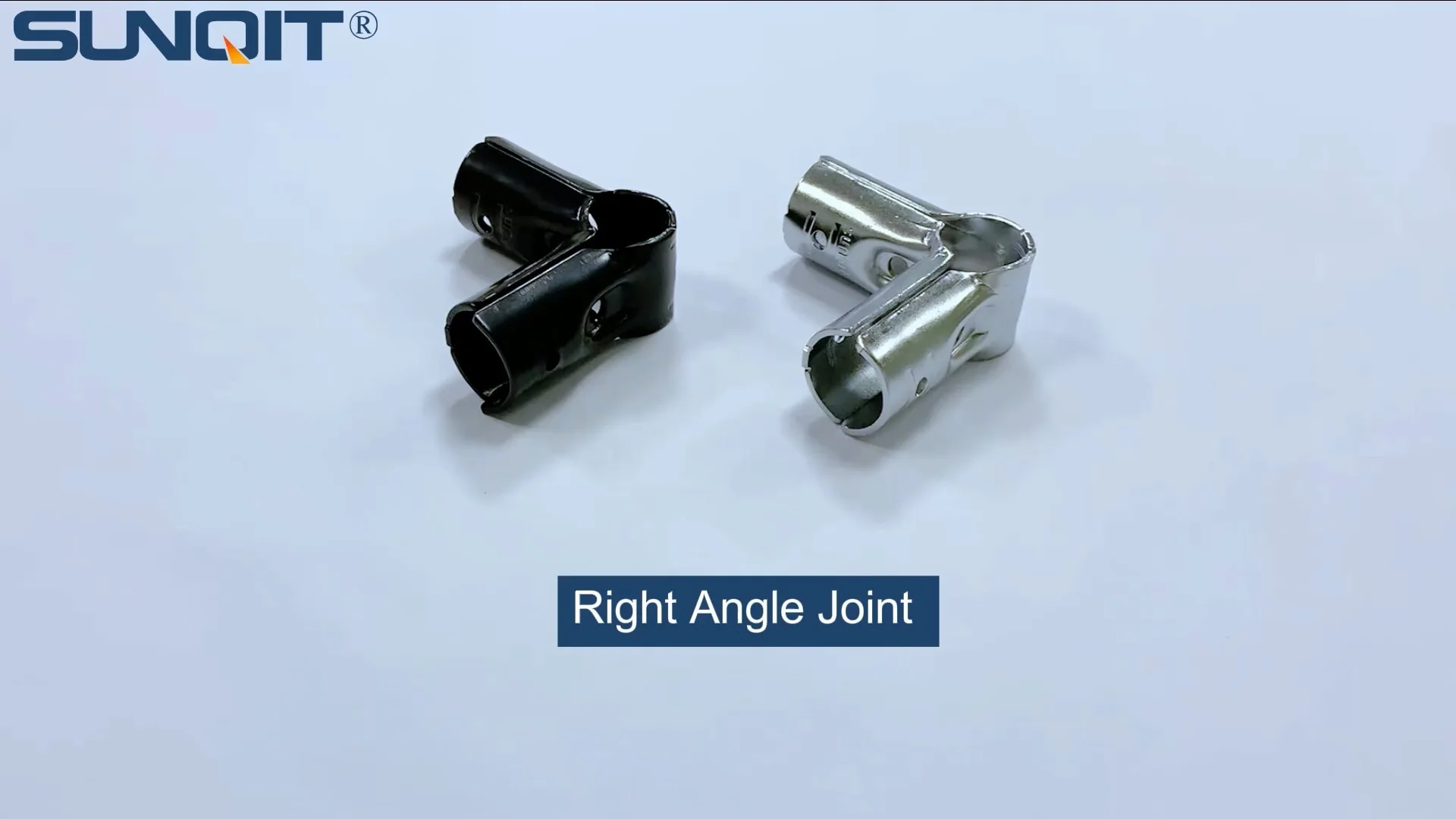
Every time you type on a keyboard, click a mouse, or print a document, you're interacting with a computer peripheral—products that blend precision engineering with seamless functionality. Behind these everyday tools lies a complex production ecosystem, where speed, flexibility, and reliability are non-negotiable. In today's fast-paced manufacturing landscape, computer peripheral production lines face relentless pressure to adapt to evolving consumer demands: slimmer designs, wireless capabilities, eco-friendly materials, and shorter product cycles. To keep up, manufacturers are turning to lean manufacturing principles, and at the heart of this transformation are modular components like the Three Way Lean Pipe Joint Chrome . This unassuming yet critical part is redefining how production lines are built, reconfigured, and optimized—turning rigid workspaces into agile hubs of innovation.
The Challenges of Modern Computer Peripheral Production
Computer peripherals may seem simple, but their production involves intricate steps: from molding plastic casings and soldering circuit boards to assembling tiny components like microchips and sensors. Consider a wireless mouse: its production line must handle delicate PCBs (printed circuit boards), precision-machined scroll wheels, and ergonomic plastic shells—each requiring specific tools, workstations, and material flows. Add to this the need for customization (e.g., gaming mice with RGB lighting vs. basic office models) and strict quality control (even a single misaligned keycap can render a keyboard unusable), and the complexity becomes clear.
Traditional production setups often struggle here. Fixed conveyor belts, immovable workbenches, and bulky material racks leave little room for. When a new product model is introduced, reconfiguring the line can take weeks, causing costly downtime. Material handling is another pain point: components frequently get stuck in transit, leading to delays, while excess inventory piles up, wasting space and capital. These inefficiencies directly contradict the lean manufacturing goal of minimizing waste—whether it's time, space, or resources.
Lean Manufacturing: Building for Adaptability
Lean manufacturing, born from the Toyota Production System, is all about creating value with fewer resources. Its core principles— waste reduction, continuous improvement, and customer-centricity —align perfectly with the needs of computer peripheral production. At its core, lean relies on modular systems : flexible, reusable components that can be quickly assembled, disassembled, and reconfigured to match shifting production demands. This is where lean pipe systems shine.
Lean pipe systems (also known as "flexible pipe systems") consist of lightweight, durable pipes (often steel or aluminum) and connecting joints that allow manufacturers to build custom structures: workbenches, flow racks, material trolleys, and even entire assembly lines. Unlike fixed metal frames, these systems are modular by design—think of them as industrial-grade building blocks. And among these blocks, the Three Way Lean Pipe Joint Chrome stands out for its versatility and strength.

Meet the Three Way Lean Pipe Joint Chrome: Design and Functionality
At first glance, the Three Way Lean Pipe Joint Chrome might seem like a small, unremarkable piece of hardware. But its design is a masterclass in practical engineering. Let's break it down:
- Three-Way Connectivity : As the name suggests, this joint features three openings (typically at 90-degree angles to each other), allowing it to connect three lean pipes in a single, stable junction. This is critical for building multi-directional structures—like the corner of a workbench, a T-junction in a flow rack, or the base of a material trolley.
- Chrome Plating : The chrome finish isn't just for aesthetics. Chrome adds a protective layer that resists corrosion, scratches, and wear—essential in production environments where joints are exposed to oils, coolants, and frequent handling. It also makes cleaning easy; a quick wipe with a cloth removes dust and debris, maintaining hygiene standards.
- Durable Construction : Most Three Way Lean Pipe Joints are made from high-grade steel, ensuring they can withstand the weight of heavy components (e.g., stacks of circuit boards or metal tooling). Even under constant stress—like the vibration of a conveyor belt or the daily movement of materials—these joints maintain their grip, preventing structural wobbles that could compromise product quality.
- Tool-Free Assembly : Unlike welded or bolted joints, lean pipe joints use a simple clamping mechanism. insert a lean pipe into each opening, tighten the joint's screw (often with a hex key), and you're done. This allows workers to assemble or reconfigure structures in minutes, not hours—eliminating downtime and reducing reliance on specialized tools.
To put it simply: the Three Way Lean Pipe Joint Chrome is the "glue" that holds lean production systems together. It transforms individual pipes into robust, adaptable structures that grow and change with your production needs.

How Three Way Lean Pipe Joints Transform Production Lines
Let's step into a real-world scenario: a mid-sized factory producing wireless keyboards. Before adopting lean pipe systems, their assembly line was a maze of fixed wooden workbenches and static metal racks. Workers had to walk 20 feet to retrieve keycaps from a distant shelf, and reconfiguring the line for a new keyboard model (with a different layout) took 3 days of downtime. Today, their line is built around Three Way Lean Pipe Joint Chrome and other modular components. Here's how it works:
1. Ergonomic Workstations That Adapt
Each assembly station is a custom workbench built with lean pipes and Three Way Lean Pipe Joints. The height is adjustable (thanks to telescoping pipes and joints that lock at different lengths), ensuring workers of all sizes can stand or sit comfortably—reducing fatigue and errors. The workbench's surface is a lightweight aluminum honeycomb panel (another modular component), and the corners are reinforced with three way joints, adding stability. Underneath, hanging racks (built with T-junctions using three way joints) hold tools like screwdrivers and soldering irons, keeping them within arm's reach. When a new keyboard model arrives, workers simply loosen the joints, adjust the height, and reposition the tool racks—done in 20 minutes instead of 3 days.
2. Streamlined Material Flow with Flow Racks
Material handling is where Three Way Lean Pipe Joints truly shine. The factory uses flow racks (also called "gravity racks") to move components from storage to assembly stations. These racks are angled slightly downward, so components slide toward workers via roller tracks—eliminating the need for manual carrying. The frame of each flow rack is built with lean pipes and three way joints: vertical pipes for height, horizontal pipes for width, and diagonal pipes (connected via three way joints) for stability. Each tier of the rack is a T-junction, with three way joints supporting the roller tracks. When production shifts to a larger keyboard (requiring bigger keycaps), workers add an extra tier by inserting new pipes into the three way joints—no welding, no heavy lifting.
3. Mobile Material Trolleys for On-Demand Supply
For components that can't be stored in flow racks (e.g., bulky plastic casings), the factory uses turnover trolleys built with lean pipes and three way joints. The trolley's base is a square frame held together by four three way joints, with casters (wheels) attached to the bottom. The top features a flat surface for stacking casings, and side rails (connected via T-junctions) prevent items from falling off. When a workstation runs low on casings, a worker wheels the trolley directly to the station—reducing walk time from 20 feet to 2 steps. After delivery, the trolley is disassembled (by loosening the joints) and stored compactly, saving floor space.
Comparing Lean Pipe Joints: Why Three Way Chrome Stands Out
Not all lean pipe joints are created equal. To understand why Three Way Lean Pipe Joint Chrome is a favorite among manufacturers, let's compare it to other common joint types:
| Joint Type | Connection Points | Load Capacity (kg) | Best For | Key Advantage |
|---|---|---|---|---|
| Three Way Lean Pipe Joint Chrome | 3 (90° angles) | Up to 200 | Workbench corners, flow rack T-junctions, trolley bases | Multi-directional stability; chrome resistance to corrosion |
| Two Way Lean Pipe Joint | 2 (straight line) | Up to 150 | Straight sections of pipes (e.g., workbench edges) | Simplest design; ideal for linear structures |
| 90° Crossing Lean Pipe Joint | 4 (cross shape) | Up to 180 | Overhead racks, intersecting conveyor tracks | Connects perpendicular pipes without T-junctions |
| Swivel Lean Pipe Joint | 2 (rotating) | Up to 100 | Adjustable workbench shelves, tiltable flow racks | Allows pipes to rotate 360° for dynamic positioning |
The Three Way Lean Pipe Joint Chrome's edge lies in its balance of versatility, strength, and durability. While two way joints are great for straight lines and swivel joints offer rotation, three way joints excel at creating the complex, multi-directional structures that modern production lines demand—all while withstanding heavy loads and harsh environments.
Beyond the Joint: Integrating with Other Lean Components
The Three Way Lean Pipe Joint Chrome rarely works alone. It pairs seamlessly with other lean pipe accessories to create fully functional production systems. Here are a few key partnerships:
Lean Pipes
Most lean pipes are 28mm in diameter (a standard size), making them compatible with three way joints. They come in various materials: steel (for heavy loads), aluminum (for lightweight structures), and even PE-coated steel (for electrostatic discharge, or ESD, protection—critical when handling sensitive electronics like PCBs). The Three Way Lean Pipe Joint Chrome grips these pipes tightly, ensuring a secure fit regardless of material.
Flow Racks and Roller Tracks
Flow racks rely on gravity to move materials, and their frames are often built with lean pipes and three way joints. Roller tracks (plastic or metal) are attached to the frame, allowing components to slide smoothly. For example, a three way joint might support the vertical post of the rack, while another connects the horizontal rail that holds the roller track. This modularity lets manufacturers adjust the rack's height, width, or number of tiers to match the size of components (e.g., small sensors vs. large printer casings).
Workbenches
A typical lean workbench has a frame of lean pipes connected by three way joints (at the corners) and two way joints (along the edges). The top is a wooden, aluminum, or ESD-safe panel, and accessories like tool hooks, monitor arms, or LED lights can be added by clamping them to the pipes. If a worker needs more space, simply loosen the three way joints, extend the pipes, and re-tighten—no sawing or welding required.
Casters and Wheels
For mobile structures like material trolleys, casters (wheels) are attached to the base frame—often via a plate connected to three way joints. This allows the trolley to roll smoothly across the factory floor, and locking casters keep it stable during loading/unloading. When mobility isn't needed, the casters can be removed, and the frame can be converted into a static rack—all thanks to the joint's tool-free design.
The Bottom Line: ROI of Three Way Lean Pipe Joint Chrome
Investing in modular lean systems isn't cheap—but the return on investment (ROI) is clear. Let's crunch the numbers for our keyboard factory example:
- Downtime Reduction : Reconfiguring the line for a new model now takes 20 minutes instead of 3 days. With 12 new models per year, that's 36 days of saved production time—enough to produce 10,000 extra keyboards (at 500 units/day).
- Labor Savings : Workers no longer walk 20 feet per component retrieval. With 10 workers per shift, 8-hour shifts, and 250 workdays/year, that's 25,000 fewer steps—reducing fatigue and boosting productivity by ~15%.
- Space Optimization : Disassembled trolleys and adjustable racks free up 300 sq. ft. of floor space, which is repurposed for a new testing station—adding $50,000/year in revenue.
- Durability : Chrome-plated joints last 5+ years (vs. 2-3 years for uncoated joints), reducing replacement costs by 40%.
In short: the Three Way Lean Pipe Joint Chrome isn't just a component—it's a catalyst for operational excellence. It turns production lines from fixed obstacles into flexible assets that can adapt, grow, and thrive in an ever-changing market.
Future-Proofing Production: What's Next for Lean Systems?
As computer peripheral production becomes more automated and connected (thank you, Industry 4.0), lean pipe systems are evolving too. Manufacturers are already experimenting with "smart" lean joints—equipped with sensors that monitor load capacity, joint tightness, or even temperature. Imagine a three way joint that alerts managers when it's loose, preventing a potential collapse. Or a joint with RFID tags that track which components are stored on a flow rack, streamlining inventory management.
Sustainability is another trend. Aluminum lean pipes (lighter and more recyclable than steel) are growing in popularity, and manufacturers are exploring bio-based plastics for joint components. The Three Way Lean Pipe Joint Chrome, with its long lifespan and recyclable steel core, is already aligned with these goals—proving that efficiency and eco-friendliness can go hand in hand.
Conclusion: The Joint That Powers Possibility
In the world of computer peripheral production, success hinges on the ability to adapt. The Three Way Lean Pipe Joint Chrome may be small, but its impact is enormous. It turns rigid production lines into flexible ecosystems where waste is minimized, workers are empowered, and innovation thrives. Whether you're building a workbench for assembling mice, a flow rack for storing printer parts, or a trolley for transporting circuit boards, this joint is the quiet hero that makes it all possible.
So the next time you type on your keyboard or click your mouse, take a moment to appreciate the engineering behind it—not just the product itself, but the modular, adaptable systems that brought it to life. And remember: every great production line starts with a single joint.