- Company Articles
- Products and Technology
- Product knowledge
- Three Way Lean Pipe Joint Chrome in Consumer Electronics Manufacturing

Three Way Lean Pipe Joint Chrome in Consumer Electronics Manufacturing
Related Product
Three Way Lean Pipe Joint Chrome
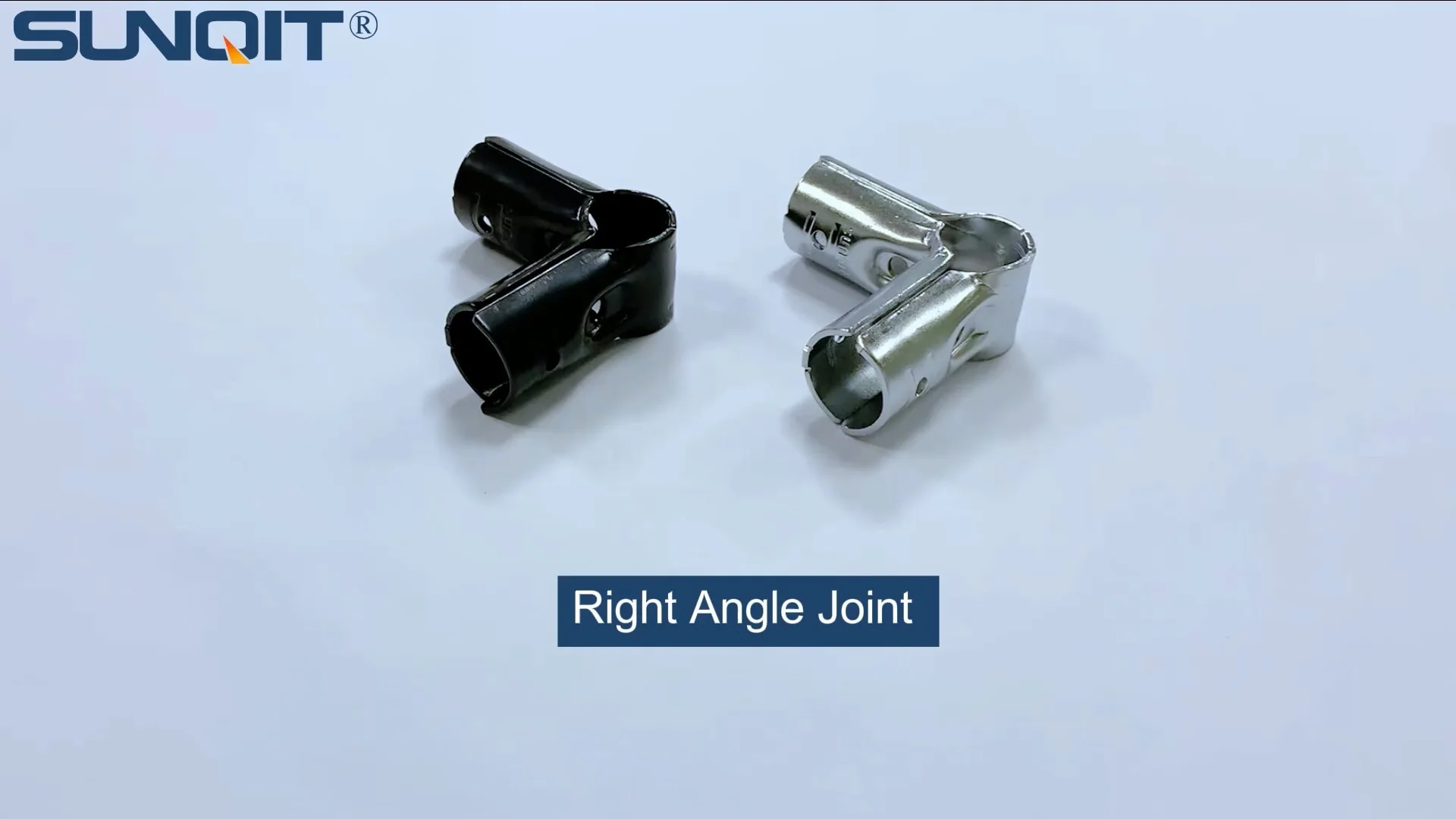
Three way lean pipe joint for 3 pcs 28MM lean pipe connection in straight angle, which used widely in workbench, flow rack, hand trolley frame connection.
The Race to Build the Next Big Thing: Why Every Second Counts in Consumer Electronics
Walk into any consumer electronics factory today, and you'll feel the buzz of a well-oiled machine—literally. Conveyor belts hum as circuit boards glide past, workers in static-free smocks assemble tiny components with precision, and screens light up as prototypes of the next smartphone or smartwatch take shape. In this world, where product lifecycles shrink from years to months, and customer demand shifts overnight, efficiency isn't just a goal—it's survival. Miss a deadline, and your competitor's latest gadget hits the shelves first. Cut corners on quality, and a single faulty batch can tank a brand's reputation. So, what keeps these factories running like clockwork? It's not just the high-tech robots or the skilled workforce—it's the often-overlooked backbone of lean manufacturing: modular, adaptable systems built on components like the Three Way Lean Pipe Joint Chrome .
Consumer electronics manufacturing is a unique beast. Unlike automotive or heavy machinery production, where lines can run unchanged for years, electronics factories need to pivot fast. A new phone model might require rearranging assembly stations. A sudden surge in demand for wireless earbuds could mean adding extra workbenches overnight. And with components getting smaller and more delicate—think microchips the size of a fingernail or OLED screens that crack at the slightest pressure—stability and precision in every step of the process are non-negotiable. This is where lean systems shine, and at the heart of these systems lies a humble yet powerful tool: the Three Way Lean Pipe Joint Chrome. It's not flashy, but it's the reason factories can reconfigure, adapt, and thrive in an industry that never stands still.
Lean Manufacturing 101: Why Modularity is the Name of the Game
Before diving into the specifics of the Three Way Lean Pipe Joint Chrome, let's take a step back and talk about lean manufacturing. At its core, lean is about eliminating waste—whether that's wasted time, wasted space, or wasted effort. In consumer electronics, where every square foot of factory floor costs money and every minute of downtime eats into profits, lean principles aren't just guidelines; they're the rulebook. And the most effective way to implement lean? Modular systems. Instead of building fixed, permanent structures that take weeks to tear down and rebuild, modular systems use interchangeable components that can be assembled, disassembled, and reconfigured in hours. Think of it like building with high-quality Legos—strong enough to support heavy equipment, but flexible enough to rebuild into something entirely new when needed.
This is where components like lean pipe workbenches , flow racks , and roller tracks come into play. A lean pipe workbench isn't just a table; it's a customizable station where workers can assemble, test, and package products, with built-in tool holders, ESD (electrostatic discharge) mats to protect sensitive components, and adjustable heights to keep workers comfortable. A flow rack isn't just a shelf; it's a gravity-fed storage system that ensures the first part in is the first part out, reducing the risk of obsolete inventory. And a roller track? It's the silent conveyor that moves parts from station to station smoothly, cutting down on manual lifting and speeding up production. But here's the catch: all these systems rely on one critical component to hold them together and keep them flexible—the joints that connect the pipes, racks, and tracks. And when it comes to durability, versatility, and sheer reliability, the Three Way Lean Pipe Joint Chrome stands head and shoulders above the rest.

Meet the Three Way Lean Pipe Joint Chrome: Small Component, Big Impact
At first glance, the Three Way Lean Pipe Joint Chrome might seem unremarkable. It's a small, roughly cubic connector with three openings, each designed to fit standard lean pipes. But looks can be deceiving. This little joint is engineered to solve one of the biggest challenges in factory design: how to create stable, multi-directional structures that are both strong and easy to adjust. Let's break down what makes it so special.
Material Matters: Chrome Plating for the Long Haul Consumer electronics factories are tough environments. Dust, humidity, and occasional spills are par for the course, not to mention the constant vibration from machinery. A cheap plastic joint would crack under the stress; a basic steel joint would rust, leaving metal shavings that could damage sensitive electronics. The Three Way Lean Pipe Joint Chrome, however, is built to last. Its core is made from high-grade steel, ensuring it can support heavy loads—think a fully loaded flow rack stacked with laptop batteries or a workbench with a 50kg testing machine on top. Then, it's coated in a thick layer of chrome, which acts as a shield against corrosion, rust, and wear. Chrome plating also gives the joint a smooth, clean finish that resists dust buildup—a must in environments where even a single speck of dirt can ruin a circuit board.
Three Ways to Connect: Flexibility in Every Direction The "three way" in the name isn't just a gimmick. This joint is designed to connect three lean pipes at once, in almost any angle—90°, 45°, even custom angles for unique setups. Need to build a corner on a workbench? Connect two pipes at 90°. Want to add a vertical shelf to a flow rack? Use the third opening to attach a pipe straight up. This flexibility is a game-changer for factories that need to adapt quickly. For example, when a manufacturer launches a new smartwatch, they might need to add a small, angled shelf to their existing workbench to hold specialized tools. With a standard two-way joint, that would mean adding extra connectors or even rebuilding the entire section. With the Three Way Lean Pipe Joint Chrome? It's as simple as sliding a third pipe into the joint and tightening a screw. No welding, no drilling, no downtime.
Tool-Less Assembly: Because Time is Money In a factory where every minute counts, the last thing anyone needs is to spend hours assembling or disassembling equipment. The Three Way Lean Pipe Joint Chrome is designed for speed. It uses a simple set-screw mechanism: slide a lean pipe into one of the joint's openings, tighten the screw with a hex key, and you're done. No need for power tools, no need for specialized training. Even a new worker can learn to use it in minutes. This tool-less design also means that if a joint wears out or gets damaged, it can be replaced in under five minutes—no need to shut down the entire line while a maintenance crew cuts and welds a new connection. For factories running 24/7 shifts, this quick replacement is invaluable.

Why Chrome Joints Outshine the Rest: A Side-by-Side Comparison
You might be thinking, "There are other lean pipe joints out there—why choose chrome-plated three-way ones?" To answer that, let's compare the Three Way Lean Pipe Joint Chrome to two common alternatives: basic plastic joints and unplated steel joints. The table below breaks down the key differences:
| Feature | Basic Plastic Joints | Unplated Steel Joints | Three Way Lean Pipe Joint Chrome |
|---|---|---|---|
| Durability | Prone to cracking under heavy loads; degrades in high humidity. | Strong, but rusts easily in damp environments; rough surface traps dust. | Chrome plating resists rust and corrosion; steel core handles heavy loads (up to 150kg per joint). |
| Flexibility | Limited to 2-way connections; angles are fixed. | Some 3-way options, but angles are often rigid. | 3-way connections with adjustable angles; compatible with all standard lean pipe sizes. |
| ESD Compatibility | Can generate static electricity, risking damage to sensitive electronics. | Conductive, but rust can disrupt static grounding. | Smooth chrome surface minimizes static buildup; compatible with ESD mats and grounding systems. |
| Maintenance | Need frequent replacement due to wear; hard to clean dust from crevices. | Require regular painting to prevent rust; rough surface needs constant dusting. | Low maintenance: wipe clean with a cloth; chrome resists rust, so no repainting needed. |
| Cost Over Time | Cheap upfront, but high replacement costs add up. | Moderate upfront cost, but rust and maintenance add long-term expenses. | Slightly higher upfront cost, but lasts 3-5x longer than plastic; no ongoing maintenance costs. |
As the table shows, the Three Way Lean Pipe Joint Chrome isn't just a better option—it's a smarter investment. While plastic joints might save a few dollars upfront, they cost more in the long run due to frequent replacements. Unplated steel joints are strong but require constant upkeep. Chrome-plated three-way joints, on the other hand, offer durability, flexibility, and low maintenance—all critical factors in consumer electronics manufacturing.
Putting It All Together: How the Three Way Joint Powers Key Factory Systems
Now that we've covered the "what" and "why" of the Three Way Lean Pipe Joint Chrome, let's look at the "how." How does this small component fit into the larger ecosystem of a consumer electronics factory? Let's explore three key systems where it plays a starring role: lean pipe workbenches , flow racks , and roller tracks .
1. Lean Pipe Workbenches: The Heart of Assembly Lines
Walk through any electronics assembly line, and you'll see workbenches everywhere. These are where the magic happens—where workers solder components, test circuits, and assemble final products. A well-designed workbench can boost productivity by 20% or more, while a poorly designed one leads to fatigue, errors, and wasted time. The Three Way Lean Pipe Joint Chrome is critical to building workbenches that are both sturdy and adaptable.
Take, for example, a workbench used to assemble smartphone motherboards. These motherboards are delicate, so the workbench needs to be at a comfortable height to reduce worker strain. It also needs built-in shelves for tools, ESD mats to prevent static damage, and maybe even a small overhead light to illuminate the tiny components. With the Three Way Lean Pipe Joint Chrome, building this workbench is a breeze. The frame is made from lean pipes connected at the corners with three-way joints, providing a stable base. A vertical pipe is added to one side using the third joint opening, with shelves attached at different heights for tools. Even the overhead light can be mounted on a horizontal pipe connected via—you guessed it—a three-way joint. And if the factory switches to assembling larger tablets six months later? The shelves can be adjusted up or down by simply loosening the joint screws, sliding the pipes to the new height, and retightening. No need to buy a whole new workbench.
2. Flow Racks: Keeping Parts Moving, Without the Fuss
In consumer electronics manufacturing, parts come in all shapes and sizes—from tiny screws to large display screens. Keeping these parts organized and easy to access is key to maintaining a smooth workflow. That's where flow racks come in. Flow racks use gravity to slide parts from the back to the front, ensuring that the oldest parts (first in) are used first (first out), reducing waste from expired components. The Three Way Lean Pipe Joint Chrome is essential for building strong, flexible flow racks that can handle different part sizes.
Imagine a flow rack used to store lithium-ion batteries for wireless headphones. These batteries are small but heavy, so the rack needs to support multiple levels of storage. With three-way joints, each level can be connected to the vertical support pipes at exactly the right height. The front of each level has a roller track (more on that next) to let the battery trays slide forward, while the back is slightly elevated to use gravity. If the factory starts producing a new, larger battery, they can easily add an extra level to the rack by attaching new horizontal pipes to the vertical supports using the three-way joints. No need to rebuild the entire rack—just add a few new components and tighten the screws.
3. Roller Tracks: Smooth Material Flow, Even with Heavy Loads
Roller tracks are the unsung heroes of material handling. These tracks use small rollers to let trays, bins, and even entire subassemblies glide from one station to the next, reducing the need for manual lifting. In electronics factories, where workers might move hundreds of parts per day, roller tracks prevent injuries and speed up production. But roller tracks need to be strong enough to support heavy loads and flexible enough to fit around corners or connect different parts of the factory. Again, the Three Way Lean Pipe Joint Chrome delivers.
Consider a roller track that moves completed circuit boards from the assembly station to the testing station. This track might need to turn a 90° corner halfway through. With standard two-way joints, this would require a complicated setup of extra connectors and support brackets. With the Three Way Lean Pipe Joint Chrome, it's simple: connect the straight section of the track to one opening, the corner section to another, and a vertical support pipe to the third opening to keep the track stable. The joints ensure the track stays level and the rollers spin smoothly, even when carrying heavy circuit boards. And if the testing station moves to a new location? The track can be disassembled, moved, and reassembled in under an hour, using the same three-way joints.
A Day in the Life: How the Three Way Joint Makes a Difference on the Factory Floor
To really understand the impact of the Three Way Lean Pipe Joint Chrome, let's follow a typical day at a hypothetical consumer electronics factory—let's call it "TechFlow Electronics"—that specializes in wireless earbuds.
7:00 AM: Morning Shift Starts, and a Workbench Needs a Makeover Maria, the assembly line supervisor, arrives to find an urgent email: TechFlow is launching a limited-edition earbud with a new color scheme, and production starts today. The existing workbenches for earbud assembly have black tool shelves, but the new model requires pink tools (to match the branding, of course). The shelves need to be adjusted to fit the new tool organizers, which are slightly larger than the old ones. Maria heads to the factory floor and finds Juan, a line worker, already waiting. Together, they grab a few extra lean pipes and Three Way Lean Pipe Joint Chromes from the supply closet. Using the joints, they quickly add two new horizontal pipes to the workbench's vertical supports, creating wider shelves. It takes 15 minutes—just enough time for Juan to grab a coffee before the shift starts. "Last year, we would've had to order a whole new workbench," Maria says. "Now? We just reconfigure. It's like magic."
12:30 PM: A Flow Rack Needs Reinforcement By lunchtime, the flow rack storing earbud batteries is getting a workout—the new model is popular, and demand is higher than expected. The middle shelf is starting to sag under the weight of extra battery trays. Carlos, the maintenance technician, is paged. He grabs a three-way joint and a short vertical pipe, climbs a ladder, and adds a support under the sagging shelf. Using the joint, he connects the vertical support to both the shelf and the main frame of the rack. Five minutes later, the shelf is stable again. "With the old steel joints, I would've had to weld a new support," Carlos says. "That would've taken an hour, and we would've lost production. Now, I'm back to my lunch before my sandwich gets cold."
4:00 PM: A Roller Track Jam—But Not for Long The afternoon shift brings a new challenge: a roller track carrying earbud cases from the molding station to the packaging station has jammed. The cause? A small crack in one of the roller track's support pipes, which has thrown the track off balance. Priya, another maintenance tech, assesses the problem. She replaces the cracked pipe and uses a Three Way Lean Pipe Joint Chrome to reconnect it to the track's frame. She tightens the set screw, gives the track a test push (a case glides smoothly through), and heads back to her desk. Total downtime? Three minutes. "If we'd used plastic joints, that crack would've spread to the joint itself," Priya says. "Chrome steel holds up better. We probably won't have to touch this track again for months."
8:00 PM: Night Shift Preps for Tomorrow's New Launch As the night shift starts, the factory is already gearing up for tomorrow's big event: the launch of a new wireless charger that pairs with the limited-edition earbuds. This means adding a new assembly station near the earbud line. Using lean pipes, flow rack shelves, and—you guessed it—dozens of Three Way Lean Pipe Joint Chromes, the night crew builds a new workbench and roller track in under two hours. By morning, the station is ready to go. "Two years ago, setting up a new station would've taken a week and cost $10,000," says Raj, the factory manager. "Now? It's $500 in materials and a couple of hours. That's the power of modular systems—and good joints."
Choosing the Right Supplier: What to Look for in a Three Way Lean Pipe Joint Chrome Provider
Now that you're convinced of the Three Way Lean Pipe Joint Chrome's value, the next step is finding a reliable supplier. Not all joints are created equal—some are made with cheap steel that bends under pressure, or thin chrome plating that chips off after a few months. To ensure you're getting a quality product, look for these key traits in a supplier:
- Quality Certifications: Look for suppliers with ISO 9001 certification, which ensures consistent quality control. For electronics manufacturing, ESD compliance is also a must—ask if the joints are tested to prevent static buildup.
- Material Testing: Reputable suppliers will provide test reports showing the joint's load capacity (it should handle at least 150kg per joint) and chrome plating thickness (at least 0.01mm for durability).
- Range of Accessories: The best suppliers offer not just joints, but also compatible lean pipes, roller track components, and workbench accessories. This ensures everything fits together seamlessly.
- Technical Support: Even the best components need occasional troubleshooting. Choose a supplier with responsive technical support that can help with custom configurations or installation questions.
- Consistency: In manufacturing, consistency is key. Make sure the supplier's joints have tight tolerances—pipes should fit snugly into the openings, and set screws should tighten evenly without stripping.
The Future of Lean Manufacturing: Where Three Way Joints and Smart Factories Meet
As consumer electronics manufacturing moves toward smart factories—where IoT sensors, AI, and automation work together to optimize production—the Three Way Lean Pipe Joint Chrome is evolving too. Here are a few trends to watch:
Smart Joints with Built-In Sensors: Imagine a joint that can detect when it's loose or under too much strain and sends an alert to maintenance before it fails. Some suppliers are already experimenting with embedding tiny sensors into three-way joints to monitor temperature, vibration, and tension. This predictive maintenance could reduce downtime by up to 30%.
Lightweight, High-Strength Alloys: While chrome-plated steel is strong, future joints might use aluminum-chrome hybrids or carbon fiber composites to reduce weight without sacrificing durability. This would make workbenches and racks easier to move, which is critical for factories using autonomous mobile robots (AMRs) to transport equipment.
3D-Printed Custom Joints: For ultra-unique setups, 3D printing could allow factories to create custom three-way joints on demand. Need a joint that connects pipes at a 120° angle for a curved workbench? Print it in-house in a few hours. While 3D-printed joints aren't as strong as steel ones yet, advances in materials like carbon fiber-reinforced plastics are closing the gap.
Final Thoughts: Small Component, Big Impact
In the fast-paced world of consumer electronics manufacturing, success hinges on the ability to adapt, innovate, and produce high-quality products at lightning speed. While flashy technologies like robots and AI get most of the attention, it's the small, reliable components that keep the industry running—components like the Three Way Lean Pipe Joint Chrome. It's not glamorous, but it's essential. It's the reason factories can reconfigure a workbench in 15 minutes, reinforce a flow rack in 5, or build a new assembly line overnight. It's the unsung hero that turns chaos into order, waste into efficiency, and ideas into products that end up in the hands of millions.
So, the next time you unbox a new smartphone or pop in a pair of wireless earbuds, take a moment to appreciate the journey that product took to reach you. Somewhere, in a factory far away, a Three Way Lean Pipe Joint Chrome played a part in building it—quietly, reliably, and without fanfare. And in the world of lean manufacturing, that's the highest compliment of all.