- Company Articles
- Products and Technology
- Product knowledge
- Three Way Lean Pipe Joint Chrome in Home Appliance Production Lines

Three Way Lean Pipe Joint Chrome in Home Appliance Production Lines
Related Product
Three Way Lean Pipe Joint Chrome
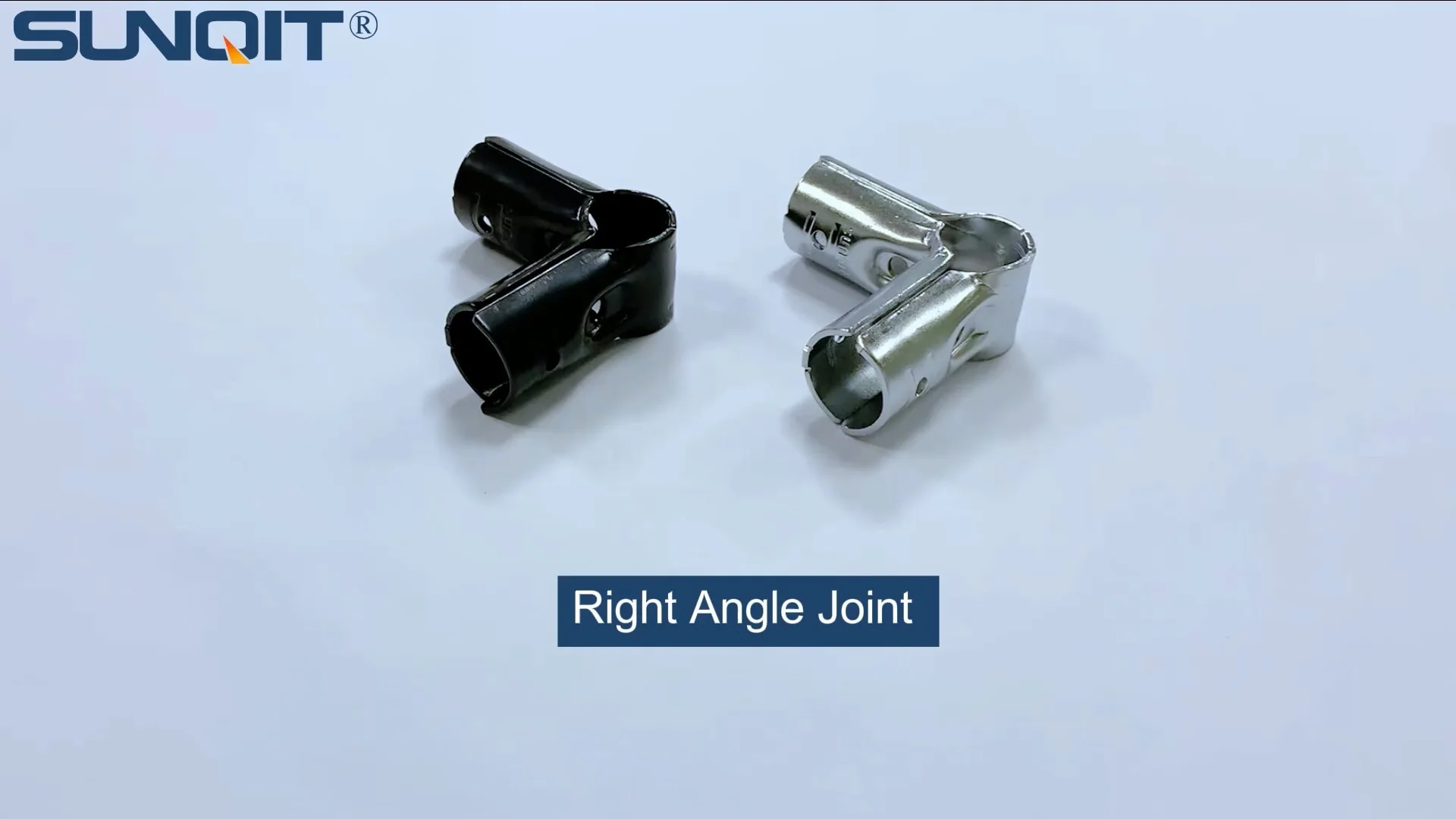
Three way lean pipe joint for 3 pcs 28MM lean pipe connection in straight angle, which used widely in workbench, flow rack, hand trolley frame connection.
Walk into any modern home appliance factory, and you'll likely be struck by the rhythm of precision: robots assembling circuit boards, workers fitting door hinges onto washing machines, and conveyor belts gliding with seamless purpose. But behind this harmony lies a hidden framework—one built not on automation alone, but on adaptability. In an industry where product lines shift yearly (think smart fridges one season, energy-efficient dryers the next), rigidity is the enemy. This is where lean manufacturing systems take center stage, and at the heart of these systems? A small but mighty component: the three way lean pipe joint chrome.
You might not notice it at first glance, but this unassuming connector is the glue that holds together the workbenches, flow racks, and conveyors that keep production moving. It's the reason a factory can reconfigure an assembly line in hours instead of weeks, or scale up a workbench to handle heavier parts without rebuilding from scratch. In this article, we'll dive into why the three way lean pipe joint chrome has become indispensable in home appliance manufacturing, how it transforms workflows, and why choosing the right lean pipe supplier matters just as much as the joint itself.
The Home Appliance Production Challenge: Why Flexibility Can't Be an Afterthought
Home appliance manufacturing is a balancing act. On one hand, there's the pressure to churn out high volumes—millions of units annually for top brands. On the other, consumer demands are more fickle than ever. A few years ago, stainless steel finishes were all the rage; today, it's matte black and smart-home integration. This means factories can't afford to be stuck with fixed, one-size-fits-all production setups. A workbench designed for a 2023 refrigerator might be useless for a 2024 model with a larger ice dispenser. A flow rack built to hold small mixer parts won't work for bulkier oven components.
Traditional production lines relied on welded steel frames or wooden shelves—sturdy, but static. If a factory needed to adjust a workbench height or add a shelf to a flow rack, it meant calling in welders or carpenters, halting production for days. The cost? Lost time, missed deadlines, and frustrated teams. Enter lean manufacturing: a philosophy centered on minimizing waste, maximizing flow, and staying agile. And lean systems, by their nature, depend on modularity. This is where lean pipes and their joints come in.
Lean Systems 101: Building Blocks for the Modern Factory
At its core, a lean system is about creating a production environment that bends, not breaks, with change. Instead of permanent structures, lean setups use lightweight, reusable components—like lean pipes (hollow tubes made of steel, aluminum, or stainless steel) and joints (connectors that link pipes together). This modular approach lets factories build, dismantle, and rebuild structures quickly, without specialized tools or downtime.
But not all joints are created equal. A two-way joint might connect two pipes in a straight line, but what if you need to branch off at a 90-degree angle to add a shelf? Or create a three-pronged frame for a flow rack with multiple levels? That's where the three way lean pipe joint chrome shines. With three ports for connecting pipes, it's the Swiss Army knife of lean components—versatile, strong, and designed to handle the chaos of a busy factory floor.

Meet the Star: What Makes the Three Way Lean Pipe Joint Chrome Special?
Let's start with the basics: what is a three way lean pipe joint chrome? Picture a small, roughly T-shaped or Y-shaped connector, usually made of die-cast zinc or steel, then coated in a layer of chrome. Its three openings (ports) are sized to fit standard lean pipes (typically 28mm or 30mm in diameter), with internal threads or friction grips that lock pipes in place. Unlike fixed joints, many three way models allow for rotation, so you can angle pipes at 30°, 45°, 90°, or anything in between—no need for custom cutting or welding.
The chrome plating isn't just for looks. In a factory where oil, coolant, and occasional spills are part of daily life, corrosion is a constant threat. Chrome creates a hard, non-porous barrier that resists rust and wear, extending the joint's lifespan. It also adds a smooth finish, making cleanup easier and reducing the risk of snags when workers handle materials. For factories that prioritize cleanliness (like those making food-grade appliances), this is a game-changer.
But the real magic is in its load capacity. A high-quality three way lean pipe joint chrome can support hundreds of pounds—enough to hold heavy parts bins on a flow rack or stabilize a workbench during assembly. This strength comes from its design: reinforced stress points, precision machining, and a tight grip on pipes that prevents slippage, even under vibration (like from nearby conveyor motors).
Design Deep Dive: Why Chrome Plating Matters
Chrome plating isn't just about aesthetics. The process involves electroplating a thin layer of chromium onto the joint's base metal, which bonds tightly to create a surface that's harder than steel. This hardness means the joint can withstand repeated tightening and loosening (a common occurrence in modular setups) without stripping threads or cracking. It also resists scratches from tools or heavy parts, keeping the joint looking (and working) like new for years.
Compare this to unplated joints, which might rust after a few months in a humid factory, or plastic joints, which can warp under heat or heavy loads. Chrome-plated joints are built to last, making them a cost-effective choice in the long run—even if they cost a bit more upfront than cheaper alternatives.

Applications in Action: How Factories Use Three Way Joints Every Day
To understand the three way lean pipe joint chrome's impact, let's walk through three critical areas of home appliance production: lean pipe workbenches, flow racks, and conveyors. In each case, the joint isn't just a connector—it's the enabler of efficiency.
1. Lean Pipe Workbenches: Where Assembly Meets Adaptability
A lean pipe workbench is the heart of any assembly station. It's where workers stand for hours, fitting parts, testing components, and keeping tools within arm's reach. But not all workers are the same height, and not all tasks require the same setup. A three way joint lets factories customize workbenches to fit both people and products.
Imagine a workbench for assembling dishwasher control panels. The base frame uses three way joints to connect vertical pipes (for height) and horizontal pipes (for the tabletop). Need to add a shelf for tools? Attach a short pipe to one of the joint's ports and slide on a plywood or aluminum top. Want to lower the bench for a shorter worker? Loosen the joints, adjust the vertical pipes, and retighten—done in 10 minutes, no tools beyond an Allen wrench.
The chrome coating here is crucial. Workbenches see constant use: parts are dropped, tools are leaned against pipes, and spills happen. A rusted joint could weaken over time, making the bench wobbly and unsafe. Chrome keeps the joint strong, even with daily wear and tear.
2. Flow Racks: Keeping Materials Moving (Without the Headaches)
Flow racks are the unsung heroes of material handling. These tilted racks use gravity to slide parts from the back (where they're stocked) to the front (where workers pick them), ensuring a steady supply of components without constant restocking. But to work well, flow racks need multiple levels, adjustable angles, and sturdy frames—all made possible by three way joints.
Take a flow rack for microwave door handles. The main frame is built with vertical pipes connected by three way joints at the top, middle, and bottom. Horizontal pipes (supported by the joints) run between the vertical pipes, holding the roller tracks that let handles slide forward. Want to add a third level for larger handles? Use a three way joint to branch off a new horizontal pipe halfway up the frame. Need to tilt the rack steeper for heavier parts? Adjust the angle of the horizontal pipes using the joint's rotating ports. It's modularity in action.
3. Conveyors: The Backbone of Production Flow
Conveyors keep products moving from one station to the next—think a washing machine drum moving from the welding station to the painting booth. But conveyor systems aren't just straight lines; they have turns, merges, and elevation changes. Three way joints help build the support frames that keep conveyor belts or roller tracks stable, even when navigating corners.
For example, a roller conveyor for oven doors might need a support frame that curves gently to the left. Using three way joints, factories can connect short pipe segments at slight angles, creating a smooth arc. The joints' chrome coating ensures the frame stays rigid, even as heavy oven doors rattle over the rollers all day. And if the conveyor needs to be extended later? Just add more pipes and joints—no need to replace the entire frame.
By the Numbers: How the Three Way Joint Stacks Up Against the Competition
Still not convinced the three way lean pipe joint chrome is worth the investment? Let's compare it to other common joints. The table below breaks down key features like material, load capacity, and flexibility:
| Joint Type | Material | Max Load Capacity (Per Joint) | Corrosion Resistance | Flexibility (Angle Adjustment) | Best For |
|---|---|---|---|---|---|
| Three Way Lean Pipe Joint Chrome | Zinc/Steel with Chrome Plating | Up to 500 lbs | High (Chrome resists rust) | High (360° rotation in some models) | Flow racks, workbenches, conveyor frames |
| Two-Way Fixed Joint (Unplated) | Zinc | Up to 300 lbs | Low (Prone to rust in humid environments) | Low (Fixed straight angle only) | Simple straight-line structures |
| Plastic Swivel Joint | Polypropylene | Up to 150 lbs | Medium (Resists moisture, but weak to heat) | Medium (Limited rotation, low durability) | Light-duty shelving, non-industrial use |
| Welded Steel Joint | Steel | Up to 1000 lbs | Medium (Needs painting to resist rust) | None (Permanent fixed angle) | Heavy, non-adjustable structures |
As you can see, the three way chrome joint offers the best balance of strength, flexibility, and durability—critical for a home appliance factory where equipment is pushed to its limits daily.
The Lean Pipe Supplier: Your Partner in Quality
A great joint is only as good as the supplier behind it. Not all lean pipe suppliers are equal, and choosing the wrong one can lead to weak joints, inconsistent sizing, or delayed shipments—all of which derail production.
What should you look for in a lean pipe supplier? First, material quality. A reputable supplier will use high-grade zinc or steel for joints, with thick, even chrome plating (look for plating thickness of at least 5 microns). They'll also test joints for load capacity, ensuring they can handle the weights they claim. Second, consistency. Pipes and joints from the same supplier should fit together perfectly—no loose connections or wobbly fits. Third, customer support. A good supplier won't just sell you parts; they'll help you design your lean system, recommend the right joints for your needs, and offer replacement parts quickly if something breaks.
Many factories make the mistake of cutting costs with cheap, off-brand joints. But in the long run, it's a false economy. A $5 joint that cracks after six months will cost more in downtime and replacements than a $10 joint from a trusted supplier that lasts five years. When your production line's efficiency depends on a small connector, quality matters.
Real-World Impact: How One Factory Transformed with Three Way Joints
Let's put this all into context with a real example. A mid-sized home appliance factory in Ohio, USA, was struggling to keep up with demand for their new line of smart ovens in 2023. Their old production line used welded steel workbenches and wooden flow racks, which couldn't be adjusted for the oven's larger control panel. Setup time for each new model was 48 hours, and workers complained about uncomfortable bench heights.
The factory partnered with a lean pipe supplier to overhaul their system. They replaced the old structures with lean pipes and three way lean pipe joint chrome. The results? Workbenches were adjusted in minutes, not days. Flow racks were reconfigured to hold the new oven parts, cutting material retrieval time by 30%. And because the joints were chrome-plated, they held up to the factory's humid, oil-rich environment without rusting. Within three months, the factory reduced setup time by 80% and increased daily output by 15%. "It's like night and day," said the production manager. "We used to dread model changes; now we barely notice them."
Caring for Your Joints: Maintenance Tips for Longevity
Even the toughest joints need a little TLC. Here's how to keep your three way lean pipe joint chrome in top shape:
- Clean Regularly: Wipe joints with a damp cloth to remove oil, dust, or debris. Avoid harsh chemicals—mild soap and water work best.
- Check for Loose Connections: Tighten joints with an Allen wrench if they start to wobble. Loose joints can weaken the entire structure.
- Lubricate Moving Parts: If your joints have rotating ports, add a drop of machine oil occasionally to keep them turning smoothly.
- replace Damaged Joints: If a joint cracks, rusts through, or loses its grip, replace it immediately. A single faulty joint can compromise safety.
Looking Ahead: The Future of Lean Joints
As home appliance factories embrace Industry 4.0 (smart manufacturing with IoT sensors and AI), lean systems will only grow more important. And the three way lean pipe joint chrome is evolving too. Some suppliers are experimenting with joints embedded with RFID tags, so factories can track components in real time. Others are using lighter, stronger materials like aluminum alloys to reduce weight without sacrificing strength. There's even talk of "smart joints" with built-in sensors that alert managers when a connection is loose—preventing breakdowns before they happen.
Final Thoughts: Small Joint, Big Impact
In the grand scheme of home appliance production, the three way lean pipe joint chrome might seem. It's not as flashy as a robot arm or as high-tech as a smart conveyor belt. But without it, the lean systems that keep factories agile and efficient would fall apart—literally. It's a reminder that sometimes, the most powerful innovations are the ones you don't see: quiet, reliable, and ready to adapt to whatever the future throws at them.
So the next time you walk through a factory, take a closer look at those metal frames and shelves. Chances are, there's a three way joint holding them together—silently keeping the line moving, one connection at a time. And for the workers and managers who depend on it? That's more than enough to make it a hero.