- Company Articles
- Products and Technology
- Product knowledge
- Three Way Lean Pipe Joint Chrome in Lean Logistics: Optimizing Material Flow

Three Way Lean Pipe Joint Chrome in Lean Logistics: Optimizing Material Flow
Related Product
Three Way Lean Pipe Joint Chrome
Three way lean pipe joint for 3 pcs 28MM lean pipe connection in straight angle, which used widely in workbench, flow rack, hand trolley frame connection.
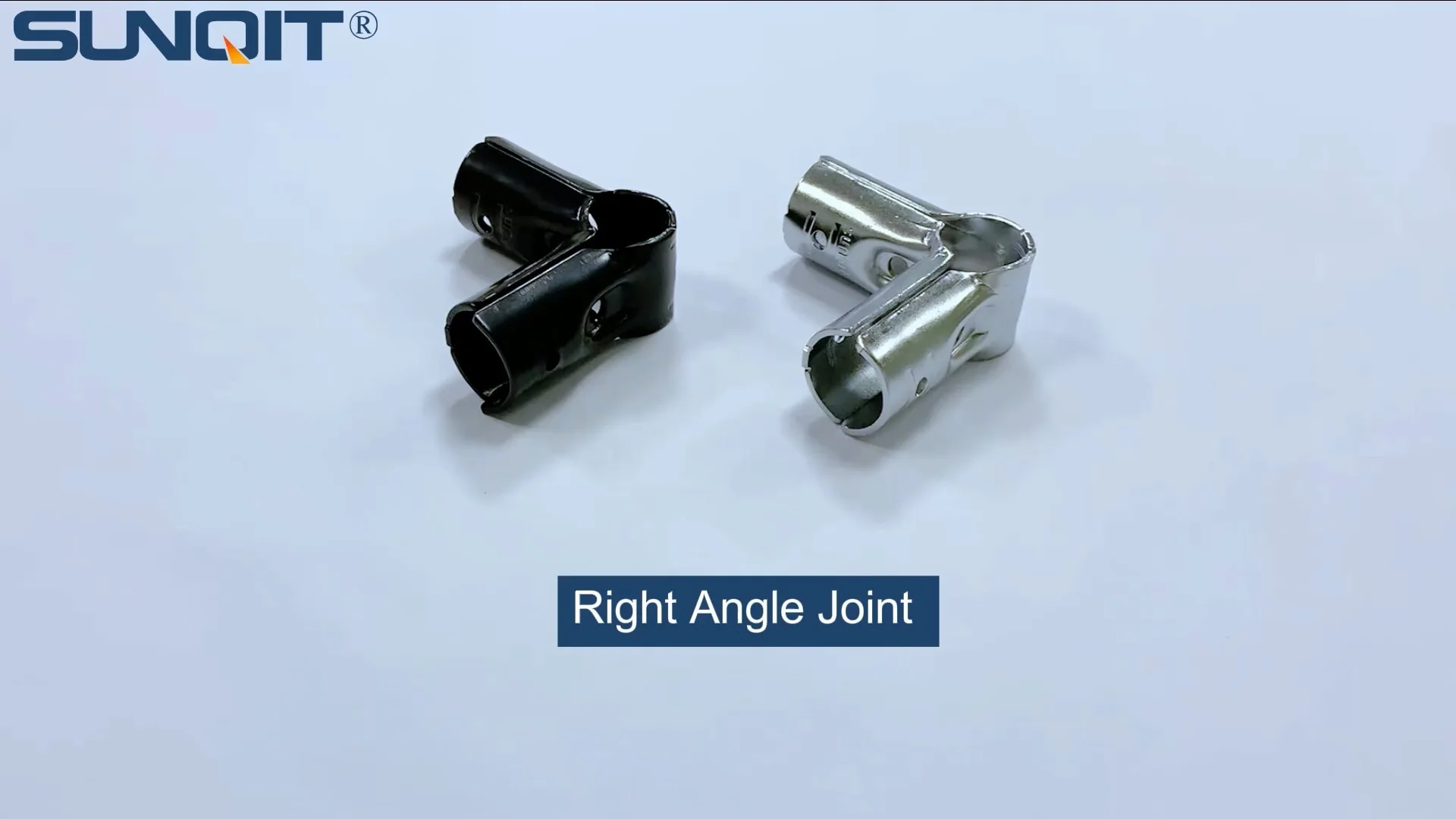
In the fast-paced world of manufacturing and logistics, where every minute counts and efficiency is the backbone of success, the concept of "lean" has become more than just a buzzword—it's a way of life. Lean logistics, at its core, is about eliminating waste, streamlining processes, and ensuring that materials move smoothly from point A to point B without unnecessary delays. But here's the thing: you can't build a lean system on outdated or rigid components. The magic lies in the details—the small, often overlooked parts that hold everything together and make flexibility possible. One such unsung hero? The Three Way Lean Pipe Joint Chrome.
If you've ever walked through a well-organized factory floor, you've probably seen it without even realizing it. Those sleek, metallic connectors that join pipes at precise angles, forming sturdy workbenches, flow racks, and conveyor systems? Chances are, many of them are three way lean pipe joints—especially the chrome-plated ones. In this article, we're going to dive deep into why this humble component is a game-changer for lean logistics, how it integrates with other key elements like flow racks and conveyors, and why it's become a go-to choice for businesses aiming to optimize their material flow.
The Foundation of Lean Systems: Why Components Matter
Before we zoom in on the Three Way Lean Pipe Joint Chrome, let's take a step back and talk about lean systems as a whole. A lean system isn't just about having a "lean mindset"—it's about having the right tools to turn that mindset into action. Think of it like building a house: you can have the best architectural plans, but if you use weak nails or flimsy beams, the structure will crumble. Similarly, in lean logistics, components like lean pipes, joints, flow racks, and conveyors are the "nails and beams" that (support) the entire operation.
At the heart of any lean system is the need for adaptability. Manufacturing lines change, product sizes evolve, and workflow demands shift—your equipment should be able to keep up. That's where modular components shine. Unlike fixed, one-size-fits-all structures, modular systems use interchangeable parts that can be reconfigured in minutes, not days. And when it comes to modularity, few components are as versatile as lean pipe joints. They're the connectors that let you build, modify, and expand structures without welding, drilling, or hiring a team of engineers.
Now, among the various types of lean pipe joints—two-way, four-way, swivel, fixed—the three way joint holds a special place. Why? Because it solves a common problem in material flow: how to connect three pipes at once, whether forming a corner, a branch, or a multi-level structure. And when that joint is chrome-plated? It adds a layer of durability and reliability that's hard to beat. Let's unpack what makes the Three Way Lean Pipe Joint Chrome so essential.
What Is a Three Way Lean Pipe Joint Chrome? Breaking It Down
Let's start with the basics. A three way lean pipe joint is a mechanical connector designed to join three lean pipes (also known as "lean tubes") at specific angles—typically 90 degrees, but some designs allow for adjustability. The "chrome" part refers to its finish: the joint is coated in a thin layer of chromium, which gives it a shiny, corrosion-resistant surface. But this isn't just about looks—chrome plating is a functional choice that extends the joint's lifespan, especially in industrial environments where moisture, oils, or chemicals might otherwise cause rust or wear.
Most three way lean pipe joints are made from high-quality steel, which provides the strength needed to support heavy loads—think stacks of materials on a flow rack or the weight of tools and products on a workbench. The design is surprisingly simple yet ingenious: each end of the joint has a hollow, cylindrical opening that fits snugly over a lean pipe. Inside these openings, there are usually set screws or clamping mechanisms that tighten around the pipe, creating a secure, wobble-free connection. No welding, no adhesives—just a few turns of a wrench, and you've got a joint that can hold hundreds of pounds.
But what really sets the Three Way Lean Pipe Joint Chrome apart is its versatility. Unlike fixed-angle joints that lock you into a single configuration, many chrome three way joints are designed to rotate or pivot slightly, allowing you to adjust the angle of the connected pipes. This is a big deal for lean systems, where a production line might need to be rearranged to accommodate a new product or a seasonal demand spike. With a chrome three way joint, you don't have to replace the entire structure—just loosen the screws, reposition the pipes, and tighten them back up. It's like having a building block that can be rearranged infinitely.

Integration with Key Lean Components: Flow Racks, Conveyors, and Workbenches
A component is only as good as its ability to work with others. The Three Way Lean Pipe Joint Chrome doesn't exist in a vacuum—it's part of a larger ecosystem of lean accessories, and its true value shines when paired with flow racks, conveyors, and workbenches. Let's look at how it enhances each of these critical elements.
Flow Racks: Keeping Materials Moving
Flow racks are the workhorses of material handling. They're designed to store and transport goods using gravity—items are loaded onto the higher end of the rack and "flow" down to the picking end as they're needed. This system minimizes walking time for workers and ensures that materials are always within easy reach. But to build a flow rack that's both sturdy and adaptable, you need joints that can support the weight of the rack itself, the materials, and the roller tracks that make the "flow" possible.
This is where the Three Way Lean Pipe Joint Chrome comes in. Flow racks often have multiple levels and vertical supports, and three way joints are perfect for connecting the horizontal beams (which hold the roller tracks) to the vertical posts. For example, a typical flow rack might have a vertical pipe at each corner, with horizontal pipes running between them to form the shelves. A three way joint can connect the vertical post to two horizontal beams (one on the front, one on the back) and a diagonal brace for extra stability. The chrome plating ensures that even if the rack is used in a warehouse with high humidity or occasional spills, the joints won't corrode, keeping the structure safe and reliable for years.
What's more, if you need to adjust the height of the shelves to accommodate taller or shorter boxes, the three way joint makes it easy. Loosen the screws, slide the horizontal pipes up or down the vertical post, and retighten—no cutting or welding required. This flexibility is why flow racks built with lean pipe joints are so popular in industries like e-commerce, where product sizes can vary widely.
Conveyors: Streamlining the Production Line
Conveyors are the arteries of a manufacturing plant, moving products from one workstation to the next with minimal human intervention. But conveyors themselves need a stable frame to support their belts, rollers, or chains. Again, the Three Way Lean Pipe Joint Chrome plays a key role here. Conveyor frames are often built using lean pipes and joints, as they're lightweight yet strong enough to handle the constant motion and vibration of the conveyor system.
Consider a roller conveyor, which uses a series of rotating rollers to move items. The frame of this conveyor needs to be level and rigid to prevent jams or misalignment. Three way joints can connect the side rails of the conveyor to the support legs, and also to cross-braces that keep the frame from wobbling. Since roller conveyors are often used in assembly lines where workers stand on either side, the joints also need to be durable enough to withstand accidental bumps or impacts. The chrome finish adds an extra layer of protection here, as chromium is harder than steel and resists scratches and dents.
Another advantage? If the production line needs to be reconfigured—say, adding a 90-degree turn to route products to a new packaging station—three way joints make it simple to extend or modify the conveyor frame. You can add a new section of pipe and joint in minutes, without disrupting the entire line. This kind of agility is crucial in lean manufacturing, where downtime equals lost revenue.
Workbenches: The Hub of Productivity
Workbenches are where the magic happens—where workers assemble products, inspect goods, or pack orders. A good workbench should be sturdy, adjustable, and tailored to the task at hand. Lean pipe workbenches, built with joints like the Three Way Lean Pipe Joint Chrome, excel in all these areas.
A typical lean pipe workbench has a frame made of vertical posts connected by horizontal beams (for the tabletop) and lower shelves (for storing tools or materials). Three way joints are used to connect the vertical posts to the horizontal beams, and often to add accessories like tool holders, monitor arms, or overhead racks. For example, a workbench in an electronics assembly line might have a three way joint connecting the main frame to a side arm that holds a soldering iron or a bin for small parts.
The chrome finish on the joints is especially useful here, as workbenches are often exposed to spills (like cleaning solvents or lubricants) or frequent handling. A chrome-plated joint is easy to wipe clean, and it won't stain or corrode, keeping the workbench looking professional and functioning smoothly. Plus, if a worker needs to adjust the height of the tabletop or add a new shelf, the three way joint allows for quick modifications—no need to buy a whole new workbench.

Three Way Lean Pipe Joint Chrome vs. Traditional Joints: A Comparative Look
You might be wondering: why choose a chrome-plated three way lean pipe joint over other types of connectors, like plastic joints or unplated steel joints? To answer that, let's compare it to two common alternatives: traditional unplated steel three way joints and plastic three way joints. The table below breaks down the key differences:
| Feature | Plastic Three Way Joints | Unplated Steel Three Way Joints | Three Way Lean Pipe Joint Chrome |
|---|---|---|---|
| Material | Polypropylene or nylon | Mild steel | Steel with chrome plating |
| Load Capacity | Low to medium (best for light loads) | Medium to high | High (supports heavy loads without bending) |
| Corrosion Resistance | High (resistant to moisture and chemicals) | Low (prone to rust in humid environments) | Very high (chrome plating prevents rust and oxidation) |
| Durability | Moderate (can crack under impact or extreme temperatures) | High (but surface can wear over time) | Very high (chrome adds scratch and impact resistance) |
| Assembly Time | Fast (lightweight, easy to handle) | Fast (similar to chrome-plated) | Fast (same clamping mechanism as unplated steel) |
| Cost | Lowest | Moderate | Slightly higher (due to plating process) |
| Best For | Light-duty applications (e.g., small parts storage) | Dry environments with medium loads | Heavy-duty, high-moisture, or corrosive environments (e.g., factories, warehouses) |
As the table shows, the Three Way Lean Pipe Joint Chrome strikes a balance between strength, durability, and versatility. While plastic joints are cheaper, they can't handle heavy loads or rough use. Unplated steel joints are strong but lack the corrosion resistance needed in many industrial settings. Chrome-plated joints, on the other hand, offer the best of both worlds: the strength of steel and the protection of chrome, making them ideal for the demands of lean logistics.
Real-World Impact: How One Manufacturer Optimized Material Flow
To put this into perspective, let's look at a real-world example. Imagine a mid-sized automotive parts manufacturer that was struggling with material flow bottlenecks on its assembly line. The company used old, fixed wooden shelves to store components, and workers had to walk back and forth to retrieve parts, wasting valuable time. Their workbenches were also outdated—heavy, immovable, and cluttered with tools that didn't have designated storage spots.
The manufacturer decided to invest in a lean system upgrade, focusing on modular flow racks, adjustable workbenches, and a new roller conveyor. A key part of this upgrade was using Three Way Lean Pipe Joint Chrome to build the frames for these structures. Here's what happened next:
Flow Racks: The company replaced the wooden shelves with flow racks built using lean pipes and three way chrome joints. The racks were designed with adjustable shelves, so they could accommodate different-sized parts bins. Workers now stand at a picking station, and parts flow down to them via gravity, eliminating the need to walk. The chrome joints ensured that even in the factory's slightly humid environment (due to cooling systems), the racks didn't rust, and the set screws stayed tight, preventing shelf wobble.
Workbenches: The old wooden workbenches were swapped out for lean pipe workbenches with chrome joints. The new workbenches had overhead tool racks (connected via three way joints) and under-shelf storage, keeping tools and materials within arm's reach. Since the joints allowed for height adjustments, each worker could set their bench to a comfortable level, reducing fatigue. The chrome finish also made cleanup easier—oil spills or grease wipes right off, keeping the work area hygienic.
Conveyor System: A roller conveyor was added to move partially assembled parts from one workstation to the next. The conveyor's frame was built with lean pipes and three way chrome joints, which made it easy to route the conveyor around existing machinery. The joints' durability meant the conveyor could handle the constant vibration of the rollers without loosening, and the chrome plating resisted scratches from metal parts.
The results? The manufacturer reported a 25% reduction in material handling time, a 15% increase in assembly line productivity, and fewer workplace injuries due to reduced lifting and walking. The modularity of the lean system also meant that when they introduced a new part size six months later, they could reconfigure the flow racks and workbenches in a single day, with no downtime. All of this was made possible, in large part, by the reliability and flexibility of the Three Way Lean Pipe Joint Chrome.
Best Practices for Using Three Way Lean Pipe Joint Chrome
If you're considering integrating Three Way Lean Pipe Joint Chrome into your lean system, here are some tips to ensure you get the most out of them:
Choose the Right Pipe Size: Three way joints are designed to fit specific lean pipe diameters (usually 28mm or 30mm). Make sure the pipes you use match the joint's opening size—too loose, and the connection will be unstable; too tight, and you might damage the joint or pipe.
Tighten Set Screws Properly: Most three way joints use set screws to secure the pipes. Use a torque wrench to tighten them to the manufacturer's recommended level—over-tightening can strip the threads, while under-tightening can lead to wobbling.
Inspect Regularly: Even with chrome plating, joints can wear over time, especially in high-use areas. Check the set screws for tightness and the chrome finish for chips or scratches every few months. If you notice corrosion or damage, replace the joint promptly to avoid structural issues.
Combine with Other Accessories: Three way joints work best when paired with other lean pipe accessories, like casters (for mobile workbenches or trolleys), roller tracks (for flow racks), or shelf boards (for workbenches). Mixing and matching these components lets you create fully customized solutions.
Train Your Team: Ensure your workers know how to assemble and adjust the joints safely. A quick training session on proper tightening techniques and weight limits can prevent accidents and extend the life of your lean system.
The Future of Lean Logistics: Why Chrome Joints Will Remain Essential
As manufacturing and logistics continue to evolve—with trends like automation, Industry 4.0, and sustainability taking center stage—will the humble three way lean pipe joint still have a role to play? Absolutely. Here's why:
Sustainability: Lean systems are inherently sustainable, as they reduce waste and promote reuse. Chrome-plated joints are durable, meaning they don't need to be replaced as often as plastic or unplated alternatives. When they do reach the end of their life, steel joints are fully recyclable, aligning with eco-friendly goals.
Compatibility with Automation: Even as factories add robots and automated systems, they still need flexible structures to support these technologies. For example, a collaborative robot (cobot) might need a workbench or frame that can be adjusted as its tasks change. Three way joints make it easy to build and modify these structures to fit around automation equipment.
Cost-Effectiveness: While chrome-plated joints may cost slightly more upfront than plastic ones, their longevity and low maintenance needs make them more cost-effective in the long run. For small and medium-sized businesses, this ROI is crucial.
Global Supply Chains: As companies look to build resilient supply chains, modular components like lean pipe joints are easier to source and transport than large, fixed equipment. This makes them ideal for businesses with multiple locations or international operations.
Conclusion: The Small Component That Drives Big Results
In the grand scheme of lean logistics, the Three Way Lean Pipe Joint Chrome might seem like a small detail. But as we've seen, it's the kind of detail that makes all the difference. It's the connector that turns individual pipes into powerful, adaptable systems—flow racks that keep materials moving, workbenches that boost productivity, and conveyors that streamline production. Its chrome plating adds durability, ensuring it can stand up to the harsh realities of industrial environments, while its simple design makes reconfiguration a breeze.
Whether you're a small workshop just starting your lean journey or a large manufacturer looking to optimize an existing system, the Three Way Lean Pipe Joint Chrome is more than just a part—it's an investment in efficiency, flexibility, and long-term success. After all, in lean logistics, it's the little things that add up to big results. And when it comes to little things that matter, this joint is hard to beat.