- Company Articles
- Products and Technology
- Product knowledge
- Three Way Lean Pipe Joint Chrome in Lean Manufacturing: ROI Analysis

Three Way Lean Pipe Joint Chrome in Lean Manufacturing: ROI Analysis
Related Product
Three Way Lean Pipe Joint Chrome
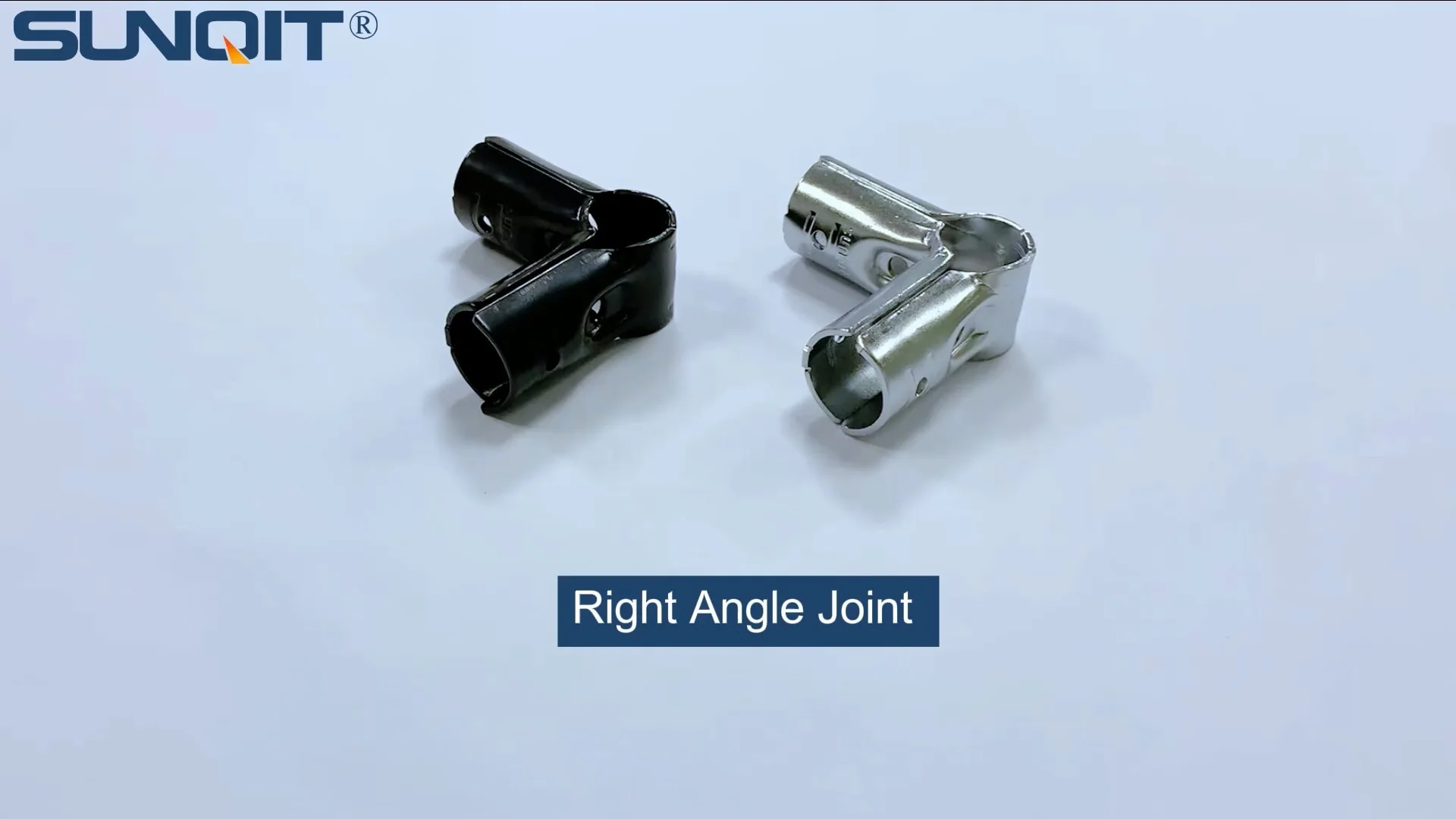
Three way lean pipe joint for 3 pcs 28MM lean pipe connection in straight angle, which used widely in workbench, flow rack, hand trolley frame connection.
In the fast-paced world of manufacturing, where every second and every dollar counts, lean principles have become more than just a buzzword—they're a survival strategy. At the heart of lean manufacturing lies the relentless pursuit of efficiency: eliminating waste, streamlining processes, and adapting quickly to change. But here's the thing: even the most well-designed lean system is only as strong as its smallest components. Enter the three way lean pipe joint chrome—a unassuming yet powerful piece that quietly transforms production floors, workbenches, and material flow. In this article, we'll dive into how this single joint becomes a catalyst for ROI, driving savings, flexibility, and long-term value in lean manufacturing setups.
What is the Three Way Lean Pipe Joint Chrome?
Let's start with the basics. The three way lean pipe joint chrome is a precision-engineered connector designed to join three lean pipes at various angles, forming the backbone of modular workstations, flow racks, and conveyor systems. Unlike clunky welded joints or flimsy plastic connectors, this joint is built to last: its chrome-plated surface resists corrosion, scratches, and the wear of daily factory life, while its internal mechanism allows for 360-degree rotation at each connection point. This means it can handle 90-degree angles for sturdy workbench frames, 45-degree slopes for gravity-fed flow racks, or even 180-degree straight lines for extended conveyor tracks. It's not just a connector—it's a Swiss Army knife for manufacturing flexibility.
But why chrome? In manufacturing environments, where humidity, coolants, and oils are part of the daily grind, standard steel joints rust quickly, leading to wobbly structures and frequent replacements. Chrome plating adds a protective layer that stands up to these elements, extending the joint's lifespan from 2-3 years to 7-10 years in most cases. For plant managers, that's less downtime spent replacing corroded parts and more time focused on production.
The Role of Three Way Lean Pipe Joint Chrome in Lean Systems
Lean manufacturing isn't about rigid, one-size-fits-all setups—it's about adaptability. A lean system thrives when it can pivot with changing product lines, fluctuating demand, or new efficiency goals. This is where the three way lean pipe joint chrome shines. Let's break down its impact across three critical areas of lean manufacturing: lean pipe workbenches, flow racks, and conveyors.
1. Lean Pipe Workbenches: From Static to Dynamic
Walk into any factory, and you'll find workbenches—they're the workhorses of assembly lines. But traditional workbenches are often fixed: welded steel frames that can't be adjusted for height, added shelves, or reconfigured for new tools. When a new product comes in with different assembly needs, managers are forced to either with the old setup (slowing down workers) or invest in entirely new workbenches (wasting money).
With three way chrome joints, workbenches become modular. Need to add a second shelf for tools? Simply slide a pipe into the joint and tighten the clamp—no welding, no drilling, no waiting for maintenance. Want to lower the work surface by 6 inches to reduce worker fatigue? Loosen the joint, adjust the pipes, and you're done in 10 minutes. A mid-sized electronics manufacturer in Ohio reported cutting workbench reconfiguration time from 8 hours to 1.5 hours per bench after switching to these joints, freeing up their maintenance team to focus on more critical tasks.
2. Flow Racks: Smoothing Material Flow, Reducing Waste
Flow racks are the arteries of lean systems, ensuring materials move seamlessly from storage to assembly. But if the angle of the rack is off, parts get stuck. If the shelves are too far apart, space is wasted. Traditional bolted racks leave little room for tweaking—you either live with inefficiencies or rebuild the entire rack.
Three way chrome joints change the game. By allowing precise angle adjustments (from 5 to 30 degrees), they ensure gravity does the work, with parts gliding smoothly to the pick point. A automotive parts supplier in Michigan used to struggle with bottlenecks at their flow racks; parts would jam, causing workers to leave their stations to unclog the line. After reconfiguring their racks with three way joints to optimize angles, jams dropped by 75%, and pick times decreased by 12 seconds per part—adding up to 200 more units assembled per shift.
3. Conveyors: Building Flexible, Scalable Lines
Conveyors are the backbone of material transport, but traditional systems are often overbuilt and underflexible. Expanding a conveyor line might require custom metal fabrication, while changing its direction could mean weeks of downtime. The three way lean pipe joint chrome turns conveyors into modular systems: connect roller tracks with the joint to create straightaways, curves, or merges, all without welding. When a food packaging plant in Texas needed to add a new product line, they used these joints to extend their existing conveyor by 15 feet in a single day—no contractor needed, no production halts.

ROI Analysis: The Numbers Behind the Joint
At the end of the day, manufacturing decisions come down to the bottom line. So, does investing in three way lean pipe joint chrome actually pay off? Let's crunch the numbers. We'll compare a traditional setup (using welded steel joints) to a modular setup (using three way chrome joints) across key ROI metrics: initial cost, reconfiguration labor, maintenance, and lifespan.
| Metric | Traditional Welded Joints (10 Workbenches) | Three Way Lean Pipe Joint Chrome (10 Workbenches) | ROI Impact |
|---|---|---|---|
| Initial Cost | $5,000 (welded steel frames, labor for welding) | $4,500 (pipes, joints, no welding labor) | -$500 upfront savings |
| Reconfiguration Labor | $240 per workbench (8 hours x $30/hour) | $60 per workbench (2 hours x $30/hour) | $1,800 saved per 10 reconfigurations |
| Annual Maintenance | $100 per workbench (rust repair, repainting) | $20 per workbench (occasional tightening, no rust issues) | $800 saved annually |
| Lifespan | 5 years (rust weakens structure) | 10 years (chrome resists corrosion) | Double the usable life |
| Total Cost Over 10 Years | $27,000 (replacement + labor + maintenance) | $9,500 (initial cost + labor + maintenance) | $17,500 total savings |
These numbers tell a clear story: while the initial cost of three way chrome joints is slightly lower, the real savings come from reduced labor, minimal maintenance, and extended lifespan. For a factory with 50 workbenches, that's over $87,500 in savings over 10 years—enough to fund new equipment, worker training, or process improvements.
Case Study: A Furniture Manufacturer's 8-Month ROI
A family-owned furniture manufacturer in North Carolina was struggling with their lean transition. They produced custom pieces, meaning their production lines changed weekly, and their fixed wooden workbenches and bolted flow racks couldn't keep up. Workers were wasting 2-3 hours daily adjusting to poorly configured setups, and the company was spending $20,000 annually on new racks and workbenches.
In 2023, they switched to a modular system built with three way lean pipe joint chrome. The initial investment was $15,000 (pipes, joints, and basic tools). Within 3 months, reconfiguration time dropped by 80%, and workers reported a 15% increase in daily output. By month 8, the savings from reduced labor and avoided equipment purchases had already covered the initial investment. Today, two years later, they estimate the joints have saved them over $60,000—and they've expanded their product line by 25% without adding floor space.

Why Choose Chrome Over Alternatives?
Skeptics might ask: Why not use plastic joints? They're cheaper upfront. Or non-chrome steel joints? They're stronger, right? Let's address these head-on.
Plastic joints cost 30-50% less initially, but they're prone to cracking under heavy loads and degrade quickly in high-temperature environments. A pharmaceutical manufacturer in Indiana tried plastic joints for their flow racks and found they needed replacements every 18 months—costing more in the long run than chrome. Non-chrome steel joints are strong, but they rust. In a humid factory, a non-chrome joint can start showing rust in 6 months, leading to loose connections and safety hazards. The chrome-plated version avoids this, making it the only choice for long-term reliability.
For lean pipe suppliers, the three way chrome joint is also a selling point. It differentiates their offerings as premium, durable solutions rather than disposable parts. A supplier in California reported a 20% increase in repeat customers after shifting to chrome-plated joints, as clients recognized the long-term value over cheaper alternatives.
Conclusion: Small Joint, Big Returns
In the world of lean manufacturing, ROI isn't just about big-ticket machines or software—it's about the small, critical components that make daily operations smoother, faster, and more adaptable. The three way lean pipe joint chrome embodies this idea: a connector that drives savings through reduced labor, lower maintenance, and extended lifespan. It transforms rigid workbenches into dynamic workstations, clunky flow racks into efficient material highways, and static conveyors into scalable transport systems.
For plant managers and lean coordinators, the message is clear: don't overlook the power of modularity. Investing in components like the three way lean pipe joint chrome isn't just about buying a better connector—it's about building a lean system that grows with your business, adapts to challenges, and delivers consistent ROI year after year. In the end, lean manufacturing isn't just about eliminating waste—it's about investing wisely in the tools that eliminate waste for good. And this joint? It's one of the smartest investments you can make.