Three Way Lean Pipe Joint Chrome in Mechanical Manufacturing: Enhancing Flexibility

Related Product
Three Way Lean Pipe Joint Chrome
Three way lean pipe joint for 3 pcs 28MM lean pipe connection in straight angle, which used widely in workbench, flow rack, hand trolley frame connection.
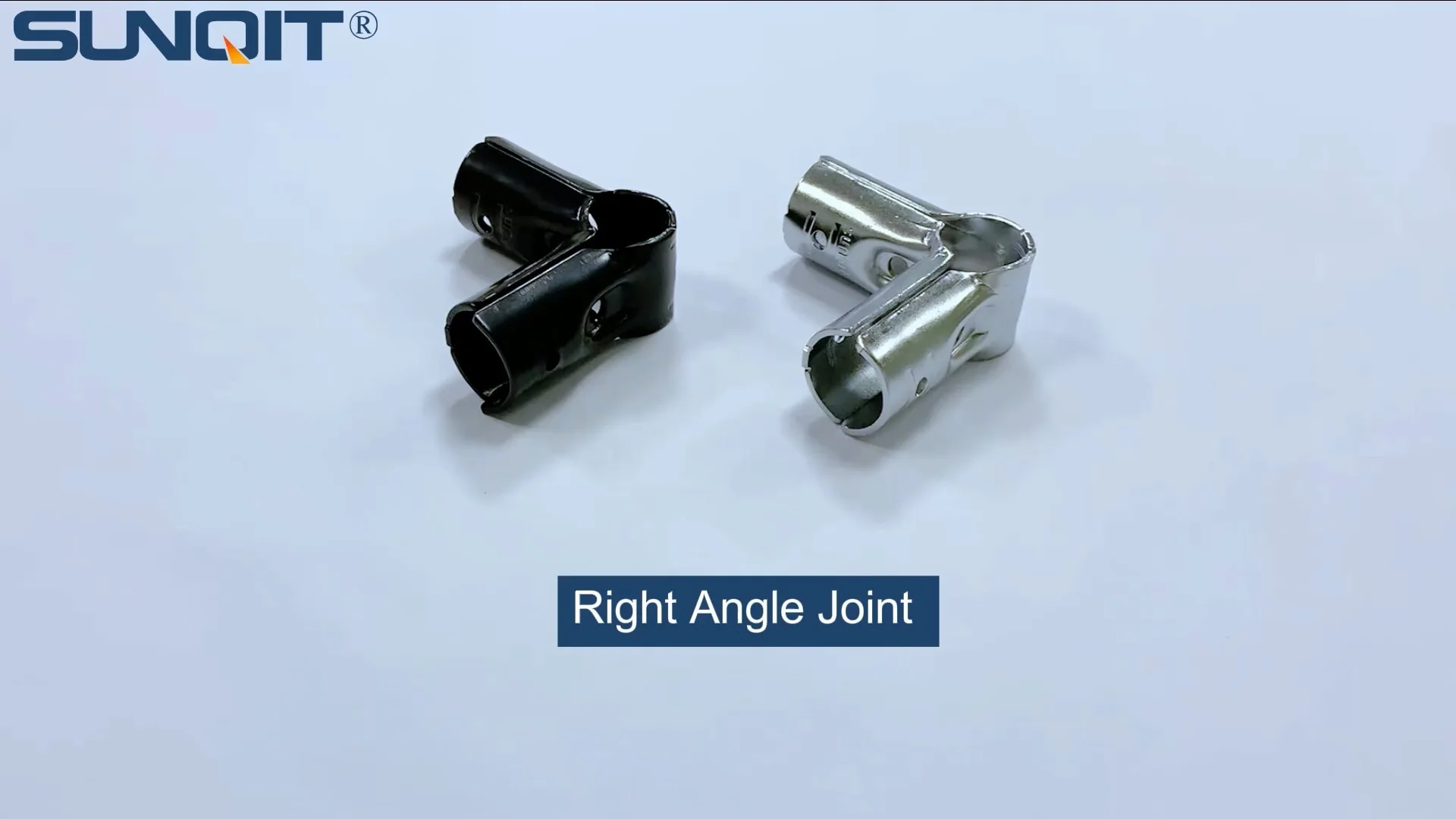
Three Way Lean Pipe Joint Chrome
In the fast-paced world of mechanical manufacturing, where customer demands shift overnight and production lines must adapt in the blink of an eye, one challenge looms larger than most: flexibility. Manufacturers today aren't just building products—they're building systems that can pivot, scale, and evolve without grinding to a halt. Waste, downtime, and rigid setups have become the enemy, and the solution often lies in the smallest, most unassuming components. Enter the three way lean pipe joint chrome—a humble yet powerful piece of hardware that's quietly revolutionizing how factories design, build, and reimagine their production spaces. In this article, we'll dive into how this unassuming joint, paired with lean system principles and modular components like lean pipe workbenches and flow racks, is turning manufacturing floors into hubs of adaptability.

The Pressure to Adapt: Why Flexibility Matters in Modern Manufacturing

Let's start with the reality on the ground. A mid-sized automotive parts manufacturer in Michigan recently found itself in a bind: a major client suddenly requested a new line of electric vehicle components, requiring a production shift from metal brackets to lighter, more intricate plastic assemblies. Their existing setup? Rows of fixed steel workbenches bolted to the floor, custom-built for their old product line. Retooling would take weeks, cost tens of thousands, and risk missing the client's deadline. Sound familiar? This scenario plays out daily across industries—from electronics to pharmaceuticals—where the cost of inflexibility is measured in lost opportunities. Lean manufacturing, with its focus on eliminating waste and maximizing value, has long been the north star for solving these challenges. But lean isn't just a philosophy; it's a toolkit. At its core are modular, reusable components that let manufacturers build and rebuild production systems on the fly. And if lean systems are the toolkit, then lean pipe joints—especially the three way lean pipe joint chrome—are the Swiss Army knife. They're the connectors that turn static workspaces into dynamic ecosystems, where a single workbench can transform from assembling circuit boards in the morning to packing finished goods in the afternoon.

What Is a Three Way Lean Pipe Joint Chrome, Anyway?

Let's get technical—without the jargon. A three way lean pipe joint chrome is a small, often T-shaped or Y-shaped connector designed to join three lean pipes at once. Picture this: three aluminum or steel pipes meeting at a central hub, secured tightly by the joint. The "chrome" in its name refers to its coating—a thin layer of chromium that adds durability, resists corrosion, and gives it that sleek, industrial finish. But its real magic isn't in the shine; it's in the design. Unlike traditional welded or bolted joints, which require tools, time, and permanent modifications, the three way lean pipe joint chrome is engineered for speed. Most models use a simple clamping mechanism: slide the pipes into the joint's three openings, tighten a screw or lever, and you're done. No welding, no drilling, no specialized skills. This simplicity is intentional. It means a line worker with basic training can reconfigure a workbench in 15 minutes, not 15 hours. But why three ways? Why not just use two-way joints and stack them? The answer lies in stability and versatility. A three way joint creates a rigid, triangulated connection that distributes weight evenly across three axes. This makes it ideal for building structures that need to support tools, materials, or even heavy equipment. Think of it as the cornerstone of a modular system—whether you're building a lean pipe workbench with overhead shelving, a flow rack with multiple levels, or a mobile trolley with side rails. It's the component that turns "this is how we've always done it" into "what if we try this instead?"

Beyond the Basics: How Three Way Joints Enhance Lean Systems

Lean systems thrive on two principles: minimizing waste (time, materials, space) and maximizing flow (of materials, information, and people). The three way lean pipe joint chrome directly supports both, and here's how: 1. Waste Reduction Through Reusability Traditional manufacturing setups often treat equipment as disposable. A custom steel frame for a production line, for example, gets scrapped when the product line ends. With three way joints, every component—pipes, joints, shelves—becomes reusable. That lean pipe workbench you built for smartphone assembly? Disassemble it, swap out a few joints, and suddenly it's a packing station for tablets. The joint itself? It'll outlast multiple product cycles, thanks to its chrome coating and durable plastic or metal construction. This isn't just eco-friendly; it's cost-effective. A single three way joint might cost $5-$10, but it can save thousands in replacement equipment over time. 2. Flow Optimization with Modular Design Flow racks, a staple in lean manufacturing, rely on gravity to move materials from storage to the workstation—eliminating the need for workers to walk back and forth. But a flow rack's effectiveness depends on its layout: the angle of the rollers, the height of the shelves, the spacing between lanes. Three way joints make it easy to tweak these variables. Need to add a third lane to your flow rack to accommodate a new material? Screw in a few joints, add pipes, and you're set. Want to lower a section to reduce bending for shorter workers? Loosen the joints, adjust the pipes, and tighten. The result? Materials flow smoother, workers move less, and productivity ticks up. 3. Agility in the Face of Change Let's circle back to that Michigan automotive manufacturer. With a lean system built on three way joints, their transition to electric vehicle components would have looked very different. Instead of ripping out fixed workbenches, they could have reconfigured existing lean pipe workbenches by adjusting shelf heights with three way joints, adding tool holders, and even integrating new flow racks for plastic parts—all in a matter of days. That's the agility the three way joint enables: the ability to turn a crisis into an opportunity.

Comparing Joints: Why Three Way Chrome Stands Out

Not all lean pipe joints are created equal. To understand why the three way lean pipe joint chrome is a game-changer, let's compare it to other common joint types. The table below breaks down key features:
Joint Type Number of Connections Flexibility (Reconfiguration Speed) Load Capacity (Average) Best For
Two-Way Fixed Joint 2 pipes (straight line) Medium (requires tools to adjust angle) 150-200 kg Simple frames, straight conveyor rails
Three Way Lean Pipe Joint Chrome 3 pipes (T or Y shape) High (tool-free reconfiguration in minutes) 200-300 kg Workbenches, flow racks, multi-level structures
Swivel Joint 2 pipes (adjustable angle) Very High (rotates 360° without disassembly) 100-150 kg Mobile trolleys, adjustable work surfaces
Four-Way Cross Joint 4 pipes (cross shape) Medium (bulky, harder to reposition) 250-350 kg Heavy-duty shelving, structural supports
The three way joint strikes a sweet spot: it offers more flexibility than fixed two-way joints, higher load capacity than swivel joints, and greater agility than bulky four-way cross joints. For most manufacturers, this balance makes it the go-to choice for everyday reconfigurations. It's not just about connecting pipes—it's about connecting possibilities.

Real-World Impact: How Manufacturers Are Using Three Way Joints Today

Let's look at two case studies that highlight the three way lean pipe joint chrome in action. These aren't hypothetical—they're stories from real manufacturers who've embraced modularity. Case Study 1: A Medical Device Manufacturer in California This company produces surgical tools, where precision and cleanliness are non-negotiable. Their challenge? They needed workbenches that could be easily sanitized and reconfigured for different tool sizes. Fixed stainless steel benches were expensive and hard to clean around bolted joints. Enter lean pipe workbenches with three way chrome joints. By using chrome-plated joints (resistant to harsh cleaning chemicals) and aluminum pipes (lightweight and easy to wipe down), they built workbenches with adjustable shelves, tool hooks, and integrated LED lights—all connected via three way joints. When a new tool line was introduced, workers simply loosened the joints, adjusted the shelf heights, and added a second level for smaller components. Sanitization became faster, too: no crevices for bacteria to hide in, thanks to the smooth chrome finish. The result? A 30% reduction in setup time for new product lines and a 20% drop in cleaning-related downtime. Case Study 2: A Furniture Manufacturer in North Carolina Seasonal demand is the bane of furniture manufacturing. This company saw a 40% spike in orders for outdoor patio sets every spring, then a lull in winter. Their fixed assembly lines sat idle for months, wasting space. They turned to flow racks and lean pipe workbenches built with three way joints. In peak season, they assembled long flow racks with three levels (using three way joints to connect vertical and horizontal pipes) to store cushions, frames, and hardware. Workers pulled materials directly from the racks, cutting down on walking time. In winter, they disassembled the flow racks, reusing the pipes and joints to build smaller workbenches for indoor furniture assembly. The three way joints made it possible to switch between setups in a weekend, not a month. Storage space freed up by disassembled racks was repurposed for inventory, and labor costs dropped by 15% in the off-season.

Choosing the Right Components: Lean Pipe and Accessories Matter

A three way joint is only as good as the components it connects. To maximize flexibility, manufacturers need to pair it with high-quality lean pipe and accessories. Here's what to look for: Lean Pipes: Material Matters Most lean pipes are either steel (with a plastic coating for ESD protection) or aluminum. Steel pipes are stronger (ideal for heavy loads), while aluminum is lighter (easier to reconfigure). For most applications, a 28mm diameter pipe works well with standard three way joints, but sizes can vary—so check compatibility with your joint supplier. Accessories: The Finishing Touches Even the best joint needs help to create a fully functional system. Accessories like caster wheels (for mobile workbenches), roller tracks (for flow racks), and shelf brackets (for lean pipe workbenches) turn a basic frame into a complete workstation. When choosing accessories, opt for ones designed to work with your three way joints—many suppliers offer kits that include pipes, joints, and accessories, ensuring a perfect fit. Supplier Reliability: Your Partner in Flexibility Not all three way lean pipe joint chrome products are created equal. A cheap, poorly made joint might crack under load or slip over time, undoing all your lean efforts. Look for a lean pipe supplier with a track record of quality—one that offers warranties, tests their products for load capacity, and provides technical support. A good supplier won't just sell you a joint; they'll help you design a system that grows with your needs.

The Future of Manufacturing: Where Three Way Joints Fit In

As manufacturing evolves—with trends like Industry 4.0, automation, and mass customization—flexibility will only become more critical. Three way lean pipe joint chrome isn't just keeping up; it's enabling these trends. Imagine a smart factory where IoT sensors track material flow, and AI suggests real-time reconfigurations. The physical infrastructure needs to keep pace—and modular systems with three way joints are the bridge between digital and physical agility. We're also seeing innovation in joint design. Some manufacturers are adding quick-release levers for even faster assembly, or integrating RFID tags into joints to track components across the factory. Others are experimenting with composite materials to make joints lighter without sacrificing strength. But even with these advances, the core value of the three way joint remains: simplicity. In a world of complex technology, sometimes the best solution is a component that does one thing exceptionally well—connect, adapt, and endure.

Conclusion: Small Joints, Big Impact

The three way lean pipe joint chrome is a testament to the power of small innovations. It doesn't have sensors or software, but it has something equally valuable: the ability to turn rigid systems into flexible ones. In an industry where the only constant is change, that's priceless. For manufacturers just starting their lean journey, the message is clear: don't overlook the basics. Invest in modular components. Partner with a trusted lean pipe supplier. And when you're designing your next workbench or flow rack, reach for that three way joint. It might just be the key to building a production line that doesn't just keep up with the future—but shapes it. After all, flexibility isn't about predicting the future. It's about being ready for whatever it throws your way. And in that readiness, the three way lean pipe joint chrome is more than a component—it's a competitive advantage.


Get In Touch with us

Hey there! Your message matters! It'll go straight into our CRM system. Expect a one-on-one reply from our CS within 7×24 hours. We value your feedback. Fill in the box and share your thoughts!