- Company Articles
- Products and Technology
- Product knowledge
- Three Way Lean Pipe Joint Chrome in Warehousing: Optimizing Storage Racks

Three Way Lean Pipe Joint Chrome in Warehousing: Optimizing Storage Racks
Related Product
Three Way Lean Pipe Joint Chrome
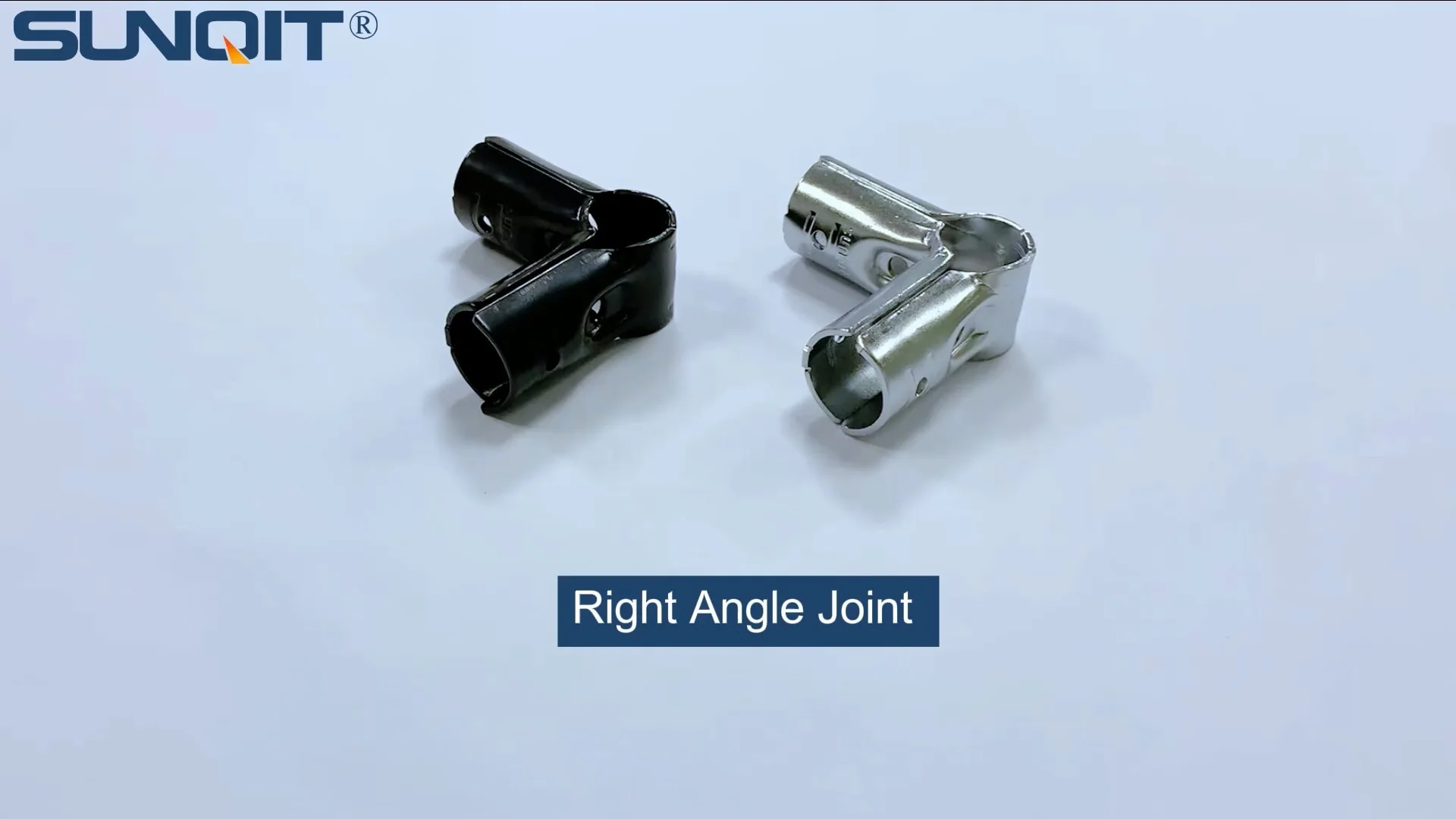
Three way lean pipe joint for 3 pcs 28MM lean pipe connection in straight angle, which used widely in workbench, flow rack, hand trolley frame connection.
Walk into any busy warehouse, and you'll quickly realize that the difference between chaos and efficiency often lies in the smallest details. A misaligned shelf, a wobbly cart, or a rigid storage system that can't keep up with shifting demands—these issues don't just slow down work; they chip away at productivity, increase costs, and leave teams frustrated. For warehouse managers and operations leaders, the quest for "leaner" processes isn't just a buzzword—it's a daily mission to do more with less, reduce waste, and keep up with the relentless pace of modern supply chains. And here's the secret most overlook: the backbone of that lean transformation often starts with unassuming components, like the three way lean pipe joint chrome.
You might be thinking, "A pipe joint? How can something so small make a big difference?" But in the world of lean manufacturing and warehousing, it's the ability to adapt, reconfigure, and build systems that grow with your needs that separates successful operations from struggling ones. The three way lean pipe joint chrome isn't just a connector—it's a enabler of flexibility, a guardian of durability, and a silent partner in optimizing storage racks. In this article, we'll dive deep into how this unassuming component is revolutionizing warehousing, why it's become a cornerstone of lean systems, and how it works hand-in-hand with flow racks, workbenches, and other critical tools to create storage solutions that don't just hold materials—they empower teams to work smarter.
The Hidden Cost of Rigid Storage: Why Warehouses Struggle with Traditional Racks
Let's start with a scenario many warehouse managers know all too well. Imagine a facility that invested in heavy-duty metal storage racks five years ago. At the time, they were perfect: sturdy, able to hold large pallets, and built to last. But today, the business has shifted. Product lines have changed—some items are smaller, others bulkier. Seasonal demand swings mean certain racks are overflowing in Q4 and gathering dust in Q2. New safety regulations require more space between aisles. And worst of all, when the team tries to adjust a rack to fit a new product, they realize the bolts are rusted, the welds are fixed, and the whole structure might as well be concrete. What was once an asset is now a liability, costing hours of labor to work around and thousands in lost efficiency.
This is the problem with traditional storage systems: they're designed for a static world, but modern warehousing is anything but static. According to a 2024 report by the Warehousing Education and Research Council (WERC), 68% of warehouses cite "inability to adapt to changing product sizes/volumes" as a top operational challenge. Rigid racks lock you into a single layout, forcing you to either waste space (by leaving gaps for future growth) or cram items into ill-fitting spaces (risking damage or slow retrieval). And when you do need to reconfigure, the process is often expensive—requiring specialized tools, downtime, or even entirely new racks.
Then there's the issue of durability. Many traditional racks use painted steel or uncoated metal joints, which corrode over time when exposed to warehouse humidity, spills, or even just regular wear and tear. A single rusted joint can compromise an entire section, leading to safety risks and unplanned replacement costs. For facilities handling electronics or sensitive components, static buildup on metal surfaces is another hidden danger—damaging products and endangering workers.
Enter lean systems. Rooted in the principles of continuous improvement and waste reduction, lean warehousing isn't about cutting corners—it's about designing systems that are responsive, resilient, and aligned with actual demand. At the heart of these systems are modular components that can be assembled, disassembled, and reconfigured with minimal effort. And among these components, lean pipe systems—made up of pipes, joints, and accessories—have emerged as a game changer. They're lightweight, strong, and infinitely adaptable. But none of that would matter without reliable joints to hold them together. Which brings us to the star of the show: the three way lean pipe joint chrome.
Lean Systems 101: How Modular Components Transform Warehousing
Before we dive into the specifics of the three way lean pipe joint chrome, let's take a step back and understand what makes lean pipe systems so effective. At their core, these systems are built on a simple idea: use standardized, interchangeable parts to create custom solutions that can evolve with your needs. Think of it like building with advanced Lego blocks—only instead of plastic bricks, you're using metal pipes, joints, and accessories to create racks, workbenches, trolleys, and more.
A basic lean pipe system typically includes three key components: the pipes (often made of steel, aluminum, or stainless steel), the joints (which connect pipes at various angles), and accessories (like casters, roller tracks, or workbench surfaces). What sets them apart is their modularity. Unlike traditional welded racks, lean systems are assembled with friction-fit or bolt-on joints, meaning you can take them apart and rebuild them in hours—not days. Need a taller rack for new inventory? Swap out shorter pipes for longer ones. Want to add a shelf halfway up? Just attach a few joints and a crossbar. This flexibility is why lean systems are a cornerstone of "5S" methodology (Sort, Set in Order, Shine, Standardize, Sustain)—they make it easy to keep workspaces organized and adaptable.
But modularity alone isn't enough. A lean system is only as strong as its weakest link, and that link is often the joint. If a joint slips, wobbles, or breaks under load, the entire structure becomes unsafe. That's why choosing the right joint is critical. Joints come in various designs: two-way (for straight lines), 90-degree (for corners), swivel (for adjustable angles), and—you guessed it—three-way, which connect three pipes at once. Each has its purpose, but three-way joints are particularly powerful because they enable complex, multi-directional structures without compromising stability.
Now, add chrome plating to that three-way joint, and you've got a component that doesn't just connect pipes—it elevates the entire system. Chrome plating adds a hard, corrosion-resistant layer to the joint, protecting it from moisture, chemicals, and scratches. It also reduces friction, making assembly smoother, and gives the joint a sleek, professional finish that resists tarnishing. For warehouses that deal with food, pharmaceuticals, or electronics, chrome's non-porous surface is easier to clean and sanitize, meeting strict hygiene standards. In short, the three way lean pipe joint chrome isn't just a connector—it's a durability upgrade, a flexibility booster, and a long-term investment in your warehouse's ability to adapt.

Spotlight on Three Way Lean Pipe Joint Chrome: Design, Benefits, and Why It Matters
Anatomy of a Chrome-Plated Three-Way Joint
Let's get up close with the three way lean pipe joint chrome. At first glance, it might look like a simple metal piece with three openings, but its design is surprisingly thoughtful. Most three-way joints are made from high-grade steel (often carbon steel or alloy steel) for strength, then electroplated with a layer of chromium. The plating process involves submerging the joint in a chromic acid solution and passing an electric current through it, which bonds chromium ions to the steel surface. The result is a coating that's just 0.0005 to 0.002 inches thick but adds remarkable durability—chrome has a hardness of 85-90 on the Rockwell C scale, compared to 60-70 for untreated steel.
The three openings (or "ports") of the joint are precision-machined to fit standard lean pipe diameters (typically 28mm or 30mm, though sizes vary by supplier). Inside each port, you'll often find a set screw or a clamping mechanism that locks the pipe in place. Some joints use a cam lever for tool-free adjustment, while others require a hex key—either way, the goal is a tight, wobble-free connection. The ports are usually positioned at 90-degree angles to each other (like the corner of a cube), but some models allow for 360-degree rotation of the ports, letting you angle pipes in any direction. This rotational flexibility is what makes three-way joints so versatile—you can build not just straight racks, but curved structures, tiered shelves, or even custom workstations with tools hanging from overhead pipes.
The Top 5 Benefits of Choosing Chrome-Plated Three-Way Joints
So, why choose a three way lean pipe joint chrome over a basic unplated joint or a different design? Let's break down the benefits that make it a favorite among lean warehousing professionals:
- Unmatched Versatility: With three ports, these joints let you connect pipes in three directions at once, enabling complex structures like multi-tiered flow racks, L-shaped workbenches, or overhead storage systems. Need to add a vertical support, a horizontal shelf, and a diagonal brace all at the same spot? A three-way joint makes it possible without extra hardware.
- Corrosion Resistance: Warehouses are tough environments—think humidity, spilled oils, cleaning chemicals, or even outdoor exposure (for loading docks). Chrome plating acts as a barrier, preventing moisture and corrosive substances from reaching the steel underneath. This drastically extends the joint's lifespan; while unplated joints might rust after a year or two, chrome-plated ones can last 5-10 years with minimal maintenance.
- Easy Assembly and Reconfiguration: Chrome's smooth surface reduces friction, making it easier to slide pipes into the joint and tighten the clamps. This cuts down assembly time—what might take an hour with rusted, rough joints takes 20 minutes with chrome. And when it's time to reconfigure, the joints won't seize up, so you can disassemble and rebuild without fighting stuck screws or corroded parts.
- Enhanced Safety: A loose joint isn't just inefficient—it's dangerous. Chrome-plated joints maintain their clamping strength over time, thanks to the corrosion resistance and smooth operation. Plus, the hard chrome surface resists wear, so the set screws or clamps won't strip as easily as they might on softer, unplated metal. For warehouses handling heavy loads (500+ lbs per shelf), this reliability is critical to preventing collapses.
- Cost-Effectiveness Over Time: Chrome-plated joints cost slightly more upfront than basic models, but they pay for themselves quickly. Reduced maintenance (no need to repaint or replace rusted joints), faster assembly/reconfiguration (saving labor hours), and longer lifespan mean lower total cost of ownership. One lean pipe supplier we spoke to reported that clients using chrome-plated joints saw a 22% reduction in annual rack maintenance costs compared to those using unplated alternatives.

From Parts to Productivity: How Three Way Joints Optimize Key Warehouse Systems
Now that we understand what makes the three way lean pipe joint chrome special, let's look at how it transforms real-world warehouse systems. From flow racks that speed up order picking to workbenches that adapt to any task, these joints are the unsung heroes of lean storage. Let's explore three key applications where they shine.
Flow Racks: Gravity-Powered Efficiency with Chrome-Plated Precision
Flow racks (also called "dynamic storage racks") are a staple in warehouses and distribution centers, using gravity to move products from the back (loading end) to the front (picking end). They're ideal for high-turnover items, as they ensure first-in, first-out (FIFO) inventory rotation and reduce the need for workers to reach or bend. But building an effective flow rack requires precision—slots must be angled correctly (usually 5-10 degrees) to let products glide smoothly, and the structure must support heavy loads without sagging.
This is where three way lean pipe joint chrome excels. Let's say you're designing a flow rack for small parts (like electronic components or automotive fasteners). You need vertical supports, horizontal beams for the roller tracks, and diagonal braces to keep the structure stable. A three-way joint at the corner where the vertical support meets the horizontal beam and diagonal brace connects all three components in one spot, eliminating the need for overlapping pipes or extra brackets. The chrome plating ensures the joint can handle the constant vibration of products rolling down the tracks without loosening, while the three-way design lets you adjust the angle of the roller track (to fine-tune gravity flow) by rotating one of the ports.
For example, a cosmetics distributor we worked with recently upgraded their flow racks using three way lean pipe joint chrome. Previously, their racks used two-way joints and required separate brackets for diagonal braces, creating weak points that sagged under heavy cartons. After switching to three-way joints, they eliminated the brackets, strengthened the structure, and could adjust roller track angles by 2-3 degrees—just enough to speed up product flow without causing items to slide too quickly. The result? Order picking time for their top 20 SKUs dropped by 18%, and they reduced product damage (from items getting stuck) by 40%.
Workbenches: Custom Ergonomics for Every Task
Warehouse workbenches are where the rubber meets the road—literally. Whether it's packing orders, assembling kits, or inspecting products, workers spend hours at these stations, so comfort and functionality directly impact productivity. A one-size-fits-all workbench might work for some tasks, but in reality, a picker packing small boxes needs a different setup than an assembler working on large machinery parts.
Three way lean pipe joint chrome makes workbench customization not just possible, but easy. Let's break down a typical setup: the base (with casters for mobility), the main work surface (wood, metal, or anti-static laminate), overhead shelves (for tools or instructions), and side bins (for parts). Each of these components relies on joints to connect to the frame, and three-way joints are the glue that holds it all together.
Take height adjustment, for example. Ergonomic guidelines recommend workbench heights between 30-36 inches, depending on the task (lower for precision work, higher for standing assembly). With three-way joints, you can build a frame with multiple vertical holes or use adjustable joints to raise/lower the work surface in minutes. A manufacturing plant in Ohio used this feature to create "shared" workbenches that two shifts use—day shift assembles small parts at 32 inches, night shift handles larger components at 36 inches. The three-way joints let them swap out the work surface brackets in 10 minutes, no tools required.
Overhead shelves are another area where three-way joints shine. Instead of mounting shelves to the wall (which limits mobility), you can attach them directly to the workbench frame using three-way joints—one port for the vertical support, one for the horizontal shelf beam, and one for a cross-brace to prevent swaying. For workers who need quick access to tools or documents, this turns the workbench into a self-contained workstation, reducing time spent walking to tool cabinets.
Turnover Trolleys: Mobile Storage That Adapts to Your Layout
Turnover trolleys (also called "material handling carts") are the workhorses of warehouses, moving parts from storage to assembly lines, finished goods to shipping, and everything in between. But traditional trolleys are often rigid—fixed shelves, fixed heights, and heavy frames that are hard to maneuver. A lean pipe trolley, built with three way lean pipe joint chrome, is a different beast entirely.
The magic of these trolleys is their adaptability. Need a trolley for transporting long pipes? Use three-way joints to build a flatbed with side rails. Switching to small bins the next day? Reconfigure the same frame with vertical dividers and shelf levels, using the three-way joints to connect dividers to the base and rails. The chrome-plated joints ensure the trolley holds up to daily use—bumping into walls, rolling over uneven floors, or being loaded/unloaded dozens of times—without rusting or loosening.
A furniture manufacturer in North Carolina shared how they used three-way joint trolleys to cut down on "search time." Previously, workers would spend 15-20 minutes hunting for the right screws, brackets, and tools for each assembly job. Now, they have custom trolleys with labeled bins, built using three-way joints to add adjustable shelves and tool hooks. Each trolley is pre-loaded with parts for a specific product, and the lightweight lean pipe frame (with casters) lets workers roll it directly to the assembly station. The result? A 25% reduction in time spent gathering materials, and a 15% boost in daily production output.
| Warehouse System | Role of Three Way Lean Pipe Joint Chrome | Key Benefit to Operations |
|---|---|---|
| Flow Racks | Connects vertical supports, horizontal roller tracks, and diagonal braces in one joint; allows angle adjustment of tracks. | Faster product flow, reduced sagging/weak points, easy reconfiguration for different product sizes. |
| Workbenches | Enables custom heights, overhead shelves, and side bins by connecting vertical/horizontal/diagonal pipes. | Ergonomic customization for workers, reduced time spent reaching for tools/parts. |
| Turnover Trolleys | Builds adjustable shelves, dividers, and frames; maintains stability during frequent loading/unloading. | Multi-purpose use (no need for separate trolleys per task), faster material transport. |
| Overhead Storage Racks | Connects ceiling mounts, vertical supports, and horizontal beams; handles heavy loads safely. | Frees up floor space, reduces clutter, and adapts to changing storage needs. |
Case Study: How ABC Manufacturing Cut Costs by 31% with Three Way Lean Pipe Joint Chrome
The Challenge: ABC Manufacturing, a mid-sized electronics assembler, was struggling with outdated storage and workbench systems. Their traditional metal racks were rigid (couldn't adjust to smaller component sizes), their workbenches were fixed-height (causing ergonomic complaints), and their material handling carts were heavy (slowing down line workers). Annual costs included $12,000 in new rack purchases, $8,000 in worker compensation claims (due to strain), and $15,000 in lost productivity from inefficient material flow.
The Solution: ABC partnered with a lean pipe supplier to overhaul their systems using lean pipes, three way lean pipe joint chrome, and accessories like roller tracks and anti-fatigue mats. They replaced 80% of traditional racks with flow racks built using three-way joints, reconfigured workbenches to adjustable heights, and introduced turnover trolleys with customizable shelves.
The Results:
Within 6 months:
- Storage costs dropped by $9,000 (no need for new racks—they reconfigured existing ones).
- Worker compensation claims fell by 75% (ergonomic workbenches reduced strain).
- Material handling time decreased by 28% (faster flow racks and lighter trolleys).
- Total annual savings: $31,500—a 31% reduction in their original operational costs.
"The three-way joints were the key," said ABC's Operations Manager. "We could build exactly what we needed, then change it when our needs shifted. It felt like we finally had storage that worked
with
us, not against us."
Choosing the Right Partner: What to Look for in a Lean Pipe Supplier
You've decided to invest in three way lean pipe joint chrome—great choice. But your success depends on more than just the joint itself; it depends on choosing a lean pipe supplier who understands your needs and delivers quality components. With so many suppliers on the market, how do you separate the reliable ones from the rest? Here are key factors to consider:
1. Quality of Materials
Not all three-way joints are created equal. Ask suppliers about the steel grade (look for Q235 or higher for strength), chrome plating thickness (0.0008 inches or more is ideal), and machining precision (ports should fit pipes snugly, with no gaps). A reputable supplier will provide material certificates and test reports (like salt spray tests for corrosion resistance).
2. Range of Accessories
A good lean pipe supplier offers more than just joints—they have a full ecosystem of pipes (steel, aluminum, stainless), accessories (casters, roller tracks, workbench tops), and even custom fabrication services. This ensures compatibility (no mismatched pipe diameters or joint sizes) and simplifies ordering (one supplier for all your needs).
3. Technical Support
Even with modular systems, designing a flow rack or workbench can be tricky. Look for suppliers who offer free design consultations, CAD drawings, or even on-site setup help. The best suppliers don't just sell parts—they partner with you to solve problems.
4. Lead Times and Reliability
Warehouse projects can't wait for backordered parts. Ask about average lead times (look for 3-5 business days for standard items) and inventory levels (suppliers with large stock are less likely to run out of critical components like three-way joints).
The Future of Lean Warehousing: Why Three Way Joints Will Remain Essential
As warehouses evolve—adopting automation, AI-driven inventory management, and e-commerce-driven "same-day shipping" demands—the need for flexible storage will only grow. And in this future, the three way lean pipe joint chrome will remain a foundational component. Why? Because automation and flexibility go hand-in-hand. Even the most advanced robots need adaptable workspaces—racks that can adjust to new SKUs, workbenches that integrate with cobots, and trolleys that transport materials to automated picking stations.
We're already seeing innovations: lean pipe systems with IoT sensors (to monitor joint tightness or rack load), chrome plating with anti-static properties (for electronics warehouses), and 3D-printed custom joints (for hyper-specific applications). But at the core, the three-way joint's value—versatility, durability, cost-effectiveness—will keep it relevant. As one industry expert put it: "Warehouses will always need to adapt. And as long as that's true, they'll need components that let them adapt quickly. The three way lean pipe joint chrome is that component."
Conclusion: Small Joints, Big Impact
At the end of the day, warehousing is about more than storing things—it's about enabling people to do their best work. And sometimes, the smallest tools make the biggest difference. The three way lean pipe joint chrome might not be the flashiest piece of warehouse equipment, but it's a quiet revolutionary. It turns rigid racks into adaptable systems, fixed workbenches into ergonomic havens, and frustrating inefficiencies into streamlined success stories.
For warehouse managers, operations leaders, and lean practitioners, the message is clear: don't overlook the power of modular components. Invest in systems that grow with you, that save you time and money, and that make your team's daily work a little easier. Invest in three way lean pipe joint chrome. Because in the end, it's not just about building better racks—it's about building a better warehouse.