- Company Articles
- Products and Technology
- Product knowledge
- Three Way Lean Pipe Joint Chrome Sizing Guide: Matching Pipes and Joints

Three Way Lean Pipe Joint Chrome Sizing Guide: Matching Pipes and Joints
Related Product
Three Way Lean Pipe Joint Chrome
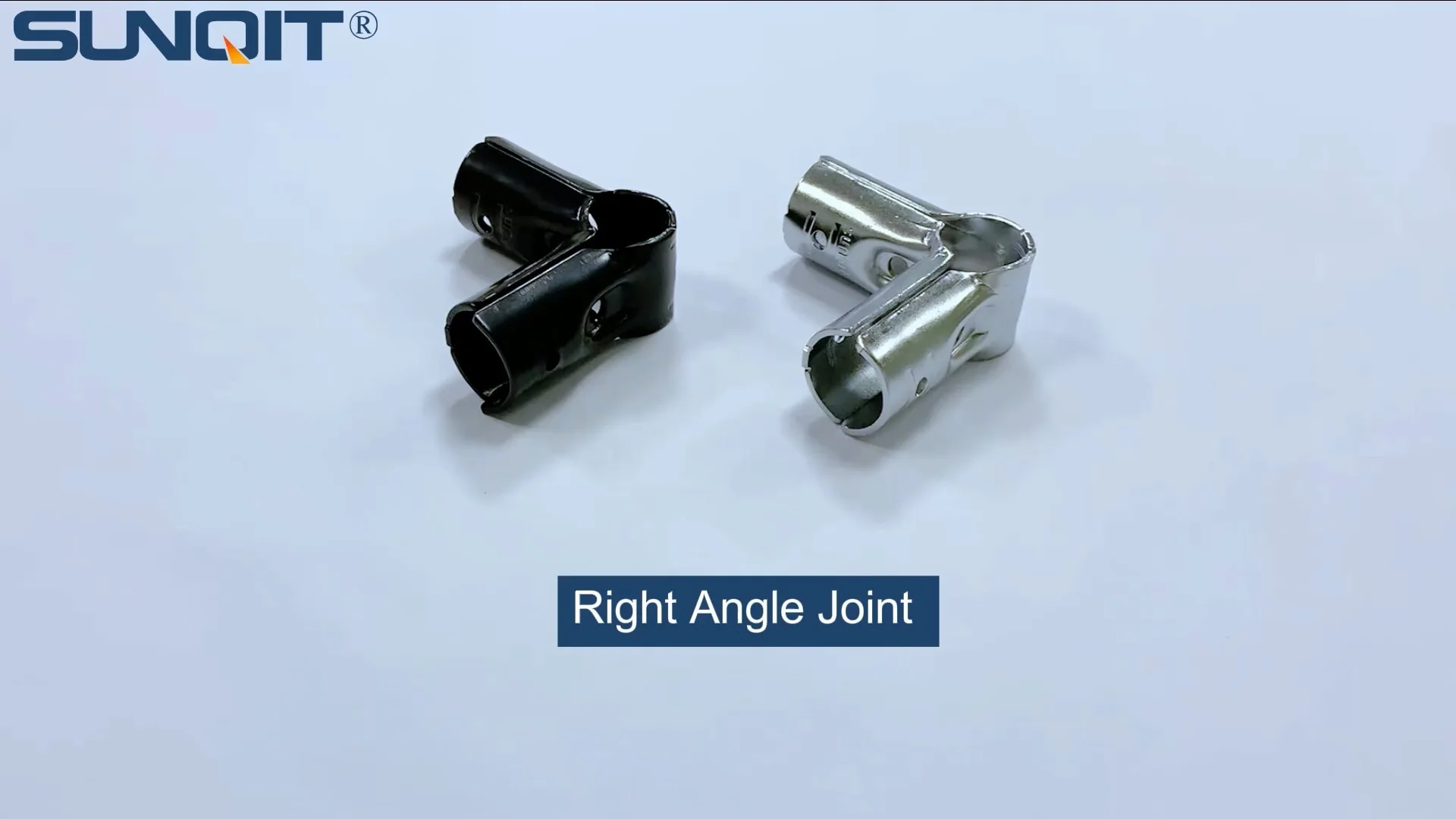
Three way lean pipe joint for 3 pcs 28MM lean pipe connection in straight angle, which used widely in workbench, flow rack, hand trolley frame connection.
Introduction: The Hidden Cost of a Poor Fit
Walk into any busy workshop, factory floor, or warehouse, and you'll likely spot structures held together by a network of pipes and joints—workbenches where assemblers piece together products, material racks stacked with components, or flow racks guiding parts from one station to the next. These structures look simple enough, but their stability, safety, and efficiency hinge on one tiny detail: how well the pipes and joints fit together. And when it comes to building with lean pipe systems, few components are as critical as the three way lean pipe joint chrome.
If you've ever built something with pipes and joints, you know the frustration of a wobbly connection. You tighten the joint as much as possible, but the pipe still spins or shifts. Or worse, you assemble an entire rack only to have it lean to one side because the joints and pipes weren't sized right. What feels like a minor inconvenience at first can snowball into bigger problems: wasted time disassembling and reordering parts, increased risk of workplace accidents, and even damaged inventory when a rack collapses. The truth is, getting the sizing of your three way lean pipe joint chrome right isn't just about "making things fit"—it's about building a foundation for smooth, safe, and sustainable operations.
In this guide, we'll dive deep into the world of three way lean pipe joint chrome sizing. We'll break down why pipe and joint compatibility matters, how to measure your pipes correctly (hint: it's not just about length), the differences between common pipe materials like lean pipe, aluminum pipe, and stainless steel pipe series, and how to match them to the right joints. Whether you're setting up a new workspace, upgrading old equipment, or troubleshooting a wobbly structure, this guide will help you avoid the guesswork and build with confidence.
Why Sizing Matters: More Than Just "Snug"
At first glance, you might think a joint that "sort of fits" is good enough. After all, if you can tighten the screws and the pipe doesn't fall out, what's the harm? But in reality, the fit between a three way lean pipe joint chrome and its pipe affects nearly every aspect of your structure's performance. Let's break down the key reasons sizing deserves your attention.
Safety First: Wobbly Structures = Wasted Risks
Imagine a workbench in a electronics assembly line, loaded with delicate circuit boards and tools. If the three way joints holding up the bench legs are too loose, the whole surface might shake when an operator leans on it. A shaky workbench isn't just annoying—it's a safety hazard. Components could fall and break, or worse, tools might slip and injure someone. In warehouses, material racks holding heavy boxes or machinery parts rely on tight, secure joints to prevent collapse. A joint that's too small for the pipe might seem tight initially, but over time, the constant stress of weight and movement can cause the pipe to crack or the joint to strip. On the flip side, a joint that's too large will never grip the pipe properly, leading to gradual slippage until the structure fails.
Efficiency: Time Lost to "Almost Right" Parts
Time is money, especially in fast-paced environments. Ordering the wrong size three way lean pipe joint chrome means waiting for replacements, delaying projects, and paying for shipping twice. Even if you try to "make do" with ill-fitting parts—using tape to shim a loose joint or sanding down a pipe to fit a tight one—you're adding extra steps that slow down production. A team of assemblers shouldn't have to spend 30 minutes jury-rigging a joint when they could be building structures that work the first time. Proper sizing eliminates these headaches, letting you focus on what matters: getting the job done.
Durability: The Long Game of a Tight Fit
Lean pipe systems are designed to be modular and reusable, meaning you might rearrange or repurpose your structures multiple times over the years. A joint that fits perfectly today will still hold strong after being disassembled and reassembled. But a poor fit? It wears out faster. A loose joint causes the pipe to rub against the joint's interior, scratching off the protective coating on lean pipe or corroding aluminum pipe. A tight joint, forced onto a pipe that's too large, can crack the joint's plastic or metal components. Either way, you're looking at premature replacement costs. Investing time in sizing upfront saves you from replacing joints and pipes every few months.

Understanding the Three Way Lean Pipe Joint Chrome: Design and Function
Before we get into sizing, let's make sure we're all on the same page about what a three way lean pipe joint chrome is and how it works. At its core, this joint is a connector that lets you join three pipes at (you guessed it) three different angles—typically 90 degrees, but some designs allow for adjustable angles. The "chrome" in its name refers to the chrome plating on the joint's surface, which adds corrosion resistance and a smooth, professional finish—important for environments where moisture or chemicals are present, like food processing or automotive shops.
Most three way lean pipe joint chrome designs feature a central body with three openings (ports) where pipes insert. Each port has a setscrew or a clamping mechanism that tightens down on the pipe to hold it in place. Some joints have fixed angles (e.g., one port straight, two at 90 degrees), while others are swivel or rotatable, letting you adjust the angle of the pipes during assembly. The key here is that each port is engineered to fit a specific pipe diameter. A joint made for 28mm pipes won't work well with 30mm pipes, and vice versa—even if the difference seems small.
These joints are workhorses in lean manufacturing systems, where flexibility and adaptability are priorities. Need to reconfigure a workbench to accommodate a new product? Swap out the pipes and joints. Want to add a shelf to a material rack? Just add a three way joint. But that flexibility only works if the joints and pipes play by the same sizing rules. Next, let's look at the pipes themselves—because not all pipes are created equal.

Pipe Materials 101: Lean Pipe, Aluminum Pipe, and Stainless Steel Pipe Series
When it comes to building with lean systems, you'll encounter three main pipe materials: lean pipe (also called PE coated pipe), aluminum pipe, and stainless steel pipe series. Each has its own strengths, weaknesses, and—crucially—sizing quirks. Let's break them down so you know what to measure.
Lean Pipe: The Budget-Friendly Workhorse
Lean pipe, or PE coated pipe, is the most common material in workshops and factories. It's made of a steel core wrapped in a colorful plastic (polyethylene) coating—usually white, black, or yellow. The coating protects the steel from rust, reduces noise when parts slide against it, and adds a bit of grip. Lean pipe comes in various wall thicknesses (1.0mm, 1.2mm, 1.5mm, 2.0mm), which affects its strength and weight capacity. But here's the catch: when manufacturers list the "size" of lean pipe, they're usually referring to the outer diameter (OD) of the entire pipe, including the PE coating. For example, a "28mm lean pipe" has an outer diameter of 28mm, with the steel core being slightly smaller (around 25mm for 1.5mm coating thickness).
Why does this matter? Because the three way lean pipe joint chrome grips the outer coating, not the steel core. If you measure the steel core instead of the full OD, you'll end up with a joint that's too loose. And if the coating is worn or damaged in spots, the pipe's OD might be slightly smaller in those areas, leading to uneven fits. Always measure the outer diameter of the PE coating when working with lean pipe.
Aluminum Pipe: Lightweight and Corrosion-Resistant
Aluminum pipe is gaining popularity in industries where weight and corrosion resistance are priorities—think aerospace, cleanrooms, or pharmaceutical labs. Unlike lean pipe, aluminum pipe doesn't have a coating; what you see is what you get. Its outer diameter is the same as its structural diameter, so measuring is straightforward. Aluminum pipe is often sold in metric sizes (e.g., 20mm, 30mm, 40mm OD) and is lighter than steel, making it easier to assemble and reconfigure. However, aluminum is softer than steel, so over-tightening a joint can dent or scratch the pipe, weakening the connection over time. When pairing aluminum pipe with three way lean pipe joint chrome, look for joints with rounded or padded clamping surfaces to avoid damaging the pipe.
Stainless Steel Pipe Series: Heavy-Duty and Hygienic
Stainless steel pipe series is the tough guy of the group, ideal for heavy loads, high temperatures, or environments where cleanliness is non-negotiable (like food processing or medical device manufacturing). Stainless steel resists rust, chemicals, and bacteria growth, but it's also heavier and more expensive than lean or aluminum pipe. Like aluminum, stainless steel pipe's size refers to its outer diameter, with wall thickness ranging from 0.8mm to 2.0mm. When using stainless steel pipe with three way lean pipe joint chrome, ensure the joint's material is compatible—chrome-plated steel joints work well, but avoid mixing metals that can cause galvanic corrosion (e.g., aluminum joints with stainless steel pipes in wet environments).
Measuring Pipes Correctly: The "OD Rule" and Why Inner Diameter Doesn't Matter
If there's one mistake we see people make over and over, it's measuring the wrong part of the pipe. Let's clear this up: when sizing a three way lean pipe joint chrome, you only care about the pipe's outer diameter (OD). The inner diameter (ID) might matter for fluid flow in plumbing, but for structural joints, it's irrelevant. The joint clamps onto the outside of the pipe, so the OD is the critical measurement.
So, how do you measure OD accurately? Grab a digital caliper—this is the best tool for the job. A tape measure can work in a pinch, but it's easy to get off by a millimeter or two, which is enough to ruin a fit. Here's how to do it:
- Clean the pipe: Wipe off any dirt, grease, or debris from the area you'll measure. For lean pipe, check that the PE coating isn't cracked or bulging—if it is, measure in an undamaged spot (or replace the pipe, since damaged coating can affect fit).
- Position the caliper: Open the caliper jaws and place them around the pipe, making sure they're perpendicular to the pipe's length (not slanted). Gently close the jaws until they touch the pipe—you should feel slight resistance, but don't squeeze too hard, especially with aluminum or thin-walled lean pipe.
- Read the measurement: Digital calipers will display the OD in millimeters (mm) or inches. Most lean pipe systems use metric sizes, so stick to mm for consistency. For example, a standard lean pipe might measure 28.0mm OD, while an aluminum pipe could be 30.0mm OD.
- Check multiple spots: Pipes can sometimes be slightly out of round, especially if they've been bent or stored improperly. Measure the OD in three different places (top, bottom, side) and take the average. If the measurements vary by more than 0.5mm, the pipe might be warped and should be replaced.
Pro tip: Always measure the pipe you'll actually use, not just the size listed on the packaging. Manufacturing tolerances mean a "28mm lean pipe" might actually be 27.8mm or 28.2mm—close, but enough to affect how a joint fits. If you're buying pipes and joints from the same supplier, ask for a size chart that lists the exact OD of their pipes and the corresponding joint sizes. Reputable suppliers (like many lean pipe suppliers or aluminum pipe suppliers) will have this information readily available.
Matching Joints to Pipes: A Practical Guide
Now that you know how to measure your pipe's OD and understand the differences between materials, let's put it all together: matching your three way lean pipe joint chrome to your pipes. This step is where most people get stuck, but it doesn't have to be complicated. Follow these steps, and you'll be on your way to tight, secure connections.
Step 1: Get the Joint's Size Specifications
Every three way lean pipe joint chrome should come with size specs from the manufacturer, usually listed as "fits [X]mm pipes" or "port diameter: [X]mm." This is the starting point. For example, a joint labeled "fits 28mm pipes" is designed for pipes with a 28mm OD. If your pipe measures 28mm OD (after cleaning and averaging), this joint should work—assuming the pipe material is compatible.
If you're buying joints online or from a catalog, check the product description for "compatible pipe OD" or "port size." Avoid vague labels like "standard size" or "universal fit"—there's no such thing when it comes to pipe joints. A "universal" joint might fit multiple sizes poorly, which is worse than a joint that fits one size well.
Step 2: Consider Pipe Material and Wall Thickness
Even if the OD matches, pipe material can affect the fit. For example, lean pipe with a thick PE coating (1.5mm) might have more "give" than a thin-walled stainless steel pipe of the same OD. A joint that clamps tightly on stainless steel might feel loose on lean pipe because the coating compresses slightly when the setscrew is tightened. In this case, you might need a joint with a slightly smaller port size (e.g., 27.5mm for 28mm lean pipe) to account for the coating's flexibility. Conversely, aluminum pipe is rigid but soft, so a joint with a port size exactly matching the OD is better—over-tightening can deform the pipe, making future disassembly difficult.
Wall thickness also plays a role in weight capacity, but not directly in sizing. A 28mm lean pipe with a 2.0mm steel core can hold more weight than a 28mm pipe with a 1.0mm core, but both will fit the same 28mm joint. Just make sure the joint's clamping mechanism is strong enough for the pipe's intended load—heavier loads may require joints with larger setscrews or reinforced clamping surfaces.
Step 3: Test the Fit Before Full Assembly
Before assembling an entire structure, test the joint and pipe fit with a single connection. insert the pipe into the joint's port and tighten the setscrew until it's snug (but not over-tight). Give the pipe a gentle tug and twist. It should stay firmly in place—no spinning, sliding, or wobbling. If the pipe slides out easily, the joint is too large. If you can't insert the pipe all the way, or if the joint cracks when tightening, it's too small. If the fit is perfect, great! If not, now's the time to exchange the joint for the correct size—don't try to "fix" it with tape, glue, or extra setscrews. Those are temporary solutions that will fail under stress.
| Pipe Type | Typical OD (mm) | Compatible Three Way Joint Size (mm) | Best For |
|---|---|---|---|
| 1.2mm PE Coated Lean Pipe | 28.0 | 28.0 | General workbenches, light-duty material racks |
| 2.0mm Aluminum Pipe | 30.0 | 30.0 | Cleanrooms, lightweight assembly lines |
| 1.5mm Stainless Steel Pipe (Series 304) | 32.0 | 32.0 | Heavy-duty material racks, food processing areas |
| 0.8mm PE Coated Lean Pipe | 25.0 | 25.0 | Small parts storage, mobile trolleys |
| 1.5mm Aluminum Pipe | 40.0 | 40.0 | Workstations with heavy equipment |
Common Sizing Issues and How to Fix Them
Even with careful measuring, you might run into sizing problems. Let's troubleshoot the most common issues and how to solve them.
Issue 1: The Pipe Spins in the Joint
If the pipe spins or rotates in the joint even after tightening the setscrew, the joint is likely too large for the pipe's OD. This is common with lean pipe that has a worn or thin PE coating—over time, the coating can wear down, reducing the pipe's OD by 0.5mm or more. The solution? replace the worn pipe with a new one of the correct OD, or use a joint with a slightly smaller port size (e.g., 27.5mm for a 28mm pipe that's worn to 27.8mm). Avoid wrapping the pipe in tape to "bulk it up"—the tape will compress over time, and the pipe will start spinning again.
Issue 2: The Joint Cracks When Tightening
Cracking usually happens when the pipe is too large for the joint, and you force it in. This is more common with plastic or nylon joints, but even chrome-plated steel joints can crack if over-stressed. If a joint cracks, discard it immediately—cracked joints can't hold weight safely. Measure the pipe's OD again to confirm it matches the joint's specs, and replace the joint with the correct size.
Issue 3: The Joint and Pipe Are the Same OD, But Still Loose
If the OD measurements match but the fit is loose, check if the pipe is out of round. Use your caliper to measure the OD in multiple spots—if one side is 28mm and another is 27.5mm, the pipe is warped. replace it with a straight, round pipe. Another possibility is that the joint's clamping mechanism is worn (e.g., stripped setscrew threads). Try replacing the setscrew with a new one of the same size—this is often cheaper than replacing the entire joint.
Case Study: From Wobbly Racks to Smooth Workflow
To see how proper sizing transforms a workspace, let's look at a real example: a small electronics manufacturer we'll call "TechWorks." TechWorks assembles circuit boards for medical devices, and their production line relied on a series of material racks built with lean pipe and three way joints. Over time, the racks had become increasingly wobbly—components would slide off shelves, and workers had to stop frequently to readjust the structures. The team assumed the issue was "cheap parts" and planned to replace all the racks with expensive aluminum models.
Before investing in new equipment, TechWorks brought in a lean manufacturing consultant who noticed something simple: the racks were built with a mix of 28mm and 30mm lean pipes, but all the joints were labeled "universal 28-30mm." The consultant measured the pipes and found that some were 28mm OD (standard lean pipe) and others were 30mm OD (leftover from a previous project). The "universal" joints fit neither size well—they were loose on the 28mm pipes and tight on the 30mm ones, causing the racks to flex and wobble.
The solution? The consultant ordered new three way lean pipe joint chrome sized specifically for 28mm pipes, replaced the mismatched 30mm pipes with 28mm ones, and reassembled the racks. The result? The racks were stable, components stayed in place, and production downtime due to rack adjustments dropped by 90%. TechWorks saved thousands by avoiding new aluminum racks and learned the value of precise sizing.
Maintenance: Keeping Joints and Pipes Fitting Well Over Time
Even the best-fitting joints and pipes need a little care to stay tight. Here's how to maintain your three way lean pipe joint chrome connections:
- Check for looseness monthly: Over time, vibration from machinery or frequent use can loosen setscrews. Tighten them gently with a hex key—don't over-tighten.
- Clean chrome joints regularly: Wipe down chrome-plated joints with a damp cloth to remove dirt and grime, which can corrode the finish. Avoid abrasive cleaners that scratch the chrome.
- replace worn parts: If a setscrew strips, or the joint's clamping surface is damaged, replace the joint. Similarly, if a pipe's PE coating is peeling or the aluminum/stainless steel is bent, replace the pipe.
- Re-measure after reconfigurations: If you disassemble and reassemble a structure, re-measure the pipes and test joint fits—pipes can get bent during storage, and joints can wear slightly.
Conclusion: Measure Twice, Build Once
Building with three way lean pipe joint chrome and pipes isn't rocket science, but it does require attention to detail—specifically, the outer diameter of your pipes and the port size of your joints. What might seem like a small measurement (a millimeter here or there) can mean the difference between a stable, safe structure and a wobbly, frustrating one. By taking the time to measure your pipes correctly, understand the differences between materials like lean pipe, aluminum pipe, and stainless steel pipe series, and test fits before assembly, you'll build structures that last, save time and money on replacements, and create a safer, more efficient workspace.
Remember, the goal isn't just to "get it done"—it's to build something that works as hard as you do. So grab your caliper, measure twice, and build with confidence. Your future self (and your wobbly workbench) will thank you.