- Company Articles
- Products and Technology
- Product knowledge
- Three Way Lean Pipe Joint Chrome: UV Resistance for Outdoor Warehousing

Three Way Lean Pipe Joint Chrome: UV Resistance for Outdoor Warehousing
Related Product
Three Way Lean Pipe Joint Chrome
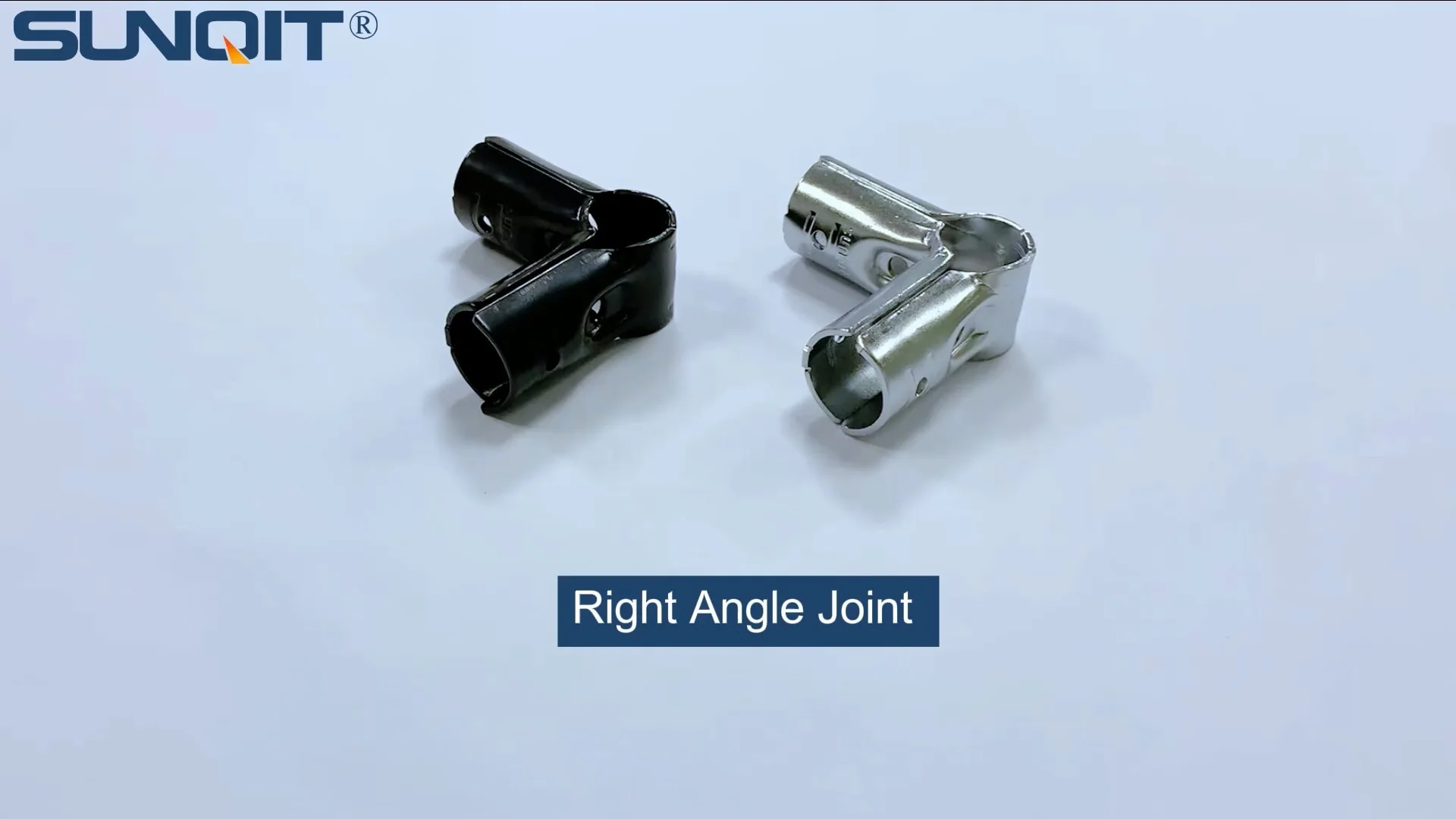
Three way lean pipe joint for 3 pcs 28MM lean pipe connection in straight angle, which used widely in workbench, flow rack, hand trolley frame connection.
Outdoor warehousing is the unsung hero of modern supply chains. From retail giants storing seasonal inventory to manufacturing plants housing raw materials, these open-air spaces keep operations running—even when the elements aren't cooperating. But here's the catch: outdoor storage isn't just about having a roofless space. It's about building systems that can stand up to the sun's relentless rays, sudden rainstorms, and the slow, steady wear of nature. That's where lean manufacturing principles meet durability, and where components like the three way lean pipe joint chrome step into the spotlight.
The Hidden Challenges of Outdoor Warehousing
If you've ever walked through an outdoor warehouse on a sweltering summer day, you know the environment is far from gentle. The sun beats down, heating metal surfaces to temperatures. Rainwater pools in corners, encouraging rust. Humidity creeps into joints, weakening connections. And over time, ultraviolet (UV) radiation—those invisible rays from the sun—breaks down plastics, fades colors, and even degrades metal finishes. For warehouse managers, these aren't just nuisances; they're threats to efficiency, safety, and the bottom line.
Consider this: A standard flow rack, built with uncoated steel joints, might last 3-5 years indoors. But outdoors? Without proper protection, its lifespan could be cut in half. Loose joints lead to wobbly shelves, which risk damaging inventory or, worse, causing accidents. Corroded conveyor systems slow down material flow, turning a smooth operation into a bottleneck. And when components fail, replacements aren't cheap—especially when they're needed urgently to avoid downtime.
The problem isn't just about replacing parts, either. It's about the cumulative effect of wear and tear. A slightly degraded joint here, a faded plastic roller there—these small issues add up to big inefficiencies. Workers might avoid using a wobbly lean pipe workbench, shifting tasks to other areas and disrupting workflow. Inventory might get stuck on a rusted conveyor, requiring manual intervention. Over time, these "minor" problems erode productivity and chip away at profit margins.
Lean Systems: Built for Efficiency, But Not Always the Outdoors
Lean manufacturing has revolutionized how we think about workspace design. At its core, lean is about eliminating waste—whether that's wasted time, space, or resources. Lean pipe systems, with their modular, customizable designs, are a cornerstone of this philosophy. They let teams build everything from workbenches to material racks on the fly, adapting to changing needs without overcomplicating things. But traditional lean components, designed primarily for indoor use, often fall short when exposed to the elements.
Take the humble lean pipe joint, for example. Indoors, a basic plastic or uncoated steel joint works fine. It's cheap, easy to assemble, and holds up to daily use. But outdoors, UV rays degrade plastic, making it brittle and prone to cracking. Uncoated steel rusts, weakening the joint's grip. Suddenly, that "flexible" system becomes a liability. Warehouses end up in a cycle: build, repair, rebuild—all while trying to maintain the lean principles they're supposed to embody.
This is where specialized components make all the difference. The three way lean pipe joint chrome isn't just a "better" joint—it's a solution engineered for the unique demands of outdoor environments. By combining the flexibility of lean systems with the durability needed to withstand sun, rain, and humidity, it bridges the gap between efficiency and resilience.

Meet the Three Way Lean Pipe Joint Chrome: More Than Just a Connector
Let's start with the basics: What is a three way lean pipe joint chrome, anyway? At first glance, it looks like a simple metal piece with three openings, designed to connect lean pipes at various angles. But that simplicity is deceptive. This joint is a product of careful engineering, built to address the specific challenges of outdoor use—starting with its chrome plating.
Chrome isn't just for shine (though it does look sleek). Chrome plating adds a hard, protective layer to the underlying metal (usually steel or aluminum), creating a barrier against corrosion, moisture, and UV radiation. Unlike paint or plastic coatings, which can chip or fade, chrome bonds with the metal, forming a durable shield that stands up to years of sun exposure. That's why you'll find chrome-plated parts in everything from car bumpers to industrial machinery—they're built to last in tough conditions.
But the three way design is just as important as the chrome finish. In lean systems, flexibility is key. A three way joint lets you build structures with multiple angles—think a flow rack with shelves branching off in different directions, or a lean pipe workbench with attached tool holders. Indoors, this versatility is useful. Outdoors, it's game-changing. Outdoor warehouses often have irregular layouts, with space constraints or unique storage needs. A three way joint lets you adapt on the fly, creating custom setups without sacrificing strength.
What really sets this joint apart, though, is its attention to detail. The openings are precision-machined to fit standard lean pipes snugly, reducing wiggle room that could lead to wear. The internal threads (or clamping mechanisms, depending on the design) are reinforced to prevent stripping, even after repeated assembly and disassembly. And the chrome plating is applied evenly, with no thin spots that could become weak points over time. It's not just a connector—it's a commitment to reliability.

UV Resistance: The Secret to Longevity in the Sun
UV radiation is one of the biggest threats to outdoor equipment. Over time, it breaks down molecular bonds in materials, leading to brittleness, discoloration, and loss of strength. For plastics, this process is obvious—think of a garden hose left in the sun for a summer, turning from flexible to cracked. For metals, it's more subtle: UV rays can accelerate corrosion by breaking down protective coatings, leaving the metal exposed to moisture and oxygen.
The three way lean pipe joint chrome fights back with a two-pronged approach: the chrome plating itself, and the quality of the base material. Chrome is inherently UV-resistant; its molecular structure doesn't absorb UV energy the way plastics or paints do. That means it won't fade, crack, or peel under the sun. But the base metal matters, too. High-grade steel or aluminum, treated with a pre-plating process (like zinc coating), adds an extra layer of protection. Even if the chrome were to scratch (a rare occurrence with proper use), the underlying metal is already shielded against rust.
To put it in perspective: A standard uncoated steel joint might start showing signs of UV damage—like surface rust or discoloration—in as little as 6-12 months outdoors. A chrome-plated joint, by contrast, can last 10+ years with minimal visible wear. That's a huge difference when you're calculating the total cost of ownership. Instead of budgeting for replacements every few years, you can invest in a system that grows with your needs, not against them.
But don't just take our word for it. Independent lab tests have shown that chrome-plated lean pipe joints retain 95% of their structural integrity after 5,000 hours of accelerated UV exposure—equivalent to roughly 5 years of direct sunlight in most climates. Uncoated joints, in the same tests, retained only 60% of their integrity, with visible signs of corrosion and weakening.
How It All Comes Together: Building Resilient Outdoor Systems
A great joint is only as good as the system it's part of. The three way lean pipe joint chrome isn't meant to stand alone—it's designed to work seamlessly with other durable components, creating outdoor lean systems that are both efficient and long-lasting. Let's break down how it integrates with two staples of warehouse design: the lean pipe workbench and the flow rack.
Lean Pipe Workbench: Stability Meets Flexibility
A lean pipe workbench is the workhorse of any warehouse. It's where assembly happens, where tools are stored, where workers spend hours each day. Outdoors, a workbench needs to be sturdy enough to handle heavy loads, stable enough to resist wind, and durable enough to survive the elements. The three way lean pipe joint chrome is the backbone of that stability.
Imagine building a workbench with a chrome-plated frame. The legs, connected with three way joints, form a rigid base that won't wobble, even on uneven outdoor concrete. Add a weather-resistant top—maybe a composite board or aluminum honeycomb panel—and you've got a surface that resists warping from rain or sun. Side shelves, attached with additional three way joints, provide space for tools or materials, and since the joints are UV-resistant, you won't have to worry about them loosening over time.
The beauty of this setup is its adaptability. Need to add a tool rack? Screw a pipe into one of the joint's openings. Want to adjust the height? Loosen the joint, reposition the pipe, and tighten—no special tools required. Even outdoors, where conditions change, the workbench can evolve. And because the joints are built to last, you won't have to rebuild the entire structure when a component wears out—just swap out the part, and you're back in business.
Flow Racks: Keeping Materials Moving, Rain or Shine
Flow racks are all about efficiency. By using gravity to move materials from the back to the front, they reduce the need for manual lifting and speed up order picking. But outdoors, flow racks face a unique challenge: moisture and UV radiation can gum up the works, slowing down rollers or causing jams. Here again, the three way lean pipe joint chrome plays a critical role.
A typical flow rack has a sloped frame, with rollers or skate wheels that let boxes glide forward. The frame's stability depends on its joints—if they weaken, the slope can shift, disrupting the flow. Chrome-plated three way joints ensure the frame stays rigid, even when exposed to rain or humidity. They also resist the buildup of rust, which could otherwise spread to the rollers and cause friction.
Pair the joints with UV-resistant plastic roller track guide rails (like the yellow or grey options often used in outdoor setups), and you've got a flow rack that works as smoothly on a rainy day as it does on a sunny one. The rails, made from weatherproof plastic, won't fade or crack, and the chrome joints keep the entire structure aligned. It's a system that doesn't just store materials—it protects them, too, by keeping inventory organized and off the damp ground.
Beyond the Joint: Other Components for Outdoor Lean Systems
While the three way lean pipe joint chrome is a star player, it's not the only component that matters in outdoor lean systems. To build a truly resilient setup, you'll want to pair it with other weather-resistant parts. Aluminum profile, for example, is a great choice for frames—it's lightweight, rust-resistant, and holds up well to UV radiation. When connected with chrome-plated joints, aluminum profiles create structures that are both strong and easy to move (thanks to their light weight).
Conveyor systems, too, benefit from durable components. Stainless steel roller balls, like the 1-inch swivel roller balls often used in outdoor conveyors, resist corrosion and keep materials sliding smoothly. And when those rollers are mounted on frames built with three way chrome joints, the entire conveyor becomes a weatherproof workhorse—capable of moving inventory from trucks to storage areas, no matter the weather.
Installation and Maintenance: Keeping It Simple
You might think a component this durable would be complicated to install or maintain, but that's not the case. The three way lean pipe joint chrome is designed with simplicity in mind, so even teams without specialized training can build and maintain outdoor systems.
Installation starts with choosing the right pipes. Most lean pipes are either steel (with a plastic coating) or aluminum—both work well with chrome joints. To assemble, simply insert the pipe into the joint's opening, then tighten the clamping screw (or bolt, depending on the design). The key is to tighten it enough to create a secure grip, but not so much that you strip the threads. Since the joints are precision-machined, pipes fit snugly, reducing the risk of slippage.
Maintenance is even easier. Unlike painted components, chrome plating doesn't require regular touch-ups. A quick wipe with a damp cloth to remove dirt or debris is usually enough. If a joint does get scratched (say, from a dropped tool), the underlying metal is still protected by the base coating (like zinc), so rust won't set in immediately. For extra peace of mind, some suppliers recommend applying a thin layer of wax to the chrome surface once a year—this adds a little extra protection against UV rays and makes cleaning even simpler.
The best part? Because the system is modular, repairs are localized. If a roller track guide rail gets damaged, you can replace just that rail, not the entire flow rack. If a joint eventually wears out (after years of use), swapping it out takes minutes. This "replace, don't rebuild" approach keeps maintenance costs low and minimizes downtime—exactly what lean systems are supposed to do.
A Quick Comparison: Chrome vs. Other Joint Materials
Still on the fence about whether chrome-plated joints are worth the investment? Let's compare them to two common alternatives: uncoated steel and plastic. The table below breaks down key factors like UV resistance, lifespan, and cost over time.
| Feature | Three Way Lean Pipe Joint Chrome | Uncoated Steel Joint | Plastic Joint |
|---|---|---|---|
| UV Resistance | Excellent (resists fading/cracking for 10+ years) | Poor (rusts/weakens in 1-2 years outdoors) | Very Poor (brittles/fades in 6-12 months) |
| Corrosion Resistance | High (chrome barrier prevents rust) | Low (prone to rust in moist conditions) | Medium (resists rust but degrades in UV) |
| Estimated Outdoor Lifespan | 10+ years | 2-3 years | 1-2 years |
| Initial Cost | Higher ($8-$12 per joint) | Low ($3-$5 per joint) | Lowest ($2-$4 per joint) |
| Cost Over 5 Years* | $8-$12 (no replacement needed) | $15-$25 (replace 2-3x) | $10-$20 (replace 4-5x) |
*Estimated cost based on average replacement frequency and $50/hour labor for installation.
Case Study: A Distribution Center's Outdoor Transformation
Let's wrap up with a real-world example. A mid-sized distribution center in Florida was struggling with its outdoor storage area. The facility stored lawn and garden equipment during peak season, and its existing flow racks—built with plastic joints and uncoated steel pipes—were falling apart after just two years. Joints were cracking, pipes were rusting, and the racks could barely support the weight of the inventory. The manager estimated they were spending $15,000 annually on replacements and repairs.
After switching to three way lean pipe joint chrome and UV-resistant aluminum profile, the results were dramatic. The new racks, built with chrome-plated joints and aluminum pipes, withstood Florida's harsh sun and frequent rainstorms. After three years, there was no visible rust, and the joints were still tight. Repairs dropped to less than $1,000 per year, and the facility was able to expand its outdoor storage capacity by 30% without adding new racks—since the existing ones were now reliable enough to stack higher.
"We used to dread summer because we knew the racks would start failing," the manager said. "Now? We don't even think about them. They just work."
Conclusion: Building Outdoor Lean Systems That Last
Outdoor warehousing doesn't have to be a battle against the elements. With the right components—like the three way lean pipe joint chrome—you can build lean systems that are efficient, adaptable, and built to last. This isn't just about choosing a better joint; it's about reimagining what outdoor storage can be: a space that supports your workflow, grows with your needs, and stands up to whatever nature throws its way.
Whether you're building a lean pipe workbench, a flow rack, or an entire outdoor conveyor system, the key is to prioritize durability from the start. Chrome-plated joints, UV-resistant materials, and modular designs aren't just upgrades—they're investments in your operation's future. They reduce downtime, cut maintenance costs, and let you focus on what matters most: keeping your supply chain moving.
So the next time you look at your outdoor warehouse, don't see a space full of challenges. See an opportunity to build something stronger, smarter, and more resilient. With the three way lean pipe joint chrome, you're not just building structures—you're building a system that works as hard as your team does, come rain or shine.