- Company Articles
- Products and Technology
- Product knowledge
- Three Way Lean Pipe Joint Chrome vs. Zinc-Plated: Longevity Comparison

Three Way Lean Pipe Joint Chrome vs. Zinc-Plated: Longevity Comparison
Related Product
Three Way Lean Pipe Joint Chrome
Three way lean pipe joint for 3 pcs 28MM lean pipe connection in straight angle, which used widely in workbench, flow rack, hand trolley frame connection.
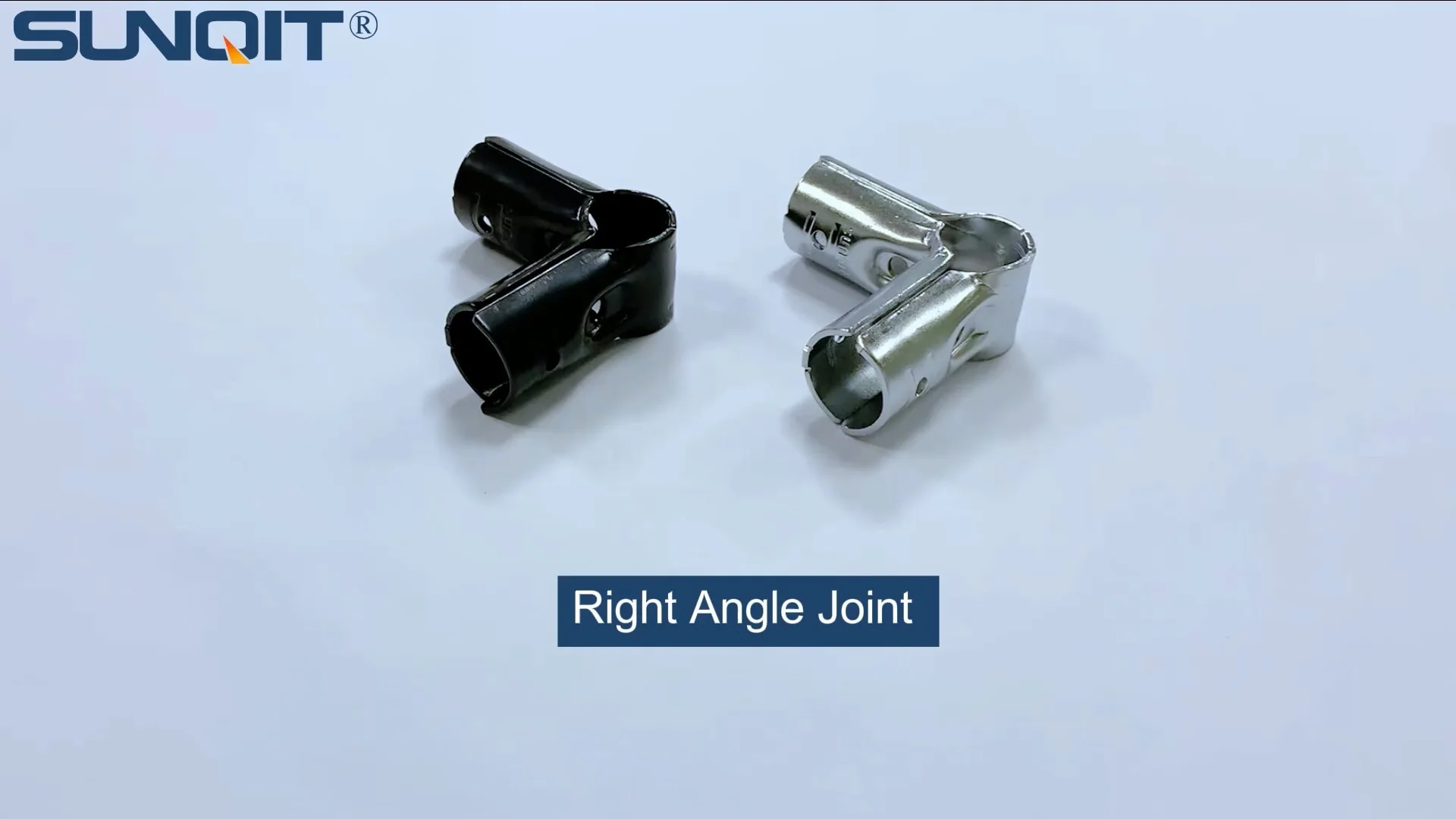
In the world of lean manufacturing, where efficiency and durability are the backbone of daily operations, every component plays a silent yet critical role. From the conveyor belts that move products seamlessly to the workbenches where precision assembly happens, each part must stand the test of time—especially the unsung heroes that hold everything together: lean pipe joints. Among these, the three way lean pipe joint is a workhorse, tasked with connecting pipes at multiple angles to build stable structures like flow racks, production workbenches, and material trolleys. But when it comes to choosing between chrome-plated and zinc-plated variants, the question of longevity often takes center stage. How do these coatings stack up over years of heavy use? Which one will keep your lean system sturdy and reliable, even in the harshest factory environments? Let's dive in.
The Role of Three Way Lean Pipe Joints in Lean Systems
Before we compare coatings, let's first understand why three way lean pipe joints matter. In lean manufacturing, modularity is key. Factories need structures that can be quickly reconfigured to adapt to changing production needs—whether it's a new product line, a redesigned workflow, or a seasonal surge in demand. Three way joints are the linchpin of this flexibility. By connecting three pipes at 90-degree or 135-degree angles, they allow for the creation of multi-dimensional frames: think of a workbench with shelves on both sides, a flow rack with multiple levels, or a turnover trolley with reinforced corners. Unlike fixed joints, these components are designed to be disassembled and reassembled without compromising structural integrity, making them ideal for dynamic workspaces.
But here's the catch: a joint is only as good as its ability to resist wear, corrosion, and stress over time. In a typical factory, these joints face daily challenges: exposure to oils, coolants, and cleaning agents; constant vibration from nearby machinery; and the physical strain of supporting heavy loads (think stacks of raw materials or finished products). Over months and years, even a small flaw in the coating can lead to rust, weakening the joint and putting the entire structure at risk. That's why choosing the right coating—chrome or zinc-plated—isn't just a matter of aesthetics; it's a decision that directly impacts productivity, maintenance costs, and the lifespan of your lean system.
Understanding Chrome-Plated Three Way Lean Pipe Joints
Chrome-plated three way lean pipe joints are known for their sleek, mirror-like finish, but there's more to this coating than meets the eye. The chrome plating process involves electroplating a thin layer of chromium onto the surface of the steel joint. This isn't just about shine—chromium is a hard, corrosion-resistant metal that forms a protective barrier between the steel base and the environment. The process typically starts with cleaning the joint to remove dirt, oil, and rust, followed by submerging it in a chromium solution and passing an electric current through it. This causes the chromium ions to bond to the steel, creating a coating that's usually between 0.5 and 5 microns thick (though thicker coatings are possible for high-wear applications).
One of the standout features of chrome plating is its hardness. Chromium has a Mohs hardness rating of 8.5 (for reference, steel is around 4-5), which means it's highly resistant to scratches and abrasion. In a busy factory where workers might bump tools against the joints or materials might rub against them during transport, this hardness translates to longer-lasting protection. Chrome also has low friction properties, which can reduce wear from repeated assembly and disassembly—a common scenario when reconfiguring lean structures. Additionally, the smooth surface of chrome makes it easier to clean, preventing the buildup of grime that can trap moisture and accelerate corrosion.
But chrome plating isn't without its limitations. While it excels at resisting surface corrosion in dry or moderately humid environments, it's less effective in settings with high moisture, salt, or chemical exposure. Why? Because chromium plating is a "barrier coating"—it works by physically blocking corrosive elements from reaching the steel. If the coating is scratched or chipped (a common occurrence in heavy use), the exposed steel can start to rust, and the rust can spread under the coating over time. This is known as "undercutting," and it can weaken the joint even if the damage seems minor. Additionally, chrome plating is generally more expensive than zinc plating, both in terms of material costs and the complexity of the electroplating process. For budget-conscious operations, this might be a deciding factor.

The Lowdown on Zinc-Plated Three Way Lean Pipe Joints
Zinc-plated three way lean pipe joints, on the other hand, take a different approach to protection. Instead of relying solely on a barrier, zinc plating uses a process called "sacrificial corrosion." Zinc is more reactive than steel, which means if the coating is damaged and the steel is exposed, the zinc will corrode first, acting as a "sacrifice" to protect the underlying metal. This makes zinc-plated joints particularly resilient in environments where scratches or dents are unavoidable—like busy warehouses or outdoor storage areas.
Zinc plating can be done in two main ways: electroplating (similar to chrome) or hot-dip galvanizing. Electroplated zinc coatings are thinner (usually 5-25 microns) and have a matte, silver-gray finish, while hot-dip galvanizing involves dipping the joint in molten zinc, resulting in a thicker, rougher coating (often 50-150 microns) with a dull gray appearance. For three way lean pipe joints, electroplating is more common because it allows for precise control over the coating thickness, ensuring the joint remains easy to assemble with pipes and accessories. The electroplating process also leaves a more uniform finish, which is important for maintaining the tight tolerances needed for a secure fit between the joint and the lean pipe.
In terms of cost, zinc plating is generally more affordable than chrome plating. The materials are cheaper, and the electroplating process is less energy-intensive, making it a popular choice for bulk orders or budget-sensitive projects. But affordability doesn't mean compromising on basic durability. Zinc-plated joints hold up well in dry to moderately humid environments, and their sacrificial protection mechanism gives them an edge in settings where minor scratches are common. However, they do have limitations: the zinc coating is softer than chrome (Mohs hardness around 2.5), so it's more prone to wear from friction—for example, if pipes are frequently adjusted or rotated within the joint. Over time, this wear can thin the coating, reducing its protective properties.
Another consideration is appearance. Unlike chrome's high shine, zinc-plated joints have a more understated look, which some factories prefer for their utilitarian aesthetic. However, zinc can develop a patina over time—a thin layer of zinc oxide or carbonate—that gives the joint a slightly dull, bluish-gray tint. While this patina is harmless and even adds a layer of protection (it acts as a barrier against further corrosion), some operators might mistake it for rust, leading to unnecessary replacements. A quick wipe with a cloth can usually clarify that it's just the natural aging of the zinc coating.

Longevity Showdown: Chrome vs. Zinc-Plated in Real-World Conditions
To truly understand how chrome and zinc-plated three way lean pipe joints compare in longevity, we need to look beyond lab tests and into real factory settings. Let's break down their performance across key factors that affect lifespan: corrosion resistance, wear resistance, and environmental adaptability.
Corrosion Resistance: Battling Moisture and Chemicals
In dry environments—think electronics assembly cleanrooms or offices with climate control—both coatings perform similarly well. Chrome's barrier protection and zinc's sacrificial layer will keep joints rust-free for years, with minimal maintenance. But when moisture enters the equation, the difference becomes clear.
Take a food processing plant, for example, where floors are frequently hosed down to maintain hygiene. Here, chrome-plated joints may start showing signs of rust within 12-18 months if the coating is scratched, as water seeps into the tiny cracks and attacks the steel. Zinc-plated joints, on the other hand, can last 2-3 years under the same conditions. The zinc corrodes slowly, forming a protective patina that prevents water from reaching the steel. Similarly, in factories with high humidity (like those near coastal areas), zinc-plated joints often outlast chrome-plated ones by 1-2 years, thanks to their sacrificial protection.
Chemicals are another wild card. Chrome is more resistant to acids and alkalis than zinc, making it a better choice in environments with exposure to solvents, coolants, or industrial cleaners. For instance, in an automotive factory where degreasing agents are used regularly, a chrome-plated joint might last 5+ years, while a zinc-plated joint could start corroding within 3 years as the chemicals break down the zinc coating. Conversely, in settings with mild detergents (like a packaging facility), both coatings hold up well, with zinc again offering better value for money.
Wear Resistance: Handling Friction and Stress
In high-traffic areas where joints are frequently adjusted—say, a production line that's reconfigured monthly—wear resistance becomes critical. Chrome's hardness gives it a clear advantage here. The smooth, hard surface resists friction, so even if pipes are rotated or moved within the joint, the coating remains intact. In one case study, a car parts manufacturer using chrome-plated three way joints on a frequently reconfigured flow rack reported minimal wear after 4 years of use, with joints still fitting tightly and securely.
Zinc-plated joints, while durable, are softer and more prone to wear from repeated movement. In the same car parts factory, a parallel line using zinc-plated joints required joint replacements after 2.5 years, as the constant rotation of pipes had worn through the zinc coating in high-stress areas (like the corners of the flow rack). This isn't to say zinc is "weak"—it just isn't designed for the same level of friction as chrome. For static structures (e.g., a fixed workbench that rarely changes), zinc-plated joints can last just as long as chrome-plated ones, if not longer, due to their corrosion resistance in less demanding environments.
Cost vs. Lifespan: The Total Cost of Ownership
When comparing longevity, it's important to consider the total cost of ownership, not just the upfront price. A chrome-plated joint might cost 30-50% more than a zinc-plated one, but if it lasts twice as long in a high-wear environment, it could be the more economical choice in the long run. Let's crunch the numbers:
Suppose a factory needs 100 three way joints for a production line. Chrome-plated joints cost $5 each, while zinc-plated ones cost $3 each. In a dry, low-wear environment, both last 5 years. The total cost for chrome is $500, zinc is $300—zinc wins. But in a high-moisture, high-wear environment where chrome lasts 6 years and zinc lasts 3 years, the math changes: chrome costs $500 for 6 years ($83/year), while zinc costs $300 for 3 years ($100/year). Suddenly, chrome is the better value. This is why understanding your specific environment is key to making the right choice.
Comparison Table: Chrome-Plated vs. Zinc-Plated Three Way Lean Pipe Joints
| Factor | Chrome-Plated Three Way Lean Pipe Joint | Zinc-Plated Three Way Lean Pipe Joint |
|---|---|---|
| Coating Thickness | 0.5-5 microns (electroplated) | 5-25 microns (electroplated) |
| Corrosion Resistance | Excellent in dry/moderately humid environments; poor if coating is scratched (no sacrificial protection) | Good in dry/moderately humid environments; better than chrome if scratched (sacrificial protection) |
| Wear Resistance | High (hard coating resists friction and scratches) | Moderate (softer coating prone to wear from repeated movement) |
| Cost | Higher (30-50% more than zinc-plated) | Lower (more affordable for bulk orders) |
| Expected Lifespan (Average Factory Use) | 5-7 years (dry/high-wear), 3-5 years (moderately humid) | 3-5 years (dry/low-wear), 2-3 years (high-moisture/high-wear) |
| Best For | High-wear environments, frequent reconfigurations, chemical exposure | Static structures, dry/moderately humid environments, budget-sensitive projects |
| Appearance | Shiny, mirror-like finish | Matte, silver-gray finish (may develop patina over time) |
Real-World Case Studies: How Factories Choose
Case Study 1: Automotive Parts Manufacturer (High-Wear, Moderate Humidity)
A mid-sized automotive parts factory in Michigan was struggling with frequent joint failures on their main assembly line flow racks. The line was reconfigured every 3 months to accommodate new part designs, and the existing zinc-plated joints were showing signs of wear after just 2 years—scratches on the coating led to rust, and loose joints were causing the flow rack to wobble, slowing down production. After consulting with their lean pipe supplier, they switched to chrome-plated three way joints. Five years later, the joints still look nearly new, with no signs of rust or looseness. The supplier noted that the chrome coating's hardness had withstood the constant pipe adjustments, while the barrier protection kept moisture from seeping in during the factory's humid summer months. The upfront cost was higher, but the factory saved on replacement parts and downtime, making it a smart investment.
Case Study 2: Electronics Assembly Plant (Dry, Low-Wear)
An electronics assembly plant in Arizona needed to build 50 static workbenches for their circuit board production line. The environment is dry (humidity rarely exceeds 30%), and the workbenches are rarely reconfigured—once built, they stay in place for years. The plant's lean pipe and accessories budget was tight, so they opted for zinc-plated three way joints. Seven years later, the workbenches are still sturdy, with no rust or corrosion. The zinc coating has developed a slight patina, but the joints remain tight, and the workbenches show no signs of structural weakness. The plant manager noted that they prioritized cost savings for a low-wear application, and the zinc-plated joints delivered exactly what they needed: reliable performance at a fraction of the cost of chrome.
Choosing the Right Coating: Key Questions to Ask
When deciding between chrome-plated and zinc-plated three way lean pipe joints, start by asking yourself these questions:
- What's the environment like? Is the area humid? Exposed to chemicals, oils, or water? Chrome is better for chemicals and high humidity (if coating stays intact), while zinc handles moisture with sacrificial protection.
- How often will the structure be reconfigured? Frequent adjustments mean more friction—chrome's wear resistance is a must here. Static structures can thrive with zinc.
- What's your budget? If upfront cost is a priority and the environment is mild, zinc is a solid choice. For long-term durability in tough conditions, chrome may save money in the long run.
- Do you need a specific aesthetic? Chrome's shine stands out, while zinc offers a more understated look. (Note: Aesthetics shouldn't override functionality, but it's a valid consideration for customer-facing areas.)
It's also worth consulting with your lean pipe supplier. A reputable supplier will have experience with both coatings and can provide insights based on your specific use case—they may even offer samples or short-term trials to test performance in your factory environment. Remember, the goal isn't just to choose a joint—it's to choose a solution that keeps your lean system running smoothly for years to come.
Conclusion: Longevity is About Matching Coating to Need
At the end of the day, there's no "one-size-fits-all" answer to the chrome vs. zinc-plated debate. Both coatings have their strengths: chrome excels in high-wear, chemical-exposed environments, offering long-lasting durability with a sleek finish; zinc shines in budget-sensitive, low-wear settings, providing reliable protection with sacrificial corrosion. The key is to match the coating to your factory's unique conditions—whether that's the dry heat of an Arizona electronics plant or the humid, high-movement environment of a Michigan automotive factory.
Three way lean pipe joints may be small components, but their impact on your lean system's longevity is huge. By choosing wisely, you'll not only extend the life of your structures but also reduce maintenance costs, minimize downtime, and keep your production line running at peak efficiency. After all, in lean manufacturing, every detail counts—and a joint that lasts is a joint that contributes to your bottom line.