- Company Articles
- Products and Technology
- Product knowledge
- Three Way Lean Pipe Joint for Flexible Production Lines: Adaptability Features

Three Way Lean Pipe Joint for Flexible Production Lines: Adaptability Features
Related Product
Three Way Lean Pipe Joint
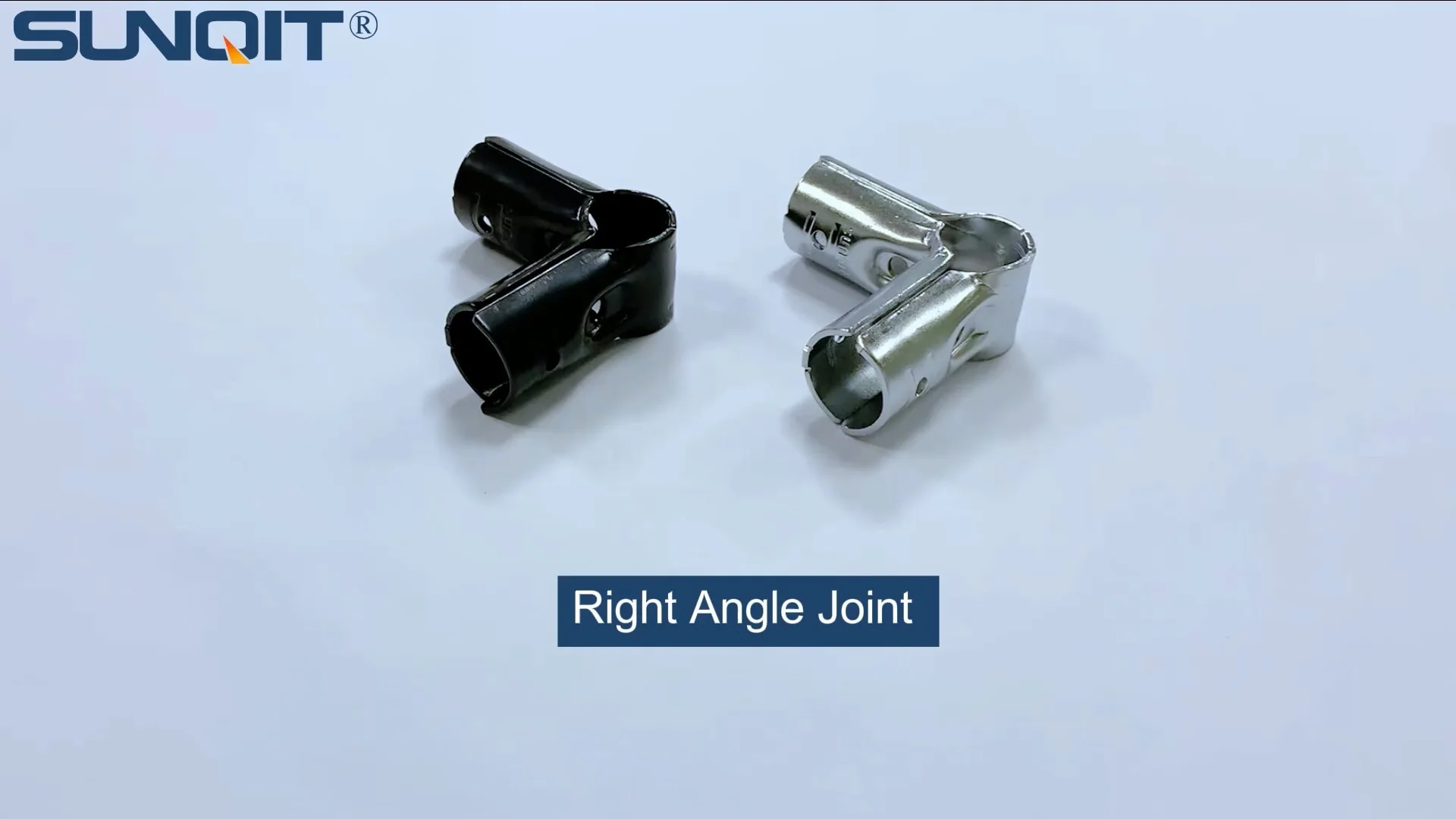
Three way lean pipe joint for 3 pcs 28MM lean pipe connection in straight angle, which used widely in workbench, flow rack, hand trolley frame connection.
In today's fast-paced manufacturing landscape, the ability to pivot quickly isn't just a competitive advantage—it's a survival skill. As consumer demands shift toward customization and short production runs, factories and warehouses are ditching rigid, one-size-fits-all setups in favor of lean system solutions that can adapt on the fly. At the heart of this transformation lies a small but mighty component: the three way lean pipe joint. Far more than a simple connector, this unassuming piece of hardware is the unsung hero of flexible production lines, enabling teams to build, reconfigure, and repurpose workspaces with minimal effort and maximum efficiency.
Imagine a electronics assembly line that needs to switch from assembling smartwatches to fitness trackers overnight, or a warehouse that must double its storage capacity for holiday inventory and scale back just as quickly. In these scenarios, traditional fixed structures—welded metal racks, bolted-down workbenches—become liabilities. They take days or weeks to modify, disrupt operations, and drain budgets. This is where the three way lean pipe joint shines. By turning static production lines into modular, reconfigurable ecosystems, it empowers businesses to respond to change without skipping a beat.
In this article, we'll dive deep into the world of three way lean pipe joints, exploring their design, core adaptability features, and real-world impact. We'll look at how they integrate with lean pipe and accessories to create everything from dynamic workbench setups to agile turnover trolley and rack systems. Whether you're a production manager looking to reduce downtime, a warehouse operator aiming to optimize space, or a small business owner building your first assembly line, understanding the versatility of the three way lean pipe joint could be the key to unlocking your operation's full potential.
What is a Three Way Lean Pipe Joint?
Before we explore its adaptability, let's start with the basics: What exactly is a three way lean pipe joint? At its core, it's a specialized connector designed to join three lean pipes (also known as "lean tubes") at various angles, creating stable, customizable structures. Unlike traditional welded or glued joints, which are permanent and rigid, three way lean pipe joints are engineered for flexibility—they can be tightened, loosened, repositioned, and reused, making them the building blocks of modular manufacturing.
Most three way lean pipe joints are made from durable materials like steel, aluminum, or high-strength plastic, depending on the application. Steel joints, for example, are ideal for heavy-duty setups like industrial workbenches or material racks, while aluminum variants offer a lighter, corrosion-resistant option for cleanroom environments or food processing facilities. The design typically features a central hub with three threaded ports or clamping mechanisms, allowing pipes to be inserted and secured with bolts, screws, or lever locks—no welding, drilling, or specialized tools required.
What sets three way joints apart from their two-way counterparts is their ability to create multi-directional structures. A two-way joint can connect two pipes in a straight line or at a 90-degree angle, but a three way joint opens up a world of possibilities: T-shapes for branching workstations, Y-shapes for diverging material flows, or even complex geometries like triangular frames for added stability. This versatility makes them indispensable for building everything from simple shelving units to intricate assembly line workstations.
To put it simply, if lean pipes are the "bones" of a flexible production system, three way lean pipe joints are the "joints" that give those bones mobility and versatility. They transform inert metal tubes into dynamic, reconfigurable tools that can evolve with your business's needs.
Core Adaptability Features of the Three Way Lean Pipe Joint
The true power of the three way lean pipe joint lies in its adaptability—a set of features that make it far more than just a connector. Let's break down the key traits that enable it to drive flexibility in production lines.
1. Modular Design: Build, Break Down, and Rebuild in Minutes
Traditional manufacturing setups often require skilled labor, heavy machinery, and hours (or days) of work to assemble or modify. A welded steel workbench, for instance, might take a team of metalworkers half a day to build, and altering its height or adding a shelf would mean cutting, welding, and repainting. The three way lean pipe joint eliminates this hassle with its modular design.
Thanks to its simple clamping mechanism—usually a bolt or lever that tightens around the pipe—assembling a structure with three way joints takes minutes, not hours. A single worker with a wrench can connect three pipes in under a minute, and reconfiguring is just as easy: loosen the bolts, adjust the angle or position of the pipes, and retighten. This modularity means that even complex setups—like a multi-station assembly line with integrated shelving and tool hooks—can be built in a fraction of the time it would take with traditional methods.
Consider a small electronics manufacturer that needs to add a new workstation to its line. With three way lean pipe joints, the team can source standard lean pipes and joints, assemble the frame in an hour, and have the workstation operational by the end of the shift. If the product line changes next month, they can disassemble the workstation, reuse the joints and pipes, and build a new setup—no waste, no downtime, no additional costs for custom fabrication.
2. Compatibility with Lean Pipe and Accessories: A Universal Connector
A component is only as adaptable as its ability to work with other tools—and the three way lean pipe joint excels here. It's designed to be compatible with a wide range of lean pipe and accessories , from standard PE-coated steel pipes to specialized options like stainless steel tubes (for hygiene-critical environments) or aluminum profiles (for lightweight setups). This universality means you're not locked into a single brand or system; you can mix and match components to suit your needs.
Need to add casters to a workbench for mobility? Simply use three way joints to attach a caster mounting plate. Want to integrate a roller track for material flow? Connect the track to your lean pipe frame with joint adapters. Even specialized accessories like LED light mounts, tool holders, or ESD (electrostatic discharge) mats can be added using compatible brackets and three way joints. This flexibility turns a basic pipe-and-joint structure into a fully functional workstation tailored to your specific process.
For example, a pharmaceutical company might use stainless steel lean pipes with three way joints to build a material rack, then add plastic roller tracks (to prevent product damage) and ESD workbench tops (to protect sensitive electronics). A automotive parts supplier, on the other hand, could opt for heavy-duty steel pipes and joints, paired with steel roller tracks and locking casters, to create a rugged turnover trolley that can withstand the weight of engine components.
3. Versatility Across Applications: From Workbench to Turnover Trolley and Rack
Perhaps the most impressive feature of the three way lean pipe joint is its versatility—it's not limited to one type of structure. Whether you need a workbench , a turnover trolley and rack , a material feeding station, or even a temporary storage unit, three way joints can bring your vision to life. Let's explore a few common applications to see how this works.
Workbenches: A basic workbench built with three way lean pipe joints might consist of a rectangular frame (using two-way joints for the corners) with three way joints adding overhead shelves, tool rails, or side tables. Need to adjust the height for taller workers? Loosen the joints, raise the legs, and retighten. Want to add a second level for component storage? Use three way joints to attach vertical pipes and a new shelf. The result is a workbench that grows with your team and your processes.
Turnover Trolleys and Racks: Turnover trolleys—used to transport materials between stations—rely on three way joints for adjustable shelving. For example, a trolley built with three way joints can have shelves spaced 12 inches apart for small parts, then reconfigured to 24 inches for larger components. Material racks, too, benefit from three way joints: a warehouse can use them to build a rack with three levels for standard inventory, then add a fourth level (using three way joints to branch off the vertical posts) during peak seasons.
Assembly Line Stations: In assembly lines, three way joints enable the creation of custom workstations that align with the flow of production. For instance, a car battery assembly line might use three way joints to build a "U-shaped" workstation, with pipes branching off to hold tools, parts bins, and testing equipment—all within arm's reach of the operator. If the assembly process changes, the joints can be repositioned to rearrange the workflow, ensuring minimal disruption.
4. Durability Without Compromise: Built to Last, Even in Tough Environments
Flexibility doesn't mean sacrificing strength—and three way lean pipe joints are proof of that. Despite their modular design, they're engineered to withstand the rigors of industrial use, from heavy loads to constant reconfiguration. Steel joints, for example, can typically support hundreds of pounds per joint, making them suitable for workbenches holding machinery or racks storing heavy parts.
Many joints also feature corrosion-resistant coatings (like zinc plating for steel or anodized finishes for aluminum) to stand up to harsh environments, such as factories with high humidity or warehouses using cleaning chemicals. This durability ensures that even after repeated disassembly and reassembly, the joints maintain their grip and stability—no wobbling, no slipping, no compromise on safety.
Consider a food processing plant that uses three way aluminum joints to build sanitizable material racks. The anodized aluminum resists rust from daily washdowns, and the joints stay tight even after months of reconfiguring to accommodate seasonal ingredients. Or a construction equipment manufacturer whose workbenches, built with steel three way joints, support power tools and heavy engine parts without bending or breaking.
5. Cost-Efficiency: Save Money While Staying Agile
At first glance, investing in modular components like three way lean pipe joints might seem more expensive than buying prefab fixed structures. But over time, they prove to be far more cost-effective. Here's why:
- Reusability: Unlike welded frames, which are often scrapped when reconfiguration is needed, three way joints and lean pipes can be reused indefinitely. A joint that builds a workbench today can build a turnover trolley tomorrow and a material rack next month—eliminating the need to purchase new components for every change.
- Reduced Downtime: Traditional reconfigurations mean halting production for days. With three way joints, a team can reconfigure a workstation during a lunch break, minimizing lost productivity.
- Lower Labor Costs: No need for skilled welders or fabricators—any worker with basic training can assemble or modify structures, reducing reliance on specialized labor.
- Scalability: Start small with a single workstation, then add more joints and pipes as your business grows. There's no need to overinvest in large, fixed structures upfront.
For example, a startup manufacturing company might begin with a single three way joint-based workbench for $500. As they expand, they can add more pipes and joints for $200 per new workstation, rather than paying $2,000 for a custom welded bench each time. Over five years, this could save tens of thousands of dollars—money that can be reinvested in other areas of the business.

Three Way Lean Pipe Joint vs. Traditional Joints: A Comparative Analysis
To truly appreciate the adaptability of three way lean pipe joints, it helps to compare them side-by-side with traditional joint types. Below is a table highlighting key differences in performance, cost, and flexibility:
| Criteria | Traditional Welded Joints | Glued/Permanent Adhesive Joints | Three Way Lean Pipe Joints |
|---|---|---|---|
| Assembly Time | Hours (requires welding equipment and skilled labor) | Hours (requires drying/curing time) | Minutes (basic tools, no specialized skills) |
| Reconfiguration Ease | Impossible (permanent; requires cutting/welding to modify) | Impossible (adhesive bonds cannot be reversed) | Simple (loosen bolts, reposition, retighten) |
| Compatibility | Limited (only works with specific pipe sizes/materials) | Limited (adhesive may not bond with all materials) | High (works with steel, aluminum, plastic pipes; compatible with most lean accessories) |
| Load Capacity | High (but rigid) | Low to Medium (bonds weaken over time) | High (steel/aluminum joints support heavy loads; flexible design absorbs stress) |
| Cost Over Time | High (requires replacement for reconfiguration; labor-intensive assembly) | High (adhesive fails over time; structures must be replaced) | Low (reusable; minimal labor costs; no replacement needed for reconfigurations) |
| Safety | High (permanent, but risk of weld failure if not done properly) | Medium (risk of bond failure under stress) | High (secure clamping mechanism; easy to inspect for tightness) |
As the table shows, three way lean pipe joints outperform traditional options in nearly every category, especially when it comes to adaptability and cost-efficiency. They're not just a better connector—they're a smarter investment in your operation's ability to evolve.

Real-World Applications: How Businesses Are Using Three Way Lean Pipe Joints
To bring these features to life, let's look at three real-world examples of businesses leveraging three way lean pipe joints to solve common manufacturing and warehousing challenges.
Case Study 1: A Medical Device Manufacturer's Adaptive Workbenches
A mid-sized medical device manufacturer in California faced a problem: Its production line for surgical tools needed to accommodate both small, delicate components (like microscopes) and larger, heavy instruments (like forceps trays). Traditional fixed workbenches were too rigid—workers either struggled with limited space for small parts or couldn't reach tools on high shelves for larger items.
The solution? Switching to workbenches built with three way lean pipe joints. The team used steel pipes and joints to create adjustable-height workbenches, with three way joints branching off to add modular shelves. For small components, they lowered the workbench height to 30 inches and added overhead shelves (using three way joints) for tools. For larger instruments, they raised the height to 36 inches and repositioned the shelves to waist level for easy access.
The results were striking: Productivity increased by 20% as workers spent less time reaching for tools, and reconfiguration time dropped from days to hours when switching between product lines. Best of all, the company estimates it saved $50,000 in the first year by reusing joints and pipes instead of buying new workbenches.
Case Study 2: An E-Commerce Warehouse's Seasonal Turnover Racks
A major e-commerce retailer with a 50,000-square-foot warehouse struggled with seasonal inventory spikes. During the holiday season (November–December), it needed 30% more storage space for toys and electronics, but during the rest of the year, that extra space went unused, wasting valuable square footage.
The warehouse manager turned to three way lean pipe joints to build modular turnover racks. Using aluminum pipes and joints, the team constructed racks with adjustable shelves (connected via three way joints) that could be reconfigured in two ways: "compact mode" (3 shelves, 18 inches apart) for off-season inventory, and "expanded mode" (5 shelves, 12 inches apart) for peak season. The three way joints allowed workers to add or remove shelf supports in minutes, without tools.
The impact was immediate: The warehouse avoided the $200,000 cost of installing permanent additional racks, and labor costs for seasonal setup dropped by 75%. Plus, the modular racks were lightweight enough to be moved around the warehouse, optimizing space for different product flows.
Case Study 3: A Furniture Maker's Custom Assembly Line
A small furniture manufacturer in North Carolina specializing in custom dining tables needed a way to adapt its assembly line to unique customer orders. Each table had different dimensions, requiring different workbench setups, tool positions, and material feeding stations. Traditional fixed stations meant constant delays as workers adjusted to new layouts.
The solution was a fully modular assembly line built with three way lean pipe joints. The team used joints to create movable workstations on casters, with branching pipes (connected via three way joints) holding clamps, glue dispensers, and sanding tools. For a 6-foot table, the workstations were spaced 8 feet apart; for an 8-foot table, they were repositioned to 10 feet apart—all by loosening the joints, rolling the stations, and retightening.
The result? Lead times for custom orders dropped from 4 weeks to 2 weeks, and customer satisfaction scores rose by 35% as the company could accommodate more unique requests without sacrificing speed.

The Future of Flexible Manufacturing: Why Three Way Joints Are Here to Stay
As manufacturing continues to evolve—driven by trends like Industry 4.0, mass customization, and just-in-time production—the demand for flexible, adaptable systems will only grow. And at the center of this evolution will be components like the three way lean pipe joint. Here's why:
Industry 4.0 Integration: Smart manufacturing relies on connected, data-driven systems—and modular structures built with three way joints are the perfect complement. For example, sensors and IoT devices can be easily mounted to lean pipe frames (using three way joints to position them optimally), collecting data on production flow or equipment usage. If the production line is reconfigured, the sensors can be moved just as easily, ensuring data collection continues uninterrupted.
Sustainability: In an era of increasing focus on sustainability, three way lean pipe joints align with circular economy principles. By enabling reuse and reducing waste (no more scrapping entire structures when needs change), they help businesses minimize their environmental footprint while cutting costs.
Small Business Empowerment: Historically, small manufacturers and startups have been priced out of flexible production systems, which often require expensive custom machinery. Three way lean pipe joints change that—they're affordable, accessible, and require no upfront investment in specialized equipment, putting modular manufacturing within reach of even the smallest operations.
Conclusion: The Three Way Lean Pipe Joint—More Than a Connector, a Catalyst for Change
In the world of manufacturing and warehousing, adaptability isn't just a buzzword—it's the key to staying competitive. And the three way lean pipe joint, with its modular design, universal compatibility, and unrivaled versatility, is the tool that makes that adaptability possible. It transforms static production lines into dynamic ecosystems, empowers workers to build and rebuild without specialized skills, and saves businesses time, money, and resources.
Whether you're building a workbench , a turnover trolley and rack , or an entire assembly line, the three way lean pipe joint is more than a component—it's a catalyst for change. It's proof that sometimes, the smallest innovations can have the biggest impact, enabling businesses to not just keep up with the pace of change, but lead the way.
So the next time you walk through a factory or warehouse, take a closer look at the structures around you. Chances are, if they're flexible, modular, and built to adapt, there's a three way lean pipe joint at their core—quietly powering the future of manufacturing, one connection at a time.