- Company Articles
- Products and Technology
- Product knowledge
- Three Way Lean Pipe Joint for Heavy-Duty Applications: Reinforced Designs

Three Way Lean Pipe Joint for Heavy-Duty Applications: Reinforced Designs
Related Product
Three Way Lean Pipe Joint
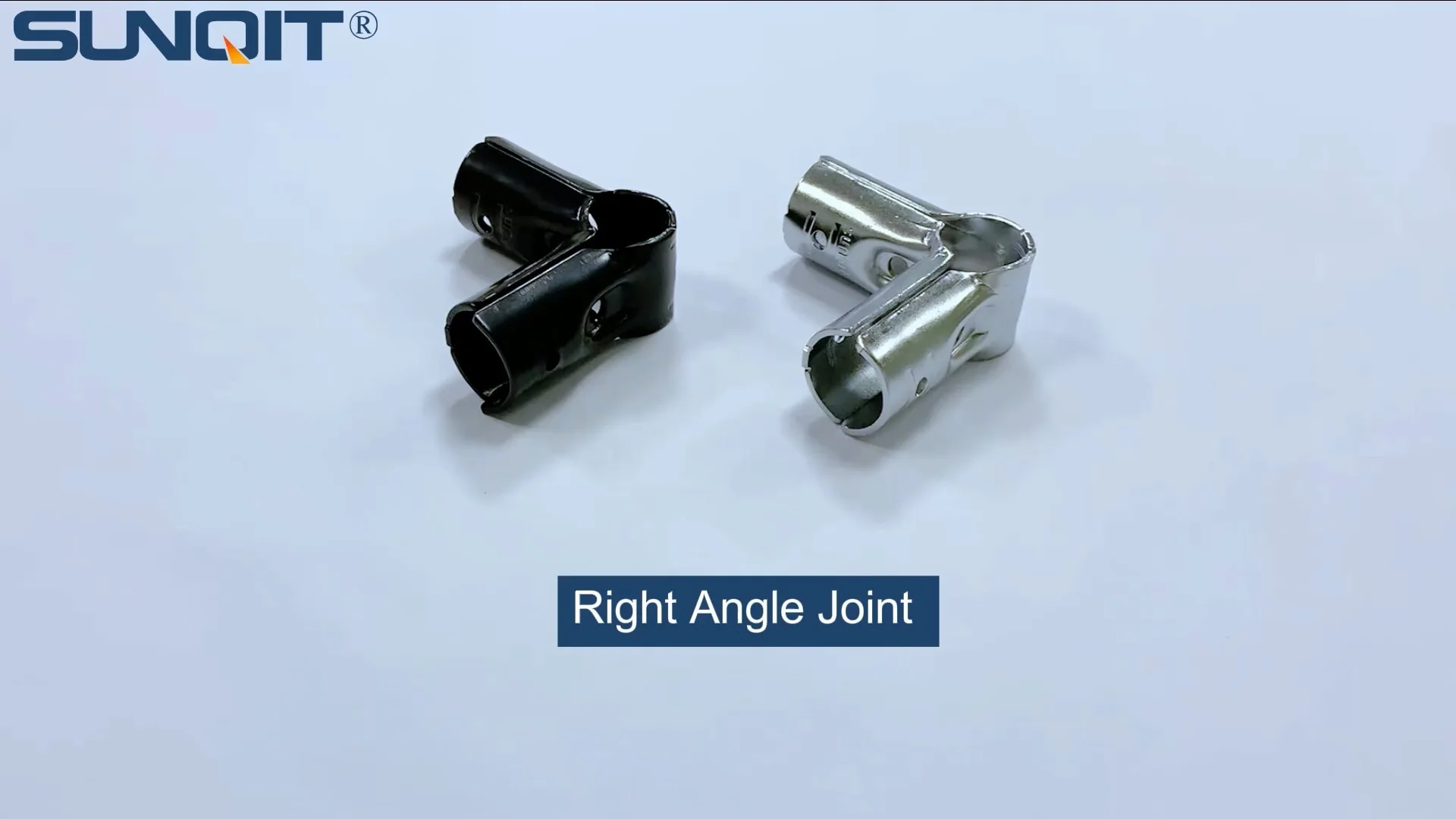
Three way lean pipe joint for 3 pcs 28MM lean pipe connection in straight angle, which used widely in workbench, flow rack, hand trolley frame connection.
Walk into any modern manufacturing facility, and you'll notice a silent hero keeping operations running smoothly: the lean system. From the workbenches where assemblers piece together products to the material racks that feed production lines, every element is designed to eliminate waste, boost efficiency, and keep workflows moving. But here's the thing: even the most well-planned lean system can stumble if its foundational components aren't up to the task. That's where the three way lean pipe joint comes in—specifically, the reinforced designs built for heavy-duty applications. In this article, we'll dive into why this unassuming component matters, how reinforced designs address real-world challenges, and why it's become a cornerstone for factories aiming to balance durability with flexibility.
The Backbone of Lean Systems: Why Joints Matter More Than You Think
Let's start with the basics: a lean system is only as strong as its weakest link. Imagine a production line where workbenches are stacked with heavy tools, material racks groan under the weight of components, and turnover trolleys are pushed back and forth dozens of times a day. In these scenarios, the joints that hold everything together—connecting lean pipe, aluminum pipe, and accessories—are under constant stress. A standard joint might work for light-duty tasks, but when you're dealing with daily loads of 200kg or more, "good enough" quickly becomes a liability.
This is where the three way lean pipe joint steps into the spotlight. Unlike simple two-way joints that connect straight sections, three-way joints are the multitaskers of lean systems. They allow for branching structures—think a workbench with a side shelf, a material rack with multiple levels, or a trolley with cross-bracing for stability. But in heavy-duty settings, even standard three-way joints can fail. Cracks form at the welds, threads strip under pressure, or the joint itself bends, throwing the entire structure out of alignment. The result? Downtime for repairs, increased maintenance costs, and frustrated teams who can't rely on their workspace.
Reinforced three-way lean pipe joints are engineered to solve exactly these problems. They're not just "stronger" versions of the standard—they're reimagined with heavy-duty use in mind, from the materials they're made of to the way they distribute weight. Let's break down what makes them different.
Reinforced Design: Beyond "Thicker Metal"
When we talk about "reinforced" three-way lean pipe joints, it's easy to assume it's just about using thicker steel or aluminum. While material thickness does play a role, the real innovation lies in how these joints are designed to handle stress. Let's take a closer look at the key features that set them apart:
1. Optimized Load Distribution
Standard three-way joints often have a single point of contact where the three pipes meet, creating a stress concentration. Over time, this spot weakens, especially under repeated heavy loads. Reinforced designs, however, spread the load across a broader area. For example, some models feature a triangular base plate that connects all three pipe sockets, turning a single stress point into a distributed network. Others use internal ribbing—think of the way an airplane wing is reinforced with struts—to add strength without adding unnecessary weight.
2. High-Grade Materials
While many standard joints use mild steel or basic aluminum, reinforced three-way joints often upgrade to materials like high-strength carbon steel (with a zinc-plated or stainless steel finish for corrosion resistance) or thick-walled aluminum alloys. For example, stainless steel pipe series joints are common in food processing or pharmaceutical facilities where hygiene and rust resistance are critical, while aluminum lean pipe joints shine in settings where weight matters (like mobile trolleys) but strength can't be compromised.
3. Precision Machining for Tighter Fits
A loose joint is a weak joint. Reinforced designs take fitment seriously, using precision machining to ensure the pipe sockets align perfectly with standard lean pipe or aluminum pipe diameters. This tight fit eliminates wiggle room, which not only prevents premature wear but also reduces noise—no more rattling joints as trolleys move across the factory floor. Some even include set screws or locking collars that bite into the pipe, creating a mechanical bond that won't loosen over time, even with constant vibration.
4. Reinforced Socket Walls
The sockets where the pipes insert are another critical area. In standard joints, these sockets might have thin walls that can crack when pipes are tightened too much or when lateral pressure is applied (like when a trolley hits a bump). Reinforced joints beef up these walls, sometimes doubling their thickness or adding a flange around the base of the socket to distribute pressure. It's a small detail, but anyone who's ever had a socket split mid-shift knows how important it is.

Heavy-Duty Applications: Where Reinforced Joints Prove Their Worth
Reinforced three-way lean pipe joints aren't just a "nice-to-have"—they're a necessity in specific heavy-duty scenarios. Let's walk through a few common applications where these joints make a tangible difference in daily operations.
Workbenches for Assembly and Repair
A typical assembly workbench might hold tools, components, and even semi-finished products. In heavy industries like automotive or aerospace, these workbenches can see loads of 300kg or more—think engine parts, metal castings, or heavy machinery components. A standard joint here would bow under the weight, leading to a wobbly work surface that makes precise assembly nearly impossible. Reinforced three-way joints, paired with sturdy aluminum pipe or stainless steel pipe, create a rock-solid foundation. Take the "Workbench E (Single Deck-without Caster)" model, for example: its frame relies on three-way joints at each corner to support the deck, ensuring stability even when technicians lean on it or place heavy tools on top.
Material Racks with Multiple Layers
Material racks, like the "Material Rack B (3 Row and 3 Floor)," are workhorses in warehouses and production lines. Each floor might hold boxes of components, and with three rows and three floors, the total weight can easily exceed 500kg. The vertical supports and horizontal beams of these racks are connected almost entirely by three-way joints. A reinforced joint here isn't just about holding the weight—it's about safety. A failed joint could send boxes crashing to the floor, risking injury or damaged inventory. Reinforced designs with higher load ratings (often tested up to 800kg per joint in static conditions) provide the peace of mind that comes with knowing the rack can handle daily use.
Turnover Trolleys and Mobile Racks
Turnover trolleys are the unsung couriers of the factory floor, shuttling materials from storage to production and back. These trolleys are constantly in motion—pushed, pulled, and sometimes even bumped into walls or other equipment. The joints here face dynamic stress: not just static weight, but sudden jolts and vibrations. Reinforced three-way joints with shock-absorbing features (like rubber gaskets or flexible collars) reduce wear and tear, while their tight fit ensures the trolley doesn't develop a "wobble" over time. Pair this with durable caster wheels and caster accessories, and you've got a mobile system that can keep up with the pace of a busy facility.
Roller Tracks and Conveyor Systems
Roller tracks, whether plastic or aluminum, rely on stable frames to keep products moving smoothly. A three-way joint might be used to connect the side rails to the support legs, or to add cross-bracing for longer tracks. When boxes or components slide down the track, they exert lateral force on the frame. A reinforced joint here prevents the rails from bending or misaligning, which would cause jams and slow down production. For example, the "Roller Track Placon Mount for Aluminum Profile High" is often paired with three-way joints to elevate tracks to the right height, and only a reinforced joint can handle the combined weight of the track, the products, and the constant motion.

How Reinforced Three-Way Joints Compare to Standard Options
To really understand the value of reinforced three-way lean pipe joints, let's put them side by side with standard three-way joints. The table below breaks down key differences in load capacity, durability, and ideal use cases:
| Feature | Standard Three-Way Joint | Reinforced Three-Way Joint |
|---|---|---|
| Static Load Capacity | Up to 200kg per joint | Up to 800kg per joint (varies by material) |
| Material | Mild steel, basic aluminum | High-strength carbon steel, stainless steel, thick-walled aluminum alloy |
| Design Focus | Cost-effectiveness, light-duty use | Durability, stress distribution, heavy loads |
| Common Applications | Light shelves, small trolleys, temporary structures | Heavy workbenches, multi-layer material racks, mobile trolleys, roller tracks |
| Expected Lifespan | 1–3 years in daily use | 5–10 years in daily use (with proper maintenance) |
| Maintenance Needs | Frequent tightening, occasional replacement | Minimal—annual inspection for wear, rare replacement |
The takeaway? For light-duty tasks, a standard joint might be sufficient. But when the stakes are high—heavy loads, constant use, or safety-critical applications—reinforced joints are an investment that pays off in reduced downtime and longer system life.

Integration with Lean Pipe and Accessories: A System Approach
A reinforced three-way joint doesn't work in isolation. To maximize its benefits, it needs to integrate seamlessly with other components in the lean system. Let's look at how these joints pair with common accessories to create robust structures.
Lean Pipe and Aluminum Pipe
Reinforced joints are designed to work with standard lean pipe diameters (often 28mm for steel or 30mm for aluminum). This compatibility means you don't have to overhaul your entire system to upgrade—you can simply swap out standard joints for reinforced ones in high-stress areas. For example, if you already use 1.5mm PE coated lean pipe for your racks, adding reinforced joints at the corners and load-bearing points will instantly boost the system's overall strength.
Aluminum Pipe Accessories
Aluminum pipe accessories like internal rotary aluminum joints or parallel fixation aluminum pipe joints often complement three-way joints in complex structures. For instance, a workbench might use a three-way joint to connect the vertical leg to the horizontal beam, while a parallel aluminum joint adds a side shelf. The reinforced three-way joint ensures the main frame stays stable, while the accessories add flexibility. This mix-and-match approach is what makes lean systems so adaptable, and reinforced joints ensure the core remains strong.
Caster Wheels and Brakes
When building mobile structures like trolleys, caster wheels are a must. But the weight of the trolley and its load is transferred through the joints to the casters. A reinforced three-way joint at the base of the trolley (connecting the vertical legs and the horizontal frame) ensures that the weight is evenly distributed to the casters, preventing uneven wear on the wheels and reducing the risk of tipping. Pairing this with heavy-duty caster accessories, like locking brakes, creates a mobile system that's both strong and safe.
Roller Track and Guide Rails
Roller tracks, such as the "Plastic Roller Track Guide Rail Yellow" or "Aluminum Guide Rail A," rely on a stable frame to keep the rollers aligned. Three-way joints connect the guide rails to the support structure, and reinforced designs here prevent the rails from sagging over time. This alignment is crucial for ensuring products glide smoothly down the track without jamming—a small detail that has a big impact on workflow efficiency.
The Long-Term Benefits: More Than Just Durability
Investing in reinforced three-way lean pipe joints might cost a bit more upfront than standard joints, but the long-term benefits far outweigh the initial expense. Let's break down the return on investment (ROI) you can expect:
Reduced Downtime
A failed joint means stopping production to repair or replace it. In a busy factory, even an hour of downtime can cost thousands of dollars in lost output. Reinforced joints, with their longer lifespan and higher durability, drastically reduce the need for unscheduled repairs. This reliability keeps the production line moving and teams focused on their work, not on fixing equipment.
Lower Maintenance Costs
Standard joints often require regular tightening, especially in high-vibration environments. Reinforced joints, with their tight fit and locking features, stay secure longer. This means less time spent on maintenance checks and fewer replacement parts ordered over the years. For example, a facility with 50 material racks might save hundreds of labor hours annually by switching to reinforced joints.
Improved Safety
Safety is non-negotiable in any workplace. A collapsed rack or a wobbly trolley can lead to injuries, workers' compensation claims, and damaged morale. Reinforced joints reduce these risks by ensuring structures stay stable under load. This not only protects employees but also builds trust—teams feel confident working around these structures, knowing they're built to last.
Scalability and Adaptability
Lean systems are all about adapting to changing needs. Maybe you need to add a shelf to a workbench or expand a material rack to hold more inventory. Reinforced joints make scaling easier because they provide a strong foundation to build on. You won't have to worry about the existing structure failing when you add weight or complexity—simply add more lean pipe, aluminum accessories, and reinforced joints to grow with your operations.
Choosing the Right Reinforced Three-Way Joint: Key Considerations
Not all reinforced three-way joints are created equal. To ensure you're getting the right one for your needs, here are a few factors to keep in mind:
Load Capacity
Start by calculating the maximum weight the joint will need to support. This includes both static weight (like a loaded shelf) and dynamic weight (like a trolley in motion). Most manufacturers list load ratings, but it's always best to factor in a safety margin—aim for a joint rated at 1.5 times your expected maximum load.
Material Compatibility
Ensure the joint is compatible with the type of pipe you're using. For example, if you're using aluminum lean pipe, an aluminum joint will prevent galvanic corrosion (a common issue when dissimilar metals touch). If you're in a wet environment, a stainless steel joint is a better choice than a zinc-plated steel one.
Environmental Factors
Consider the conditions in your facility. Is it humid? Corrosive (like a chemical plant)? High-temperature? Reinforced joints come with different finishes and materials to suit these environments. For example, stainless steel swivel roller balls and joints are ideal for cleanrooms or food processing areas, while powder-coated steel joints work well in dry, indoor settings.
Ease of Installation
Reinforced joints shouldn't be harder to install than standard ones. Look for designs with clear instructions, compatible tools (like hex keys or wrenches), and features that simplify assembly (like pre-threaded holes or quick-lock collars). The easier it is to install, the less time your team spends building structures and the more time they spend on productive work.
Conclusion: The Quiet Hero of Efficient Operations
In the world of lean manufacturing, it's easy to get caught up in big-picture strategies—optimizing workflows, reducing waste, improving cycle times. But the truth is, these strategies rely on small, foundational components to succeed. The reinforced three-way lean pipe joint is one such component: unassuming, but critical to the stability, safety, and efficiency of the entire system.
Whether you're building a heavy-duty workbench, a multi-layer material rack, or a mobile turnover trolley, choosing the right joint can transform a flimsy structure into a reliable asset. Reinforced designs, with their optimized load distribution, high-grade materials, and precision engineering, don't just hold things together—they empower your team to work with confidence, knowing their workspace can handle whatever the day throws at it.
So the next time you walk through your facility, take a moment to look at the joints holding up your lean system. Are they up to the task? If not, it might be time to consider upgrading to reinforced three-way lean pipe joints. Your team, your bottom line, and your peace of mind will thank you.