- Company Articles
- Products and Technology
- Product knowledge
- Three Way Lean Pipe Joint for Temporary Structures: Easy Disassembly

Three Way Lean Pipe Joint for Temporary Structures: Easy Disassembly
Related Product
Three Way Lean Pipe Joint
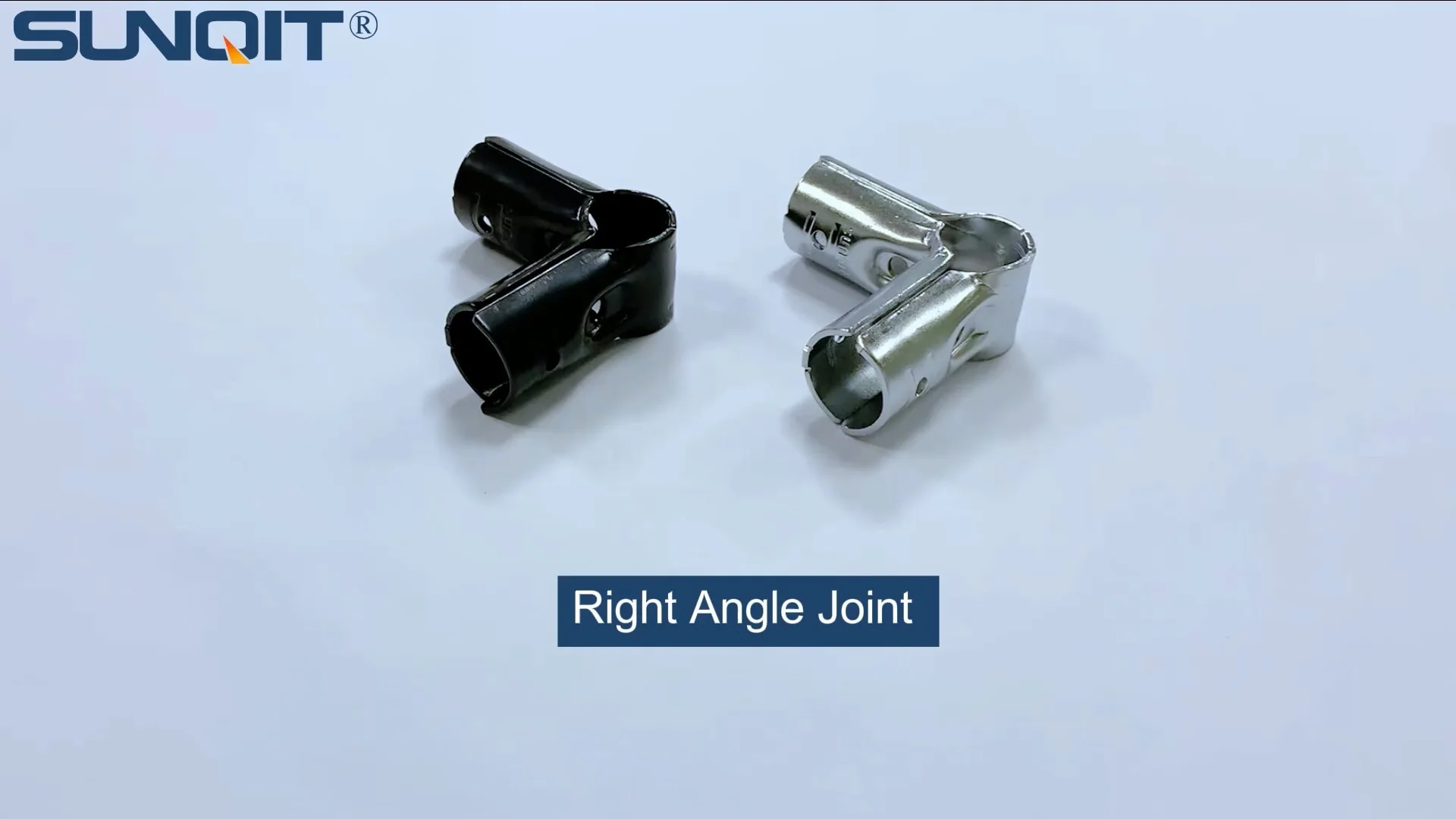
Three way lean pipe joint for 3 pcs 28MM lean pipe connection in straight angle, which used widely in workbench, flow rack, hand trolley frame connection.
Three Way Lean Pipe Joint for Temporary Structures: Easy Disassembly
In the fast-paced world of manufacturing, warehousing, and small-scale production, change is the only constant. A workshop that assembles circuit boards today might need to shift to packaging medical devices next month. A warehouse handling seasonal inventory must expand in Q4 and contract by Q1. And through it all, businesses grapple with a universal challenge: how to build structures that keep up with these shifts—without draining time, money, or resources. Enter the unsung hero of flexible workspaces: the three way lean pipe joint. This small but mighty component is redefining what "temporary" means, turning rigid, one-and-done setups into adaptable, reusable systems that grow with your needs. Let's dive into how this unassuming joint, paired with tools like aluminum lean pipe and caster wheels, is making "easy disassembly" not just a buzzword, but a daily reality for teams everywhere.
The Problem with "Permanent" Temporary Structures
Walk into any traditional workshop or warehouse, and you'll likely spot the same (pains): welded metal racks that can't be adjusted an inch, wooden workbenches bolted to the floor, and conveyor systems that require a team of contractors to reconfigure. These structures are built to last—but "last" often means "outlive their usefulness." A small electronics manufacturer I spoke with recently shared a familiar story: they invested in a custom steel workbench for their assembly line, only to launch a new product six months later that required a taller surface. The old bench? It sat in a corner, collecting dust, while they shelled out for a brand-new one. "We felt stuck," the operations manager told me. "Either waste money on something we might not need next year, or waste time jury-rigging a solution that never quite worked."
This isn't just about wasted cash. Rigid structures also strangle productivity. When your material racks can't be rearranged to shorten worker travel time, or your packing station can't add a shelf for new tools, every day becomes a series of small inefficiencies. And in an era where agility is key to staying competitive, "small inefficiencies" add up to big losses. The worst part? These structures are rarely designed with disassembly in mind. Tearing down that welded rack or bolted bench means hours of labor, bent metal, and broken wood—hardly "temporary" when it's easier to build new than fix old.

Meet the Three Way Lean Pipe Joint: Flexibility in a Nutshell
So, what if there was a way to build structures that are intentionally temporary? That's where the three way lean pipe joint comes in. At first glance, it looks simple: a small, often metal or plastic connector with three openings, designed to join lean pipes at (you guessed it) three different angles. But its simplicity is its superpower. Unlike welds or bolts, which lock pieces together permanently, these joints use friction, clips, or simple screws to hold lean pipes in place—meaning you can twist, pull, or unscrew them in minutes, no power tools required.
Let's break it down. Imagine you're building a workbench. With a three way lean pipe joint, you can connect vertical pipes (for legs) to horizontal pipes (for the frame) at 90-degree angles. Need a shelf halfway up? Add another joint to branch off a vertical pipe, and slot in a crossbar. Want to move the workbench later? Swap out fixed feet for caster wheels by unscrewing the bottom joints and attaching the casters in their place. Six months later, if you need a longer bench? Just add more aluminum lean pipe and joints to extend one side. No cutting, no welding, no headaches. It's like building with giant, industrial-grade Legos—except instead of bricks, you're using pipes and joints that can support heavy tools, boxes of inventory, or even assembly line components.
But the three way joint isn't just for right angles. Many models swivel or pivot, letting you create slopes for roller tracks (more on that later) or angled shelves for easy access. Some are made of durable plastic for light-duty use, others of aluminum or stainless steel for heavier loads. And because they're standardized, you can mix and match brands or types—no need to stick to one supplier. This universality is a game-changer for small businesses that can't afford custom solutions.

Why Aluminum Lean Pipe? The Perfect Partner for the Three Way Joint
A joint is only as good as the pipes it connects. That's why aluminum lean pipe has become the go-to material for these systems. Unlike traditional steel pipes, which are heavy and prone to rust, aluminum lean pipe is lightweight, corrosion-resistant, and surprisingly strong. It's easy to cut (with a simple pipe cutter) if you need a custom length, and its smooth surface won't scratch products or tools. Best of all, it's reusable—you can disassemble a rack, pack the pipes away, and rebuild something entirely new with them later. Pair that with a three way joint, and you've got a combo that's hard to beat.
Take the example of a bakery that uses lean pipe structures to hold cooling racks. In the morning, they need tall racks to stack trays of fresh bread. In the afternoon, those same racks might be broken down into shorter tables for packaging pastries. Aluminum lean pipe is light enough for two people to carry, and the joints make disassembly so quick that the team can switch setups between shifts—no downtime, no extra labor. "We used to have wooden racks that took an hour to move," one bakery owner told me. "Now, with aluminum pipes and three way joints, two people can reconfigure the whole space in 20 minutes. It's like night and day."
Aluminum's versatility also shines in clean environments, like labs or medical device facilities. Unlike steel, it doesn't shed rust or paint chips, and it's easy to wipe down. For warehouses dealing with wet or humid conditions, stainless steel pipe series are another option—durable, rust-proof, and just as compatible with three way joints. The key is that the pipes and joints work together as a system, designed for flexibility from the start.

From Workbenches to Roller Tracks: Real-World Applications
The three way lean pipe joint isn't a one-trick pony. Its flexibility makes it ideal for a range of temporary structures, each solving a unique problem. Let's explore a few of the most common applications—and how easy disassembly makes them indispensable.
Workbenches: Built for Change
Workbenches are the backbone of any workshop, but their needs vary wildly. A mechanic might need a low bench for engine parts, while an electronics assembler needs a higher surface to stand at. With three way joints and aluminum lean pipe, you can build a workbench that adapts. Need storage? Add shelves using joints to branch off the legs. Want to move it to a new location? Attach caster wheels to the bottom joints for mobility. Even better, when the bench wears out (or you outgrow it), you can take it apart and reuse the pipes and joints to build something else. No more sending perfectly good wood or metal to the landfill.
One auto repair shop I visited took this a step further. They built modular workbenches on casters, each with different tools mounted to the aluminum pipe frame. When a customer brings in a car with a specific issue, the team rolls the relevant bench over—no more walking back and forth to tool chests. "We used to lose 10 minutes an hour just fetching tools," the shop foreman said. "Now, the tools come to us. And if we need to add a new tool, we just drill a hole in the pipe (or use a pipe clamp) and attach it. No need to buy a whole new bench."
Roller Tracks: Smooth Material Flow, No Permanent Install
In warehouses and assembly lines, moving materials from point A to B efficiently is critical. Roller tracks—lines of small wheels that let boxes or parts glide along—are a classic solution, but traditional metal tracks are bolted to the floor, making them impossible to reposition. Enter lean pipe roller tracks, built with three way joints. By connecting aluminum guide rails and roller wheels to lean pipes (using joints), you can create custom tracks that follow the flow of your work. Need to extend the track to a new station? Add more pipes and joints. Want to change the angle to reduce worker strain? Adjust the joints to tilt the track slightly downward. And if you reorganize the floor plan next quarter? Disassemble the track, pack up the pipes and wheels, and rebuild it elsewhere.
A fulfillment center I spoke with used this to great effect during peak holiday season. They normally run a single roller track from the stockroom to packing stations. But during December, they double the track length by adding more sections—using three way joints to split the track into two lanes, reducing bottlenecks. "We used to rent extra conveyor belts for the holidays, which cost a fortune," the logistics manager explained. "Now, we just keep extra aluminum lean pipe and joints in storage. Setting up the extra track takes two people an hour, and we reuse everything next year. It's saved us thousands."
Material Racks: Grow (or Shrink) with Inventory
Inventory levels fluctuate—seasonal products, new launches, slow-moving stock—so why should your storage racks stay the same? Three way lean pipe joints let you build racks that expand or contract as needed. Start with a small 3-row, 3-floor rack (like "Material Rack B" in many supplier catalogs) using vertical pipes and horizontal shelves connected by joints. When inventory spikes, add more vertical pipes to raise the rack, or extend the sides with horizontal pipes and joints. When stock drops, remove shelves or shorten the rack to free up floor space. And because the joints are easy to adjust, you can even change shelf heights to fit taller boxes or shorter components—no more wasted vertical space.
The Benefits of Easy Disassembly: More Than Just "Flexible"
At this point, you might be thinking, "Okay, flexible structures sound nice, but what's the real value?" Let's break down the tangible benefits of choosing three way lean pipe joints and aluminum lean pipe for your temporary structures:
- Save Time: Traditional disassembly can take hours (or days) of labor. With lean pipe joints, you can tear down a workbench or rack in 15–30 minutes. That means less downtime when reconfiguring, and more time focused on actual work.
- Reduce Waste: When you can reuse pipes and joints, you're not throwing away perfectly good materials every time your needs change. This cuts down on landfill waste and lowers your carbon footprint—a win for both your budget and the planet.
- Lower Costs: No more buying new racks, workbenches, or conveyors every time you launch a product or scale up. A one-time investment in lean pipes and joints pays for itself in reused materials and reduced labor costs.
- Boost Morale: Workers hate fighting with rigid structures. When they can adjust their workspace to fit their needs (e.g., raising a workbench to avoid back strain), they're happier and more productive. One study even found that flexible workspaces reduce employee fatigue by 20%—that's a lot of extra energy for the day.
- Stay Competitive: In industries where speed to market matters, being able to retool your workspace quickly lets you launch products faster, take on new clients, or pivot to new projects without getting bogged down by infrastructure.
Traditional vs. Lean Pipe Joint Structures: A Quick Comparison
| Aspect | Traditional Structures (Welded Steel, Wood) | Lean Pipe Joint Structures (Aluminum Lean Pipe + Three Way Joints) |
|---|---|---|
| Setup Time | Hours to days (requires welding, cutting, or bolting) | Minutes to hours (no special tools needed) |
| Disassembly Time | Hours (often destructive; parts can't be reused) | 15–30 minutes (non-destructive; parts fully reusable) |
| Cost Over Time | High (need to replace structures when needs change) | Low (reuse materials; only replace worn parts) |
| Flexibility | Fixed (can't adjust height, length, or layout) | Highly adjustable (change height, add/remove parts, reconfigure layout) |
| Weight | Heavy (hard to move; requires equipment) | Lightweight (aluminum pipes easy to carry; add casters for mobility) |
Accessorizing for Success: Beyond Pipes and Joints
The three way lean pipe joint is powerful on its own, but it's even better when paired with the right accessories. Here are a few must-haves to maximize your system's flexibility:
Caster Wheels: Mobility on Demand
Caster wheels turn any static structure into a mobile one. Attach them to the bottom joints of a workbench or rack, and suddenly you can roll it across the floor to wherever it's needed. Look for swivel casters with brakes to keep things steady when in use—perfect for assembly lines that need to move with the product, or warehouses that need to shift storage during peak times.
Roller Track Guide Rails: Smooth Material Flow
Plastic or aluminum guide rails clip onto lean pipe frames (using, you guessed it, joints) to create roller tracks. They come in colors like yellow or grey, making it easy to color-code workflows (e.g., yellow for finished products, grey for raw materials). Pair them with swivel roller balls (1 inch or 0.5 inch) to let boxes glide effortlessly—no more lifting heavy loads.
Pipe Clamps and Brackets: Secure Tools and Accessories
Need to attach a tool holder, a lamp, or a bin to your workbench? Pipe clamps and brackets slide onto aluminum lean pipe and lock in place with a screw. They're adjustable, so you can move tools up or down as needed, and they're easy to remove when you no longer need them.
The Future of Workspaces: Lean, Flexible, and Human-Centered
As businesses continue to adapt to changing markets, remote work, and smaller footprints, the demand for flexible structures will only grow. The three way lean pipe joint isn't just a tool for today—it's a glimpse into the future of workspaces that prioritize people over rigid systems. It's about building environments that say, "We trust our team to know what they need, and we're giving them the tools to create it."
Whether you're a small startup working out of a garage or a mid-sized manufacturer looking to cut costs, the message is clear: temporary doesn't have to mean "flimsy" or "disposable." With three way lean pipe joints, aluminum lean pipe, and a little creativity, you can build structures that are strong enough to work hard, and flexible enough to change when you do. So why settle for "permanent" when "adaptable" is within reach?