- Company Articles
- Products and Technology
- Application Cases
- Three Way Lean Pipe Joint in Automotive Manufacturing: Case Studies

Three Way Lean Pipe Joint in Automotive Manufacturing: Case Studies
Related Product
Three Way Lean Pipe Joint
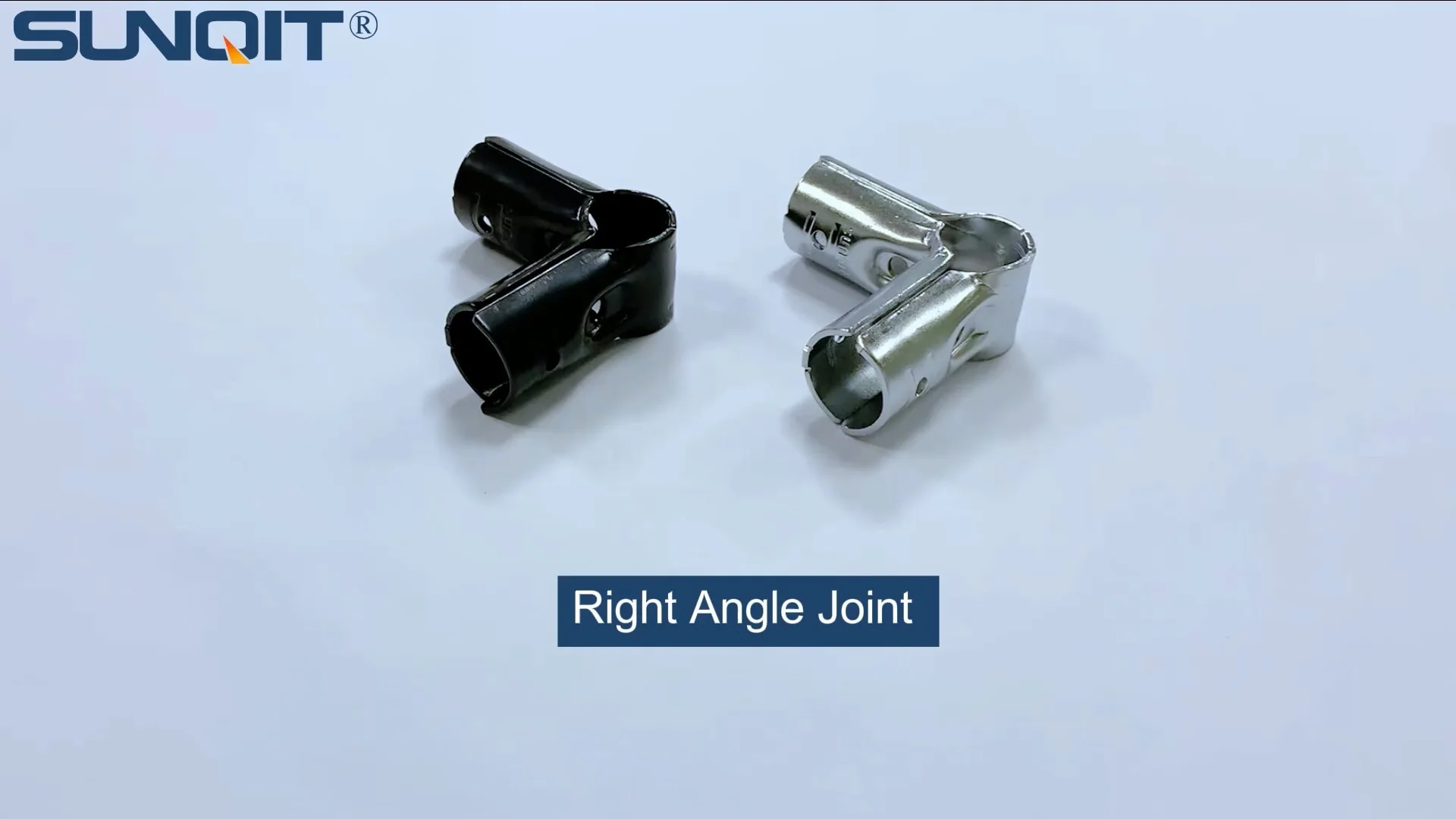
Three way lean pipe joint for 3 pcs 28MM lean pipe connection in straight angle, which used widely in workbench, flow rack, hand trolley frame connection.
In the high-stakes world of automotive manufacturing, where milliseconds matter and efficiency is the lifeblood of competitiveness, even the smallest components can drive monumental change. Among these unsung heroes is the three way lean pipe joint —a deceptively simple connector that has quietly revolutionized how assembly lines, workstations, and material flow systems are designed and operated. Far more than just a piece of hardware, this joint embodies the core principles of lean manufacturing: flexibility, adaptability, and waste reduction. In this article, we'll explore how three way lean pipe joints, paired with components like lean pipe workbenches , flow racks , and aluminum lean pipes , have transformed production processes in automotive plants worldwide. Through real-world case studies, we'll uncover the tangible impact these small but mighty tools have on reducing costs, accelerating production, and future-proofing manufacturing operations.
Understanding the Three Way Lean Pipe Joint: A Foundation for Lean Systems
Before diving into case studies, let's first unpack what makes the three way lean pipe joint so critical to modern automotive manufacturing. At its core, lean manufacturing is about eliminating waste—whether it's excess inventory, unnecessary movement, or rigid processes that resist change. To achieve this, manufacturers need tools that are not just durable, but also adaptable. Enter the three way lean pipe joint: a modular connector designed to link lean pipes (typically made of steel, aluminum, or stainless steel) at multiple angles, enabling the creation of custom structures that can be reconfigured in minutes, not months.
Unlike traditional welded or bolted frames, which are fixed and costly to modify, structures built with three way lean pipe joints are inherently flexible. The joint itself features three connection points, allowing pipes to intersect at 90°, 45°, or even 180° angles, depending on the design. This versatility means manufacturers can build everything from simple workbenches to complex flow rack systems, and then tweak or rebuild those structures as production needs evolve. For automotive plants, where model cycles shrink and customization demands grow, this adaptability is invaluable.
Materials matter too. Most three way lean pipe joints are made from zinc-plated steel for strength, but in environments where corrosion resistance or weight is a concern—such as cleanrooms or plants with frequent washing— aluminum lean pipe joints are increasingly common. These aluminum variants offer the same flexibility as steel but with reduced weight, making structures easier to move and reposition. When paired with aluminum lean pipes, they create lightweight yet sturdy systems that align with both lean and ergonomic goals.
Perhaps most importantly, three way lean pipe joints democratize innovation on the factory floor. Unlike traditional industrial equipment, which often requires engineering teams and specialized tools to modify, lean pipe structures can be adjusted by frontline workers. A team lead noticing that a workstation is too low can loosen the joints, adjust the pipe height, and retighten—all in under 10 minutes. This empowers employees to solve problems in real time, fostering a culture of continuous improvement that lies at the heart of lean manufacturing.
Case Study 1: Toyota's Kentucky Plant – Reimagining Assembly Line Flexibility
The Challenge: Adapting to the Electric Vehicle Revolution
In 2023, Toyota's Kentucky manufacturing plant faced a critical challenge: balancing production of its legacy gas-powered SUVs with the launch of new electric vehicle (EV) models. The plant's existing assembly lines, built with rigid, welded steel workstations, were optimized for the gas models but struggled to accommodate the EVs' unique component sizes and assembly steps. Changeover times between models stretched to 8 hours, and workers reported ergonomic issues—such as awkward reaching for EV battery components—that slowed production and increased injury risks.
The Solution: Modular Workstations with Three Way Lean Pipe Joints
Toyota's lean manufacturing team turned to three way lean pipe joints as the cornerstone of their solution. Working with a lean system supplier , they replaced 30% of the traditional steel workstations with modular lean pipe workbenches and flow racks, all built using three way joints and aluminum lean pipes. Here's how it worked:
- Adjustable Workbenches: Workstations were constructed with aluminum lean pipes and three way joints, allowing height adjustments from 75cm to 105cm. This enabled workers to customize their stations for both gas and EV components, reducing reaching and bending.
- Mobile Flow Racks: Material storage areas were revamped with flow racks built using three way joints, integrated with roller tracks to enable gravity-fed parts delivery. The racks were mounted on casters, so they could be wheeled directly to the assembly line, eliminating 200+ daily steps workers previously took to retrieve parts.
- Tool Hanging Systems: Three way joints were used to build overhead tool racks, with adjustable arms that could swing tools into position for gas model assembly and fold out of the way for EVs. This reduced clutter and ensured tools were always within easy reach.
The Results: Faster Changeovers, Happier Workers, Lower Costs
Within 3 months of implementation, the results were striking: Changeover time between gas and EV models dropped from 8 hours to 2.5 hours, a 69% reduction. Ergonomic complaints fell by 40%, and worker productivity (measured by units per labor hour) increased by 12%. Perhaps most impressively, the total cost of the project—including materials and labor—was recouped in under a year through savings in downtime and reduced injuries. "The three way lean pipe joints turned our rigid assembly line into a chameleon," said the plant's production manager. "We can now pivot to new models faster than ever, and the workers love that they can adjust their stations to fit how they work best."

Case Study 2: Tier-1 Supplier Bosch – Streamlining Material Flow with Flow Racks and Lean Pipes
The Challenge: Bottlenecks in Engine Component Production
Bosch, a leading tier-1 supplier producing fuel injection systems for major automakers, faced a different challenge at its Berlin plant: material flow bottlenecks in the engine component assembly area. Parts for the injection systems—small, precision-engineered pieces like nozzles and valves—were stored in static bins on shelves, requiring workers to spend 15-20 minutes per hour walking to retrieve parts. This "walking waste" was compounded by frequent stockouts, as it was hard to monitor bin levels visually. The result? A 5% daily shortfall in production targets and frustrated workers.
The Solution: Three Way Joints and Flow Racks for "First In, First Out" (FIFO) Flow
Bosch's lean team recognized that the root cause was not just disorganized storage, but a lack of visibility and accessibility. They partnered with a flow rack supplier to design a system centered on three way lean pipe joints and gravity-fed flow racks. The key steps were:
- FIFO Flow Racks: Racks were built using steel lean pipes and three way joints, with inclined roller tracks that allowed parts to slide forward as the front bin was emptied. This ensured FIFO inventory rotation, reducing the risk of expired or obsolete parts.
- Visual Bin Systems: Each rack level was color-coded by part type, with clear plastic bins mounted on the roller tracks. Three way joints were used to add "min-max" indicator bars—when parts fell below the "min" line, a red flag popped up, alerting material handlers to restock.
- Workstation Integration: Flow racks were positioned adjacent to lean pipe workbenches, with three way joints used to build small "bridge" roller tracks that fed parts directly from the racks to the workbench surface. This eliminated the need for workers to lift bins, cutting part retrieval time to under 2 minutes per hour.
The Results: 20% Higher Throughput and Zero Stockouts
The transformation was dramatic. Within 6 weeks, stockouts dropped to zero, and worker time spent retrieving parts fell by 85%. Production throughput increased by 20%, allowing the plant to meet its daily targets consistently. "We used to have workers sprinting to fetch parts when bins ran empty," said the plant's operations director. "Now, the parts come to them, and we can see at a glance if we're running low. The three way joints made the racks so easy to customize—we even added a level mid-project when we realized we needed more storage for a new valve type. That flexibility would have been impossible with our old steel racks."

Case Study 3: Volkswagen's Bratislava Plant – Space Optimization with Aluminum Lean Pipes
Not all automotive manufacturing challenges are about speed or ergonomics—sometimes, it's about space. Volkswagen's Bratislava plant, which produces SUVs and electric vehicles, was struggling with a tight footprint. The plant, built in the 1990s, had limited floor space to accommodate new EV battery assembly lines alongside existing SUV production. Adding a new wing was cost-prohibitive, so VW needed a way to maximize vertical and horizontal space without expanding the building.
The Challenge: Space Constraints for EV Battery Production
The EV battery assembly line required specialized workstations for tasks like cell stacking, wiring, and testing—each with unique space needs. The existing plant layout, however, left little room for these stations without disrupting SUV production. The team estimated they needed 30% more floor space than was available, and traditional fixed equipment would only exacerbate the problem.
The Solution: Compact, Stackable Structures with Aluminum Lean Pipes and Three Way Joints
Volkswagen turned to aluminum lean pipes and three way joints for their lightweight, high-strength properties. The goal was to build compact, stackable, and mobile structures that could be repositioned during shifts to share space between SUV and EV production. Key elements included:
- Vertical Storage Racks: Using three way joints, the team built 2.4m-tall flow racks with 5 levels, each holding battery components. The racks were made with aluminum lean pipes to keep weight low (under 80kg per rack), so they could be moved with a pallet jack when not in use.
- Folding Workbenches: Lean pipe workbenches were designed with hinged legs (using three way joints as pivot points) that folded up against the wall, freeing up 12m² of floor space per bench during SUV production shifts. When folded down, the benches locked into place, providing a stable surface for battery assembly.
- Overhead Conveyors: Three way joints were used to build lightweight overhead rails for small parts (e.g., battery connectors), reducing floor clutter. The rails could be adjusted in height using telescoping aluminum pipes, ensuring they didn't interfere with SUV assembly equipment.
The Results: 40% More Space Utilization and $2M Saved
By prioritizing vertical space and mobility, Volkswagen squeezed the entire EV battery line into the existing footprint. Space utilization increased by 40%, and the plant avoided a $20M expansion. What's more, the flexibility of the aluminum lean pipe structures allowed the team to test three different battery assembly layouts in 6 months, ultimately settling on a design that boosted battery production by 15% compared to the initial plan. "The three way joints were the glue that held it all together," said the plant engineer. "We could build, test, tear down, and rebuild structures in days, not weeks. That speed of iteration was critical—we didn't have time for trial and error with traditional construction."

Why These Case Studies Matter: The Broader Impact of Three Way Lean Pipe Joints
The stories from Toyota, Bosch, and Volkswagen highlight a common theme: three way lean pipe joints are not just tools for building structures—they're enablers of lean transformation. By making flexibility affordable and accessible, they empower manufacturers to tackle some of the biggest challenges in automotive production:
| Challenge | Traditional Solution | Three Way Lean Pipe Joint Solution | Key Advantage |
|---|---|---|---|
| Model Changeovers | Fixed steel workstations; 8+ hour changeovers | Modular lean pipe workbenches; 2-3 hour changeovers | Reduced downtime and lost production |
| Material Flow | Static shelving; 200+ daily steps for parts retrieval | Mobile flow racks with roller tracks; parts delivered to workers | Less worker fatigue and faster production |
| Space Constraints | Building expansions; $20M+ costs | Stackable, foldable aluminum structures; 40% better space use | Massive capital savings and faster scaling |
| Ergonomics | One-size-fits-all workstations; high injury rates | Height-adjustable workbenches; customized to worker needs | Happier, healthier workers and lower turnover |
Looking Ahead: Three Way Lean Pipe Joints in the Age of Smart Manufacturing
As automotive manufacturing evolves—with trends like Industry 4.0, AI-driven production, and electric mobility reshaping the landscape—the role of three way lean pipe joints is only growing. Today's joints are being integrated with smart sensors that monitor structure stability (alerting teams to loose connections before they fail) and RFID tags that track material flow in real time. Some manufacturers are even 3D-printing custom three way joint designs for highly specialized applications, such as lightweight joints for collaborative robot (cobot) workstations.
Perhaps most exciting is the potential for these joints to bridge the gap between traditional manufacturing and the future of flexibility. As automakers shift to "lot size 1" production—where every vehicle is fully customized—they'll need systems that can adapt to individual orders on the fly. Three way lean pipe joints, with their ability to reconfigure in minutes, will be critical to making this vision a reality.
Conclusion: Small Joints, Big Impact
In the grand scheme of automotive manufacturing—with its billion-dollar plants, cutting-edge robots, and complex supply chains—it's easy to overlook components like the three way lean pipe joint. But as we've seen through the case studies, these small connectors are the unsung heroes of lean transformation. They turn rigid factories into adaptable ecosystems, where change is not a disruption but a routine part of operations. Whether it's reducing changeover times at Toyota, eliminating stockouts at Bosch, or saving millions in expansion costs at Volkswagen, three way lean pipe joints prove that lean manufacturing isn't just about big ideas—it's about the right tools, applied thoughtfully, to solve real-world problems.
For automotive manufacturers looking to stay competitive in an era of rapid change, the message is clear: don't underestimate the power of a well-designed joint. When paired with lean pipe workbenches , flow racks , and aluminum lean pipes , three way lean pipe joints aren't just components—they're the foundation of a manufacturing system that can keep up with the future.