- Company Articles
- Products and Technology
- Product knowledge
- Three Way Lean Pipe Joint in Supply Chains: Streamlining Flow

Three Way Lean Pipe Joint in Supply Chains: Streamlining Flow
Related Product
Three Way Lean Pipe Joint
Three way lean pipe joint for 3 pcs 28MM lean pipe connection in straight angle, which used widely in workbench, flow rack, hand trolley frame connection.
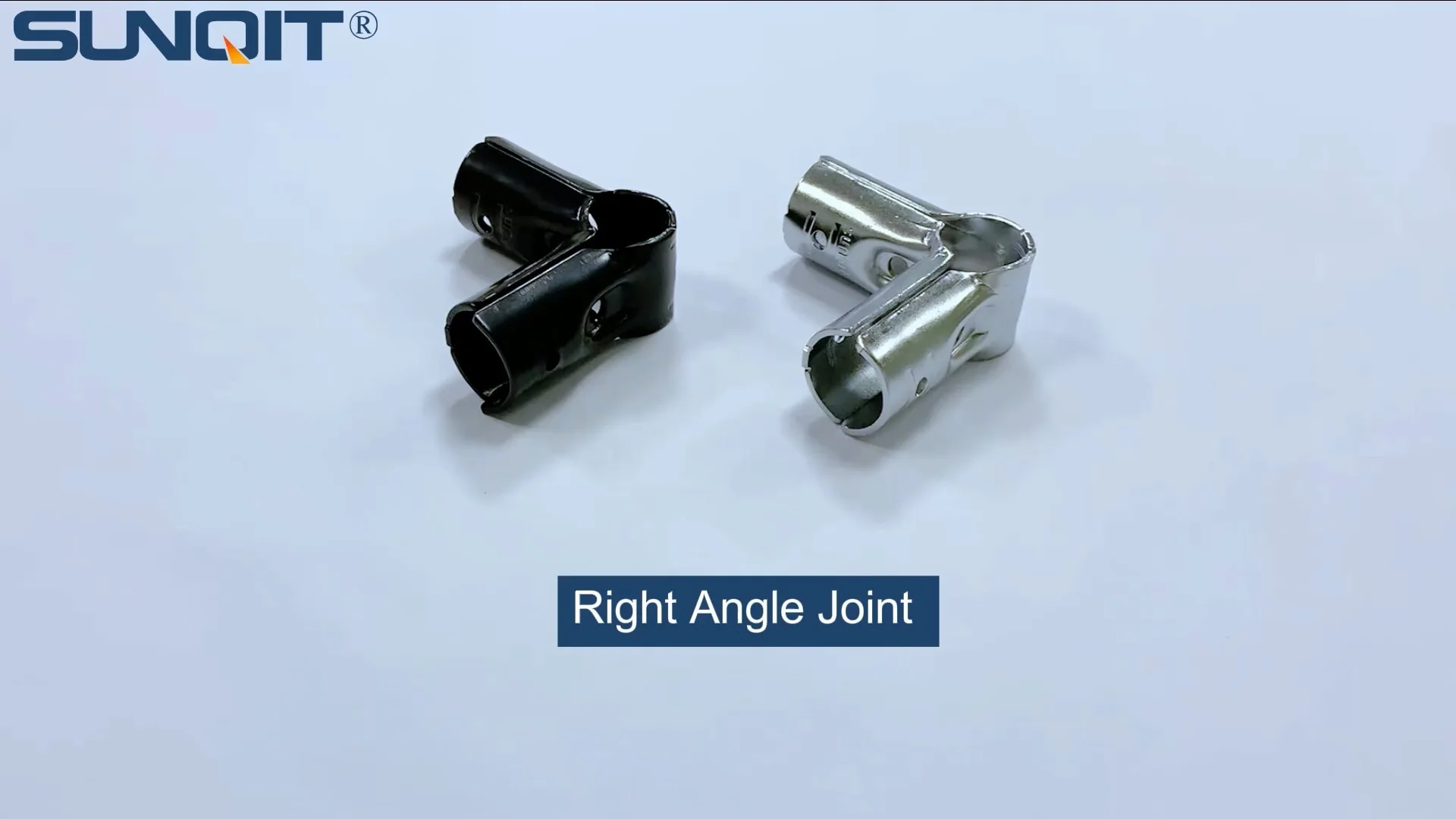
In the fast-paced world of modern supply chains, efficiency isn't just a buzzword—it's the backbone of profitability and customer satisfaction. From manufacturing floors to warehouse operations, every second wasted searching for tools, every cluttered workstation, and every delayed material transfer chips away at a company's bottom line. This is where lean principles step in, offering a framework to eliminate waste, optimize workflows, and create systems that adapt to change. At the heart of these lean systems lies a humble yet powerful component: the lean pipe joint. And among these, the three way lean pipe joint stands out as a silent hero, enabling the flexibility and customization that make lean supply chains truly effective.
The Foundation of Lean Systems: Lean Pipe and Its Role in Supply Chains
Before diving into the specifics of the three way joint, it's essential to understand the broader ecosystem it belongs to: lean pipe systems. Lean pipe, often called "flexible pipe" or "production pipe," is a simple yet ingenious solution designed to build modular, adjustable structures. Typically made of steel with a plastic coating (or sometimes aluminum for lighter applications), these pipes are lightweight, durable, and incredibly versatile. They're used to construct everything from workbenches and flow racks to turnover trolleys and material storage racks—all critical components in keeping supply chains moving smoothly.
What makes lean pipe systems revolutionary is their modularity. Unlike fixed, welded structures, lean pipe setups use joints to connect pipes, allowing teams to assemble, disassemble, and reconfigure structures in minutes. No welding, no heavy machinery, no specialized skills required. This flexibility is a game-changer in supply chains, where production needs, product lines, and storage requirements can shift overnight. A workstation that assembles small electronics today might need to adapt to larger components next month; a flow rack holding raw materials this quarter could become a shipping station the next. Lean pipe systems make these transitions possible without the cost or downtime of rebuilding from scratch.
Joints: The Unsung Connectors of Lean Flexibility
If lean pipes are the bones of these systems, joints are the joints—literally. They're the pieces that hold everything together, dictating how pipes can be arranged and what structures can be built. From simple two-way straight joints to complex multi-directional connectors, each type serves a unique purpose. Two-way joints, for example, create straight lines or 90-degree angles, ideal for building basic frames. Four-way joints enable cross-shaped connections, useful for reinforcing corners or adding stability. But when it comes to creating branching, multi-functional structures, the three way lean pipe joint is in a league of its own.
Three Way Lean Pipe Joint: Design, Features, and Why It Matters
The three way lean pipe joint is exactly what its name suggests: a connector that allows three lean pipes to meet at a single point, branching out in three directions. Think of it as a "T-junction" or "Y-junction" for your lean system, enabling you to build structures with depth, layers, and multiple access points. But its value goes far beyond just adding branches—it's about unlocking new levels of customization and efficiency in supply chain operations.
Design and Build: Durability Meets Precision
Most three way lean pipe joints are made of high-quality steel, coated with zinc or plastic to resist corrosion and wear—critical for withstanding the daily grind of industrial environments. Their design is deceptively simple: a central hub with three openings, each sized to fit standard lean pipe diameters (typically 28mm for steel pipes). Some joints are fixed, keeping pipes at rigid angles (like 90 degrees or 45 degrees), while others are swivel or rotatable, allowing pipes to pivot and adjust as needed. This adjustability is key for fine-tuning structures to fit tight spaces or unique workflows.
Load capacity is another vital feature. A well-made three way joint can support hundreds of kilograms, ensuring that even heavily loaded flow racks or workbenches remain stable. This durability is why they're trusted in manufacturing plants, warehouses, and distribution centers, where safety and reliability are non-negotiable.
The Benefits: Why Three Way Joints Transform Supply Chains
So, what makes the three way lean pipe joint indispensable in streamlining supply chain flow? Let's break down its most impactful benefits:
- Flexibility in Structure Design: Traditional two-way joints limit you to linear or L-shaped structures. With a three way joint, you can branch off in a third direction, creating multi-level flow racks, tiered workbenches, or "spider-like" material distribution centers. For example, a flow rack used to store small parts can now have a third arm that feeds directly into a nearby assembly line, cutting down on material transport time.
- Quick Adaptability to Change: Supply chains are dynamic. A sudden spike in demand might require adding more storage space; a new product line could mean reconfiguring workstations. Three way joints make these changes painless. Need to add a shelf to a workbench? Simply attach a pipe to the three way joint. No need to buy a whole new workstation—just adjust the existing one.
- Cost-Effectiveness: By enabling reusability, three way joints reduce waste and long-term costs. Instead of scrapping a fixed structure when needs change, teams can repurpose pipes and joints into something new. This not only saves money on materials but also reduces downtime, as reconfiguration takes hours, not days.
- Improved Space Utilization: Warehouses and production floors are expensive real estate. Three way joints help maximize vertical and horizontal space by allowing structures to grow upward or outward as needed. A material rack built with three way joints, for instance, can have three rows of storage instead of two, using the same footprint but doubling capacity.
- Enhanced Worker Productivity: When tools, materials, and workstations are tailored to the task at hand, workers spend less time searching and more time producing. A three way joint-equipped workbench, for example, can have dedicated arms for tools, parts bins, and even a small flow rack for incoming materials—all within arm's reach. This reduces motion waste, a common inefficiency in lean terminology, and keeps teams focused on value-adding tasks.

Real-World Applications: How Three Way Joints Streamline Flow in Key Supply Chain Components
To truly grasp the impact of three way lean pipe joints, let's look at their role in three critical supply chain components: flow racks, workbenches, and material storage racks. These are the workhorses of supply chain operations, and the three way joint makes them smarter, more adaptable, and more efficient.
Flow Racks: Smoothing Material Flow with Multi-Directional Design
Flow racks are the arteries of many supply chains, designed to move materials from storage to production (or vice versa) using gravity. Items are loaded onto the higher end and "flow" down to the picking side, ensuring first-in, first-out (FIFO) inventory management and easy access. But traditional flow racks are often linear—single rows of rollers that limit how materials can be distributed.
Enter the three way lean pipe joint. By adding branching arms to a flow rack, teams can create multi-lane or multi-level systems. Imagine a main flow rack channel running along a production line, with three way joints few feet branching off into smaller "sub-channels" that feed directly to individual workstations. This setup eliminates the need for workers to walk to a central rack—materials come to them. In a case study at a automotive parts manufacturer, this design reduced material retrieval time by 40%, as workers no longer had to leave their stations to fetch components.
Three way joints also enable vertical branching in flow racks. For example, a single vertical pipe can use three way joints to support multiple horizontal roller tracks at different heights, creating a "tower" of flow lanes. This is especially useful in tight spaces, where vertical storage is the only way to maximize capacity. A electronics warehouse, for instance, used this approach to store small circuit boards, tripling their storage density without expanding their footprint.
Workbenches: Customizable Workspaces for Every Task
Workbenches are where the rubber meets the road in supply chains—whether it's assembling products, packing orders, or inspecting goods. A poorly designed workbench forces workers into awkward positions, wastes time searching for tools, and limits productivity. The three way lean pipe joint transforms workbenches from static tables into dynamic, task-specific hubs.
Consider a basic workbench frame built with lean pipe. Using two-way joints, you might get a simple rectangle with legs. But add three way joints, and suddenly you can: attach side arms for tool hooks or parts bins, add a back shelf for manuals or monitors, or even create a lower shelf for storing turnover boxes. For example, a packaging workstation at a e-commerce fulfillment center used three way joints to add a "wing" shelf on one side for packing materials (tape, bubble wrap) and a small flow rack on the other for incoming orders. This cut packing time by 25%, as everything needed was within arm's reach.
What's more, three way joints make workbenches adjustable. If a worker needs a taller surface, simply adjust the height of the legs using extendable pipes and secure them with three way joints. If the bench needs to accommodate a larger machine, add an extra arm to widen the surface area. This adaptability is critical in environments with diverse tasks or workers of different heights, ensuring ergonomic comfort and reducing the risk of injury.
Material Storage Racks: Organized, Accessible, and Space-Efficient
Disorganized storage is a supply chain nightmare. Lost inventory, damaged goods, and wasted time searching for items all eat into profits. Material storage racks built with lean pipe and three way joints solve this by combining structure with flexibility. Unlike fixed metal shelving, these racks can be tailored to the exact size, weight, and quantity of items being stored.
Three way joints shine here by enabling multi-row, multi-level designs. For example, a "material rack B (3 row and 3 floor)" (a common configuration in lean systems) uses three way joints to connect vertical support pipes to horizontal shelf pipes, creating three rows of shelves with three levels each. Each shelf can be adjusted in height using the joints, allowing storage of everything from small bins to large boxes. A food processing plant, for instance, used such a rack to store ingredients, with lower shelves for heavy bulk items and higher shelves for lighter, frequently used spices—all organized and accessible.
These racks are also easy to reconfigure as inventory changes. If a new product line requires taller shelves, simply loosen the three way joints, adjust the pipes, and retighten. No need to buy new shelving or hire installers. This agility is why lean storage racks are a staple in industries with seasonal demand fluctuations, like retail or agriculture.

Comparing Lean Pipe Joints: Why Three Way Stands Out
To better understand the unique value of three way lean pipe joints, it's helpful to compare them to other common joint types. Below is a table highlighting key differences in design, applications, and flexibility:
| Joint Type | Design | Primary Applications | Flexibility Level | Best For |
|---|---|---|---|---|
| Two-Way Straight Joint | Connects 2 pipes in a straight line or 90° angle | Basic frames, straight workbench legs, simple trolleys | Low-Medium (linear or L-shaped structures only) | Simple, fixed structures with no branching |
| Four-Way Cross Joint | Connects 4 pipes in a cross shape (e.g., up, down, left, right) | Reinforcing corners, multi-directional frames | Medium (adds cross-bracing but limited branching) | Stability-focused structures like heavy-duty racks |
| Three Way Lean Pipe Joint | Connects 3 pipes in 3 directions (e.g., T-shape or Y-shape) | Flow racks with branches, multi-level workbenches, tiered storage racks | High (enables branching, vertical/horizontal expansion) | Custom, adaptable structures needing multi-directional access |
As the table shows, while two-way and four-way joints have their uses, the three way joint is unmatched in enabling the branching, multi-directional designs that modern supply chains demand. It's the difference between a one-dimensional structure and a three-dimensional system that can grow and adapt with your business.

The Ecosystem: Suppliers, Wholesale, and Ensuring Quality
To fully leverage the benefits of three way lean pipe joints, businesses need access to high-quality components and reliable partners. This is where lean pipe suppliers and wholesale options come into play. A reputable supplier doesn't just sell joints—they offer a complete ecosystem of lean pipe, accessories (like roller tracks, casters, and end caps), and expertise to help design and implement systems.
When choosing a supplier, compatibility is key. Three way joints must fit seamlessly with the lean pipe (whether steel, aluminum, or stainless steel) and other components like roller tracks or workbench surfaces. Reputable suppliers ensure their products adhere to standard sizes and quality standards, so you don't end up with a joint that's too loose or a pipe that doesn't fit. Many also offer custom solutions, like specialized coatings for ESD (electrostatic discharge) environments or heavy-duty joints for high-load applications.
Wholesale purchasing is another advantage for businesses scaling their lean systems. Buying three way joints, lean pipe, and accessories in bulk reduces per-unit costs, making large-scale implementations more affordable. For example, a manufacturing plant looking to outfit an entire production line with workbenches and flow racks can save 20-30% by purchasing wholesale from a single supplier, rather than buying individual components from multiple vendors.
It's also worth noting that some suppliers specialize in aluminum lean pipe systems, which are lighter and corrosion-resistant—ideal for cleanrooms or food-grade environments. While aluminum pipes and joints have different load capacities than steel, the three way joint design remains similar, ensuring the same flexibility and modularity.
Conclusion: Three Way Joints—Small Component, Big Impact on Supply Chain Flow
In the grand scheme of supply chains, the three way lean pipe joint may seem like a small component. But as we've explored, its impact is anything but minor. By enabling modular, multi-directional structures, it transforms rigid, wasteful systems into agile, efficient ones. It turns static workbenches into customizable hubs, linear flow racks into multi-lane arteries, and basic storage into space-maximizing solutions. In doing so, it reduces waste, cuts costs, and keeps materials—and profits—flowing smoothly.
For businesses looking to thrive in today's fast-changing supply chain landscape, investing in lean pipe systems with three way joints isn't just a smart move—it's a necessary one. It's about building systems that adapt, grow, and evolve with your needs, ensuring you stay efficient, competitive, and ready for whatever the future brings. After all, in supply chains, the ability to flow is everything—and the three way lean pipe joint is the key to keeping that flow uninterrupted.