- Company Articles
- Products and Technology
- Product knowledge
- Three Way Lean Pipe Joint in Trolley Manufacturing: Mobility Solutions

Three Way Lean Pipe Joint in Trolley Manufacturing: Mobility Solutions
Related Product
Three Way Lean Pipe Joint
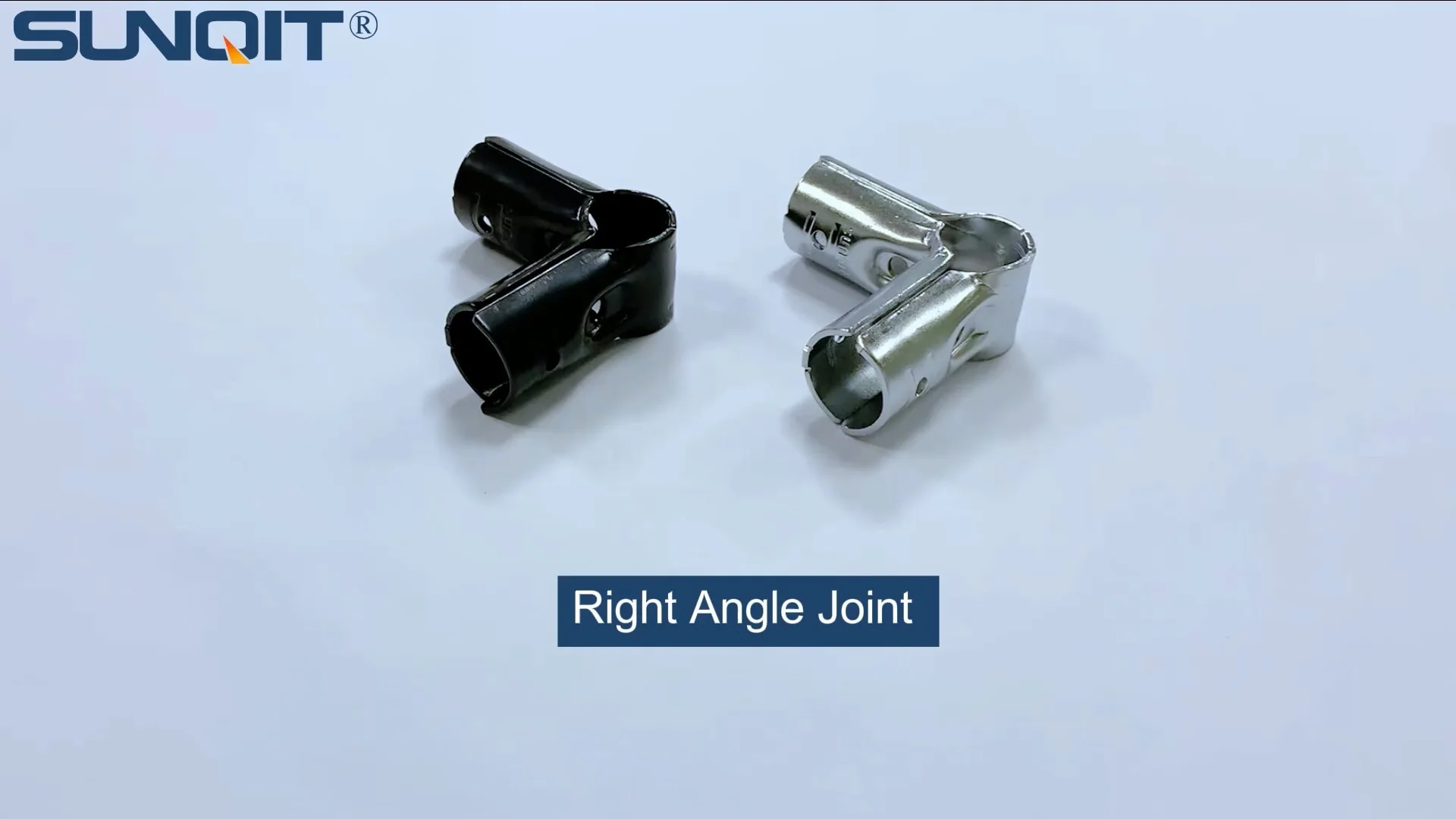
Three way lean pipe joint for 3 pcs 28MM lean pipe connection in straight angle, which used widely in workbench, flow rack, hand trolley frame connection.
Walk through any busy manufacturing floor, and you'll notice a silent hero of productivity: the humble trolley. It weaves through assembly lines, carries components from storage to workstations, and ensures materials reach the right place at the right time. But not all trolleys are created equal. For decades, manufacturers have grappled with rigid, one-size-fits-all designs that slow down workflows, limit adaptability, and even contribute to worker fatigue. Enter the world of lean manufacturing—and at its core, a small but mighty component: the three way lean pipe joint. This unassuming connector is revolutionizing how trolleys are built, turning static tools into dynamic, mobility-driven solutions that keep pace with the demands of modern production.
The Hidden Costs of Rigid Trolley Design
To understand why the three way lean pipe joint matters, let's first look at the challenges manufacturers face with traditional trolleys. Picture a factory using welded steel trolleys: heavy, inflexible, and built for a single purpose. If a production line switches to a new product with larger components, those trolleys become obsolete. Workers end up overloading them, risking damage to materials or strain injuries. If a shelf breaks, the entire trolley often needs replacement—costing time and money. And when workflows change, reconfiguring these trolleys means calling in welders or buying new ones, grinding productivity to a halt.
Mobility, too, is often an afterthought. Fixed wheels that don't swivel smoothly, or trolleys so heavy they're difficult to maneuver in tight spaces, turn simple material transport into a daily hassle. For workers on their feet for hours, these inefficiencies add up: wasted steps, frustration, and even reduced job satisfaction. In a world where lean principles demand "no waste," rigid trolleys are a silent drain on both resources and morale.
Lean Systems: Flexibility as the New Efficiency
Lean manufacturing isn't just a buzzword—it's a philosophy centered on eliminating waste and maximizing value. At its heart is the idea that workflows should adapt to people , not the other way around. This is where lean pipe systems shine. Made from lightweight yet durable materials like powder-coated steel or aluminum lean pipe, these systems use modular components to build everything from workbenches to trolleys. And the unsung star of this modularity? The three way lean pipe joint.
Unlike traditional welded joints, which lock structures into a fixed shape, three way lean pipe joints are designed for flexibility. They connect three lean pipes at 90-degree angles (or customizable angles, depending on the design), creating sturdy yet adjustable frameworks. With a simple twist of a bolt, workers can disassemble, reconfigure, or expand a trolley in minutes—no special tools, no welders, no downtime. This adaptability transforms how manufacturers approach mobility: suddenly, a trolley isn't just a cart; it's a tool that can evolve with the day's needs.

The Three Way Lean Pipe Joint: A Closer Look
So, what makes this joint so special? Let's break it down. A typical three way lean pipe joint is a compact, often zinc-plated or nickel-coated connector with three openings, each sized to fit standard lean pipes (usually 28mm in diameter). Inside each opening are gripping teeth that bite into the pipe when a bolt is tightened, creating a secure hold without damaging the pipe's surface. This design offers two critical advantages: strength and versatility .
Strength first: When properly tightened, these joints can support significant weight—enough for loaded turnover trolleys or heavy material racks. Unlike plastic connectors that crack under pressure or welded joints that weaken at the seam, three way lean pipe joints distribute weight evenly across the connected pipes, reducing stress points. This durability ensures that even with frequent reconfigurations, the joint maintains its integrity, extending the life of the entire trolley.
Versatility, though, is where the joint truly shines. Need to add a third shelf to a trolley? Slide a lean pipe into the joint's unused opening and secure it. Want to adjust the height of a section? Loosen the bolt, reposition the pipe, and retighten. This modularity means a single trolley can serve multiple roles: as a parts carrier in the morning, a workstation side cart in the afternoon, and a storage rack overnight. For small manufacturers with limited space or changing production runs, this is a game-changer.

Why Three Way Lean Pipe Joints Improve Mobility Solutions
The three way lean pipe joint isn't just a connector—it's a catalyst for better mobility. Here's how it transforms trolley manufacturing:
1. Adaptability Without Compromise
Traditional trolleys are built for one job. A three way joint-based trolley? It's built for every job. Need to carry bulkier items? Remove a shelf. Transport fragile components? Add dividers using extra lean pipe and joints. This adaptability means fewer trolleys cluttering the factory floor—one well-designed trolley can replace three or four rigid ones. For example, a turnover trolley and rack combo, often used for storing and moving parts, becomes infinitely customizable with three way joints: adjust shelf heights, add casters for mobility, or even reconfigure it as a static rack when needed.
2. Lightweight Maneuverability
Lean pipe is significantly lighter than solid steel, and when paired with three way joints, the result is a trolley that's easy to push, pull, and pivot. Combine this with high-quality caster wheels—like swivel caster wheels with brakes—and suddenly, even tight corners or narrow aisles aren't a problem. Workers no longer strain to move materials; they glide through workflows, reducing fatigue and cutting transport time by up to 30% in some cases.
3. Fast Assembly, Faster Repairs
Welding a steel trolley takes time and skill. Assembling a lean pipe trolley with three way joints? It's a job any worker can do in under an hour with basic tools. No more waiting for the maintenance team to fabricate a new trolley—order a few extra lean pipes, joints, and caster accessories, and your team can build or repair one on the spot. This agility is critical in fast-paced environments where downtime equals lost revenue.
4. Cost Savings Over Time
While the upfront cost of lean pipe components might be slightly higher than welded steel, the long-term savings are undeniable. Reconfiguring a joint-based trolley costs nothing but time; replacing a welded one means buying new materials and labor. Plus, the modular design reduces waste—damaged parts (like a bent pipe or broken joint) can be swapped out individually, instead of scrapping the entire trolley. Over five years, manufacturers report saving 40-50% on trolley-related expenses by switching to lean pipe systems.

Case Study: How a Electronics Manufacturer Boosted Mobility with Three Way Joints
To see the impact firsthand, let's look at a mid-sized electronics assembly plant in the Midwest. Before adopting lean pipe systems, the factory relied on 20+ welded steel trolleys, each designed for a specific product line. When the company introduced a new smartphone model with smaller, more delicate components, half of their trolleys were too large, and the other half lacked protective dividers. Workers were forced to use makeshift bins, leading to frequent part damage and slowdowns.
The solution? Partnering with a lean pipe supplier to build 10 modular trolleys using three way lean pipe joints, aluminum lean pipe, and caster wheels with brakes. The results were immediate:
- Workers reconfigured trolleys in 15 minutes to fit new components, eliminating the need for 10+ redundant trolleys.
- Caster wheels with 360° swivel made maneuvering in tight assembly areas 50% easier, cutting transport time by 25%.
- Damaged parts dropped by 40% thanks to customizable dividers and softer lean pipe materials.
- Worker feedback? "I no longer dread moving materials. The trolley feels like an extension of my workstation, not a burden."
Today, the plant uses three way joints in 80% of their mobility solutions—from trolleys to flow racks—and has reduced annual material handling costs by $75,000.
Traditional vs. Three Way Lean Pipe Joints: A Comparison
| Feature | Traditional Welded Joints | Three Way Lean Pipe Joints |
|---|---|---|
| Assembly Time | 4–6 hours (requires welding skills) | 30–60 minutes (no special tools) |
| Reconfigurability | Impossible (permanently fixed) | Easy (loosen/tighten bolts to adjust) |
| Weight | Heavy (steel welded frames) | Lightweight (aluminum/lean pipe materials) |
| Cost Over Time | High (replace entire trolley if damaged) | Low (replace only joints/pipes as needed) |
| Compatibility | Limited (only works with fixed components) | Universal (pairs with lean pipe accessories, aluminum profile accessories, caster wheels, etc.) |
Beyond the Joint: Accessories That Enhance Mobility
The three way lean pipe joint is powerful on its own, but when paired with the right accessories, it becomes unstoppable. Here are key components that elevate mobility solutions:
Caster Wheels and Accessories
Mobility starts with wheels. Caster wheels with brakes, swivel capabilities, or heavy-duty ratings turn a static frame into a trolley that moves with precision. Three way joints make it easy to attach casters at optimal points (e.g., corners for stability), ensuring smooth movement even with heavy loads.
Lean Pipe and Accessories
From end caps that protect workers from sharp edges to pipe clamps that secure tools or bins, lean pipe accessories expand what a joint-based trolley can do. For example, adding a plastic roller track guide rail (yellow or grey) to a trolley using three way joints creates a mini-conveyor, letting parts slide gently from shelf to workstation.
Aluminum Profile Accessories
Aluminum extrusion profiles, known for their strength and light weight, pair seamlessly with three way joints. Aluminum guide rails or brackets can reinforce trolley frames, add extra support for heavy shelves, or create custom work surfaces—all without sacrificing flexibility.
The Future of Mobility: Small Joints, Big Impact
In the world of manufacturing, mobility isn't just about moving things—it's about moving forward. The three way lean pipe joint embodies this idea: a small, unassuming component that unlocks endless possibilities for efficiency, adaptability, and worker-centric design. It turns trolleys from static tools into dynamic partners, reducing waste, boosting morale, and proving that even the smallest innovations can drive big change.
For manufacturers ready to embrace lean principles, the message is clear: invest in flexibility. Choose three way lean pipe joints. And watch as mobility solutions transform from a daily chore into a competitive advantage.