- Company Articles
- Products and Technology
- Product knowledge
- Three Way Lean Pipe Joint Load Capacity: How Much Weight Can It Support?

Three Way Lean Pipe Joint Load Capacity: How Much Weight Can It Support?
Related Product
Three Way Lean Pipe Joint
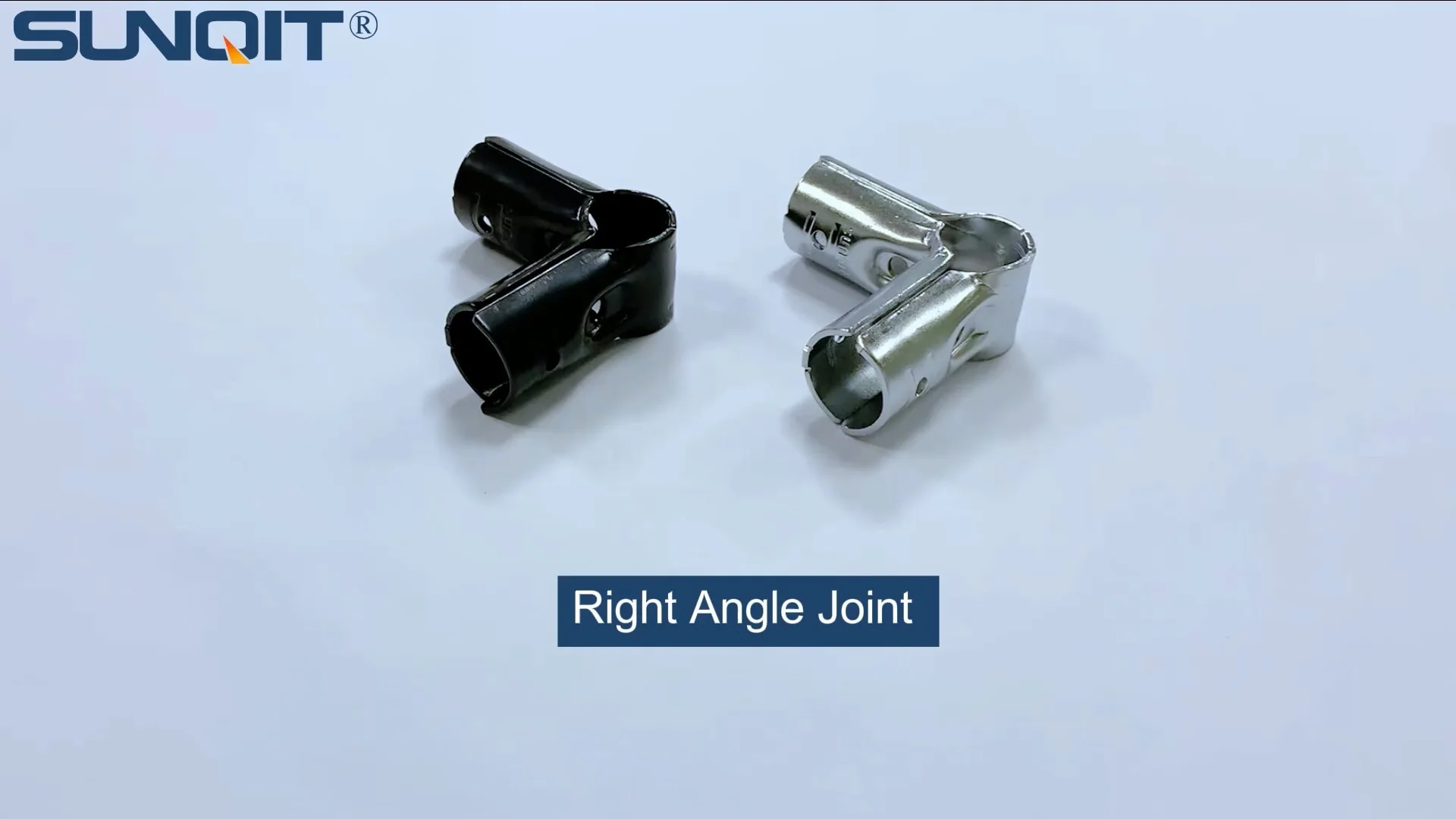
Three way lean pipe joint for 3 pcs 28MM lean pipe connection in straight angle, which used widely in workbench, flow rack, hand trolley frame connection.
In the world of manufacturing and material handling, every component plays a quiet but critical role in keeping operations running smoothly. From the conveyor belts that move products to the workbenches where assembly happens, each part has a job to do—and none is more overlooked yet essential than the lean pipe joint. Specifically, the three way lean pipe joint, a small but mighty connector that holds together the backbone of lean systems: workbenches, flow racks, material carts, and more. But here's the question that keeps plant managers and safety officers up at night: How much weight can this little joint actually support?
It's not just a matter of curiosity. Understanding load capacity is about safety—preventing collapses that could injure workers or damage expensive equipment. It's about efficiency—ensuring your flow rack doesn't sag under the weight of parts, slowing down production. And it's about cost—avoiding downtime from unexpected failures or the need to replace underperforming components. So let's dive in. We'll break down what a three way lean pipe joint is, what factors affect how much weight it can handle, and why getting this right matters for your entire operation.
First Things First: What Even Is a Three Way Lean Pipe Joint?
Before we talk about load capacity, let's make sure we're all on the same page. A lean pipe joint is exactly what it sounds like: a connector that joins lengths of lean pipe (also called "lean tube") together. These pipes are typically made of steel, aluminum, or even pe coated lean pipe (a steel pipe with a plastic coating for corrosion resistance), and they're the building blocks of modular workstations and material handling systems. Think of them as the "Legos" of manufacturing—versatile, easy to assemble, and infinitely customizable.
Now, a three way lean pipe joint is a specialized version designed to connect three lean pipes at once. Picture a T-junction or a Y-shape: one main pipe, with two others branching off at angles (usually 90 degrees, but sometimes adjustable). This design makes it indispensable for creating structures with multiple levels or branches—like a workbench with a shelf above, a flow rack with side rails, or a material trolley with extra storage arms. Without three way joints, building these multi-dimensional structures would be clunky, if not impossible.
These joints come in all shapes and sizes, but they share a common goal: to create strong, stable connections without welding or complex tools. Most are clamped or bolted onto the lean pipes, making assembly and disassembly a breeze—perfect for lean systems, where flexibility and quick reconfiguration are key. But as with any "easy to use" component, the simplicity can hide complexity when it comes to performance.
Why Load Capacity Matters More Than You Think
Let's start with a scenario. Imagine your production line relies on a flow rack to feed parts to workers on the assembly floor. The flow rack is built with pe coated lean pipe (lightweight, corrosion-resistant) and three way joints at each corner, supporting levels of bins filled with screws, washers, and small components. One day, a new batch of parts arrives—heavier than usual—and the top shelf starts to sag. At first, it's just a small dip. But by the end of the shift, the joint connecting the shelf to the upright pipe gives way, and the entire level crashes down. Parts scatter, the line stops, and now you're dealing with damaged inventory, a broken flow rack, and hours (or days) of lost productivity.
This isn't just a hypothetical. Underestimating load capacity leads to real-world consequences. On the flip side, overestimating can mean overspending on heavy-duty joints when a lighter, cheaper option would work. So whether you're building a simple workbench or a complex material handling system, knowing how much weight your three way lean pipe joint can support is the first step in building something that's safe, efficient, and cost-effective.

The Big Factors: What Determines How Much Weight a Three Way Joint Can Hold?
Load capacity isn't a one-size-fits-all number. A three way lean pipe joint's ability to support weight depends on a mix of factors, from the material it's made of to how well it's installed. Let's break down the most important ones.
1. Material: Steel vs. Aluminum vs. Plastic—Does It Make a Difference?
Yes, and it's a big one. Three way lean pipe joints are typically made from three materials: steel, aluminum, or plastic (though plastic is rare for heavy-duty use). Here's how they stack up:
- Steel joints : The heavyweights. Steel is strong, rigid, and can handle high loads—often 500 lbs or more per joint, depending on design. They're ideal for industrial settings where durability is key, like workbenches used for assembly or flow racks holding metal parts. The downside? They're heavier, which can make structures harder to move, and they're prone to rust if not coated (hence the popularity of pe coated lean pipe systems, where the pipes are coated in plastic to resist corrosion).
- Aluminum joints : The lightweight contenders. Aluminum is lighter than steel but still surprisingly strong, with load capacities often ranging from 200–400 lbs per joint. They're corrosion-resistant by nature, making them great for cleanrooms or environments with moisture (like food processing). They're also easier to handle during assembly, which speeds up setup. The tradeoff? They're not as strong as steel, so they're better for lighter loads—think small parts bins or lightweight workbenches.
- Plastic joints : The lightest of the light. These are rare in industrial use but common in low-weight applications, like retail displays or lightweight material carts. Load capacity here is minimal—maybe 50–100 lbs—and they're prone to cracking under stress. Stick to metal for anything that matters.
So, if you're using steel lean pipes, pairing them with a steel three way joint makes sense for maximum strength. If you're going for an aluminum lean system (lighter, easier to reconfigure), an aluminum joint will be your best bet. Mixing materials? Proceed with caution. A steel pipe connected to an aluminum joint might seem like a good idea, but the different expansion rates (from temperature changes) can loosen the connection over time, weakening load capacity.
2. Joint Design: It's All in the Connection
Not all three way joints are created equal. The way the joint connects to the lean pipes—its design—has a huge impact on how much weight it can support. Let's look at the two most common designs:
Clamped joints : These are the most popular in modular lean systems. They use bolts or screws to clamp the joint tightly around the lean pipes. The key here is the "grip" of the clamp. A well-designed clamped joint distributes pressure evenly around the pipe, creating a strong, stable connection. Look for joints with serrated or rubberized inner surfaces—these bite into the pipe, preventing slippage under load. Load capacity here depends on the number of bolts (more bolts = better clamping force) and the quality of the materials (steel clamps > aluminum clamps for heavy loads).
Welded joints : These are permanent—once welded, the joint and pipes become a single piece. Welded joints can support massive weight (often exceeding 1,000 lbs) because there's no risk of slippage. But they're not modular. If you need to reconfigure your workbench or flow rack, you'll have to cut the welds and start over. For lean systems, which thrive on flexibility, clamped joints are usually the way to go—even if they can't match welded joints' raw strength.
3. Lean Pipe Diameter and Thickness: The "Backbone" Factor
The joint is only as strong as the pipes it's connecting. A three way joint might be rated to hold 500 lbs, but if the lean pipes themselves are too thin or narrow, they'll bend or snap before the joint fails. Most lean pipes come in standard diameters: 1.5 inches is common for industrial use, but you'll also see 1 inch or 2 inch options. Thickness (gauge) matters too—a 1.5-inch pipe with a 1.2mm wall thickness is weaker than one with a 2.0mm wall.
Think of it like a human spine. A strong joint (the vertebrae) can't support a heavy load if the pipes (the bones) are brittle. So when calculating total load capacity, always pair your joint rating with the pipe's specs. Most manufacturers will list "system load capacity," which accounts for both the joint and the pipe—this is the number you should trust, not just the joint's individual rating.
4. Installation: Tighten Those Bolts (But Not Too Tight!)
You could have the strongest, most well-designed three way joint in the world, but if it's installed poorly, it'll fail. Installation mistakes are one of the top causes of load capacity issues. Here's what to watch for:
- Loose bolts : A clamped joint relies on tight bolts to grip the pipe. If bolts are under-tightened, the joint will slip under load, reducing its effective capacity by 30% or more.
- Over-tightened bolts : Too much force can strip the threads or crack the joint (especially with aluminum). Follow the manufacturer's torque specs—usually 15–25 ft-lbs for steel bolts.
- Misalignment : If the three pipes aren't straight or are at odd angles, the joint will bear uneven stress. Imagine trying to hold a heavy box with one arm twisted—you'll tire faster, and the box might slip. Same with joints: misalignment leads to premature failure.
4. Environmental Factors: Heat, Cold, and Corrosion
Your joint doesn't exist in a vacuum. Extreme temperatures can weaken materials: steel becomes brittle in cold, aluminum softens in heat. Humidity or chemicals can cause corrosion, eating away at the joint's structure over time. Even vibration—from nearby machinery or constant movement of parts on a flow rack—can loosen bolts or fatigue the joint (more on fatigue later).
That's why pe coated lean pipe systems are so popular in harsh environments. The plastic coating on the pipes (and sometimes the joints) acts as a barrier against moisture and chemicals, keeping the steel underneath strong. For aluminum joints, corrosion is less of an issue, but they still need protection from extreme heat or cold if you're pushing their load limits.

Testing Load Capacity: How Manufacturers Figure Out the Numbers
So how do manufacturers come up with those load capacity ratings you see on product specs? It's not guesswork—they test it. Let's take a quick look at the three main tests joints undergo:
Static Load Testing: "How Much Can It Hold… Without Moving?"
Static load testing is the most basic: you mount the joint to a test frame, attach weights (usually steel plates) to the connected pipes, and see how much it can hold before bending, slipping, or breaking. This measures "static" capacity—the weight it can support when the load isn't moving. For example, a three way joint might pass a static test at 500 lbs, meaning it can hold that weight indefinitely without failing.
Dynamic Load Testing: "What If the Load Is Moving?"
In the real world, loads aren't always static. Parts slide down flow racks, carts roll over uneven floors, and workbenches get bumped during assembly. Dynamic load testing mimics this by applying moving or shifting weights. Maybe the weight is dropped a few inches onto the joint (to simulate a heavy part being placed on a shelf) or pulled sideways (to simulate a cart hitting a wall). Dynamic capacity is usually lower than static—maybe 300 lbs for a joint that can handle 500 lbs statically.
Fatigue Testing: "How Long Can It Hold… Over Time?"
Even if a joint passes static and dynamic tests, it might fail after months or years of use. Fatigue testing cycles the load on and off—say, 10,000 times—to see if the joint weakens. This is crucial for high-use systems, like flow racks that get restocked multiple times a day. A joint might hold 400 lbs once, but after 10,000 cycles, it might only hold 300 lbs.
When you see a load capacity rating, check if it's static, dynamic, or fatigue-rated. Most manufacturers list static capacity as the "maximum" because it's the highest number, but for real-world use, dynamic and fatigue ratings are often more relevant.

Real-World Examples: How Load Capacity Plays Out on the Shop Floor
Let's put this all together with two common scenarios: a workbench and a flow rack. Both rely heavily on three way lean pipe joints, but their load needs are very different.
Scenario 1: The Assembly Workbench
A typical assembly workbench has a flat top, maybe a shelf below for tools, and is built with lean pipes and three way joints at the corners and where the shelf connects. Let's say the top is 4 feet by 2 feet, and workers place heavy tools (drills, wrenches) and parts (metal brackets, circuit boards) on it. The total weight on the top might be 200 lbs, and the shelf below another 100 lbs.
For this, a steel three way joint with a static load rating of 300 lbs would work. Why? Because the weight is spread across multiple joints (four at the corners, plus more for the shelf), so each joint isn't carrying the full load. But if you skimp and use an aluminum joint rated for 200 lbs, and the workbench has four joints, you might think 4 x 200 = 800 lbs is enough—but remember, the load isn't evenly distributed. A heavy drill placed near one corner could put 150 lbs on a single joint, pushing it past its limit and causing the bench to wobble or sag.
Scenario 2: The Flow Rack
Flow racks are all about movement. Bins of parts slide down roller tracks (another keyword!) from the back to the front, where workers pick them. The three way joints here support the roller tracks and the weight of the bins. Let's say each bin weighs 50 lbs, and there are 10 bins on a level—500 lbs total. The dynamic load comes into play when bins are added or removed: slamming a bin onto the track could create a sudden 75 lbs of force on the joint.
For this, a steel joint with a dynamic load rating of 400 lbs makes sense. It can handle the static weight of the bins plus the dynamic shocks of loading. An aluminum joint might work here too, but you'd need to derate it—maybe only stack 6 bins instead of 10—to stay under its lower dynamic capacity.
Comparing Joints: A Quick Look at Load Capacities (Table Time!)
To make this concrete, let's compare three common lean pipe joints: three way, two way, and four way. This table shows typical load capacities, materials, and best uses—keep in mind these are general ranges; always check the manufacturer's specs for your specific joint.
| Joint Type | Common Materials | Static Load Capacity (Typical Range) | Dynamic Load Capacity (Typical Range) | Best For |
|---|---|---|---|---|
| Three Way Lean Pipe Joint | Steel, Aluminum | 300–600 lbs | 200–400 lbs | Workbenches, flow racks, material carts (multi-directional structures) |
| Two Way Lean Pipe Joint | Steel, Aluminum | 400–700 lbs | 250–500 lbs | Straight structures (e.g., conveyor rails, linear shelving) |
| Four Way Lean Pipe Joint | Steel | 500–800 lbs | 300–550 lbs | Complex structures (e.g., multi-level racks, large workstations) |
Common Misconceptions: What People Get Wrong About Load Capacity
Even with all this info, there are still myths floating around about lean pipe joints. Let's bust a few:
Myth #1: "All Three Way Joints Are the Same—Just Pick the Cheapest."
Nope. A $5 aluminum joint from a no-name brand isn't going to perform like a $20 steel joint from a reputable supplier. Cheap joints often cut corners on material thickness or clamp design, leading to lower load capacities. Always check for certifications (like ISO 9001) or third-party test reports—they're a sign the manufacturer actually tested the joint.
Myth #2: "If the Joint Is Steel, It Can Handle Anything."
Steel is strong, but it's not indestructible. A steel joint with a cracked clamp (from over-tightening) or a rusted bolt (from poor maintenance) will fail just as easily as a cheap aluminum joint. Material is important, but installation and upkeep matter just as much.
Myth #3: "I Can Just Add More Joints to Hold More Weight."
Adding joints can help distribute load, but it's not a free pass. If you have a workbench with four legs (four three way joints) and add two more legs (two more joints), the total capacity might go up—but only if the new joints are properly aligned and the pipes are strong enough. Misaligned joints or weak pipes will still cause problems, even with extra support.
Maximizing Load Capacity: Tips for Getting the Most Out of Your Joints
Now that you know what affects load capacity, here's how to make sure your three way lean pipe joints perform at their best:
- Match the joint to the load : Don't overbuy (steel for a light cart) or underbuy (aluminum for a heavy workbench). Use the manufacturer's specs and factor in dynamic loads and fatigue if needed.
- Install with care : Tighten bolts to the recommended torque, align pipes straight, and use a level to ensure the structure is even. A wobbly frame puts extra stress on joints.
- Inspect regularly : Check for loose bolts, rust, cracks, or bent pipes. Tighten bolts as needed, replace corroded joints, and straighten bent pipes before they weaken the structure.
- Don't exceed the rating : If a joint is rated for 400 lbs dynamic load, don't stack 500 lbs of parts on it. It might hold for a day, but over time, it'll fail.
- Use reinforcements for high loads : If you're pushing the limit, add diagonal braces or extra joints to distribute weight. Think of it like adding a "backup" for your joints.
Final Thoughts: The Little Joint That Keeps Your Operation Moving
At the end of the day, the three way lean pipe joint might be small, but it's the glue that holds your lean system together. Understanding its load capacity isn't just about numbers—it's about building a safer, more efficient, and more reliable workplace. Whether you're using steel joints for heavy workbenches, aluminum joints for lightweight flow racks, or pe coated lean pipe systems to fight corrosion, getting this right means fewer headaches, less downtime, and more time focusing on what matters: making great products.
So next time you walk past that workbench or flow rack, take a second to look at the joints. They might not be glamorous, but they're doing the hard work—one pound at a time.