- Company Articles
- Products and Technology
- Product knowledge
- Three Way Lean Pipe Joint Specifications: Diameter, Tolerance & More

Three Way Lean Pipe Joint Specifications: Diameter, Tolerance & More
Related Product
Three Way Lean Pipe Joint
Three way lean pipe joint for 3 pcs 28MM lean pipe connection in straight angle, which used widely in workbench, flow rack, hand trolley frame connection.
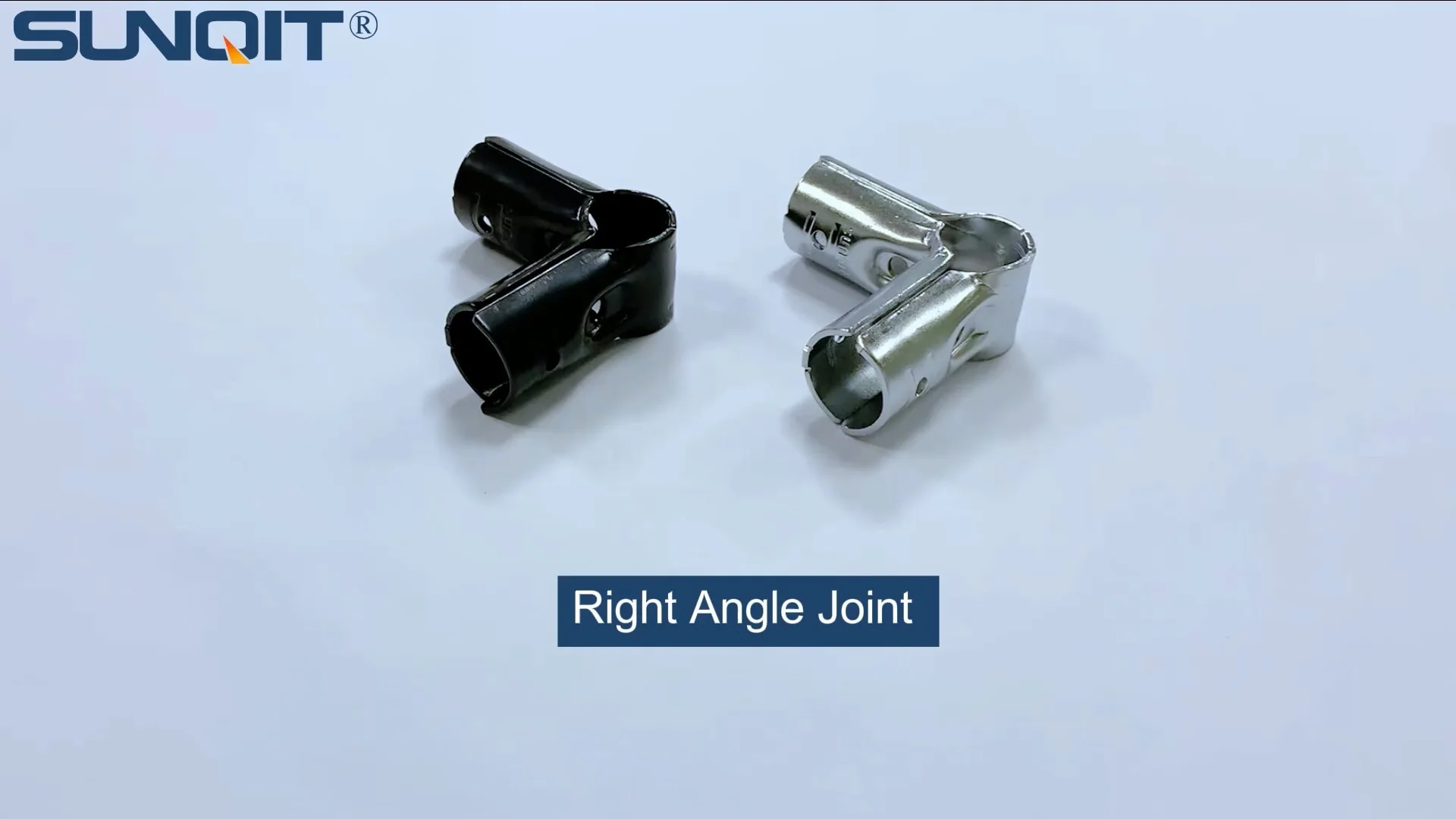
In the world of lean manufacturing, where efficiency and adaptability reign supreme, even the smallest components play a starring role. Take the three way lean pipe joint , for example. At first glance, it might seem like just another metal connector—but anyone who's built a lean pipe workbench , a flow rack, or a custom material handling system knows better. This unassuming joint is the unsung hero that turns simple lean pipe into robust, flexible structures that grow and change with your workflow. Today, we're diving deep into the specs that make or break a three way lean pipe joint: from diameter and tolerance to materials and design. Whether you're a facility manager upgrading your production line or a lean system enthusiast building a home workshop, understanding these details will help you build structures that last, adapt, and keep your operations running like clockwork.
Understanding Three Way Lean Pipe Joints: The Basics
Let's start with the fundamentals. A three way lean pipe joint is exactly what it sounds like: a connector with three ports (or openings) designed to join three lengths of lean pipe at various angles. Unlike two-way joints (which connect two pipes in a straight line or 90° angle) or four-way joints (which add a fourth port for more complex intersections), three way joints are the Swiss Army knife of lean construction. They're the go-to for building frames with horizontal and vertical supports, adding shelves to workbenches, or creating branching structures in flow racks.
What makes them so essential? Lean manufacturing thrives on modularity— the ability to reconfigure workspaces quickly as needs change. A well-designed three way joint lets you disassemble and rebuild structures without cutting pipes or welding, saving time and reducing waste. But not all three way joints are created equal. The difference between a joint that holds firm for years and one that wobbles after a month lies in its specifications: how it's sized, how precisely it's made, and what it's made of. Let's break those down, starting with the first critical spec: diameter.
Diameter Specifications: The Backbone of Compatibility
Diameter is the most basic—but perhaps most critical—spec for any lean pipe joint. It determines whether the joint will fit your lean pipe at all. Most lean pipes on the market come in standard diameters, and three way joints are designed to match these. Let's look at the most common sizes and why they matter.
Standard Diameter Sizes
The global lean manufacturing industry has converged around a few key diameters for lean pipe, and three way joints are engineered to match. The most prevalent size is 28mm (about 1.1 inches). This is the "workhorse" diameter, used in everything from light-duty workbenches to medium-weight flow racks. It strikes a balance between strength and flexibility, making it ideal for most general applications.
You'll also encounter 30mm diameter joints, often paired with thicker-walled pipes for heavier loads. These are common in industrial settings where structures need to support tools, heavy parts, or multiple tiers of materials. On the smaller end, 20mm joints exist for lightweight applications, like small parts storage or benchtop organizers, though they're less common in industrial settings.
Pro Tip:
Always check that your joint's inner diameter matches your pipe's outer diameter. A 28mm joint won't fit a 30mm pipe—even a 1mm difference can mean a loose fit or a joint that won't slide on at all. Reputable suppliers will clearly label both pipe and joint diameters, but when in doubt, ask for a sample to test before ordering in bulk.
Why Diameter Consistency Matters
Imagine building a lean pipe workbench with joints that are supposed to be 28mm, but some are 27.8mm and others are 28.2mm. The pipes would fit loosely in the smaller joints (causing wobble) and struggle to fit in the larger ones (requiring force that could damage the pipe coating). Over time, loose joints lead to unstable structures—shelves that sag, carts that tip, and workbenches that vibrate during use. Consistency in diameter isn't just about "fitting"; it's about structural integrity.
Most lean pipe supplier lines offer joints in a single, consistent diameter to match their pipes. For example, if you buy 28mm PE-coated lean pipe from a supplier, their three way joints will be precision-machined to 28mm inner diameter. Mixing brands can be risky, though—some manufacturers fudge specs slightly to push customers toward their proprietary systems. When possible, stick to a single supplier for pipes and joints to ensure a perfect fit.
Diameter and Load Capacity
Diameter also ties directly to how much weight a joint can support. A 30mm joint, with its thicker walls and larger contact area with the pipe, can handle more weight than a 28mm joint. For example, a 30mm steel three way joint might be rated for 500kg of vertical load, while a 28mm steel joint tops out at 350kg. This is why heavy-duty applications—like industrial flow racks holding pallets of parts—almost always use larger diameters, even if it means slightly higher material costs. When planning your structure, start with the load: estimate the weight each joint will bear (including dynamic loads, like a cart rolling over uneven floors) and choose a diameter that provides a comfortable safety margin.
| Joint Diameter | Typical Pipe Compatibility | Common Applications | Estimated Max Vertical Load (Steel Joint) |
|---|---|---|---|
| 20mm | 20mm lean pipe (lightweight aluminum or plastic-coated) | Small parts organizers, benchtop shelves | 100–150kg |
| 28mm | 28mm PE-coated steel, aluminum lean pipe | Lean pipe workbenches, turnover trolleys, medium-duty flow racks | 300–350kg |
| 30mm | 30mm stainless steel pipe, thick-walled aluminum | Heavy-duty flow racks, industrial material carts, pallet storage | 450–500kg |

Tolerance: The Invisible Spec That Ensures a Tight Fit
If diameter is the "size" of the joint, tolerance is how precisely that size is made. Tolerance refers to the allowable deviation from the "ideal" diameter. For example, a 28mm joint with a tolerance of ±0.1mm could measure anywhere from 27.9mm to 28.1mm. That might sound tiny, but in the world of lean pipe joints, those fractions of a millimeter make all the difference between a snug fit and a sloppy one.
Why Tolerance Matters More Than You Think
Let's say you order 100 three way joints, all specified as 28mm with ±0.2mm tolerance. The "loosest" joint in the batch would be 28.2mm, and the "tightest" would be 27.8mm. Now, pair that with lean pipe that also has its own tolerance—say, ±0.1mm. A pipe at the upper end of its tolerance (28.1mm) might not fit into the tightest joint (27.8mm) at all. Conversely, a pipe at the lower end (27.9mm) in a loose joint (28.2mm) would have 0.3mm of wiggle room—enough to make the structure feel unstable. Over time, that wiggle leads to wear: the pipe rubs against the joint, scratching the coating and weakening the connection.
Tight tolerance (like ±0.1mm) minimizes this variability. It ensures that nearly every joint and pipe in your order will fit together seamlessly, with just enough friction to hold the structure firm without requiring excessive force to assemble. Reputable suppliers invest in precision machining (like CNC turning) to hit these tight tolerances consistently. Cheaper, off-brand joints often cut corners here, using manual machining or low-quality molds that result in tolerance swings of ±0.3mm or more. The savings upfront aren't worth the headaches later.
How Suppliers Control Tolerance
So, how do you know if a supplier takes tolerance seriously? Look for mentions of quality control processes in their product descriptions. Top manufacturers use coordinate measuring machines (CMMs) to scan random samples from each production run, ensuring diameters stay within spec. Some even laser-etch tolerance ranges directly on the joint (e.g., "28mm ±0.1mm") as a mark of transparency. If a supplier can't tell you their tolerance range—or brushes off the question—walk away. Tolerance isn't a "nice-to-have"; it's a baseline for quality.
Another sign of good tolerance control is consistency across batches. If you order joints today and reorder six months later, they should fit the same pipes just as well. Inconsistent batches are a red flag that the supplier is cutting corners on machining or using low-quality raw materials.

Materials: Steel, Aluminum, or Plastic? Choosing the Right Build
Three way lean pipe joints come in a handful of materials, each with its own strengths and weaknesses. The material you choose will depend on your environment (wet vs. dry, corrosive vs. clean), load requirements, and budget. Let's break down the most common options.
Steel Three Way Joints: The Heavyweights
Steel is the traditional choice for three way joints, and for good reason: it's strong, durable, and affordable. Most steel joints are made from carbon steel (for cost) or stainless steel (for corrosion resistance). Carbon steel joints are often coated with zinc (galvanized) or chrome to prevent rust, while stainless steel relies on its natural chromium oxide layer to stay shiny and rust-free.
Pros? Steel joints can handle the highest loads—perfect for industrial lean system like automotive assembly lines or warehouse storage racks. They're also resistant to impact, which is crucial in busy environments where carts or machinery might bump into structures. Cons? Steel is heavy. If you're building a mobile cart or a structure that needs to be moved frequently, the weight adds up quickly. Stainless steel, while rust-proof, is also pricier than carbon steel—sometimes double the cost.
Aluminum Three Way Joints: Light and Bright
Aluminum joints have surged in popularity over the last decade, thanks to their lightweight design and modern look. They're often paired with aluminum lean pipe (hollow aluminum tubes) to create sleek, lightweight structures that are easy to reconfigure. Aluminum is naturally corrosion-resistant, making it a great fit for cleanrooms, food processing facilities, or outdoor applications (like loading docks).
Pros? Weight savings are dramatic. An aluminum three way joint weighs about 40% less than a steel joint of the same size, which translates to easier assembly (no more straining to lift heavy frames) and lighter mobile carts that glide on casters. Aluminum also doesn't rust, so it stays looking new even in humid environments. Cons? Aluminum is softer than steel, so it can't handle quite as much load. A 28mm aluminum joint might top out at 250kg vertical load, compared to 350kg for a steel joint. It's also more expensive than carbon steel, though usually cheaper than stainless steel.
Plastic-Coated Joints: Grip and Protection
Some joints (usually steel or aluminum) come with a plastic coating—often polyethylene (PE) or PVC. The coating adds grip, preventing pipes from slipping inside the joint, and protects both the joint and pipe from scratches during assembly. It also adds a pop of color (common options include blue, yellow, or gray), which can help with visual organization (e.g., using yellow joints for "work-in-progress" zones and blue for "finished goods").
Pros? The coating acts as a buffer, reducing noise when pipes are inserted or adjusted. It's also a plus in environments where parts might bump against the structure (like electronics assembly, where scratches on components are a no-no). Cons? The coating can wear off over time, especially at the contact points with the pipe. It also adds thickness, so you'll need to ensure the coated joint's inner diameter still matches your pipe (e.g., a 28mm pipe needs a coated joint with an inner diameter of 28mm, not 28mm including the coating).
| Material | Best For | Max Vertical Load (28mm Joint) | Corrosion Resistance | Weight (vs. Steel) | Cost (vs. Steel) |
|---|---|---|---|---|---|
| Carbon Steel (Galvanized) | Heavy loads, dry environments | 350kg | Moderate (rusts if coating scratches) | 100% | 100% (baseline) |
| Stainless Steel | Wet/clean environments, food/pharma | 350kg | High (rust-proof) | 105% | 200–250% |
| Aluminum | Lightweight structures, cleanrooms | 250kg | High (naturally corrosion-resistant) | 60% | 150% |
| Plastic-Coated Steel | Scratch-sensitive environments, noise reduction | 350kg | Moderate (coating adds protection) | 110% | 120% |

Design Features That Make a Joint User-Friendly
Beyond diameter, tolerance, and material, the best three way lean pipe joints have design features that make assembly faster, easier, and more intuitive. These small touches turn a frustrating build into a smooth process—so let's talk about what to look for.
Fixed vs. Swivel Ports: Flexibility in Angles
Three way joints come in two main angle configurations: fixed and swivel. Fixed joints have ports set at a specific angle (most commonly 90° or 135°), which is great for building square frames or triangular supports. Swivel joints, on the other hand, let you rotate one or more ports to any angle before locking them in place. This is a game-changer for custom structures—think a lean pipe workbench with a sloped shelf for easy access, or a flow rack that needs to follow the contour of a room.
Swivel joints usually have a locking mechanism, like a setscrew or a cam lever, to hold the angle once you've set it. Tool-less swivel joints (with hand-tightened levers) are especially popular—no wrenches required, which speeds up assembly and reconfiguration. Just keep in mind: swivel joints tend to have slightly lower load capacities than fixed joints, since the moving parts add points of potential weakness.
Grip Rings and Anti-Slip Design
Ever assembled a lean structure only to have the pipes slide out of the joints when you move it? That's where grip rings come in. Many modern three way joints have rubber or plastic rings inside the ports that compress when the pipe is inserted, creating friction that holds the pipe in place. Some even have serrated metal teeth that bite into the pipe's coating (gently!) for extra grip.
Anti-slip design is especially important for vertical pipes, which are prone to sliding downward under load. A joint without grip rings might require you to drill holes in the pipe and use bolts to secure it—a time-consuming workaround that defeats the "modular" spirit of lean construction. When shopping, look for joints labeled "anti-slip" or "grip-enhanced"—your future self (and your back) will thank you.
Compatibility with Accessories
A great three way joint doesn't just connect pipes—it plays well with other lean accessories. Look for joints with threaded holes or mounting points that let you add casters, shelves, roller tracks, or workbench tops. For example, some joints have a 10mm threaded hole on the side where you can screw in a caster stem, turning a static frame into a mobile cart. Others have slots for attaching roller track brackets, making it easy to build a flow rack with a gravity-fed roller track.
This compatibility is what makes lean systems so versatile. A single three way joint can be part of a workbench today, a flow rack tomorrow, and a cart next month—all by swapping out accessories. When evaluating a joint, ask: "Can I attach X, Y, or Z accessory to it?" If the answer is "no" or "only with adapters," keep looking.
Applications: Where Three Way Joints Shine
Now that we've covered the specs, let's talk real-world use. Three way lean pipe joints are everywhere in lean manufacturing, but here are a few applications where they truly excel.
Lean Pipe Workbenches: The Heart of the Workshop
A lean pipe workbench is often the first project for anyone new to lean construction—and three way joints are the backbone of its frame. Imagine building a workbench with a top shelf, a lower shelf for tools, and a side rack for parts bins. The vertical posts connect to horizontal pipes via three way joints: one port for the vertical post, one for the front horizontal rail, and one for the back horizontal rail. Add another three way joint halfway up the post, and you've got a connection point for the top shelf rails. It's modular, so you can adjust shelf heights or add new features (like a pegboard) by simply adding more joints.
In professional settings, workbenches built with three way joints are often used in assembly lines. For example, an electronics manufacturer might have a workbench with a sloped top (held at 15° by swivel three way joints) to reduce neck strain, plus side racks for PCBs and components. When the product line changes, the workbench can be reconfigured in hours instead of days.
Flow Racks and Gravity-Fed Systems
Flow racks are all about moving materials smoothly from point A to point B—think bins of parts sliding down roller tracks to an assembly station. Three way joints are critical here for building the rack's frame and supporting the roller tracks. Vertical posts connect to horizontal rails (via three way joints), and the roller tracks attach to brackets that bolt into the joints. The ability to angle the tracks (using swivel joints) ensures gravity does the work, reducing manual lifting and speeding up production.
One common setup is a three-tier flow rack: three levels of roller tracks, each supported by three way joints that connect the vertical posts to the horizontal supports. If a line needs more space for larger bins, you can easily remove a tier by disconnecting the joints and reusing the pipes elsewhere.
Material Handling Carts: Mobile and Modular
Carts are another area where three way joints shine. Whether you're moving raw materials from the warehouse to the line or finished products to shipping, a well-built cart needs to be sturdy, lightweight, and adaptable. Three way joints connect the cart's frame, while swivel joints let you add shelves at different heights. Casters attach directly to the bottom joints, turning the frame into a mobile unit.
A common trick? Using aluminum three way joints and aluminum lean pipe to keep the cart light enough for one person to push, even when loaded. Steel joints would work, but the cart would be heavier and harder to maneuver in tight spaces.
Choosing a Supplier: What to Look For
You could have the best specs in mind, but they won't matter if your lean pipe supplier cuts corners. Here's how to find a supplier that delivers quality three way joints, every time.
First, ask for samples. Any reputable supplier will send you a few joints (and matching pipes) to test before you place a large order. Assemble a small structure—a mini workbench or a simple shelf—and test the fit, tolerance, and stability. Wiggle the joints, apply gentle pressure, and see if the pipes slip. If the sample joints feel cheap or inconsistent, move on.
Second, check for certifications. ISO 9001 certification is a good sign—the supplier follows strict quality management processes. For stainless steel or aluminum joints, look for material certifications (e.g., "304 stainless steel" or "6061 aluminum") to ensure they're using the grade they claim. Avoid suppliers who can't provide material certificates—you might end up with low-grade metal that bends or rusts prematurely.
Finally, read reviews. Other customers will tell you if a supplier's joints have tolerance issues, if batches are inconsistent, or if customer service is lacking. Look for reviews from businesses similar to yours—if a automotive plant loves a supplier's steel joints, they're probably a safe bet for industrial use.
Final Thoughts: The Specs That Shape Your Lean Journey
At the end of the day, three way lean pipe joints are more than just connectors—they're the building blocks of a lean system that adapts, grows, and keeps your operations efficient. By focusing on diameter, tolerance, material, and design, you'll build structures that are strong, stable, and ready for whatever your workflow throws at them. Whether you're upgrading a single workbench or overhauling an entire production line, these specs are the difference between a structure that frustrates you and one that empowers you.
So, the next time you pick up a three way joint, take a moment to appreciate the engineering: the precision-machined diameter that ensures a tight fit, the tight tolerance that eliminates wobble, the material that balances strength and weight. It's the little things that make lean manufacturing work—and this joint is one of the littlest, most important things of all.