- Company Articles
- Products and Technology
- Product knowledge
- Three Way Lean Pipe Joint Tensile Strength: Technical Parameters

Three Way Lean Pipe Joint Tensile Strength: Technical Parameters
Related Product
Three Way Lean Pipe Joint
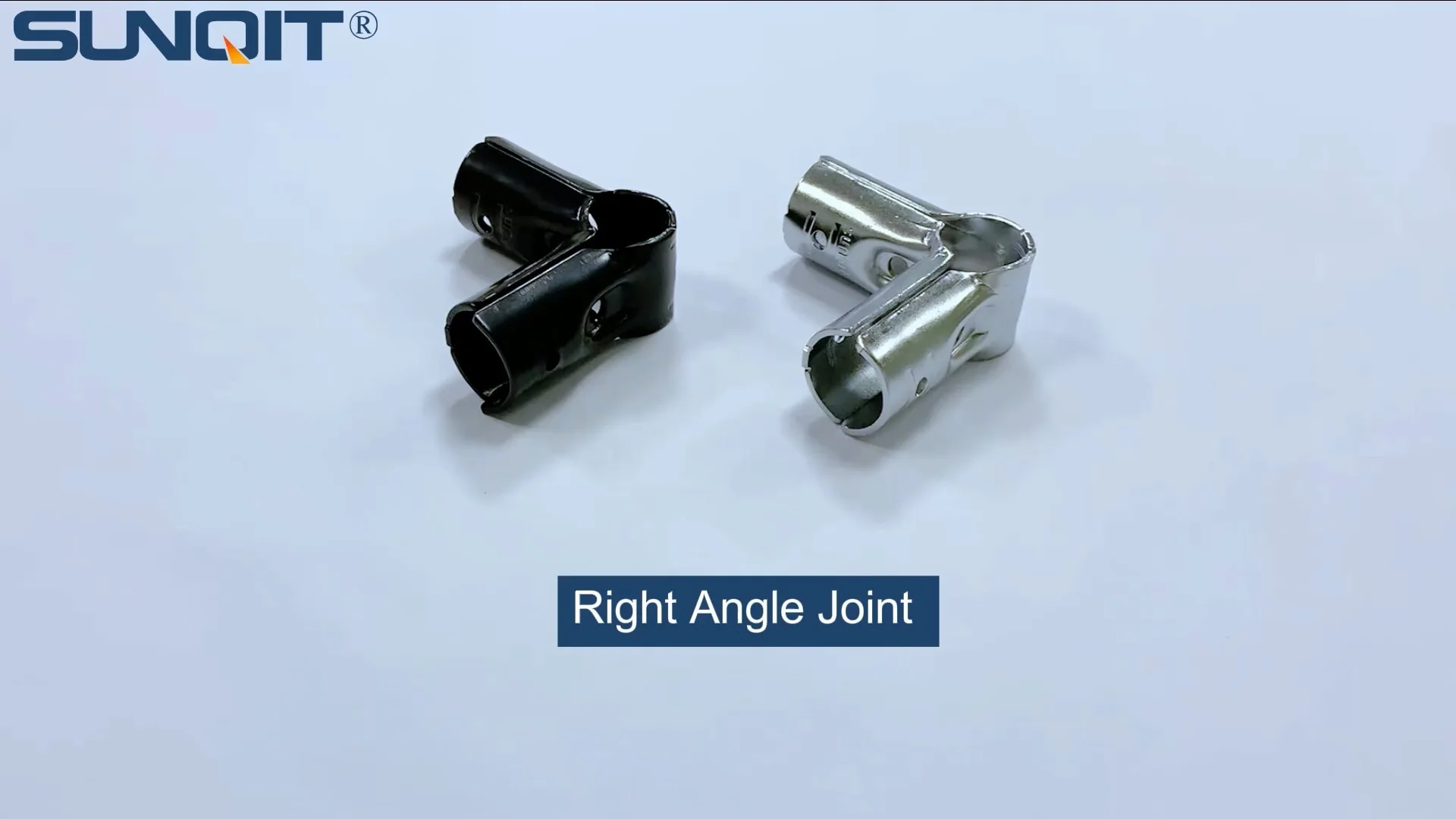
Three way lean pipe joint for 3 pcs 28MM lean pipe connection in straight angle, which used widely in workbench, flow rack, hand trolley frame connection.
In the bustling world of manufacturing and assembly, where efficiency and reliability are the backbone of daily operations, there's a silent workhorse that often goes unnoticed: the lean pipe joint. These small but mighty components are the unsung heroes of lean systems, holding together everything from workbenches to material racks, conveyor systems to turnover trolleys. Among the various types of lean pipe joints, the three way lean pipe joint stands out for its versatility, allowing for the creation of multi-directional structures that optimize space and workflow. But what truly separates a dependable joint from a liability is its tensile strength—the ability to withstand pulling forces without breaking or deforming. In this article, we'll dive deep into the technical parameters of three way lean pipe joints, focusing on tensile strength, materials, and real-world applications that make these joints indispensable in modern lean environments.
What is a Three Way Lean Pipe Joint?
Before we explore tensile strength, let's first understand what a three way lean pipe joint is and why it's so critical. A three way lean pipe joint is a connector designed to join three lean pipes at specific angles, typically 90°, 45°, or 180°, depending on the application. Unlike standard two-way joints, which only connect two pipes in a straight line or at a right angle, three way joints add a third dimension, enabling the construction of more complex, multi-tiered structures. Think of them as the "cornerstones" of lean pipe workbenches with shelves, material racks with multiple levels, or conveyor systems that branch off into different production lines.
These joints are engineered to be both strong and flexible. Most are made from durable materials like carbon steel, stainless steel, or aluminum, and many come with surface treatments such as chrome plating to enhance corrosion resistance. The design is often simple yet effective: a central body with three or more ports (openings) where lean pipes are inserted and secured, usually with set screws or bolts. This simplicity allows for quick assembly and disassembly, a key feature of lean systems that prioritize adaptability—after all, in a dynamic factory setting, production lines and workstations need to be reconfigured quickly to meet changing demands.
The Critical Role of Tensile Strength in Lean Systems
Tensile strength is the maximum amount of tensile (pulling) stress a material can withstand before breaking. For three way lean pipe joints, this isn't just a technical specification—it's a matter of safety, efficiency, and cost-effectiveness. Imagine a lean pipe workbench in an electronics assembly plant: the top shelf holds heavy testing equipment, the middle shelf supports bins of components, and the lower shelf stores tools. Every time a worker places a 20kg bin on the middle shelf, or leans against the workbench while reaching for a tool, the three way joints holding the shelves to the frame are subjected to tensile forces. If the joint's tensile strength is too low, it could stretch, bend, or even snap, causing the shelf to collapse. This isn't just a productivity issue; it's a safety hazard that could injure workers or damage expensive equipment.
In high-volume production environments, where lean systems are designed to minimize waste and maximize throughput, downtime is costly. A failed joint could bring an entire assembly line to a halt while repairs are made, leading to missed deadlines and lost revenue. Tensile strength also impacts the longevity of the structure. A joint with high tensile strength will maintain its integrity over years of use, even under repeated stress, reducing the need for frequent replacements. This is why manufacturers and facility managers don't just "buy joints"—they invest in joints with proven tensile strength ratings that align with their specific load requirements.

Technical Parameters of Three Way Lean Pipe Joints: A Detailed Breakdown
To truly understand a three way lean pipe joint's performance, we need to look beyond just tensile strength. Several technical parameters work together to determine how well the joint will function in a real-world setting. Below is a table outlining key parameters, with a focus on the popular "three way lean pipe joint chrome" variant—a common choice for its balance of strength, corrosion resistance, and affordability.
| Parameter | Three Way Lean Pipe Joint Chrome (Standard Model) | Notes |
|---|---|---|
| Material | Carbon steel (base) with chrome plating | Carbon steel provides high tensile strength; chrome plating (5-10μm thickness) adds corrosion resistance. |
| Tensile Strength | ≥ 450 MPa (megapascals) | Equivalent to ~45,000 kg-force per square centimeter; sufficient for most medium-to-heavy load applications. |
| Maximum Load Capacity (Static) | 150-200 kg per port | Depends on pipe diameter (typically 28mm or 30mm) and installation tightness; higher for shorter pipe spans. |
| Operating Temperature Range | -20°C to 80°C | Suitable for indoor factory environments; avoid extreme heat (e.g., near furnaces) or prolonged cold (unheated warehouses in winter). |
| Port Diameter | 28mm (standard) or 30mm | Matches common lean pipe sizes; ensure compatibility with lean pipe outer diameter. |
| Surface Hardness | HV 600-800 (Vickers hardness) | Chrome plating increases surface hardness, reducing wear from pipe insertion/removal. |
| Corrosion Resistance | ≥ 48 hours (salt spray test per ASTM B117) | Resists rust in humid or mildly corrosive environments (e.g., food processing, electronics assembly with cleaning agents). |
| Weight | 150-200 grams | Lightweight enough for manual assembly but heavy enough to provide stability. |
Let's unpack these parameters to see how they interact. The base material, carbon steel, is chosen for its excellent tensile strength—carbon steel alloys can easily reach 450 MPa or higher, which is more than enough for most lean system applications. The chrome plating, applied via electroplating, creates a thin but hard layer that acts as a barrier against moisture and chemicals. This is crucial in environments like automotive plants, where oil and coolant spills are common, or electronics factories, where cleaning solutions may be used to maintain ESD (electrostatic discharge) safety.
The maximum load capacity of 150-200 kg per port is a practical rating, not just a theoretical one. It assumes the joint is properly installed: pipes are fully inserted into the ports, and set screws are tightened to the manufacturer's recommended torque (usually 25-30 Nm). If pipes are only partially inserted, or screws are under-tightened, the effective load capacity drops significantly—this is why proper training for assembly teams is just as important as choosing the right joint.

Materials Matter: How Base and Coating Impact Tensile Strength
While the three way lean pipe joint chrome is a popular choice, it's not the only option. The base material of the joint has a direct impact on its tensile strength, weight, and cost. Let's compare three common materials to see how they stack up:
1. Carbon Steel (Chrome-Plated)
As we've discussed, carbon steel is the workhorse of lean pipe joints. Its high carbon content (typically 0.2-0.4%) gives it excellent tensile strength, making it ideal for heavy-duty applications like supporting loaded material racks or industrial workbenches. The chrome plating adds minimal weight (less than 5% of the joint's total weight) but significantly improves durability. However, carbon steel is prone to rust if the chrome layer is scratched or damaged, so it's best used in indoor, controlled environments.
2. Stainless Steel
Stainless steel joints, often part of the "stainless steel pipe series," offer superior corrosion resistance compared to chrome-plated carbon steel. They contain chromium (at least 10.5%) and nickel, which form a passive oxide layer that self-heals if scratched. Tensile strength is similar to carbon steel (around 400-500 MPa), but stainless steel is more expensive—up to 30% higher in cost. This makes it a better choice for environments with high humidity, frequent water exposure (e.g., food processing plants), or strict hygiene requirements (e.g., pharmaceutical manufacturing).
3. Aluminum
Aluminum joints are lightweight (about 40% lighter than steel) and naturally resistant to corrosion, thanks to a thin aluminum oxide layer. However, their tensile strength is lower—typically 200-300 MPa—so they're best suited for light-to-medium load applications, such as small workbenches or temporary storage racks. Aluminum joints are often paired with aluminum lean pipe to create lightweight, easy-to-move structures, like portable turnover trolleys. They're also popular in industries where weight reduction is critical, such as aerospace component assembly.
The takeaway? There's no "one-size-fits-all" material. A facility manager in a dry electronics factory might opt for chrome-plated carbon steel for its balance of strength and cost, while a seafood processing plant would choose stainless steel to avoid rust. Understanding the environment and load requirements is key to selecting the right material—and thus, the right tensile strength.

Testing Tensile Strength: How Manufacturers Ensure Reliability
Tensile strength ratings aren't just "guesses"—they're determined through rigorous testing. Most manufacturers use universal testing machines (UTMs) to measure a joint's tensile strength. The process is straightforward but precise:
- Sample Preparation: A batch of joints is selected at random (per quality control standards, often 1-5% of production). Each joint is cleaned and inspected for defects like cracks or uneven plating.
- Mounting: The joint is secured in the UTM, with pipes inserted into two of its ports (simulating a pulling force along a straight line). The third port may be left empty or secured to a fixed base, depending on the test standard.
- Force Application: The UTM pulls the pipes apart at a constant rate (typically 5-10 mm per minute), gradually increasing the force. Sensors measure the force applied and the joint's deformation.
- Failure Point: The test continues until the joint breaks or deforms permanently (yield point). The maximum force recorded just before failure is used to calculate tensile strength (force divided by the joint's cross-sectional area).
Reputable manufacturers often adhere to international standards like ISO 6892-1 (tensile testing of metals) or ASTM E8 (standard test methods for tension testing of metallic materials) to ensure consistency. Some even conduct additional tests, like fatigue testing (repeated stress cycles) or impact testing (sudden force), to simulate real-world conditions where joints may be subjected to more than just static loads.
It's worth noting that tensile strength is a "maximum" rating—joints should never be used at their breaking point. Safety factors (typically 2-3x the expected load) are built into design calculations to account for variables like uneven weight distribution, accidental impacts, or material fatigue over time. For example, if a joint has a tensile strength of 5000N, a safety factor of 2 means it should be used for loads up to 2500N in practice.
Real-World Applications: Three Way Joints in Action
To see how these technical parameters translate to real-world use, let's look at a common application: the lean pipe workbench. A typical workbench in an automotive parts assembly line might have a frame built with 28mm lean pipe and three way joints, with a wooden or metal top, a middle shelf for tools, and a lower shelf for parts bins. The joints at the corners of the frame must support the weight of the top (50kg), the tools on the middle shelf (30kg), and the parts bins (80kg total), plus the occasional lean from a worker (another 70kg). That's a combined load of 230kg, distributed across multiple joints—but each three way joint is only responsible for a portion of that load, thanks to the frame's structural design.
In this scenario, a three way lean pipe joint chrome with a tensile strength of 450 MPa and max load capacity of 180kg per port is more than sufficient. The chrome plating ensures the joint resists oil and grease from the assembly process, while the carbon steel core handles the tensile forces from the loaded shelves. Over time, even with daily use, the joint maintains its shape and strength, keeping the workbench stable and safe.
Another application is material flow racks, which use three way joints to create multi-tiered storage for parts that need to be accessed quickly. For example, a "material rack b (3 row and 3 floor)"—a common configuration—relies on three way joints to connect vertical support pipes with horizontal rails, creating 9 shelves (3 rows x 3 floors). Each shelf holds boxes of components, and the joints must withstand the downward force of the boxes plus the lateral forces when boxes are slid in or out. Here, tensile strength ensures the horizontal rails don't pull away from the vertical supports, even when fully loaded.
Chrome vs. Non-Chrome: When to Choose Plated Joints
The "chrome" in three way lean pipe joint chrome isn't just for aesthetics—it serves a practical purpose. Non-chrome carbon steel joints are cheaper, but they lack the corrosion resistance of their plated counterparts. In dry, clean environments (e.g., a office supply warehouse), non-chrome joints might work fine. But in most manufacturing settings, where humidity, oils, or cleaning agents are present, chrome plating is a worthwhile investment.
Chrome plating is applied via electroplating, where a thin layer of chromium is deposited onto the carbon steel surface. This layer is hard (HV 800-1000), which reduces wear from repeated pipe insertion and removal, and it's non-porous, preventing moisture from reaching the steel beneath. Over time, this means less rust, fewer broken joints, and lower maintenance costs. For example, a chrome-plated joint in a humid factory might last 5-7 years, while a non-chrome joint could start rusting within 2-3 years, weakening its tensile strength and requiring replacement.
That said, chrome plating isn't perfect. If the plating is scratched deep enough to expose the carbon steel, rust can form at the scratch site. To mitigate this, some manufacturers offer "double-plated" joints with a nickel underlayer, which provides additional corrosion resistance if the chrome is damaged. However, this adds cost, so it's typically reserved for high-end applications.
Maintenance Tips to Preserve Tensile Strength
Even the strongest three way lean pipe joint will underperform if not properly maintained. Here are simple steps to ensure your joints retain their tensile strength and functionality over time:
- Inspect Regularly: Check joints for signs of damage, such as cracks, bent ports, or loose set screws. Pay extra attention to joints in high-load areas (e.g., bottom shelves of material racks) or those exposed to moisture.
- Tighten Set Screws: Over time, vibrations from machinery or repeated use can loosen set screws, reducing the joint's grip on the pipes. Retighten screws with a torque wrench (to the manufacturer's specs) every 3-6 months.
- Clean and Protect: Wipe chrome-plated joints with a dry cloth to remove dust and debris. For stainless steel joints, use a mild detergent to clean off oils or chemicals that could compromise the oxide layer.
- Avoid Overloading: Never exceed the joint's maximum load rating. If you need to support heavier items, upgrade to a higher-strength joint or add additional support joints.
- replace Damaged Joints: If a joint is cracked, heavily rusted, or deformed, replace it immediately. A single weak joint can compromise the entire structure's integrity.
Conclusion: The Backbone of Lean Systems
Three way lean pipe joints may be small, but their impact on a lean system's efficiency, safety, and longevity is enormous. Tensile strength is the cornerstone of their performance, determining how much weight they can support, how long they'll last, and how reliably they'll function in daily use. By understanding technical parameters like material, tensile strength, and load capacity, manufacturers and facility managers can choose the right joint for their needs—whether it's a chrome-plated carbon steel joint for a heavy-duty workbench, a stainless steel joint for a corrosive environment, or an aluminum joint for a lightweight structure.
In the end, investing in high-quality three way lean pipe joints isn't just about avoiding downtime or accidents—it's about building a lean system that's truly efficient, adaptable, and built to last. After all, in the world of manufacturing, every component counts, and the strongest systems are only as good as their weakest joint.