- Company Articles
- Products and Technology
- Product knowledge
- Three Way Lean Pipe Joint vs Right Angle Joint: When to Use Each

Three Way Lean Pipe Joint vs Right Angle Joint: When to Use Each
Related Product
Three Way Lean Pipe Joint
Three way lean pipe joint for 3 pcs 28MM lean pipe connection in straight angle, which used widely in workbench, flow rack, hand trolley frame connection.
In the world of lean manufacturing, every component plays a quiet but critical role in keeping operations running smoothly. From the largest conveyor systems to the smallest connectors, each part contributes to the efficiency, flexibility, and productivity that define a truly optimized workspace. Among these unsung heroes are lean pipe joints —small, unassuming pieces that hold together the backbone of lean systems, workbenches, flow racks, and more. Today, we're zeroing in on two of the most common types: the three way lean pipe joint and the right angle joint. While they might look similar at first glance, choosing between them can mean the difference between a clunky, inefficient setup and a workspace that adapts, evolves, and supports your team's best work.
Whether you're setting up a new production line, revamping an existing workbench, or designing a custom flow rack, understanding when to reach for a three way joint versus a right angle joint is key. Let's start by breaking down what each joint is, how they work, and then dive into their unique strengths, weaknesses, and ideal use cases. By the end, you'll have a clear roadmap to help you pick the right joint for your next project—one that balances functionality, cost, and long-term adaptability.
What is a Three Way Lean Pipe Joint?
Imagine a connector that can do more than just link two pipes—it can branch out, creating new paths and structures in three directions. That's the three way lean pipe joint in a nutshell. Designed to connect three lean pipes at once, this joint is all about flexibility and multi-directional support. Unlike simpler joints that lock into a single angle, three way joints often feature adjustable or fixed ports that can handle angles like 90°, 45°, or even 180°, depending on the model.
Most three way joints are made from durable materials like steel, aluminum, or high-strength plastic, with steel being the go-to for heavy-duty applications and aluminum for lighter, more mobile setups (think aluminum lean pipe systems, which are popular in industries where weight and corrosion resistance matter). They typically feature threaded holes or clamping mechanisms that secure the pipes in place, ensuring a tight, wobble-free connection even under constant use. Some models even come with rubber or plastic liners to protect the pipes from scratches and reduce noise during assembly or adjustments.
What makes three way joints stand out is their ability to create complex, multi-level structures without the need for extra adapters or custom fabrication. For example, if you're building a material rack with three rows and three floors (like the aptly named "material rack b" from many lean system catalogs), three way joints would be your best friend. They let you connect vertical support pipes to horizontal shelves, and even add diagonal bracing for extra stability—all with a single component. This not only saves time during setup but also reduces the number of parts you need to stock, simplifying inventory management.
What is a Right Angle Joint?
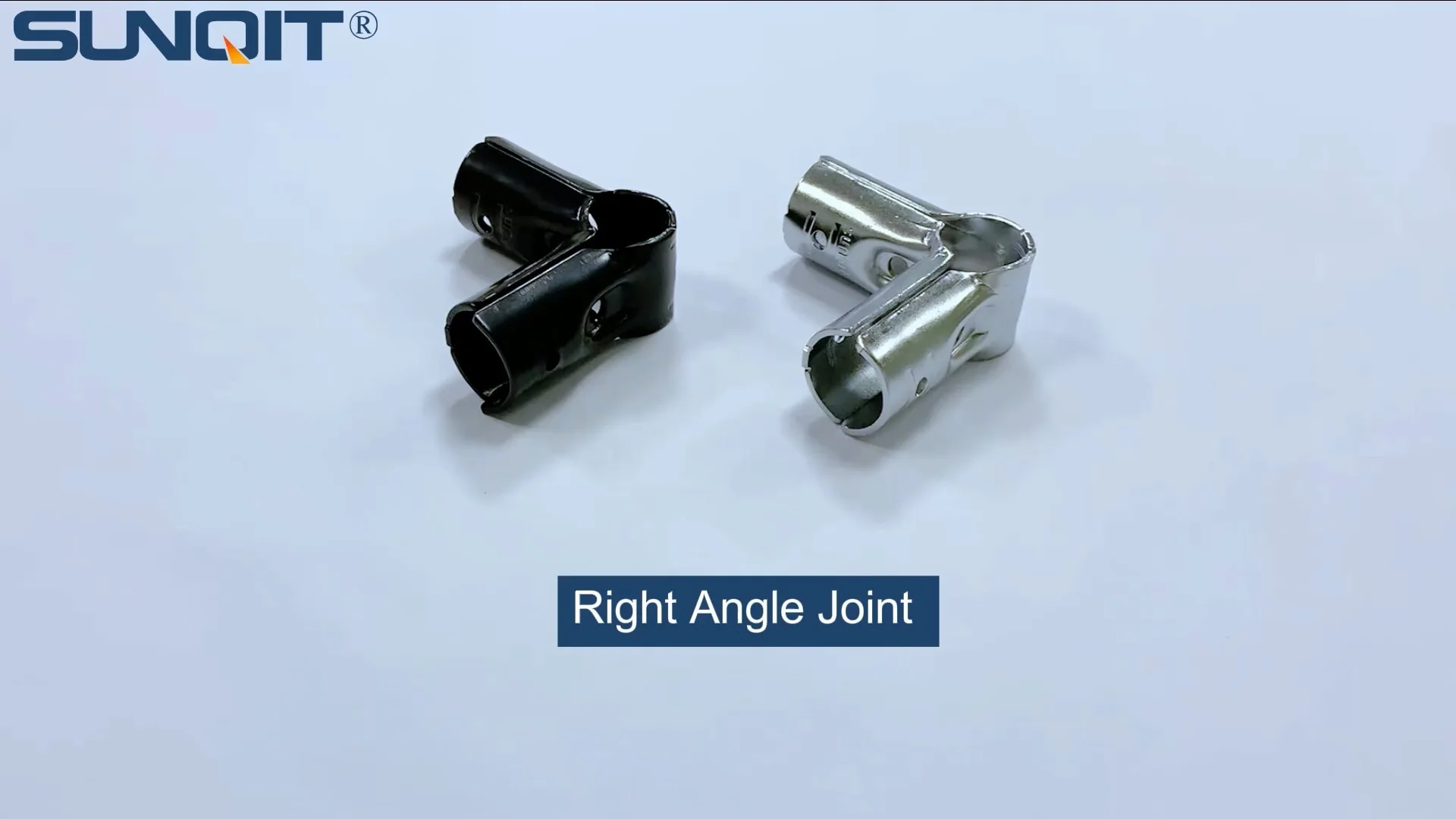
If the three way joint is the "multi-tasker" of the lean pipe world, the right angle joint is the "specialist." As the name suggests, this joint is designed to connect two pipes at a strict 90° angle—no frills, no extra directions, just a solid, perpendicular link. Think of it as the cornerstone of linear or box-like structures, where stability and simplicity are prioritized over flexibility.
Right angle joints are usually more compact than three way joints, with a simple, L-shaped design that minimizes bulk. They're available in the same materials as three way joints (steel, aluminum, plastic) and often use similar clamping or threading mechanisms to secure pipes. What sets them apart is their singular focus: creating strong, rigid 90° connections. This makes them ideal for applications where movement or angle adjustments aren't needed—like the frame of a workbench , the sides of a conveyor, or the vertical supports of a static storage rack.
Because of their simplicity, right angle joints are often more affordable than three way joints and faster to install. There's no need to align three pipes or adjust angles—just slide two pipes into the joint, tighten the clamps, and you're done. This speed and ease of use make them a favorite for quick setups or projects with tight deadlines. However, their lack of flexibility is a double-edged sword: while they excel at creating straight, sturdy corners, they can't branch out or adapt to more complex layouts without additional components.

Key Differences: A Side-by-Side Comparison
To really understand how these two joints stack up, let's put them head-to-head. The table below breaks down their core features, from the number of pipes they connect to their typical applications. This will help you see at a glance which joint makes sense for your specific needs.
| Feature | Three Way Lean Pipe Joint | Right Angle Joint |
|---|---|---|
| Number of Pipes Connected | 3 pipes (multi-directional) | 2 pipes (only 90° angle) |
| Angle Flexibility | Adjustable or fixed angles (90°, 45°, 180°, etc.) | Fixed 90° angle only |
| Load Capacity | High (but depends on material; steel models handle heavy loads) | High (excellent for vertical/horizontal static loads) |
| Installation Complexity | Slightly higher (requires aligning three pipes) | Low (simple two-pipe alignment) |
| Common Materials | Steel, aluminum, plastic | Steel, aluminum, plastic |
| Ideal Applications | Flow racks with multiple lanes, multi-level material racks, branching conveyor systems | Workbench frames, static storage racks, linear conveyor sides, simple trolleys |
| Cost | Slightly higher (due to extra ports and complexity) | Lower (simpler design) |
| Adaptability | High (easily reconfigured for new layouts) | Low (fixed angle limits reusability in complex setups) |

When to Use a Three Way Lean Pipe Joint
Now that we've covered the basics, let's talk about when to actually use a three way joint. This joint shines in scenarios where your structure needs to branch out, support multiple levels, or adapt to changing workflows. Here are the top situations where a three way joint is the right choice:
1. Multi-Lane Flow Racks and Material Racks
Flow racks are the workhorses of lean inventory management, allowing materials to slide smoothly from receiving to picking stations. But what if you need more than one lane? Or a rack with three rows and three floors (like the "material rack b" mentioned earlier)? That's where three way joints come in. By connecting vertical support pipes to horizontal roller tracks (and even diagonal bracing pipes), three way joints create sturdy, multi-level structures that maximize vertical space while keeping materials organized and accessible.
For example, imagine a flow rack for small electronic components. You might need three lanes to separate different part types, each feeding into a picking station. A three way joint at each vertical support can connect the main upright pipe to the two horizontal tracks (one for each lane) and a diagonal brace for stability. Without three way joints, you'd need extra adapters or custom brackets, adding cost and complexity.
2. Custom Workbenches with Built-In Storage
Modern workbenches aren't just flat surfaces—they're hubs of productivity, often featuring shelves, tool holders, and material bins. If you're building a workbench with overhead racks, side shelves, or under-bench storage, three way joints are essential. They let you connect the main workbench frame to these additional components without compromising stability.
Take a workbench in an electronics assembly line. The main frame might use right angle joints for the corners, but to add a side shelf for tools and a overhead rack for documentation, you'd use three way joints. The vertical leg of the workbench can connect to the horizontal shelf pipe and the overhead rack pipe, all in one spot. This creates a clean, integrated design that keeps everything within arm's reach.
3. Branching Conveyor Systems
Conveyors rarely move in straight lines forever. In many facilities, they need to split into multiple paths—for example, directing finished products to packaging on one line and defective items to a rework station on another. Three way joints are critical here, as they allow conveyor tracks to branch off without requiring major structural overhauls. By connecting the main conveyor pipe to two branching pipes (one for each new path), three way joints ensure smooth material flow while keeping the system rigid enough to handle the weight of moving products.
4. Temporary or Modular Structures
Lean systems thrive on adaptability, and three way joints are built for change. If you need a structure that can be easily disassembled, reconfigured, or expanded—like a temporary storage rack for a seasonal rush or a mobile workstation for a special project—three way joints make it possible. Their multi-directional design means you can add or remove pipes as needed without starting from scratch. For example, a small parts trolley might start with a simple frame, but with three way joints, you can later add extra shelves or side rails as your needs grow.

When to Use a Right Angle Joint
While three way joints are all about flexibility, right angle joints are the reliable workhorses of the lean world—simple, strong, and perfect for straightforward, static structures. Here are the scenarios where a right angle joint is the better choice:
1. Simple Frames and Linear Structures
Not every structure needs to branch out. Sometimes, you just need a straight, sturdy frame—like the legs and rails of a basic workbench, the sides of a conveyor, or the uprights of a single-level storage rack. In these cases, right angle joints are ideal. They connect two pipes at a perfect 90° angle, creating clean, rigid corners that can support heavy loads without flexing or wobbling.
For example, a "workbench e (single deck-without caster)" (a common model in many lean suppliers' catalogs) relies on right angle joints for its frame. The four vertical legs connect to the horizontal rails at the top and bottom, using right angle joints to create a square, stable base. There's no need for branching here—just straight lines and strong corners—and right angle joints do this job efficiently and affordably.
2. Heavy-Duty Static Loads
When you need to support a lot of weight in a fixed position—like a storage rack holding heavy machinery parts or a workbench with a large CNC machine—right angle joints are your best bet. Their simple, L-shaped design distributes weight evenly between two pipes, reducing stress on the joint itself. Unlike three way joints, which have to support forces from three directions, right angle joints only need to handle tension and compression along two axes, making them inherently stronger for static, vertical/horizontal loads.
For instance, a rack holding 50-pound boxes stacked three high would use right angle joints at each corner. The vertical uprights and horizontal beams form a grid, with right angle joints locking them together. This setup can handle thousands of pounds without bending, thanks to the joint's ability to transfer weight directly through the pipes.
3. Quick, Budget-Friendly Setups
Time and money are always factors in manufacturing. Right angle joints are often cheaper than three way joints (due to their simpler design) and faster to install. If you're working on a tight deadline or a project with a limited budget, right angle joints can help you get the job done without sacrificing quality.
For example, a small business setting up its first production line might start with basic conveyor systems and simple workbenches. Using right angle joints for the frames keeps costs low, and their ease of installation means the line can be up and running in hours, not days. As the business grows, they can upgrade to more complex setups with three way joints—but right angle joints get them off the ground quickly.
How to Choose: 4 Key Factors to Consider
By now, you have a sense of when each joint shines, but choosing between them isn't always black and white. Here are four practical factors to weigh before making your decision:
1. Layout Complexity
Start by sketching your structure. Does it need to branch out (three or more directions) or is it mostly linear (two directions, 90° corners)? If you're drawing more than two pipes meeting at a single point, you need a three way joint. If it's just corners and straight lines, stick with right angle joints.
2. Load Requirements
How much weight will the joint need to support? For heavy, static loads (like storage racks), right angle joints are often sufficient. For multi-directional loads (like a flow rack with moving materials), three way joints with steel construction are better, as they distribute force across three pipes instead of two.
3. Future Adaptability
Will your structure need to change? If you anticipate adding shelves, lanes, or new components later, three way joints offer more flexibility. You can easily add a third pipe later without replacing the joint. Right angle joints, while sturdy, are fixed—changing the layout would require swapping out joints entirely.
4. Cost vs. Functionality
Three way joints are slightly more expensive, but they can reduce the number of parts you need (no extra adapters). Right angle joints are cheaper but may require more components for complex layouts. Ask: Is the added flexibility of a three way joint worth the extra cost, or can a simpler right angle setup meet your needs?
Final Thoughts: It's All About Balance
At the end of the day, there's no "better" joint—only the right joint for the job. Three way lean pipe joints excel in complex, multi-directional structures where flexibility and adaptability are key, while right angle joints shine in simple, sturdy, cost-effective setups with static loads. The best lean systems often use a mix of both: right angle joints for the core frame and three way joints for branching components like shelves, lanes, or storage.
As you plan your next project, remember: the goal of lean manufacturing is to eliminate waste, maximize value, and support your team. Choosing the right joint—whether three way or right angle—helps you do just that. It ensures your structure is strong enough to handle the work, flexible enough to grow with your needs, and simple enough to keep costs in check. So the next time you're reaching for a lean pipe joint , take a moment to think about the bigger picture. Your team, your workflow, and your bottom line will thank you.