- Company Articles
- Products and Technology
- Product knowledge
- Three Way Lean Pipe Joint vs T-Joint: What's the Difference?

Three Way Lean Pipe Joint vs T-Joint: What's the Difference?
Related Product
Three Way Lean Pipe Joint
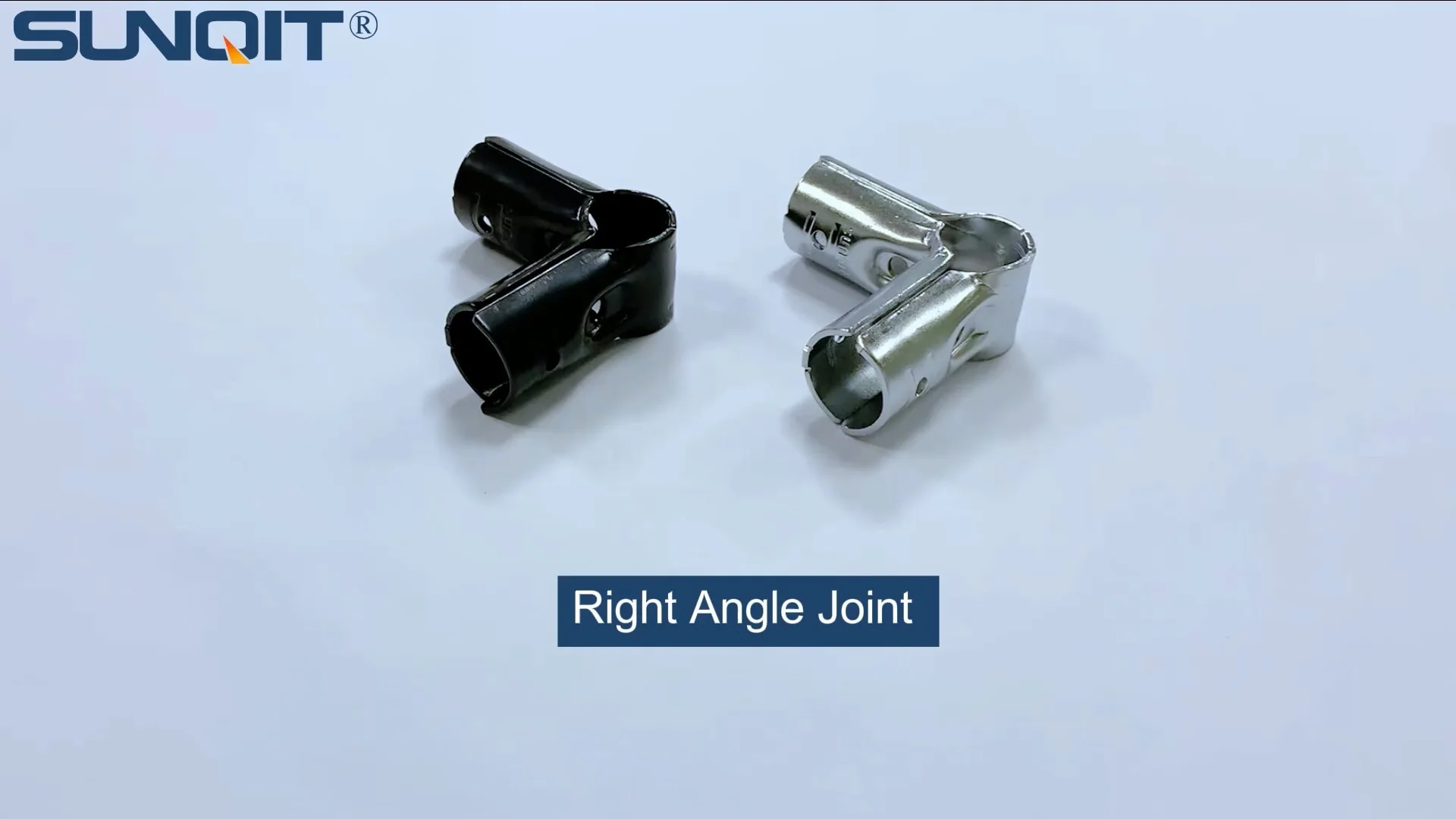
Three way lean pipe joint for 3 pcs 28MM lean pipe connection in straight angle, which used widely in workbench, flow rack, hand trolley frame connection.
Walk into any modern manufacturing facility, and you'll notice a silent hero working behind the scenes: the lean pipe system. These modular setups—think workbenches, material racks, conveyor lines, and turnover trolleys—are the backbone of efficient workflows, allowing teams to adapt quickly to changing production needs. But here's the thing: none of it works without the right joints. Those small, unassuming connectors are what hold the entire system together, dictating everything from stability to flexibility.
Today, we're diving into two of the most common yet often confused components in this world: the three way lean pipe joint and the T-joint. At first glance, they might seem interchangeable—both connect three pipes, right? But anyone who's spent time building or maintaining lean systems knows that the difference between them can make or break a production line's efficiency. Let's break it down, step by step, so you can choose the right one for your next project.
First Things First: What Even Is a Lean Pipe Joint?
Before we compare the two, let's make sure we're on the same page. A lean pipe joint is the unsung hero of modular lean systems. It's the component that links lengths of lean pipe (whether aluminum, stainless steel, or PE-coated) to form structures like workbenches, flow racks, or assembly stations. Think of it as the "glue" that turns individual pipes into functional, customizable tools.
But not all joints are created equal. Some are fixed, locking pipes into rigid angles; others swivel or rotate, letting you adjust heights or angles on the fly. Some handle heavy loads, while others are better for lighter, more dynamic setups. And that's where our two contenders come in: the three way lean pipe joint and the T-joint.
Meet the Contenders: Three Way Lean Pipe Joint
Let's start with the three way lean pipe joint. If you've ever seen a workbench with a shelf above and a side rack for tools, or a material rack with multiple levels branching off in different directions, chances are it's held together by one of these. As the name suggests, it's designed to connect three pipes—but here's the kicker: it's not limited to a single angle.
Most three way joints are built with adjustability in mind. For example, some models (like the internal rotatary aluminum joint from certain suppliers) let you rotate one or more of the connected pipes up to 180 degrees, allowing you to tweak the angle as needed. Others are fixed but offer multiple preset angles (30°, 45°, 90°, etc.) to accommodate different structural needs. This flexibility makes them a favorite in environments where workflows evolve frequently—like automotive assembly lines or electronics manufacturing, where product designs change regularly.
Materials matter too. Three way joints are often made from chrome-plated steel for durability, but you'll also find aluminum versions (great for lightweight setups) or even plastic composites for corrosion-resistant applications. Take the 180° internal rotation lean pipe joint chrome , for instance: its chrome plating resists rust, making it ideal for factories with high humidity or frequent cleaning.
So, when would you reach for a three way joint? Think complex structures: multi-level workbenches (like the workbench e (single deck-without caster) but with added shelves), material racks with branching paths (similar to material rack b (3 row and 3 floor) ), or custom trolleys that need to hold tools, parts, and bins in multiple directions. They're also a go-to for lean pipe and accessories setups that need to grow with your business—add a new pipe later, and the joint can often accommodate it without requiring a full rebuild.

And the Challenger: The T-Joint
Now, the T-joint. If the three way joint is the "Swiss Army knife" of connectors, the T-joint is the "precision screwdriver"—simple, reliable, and designed for a specific job. True to its name, it connects three pipes in a strict T-shape: one main pipe (the "stem") and two perpendicular pipes (the "crossbar"), forming a 90° angle between each. No frills, no rotation—just a solid, fixed connection.
T-joints are all about stability. Since they don't have moving parts, they're incredibly rigid once tightened, making them perfect for applications where movement or flexing could throw off precision. Think conveyor systems, where a wobbly joint could cause products to jam, or roller track setups (like the 40 steel roller track yellow wheel systems) that rely on straight, level paths to move parts smoothly.
Material-wise, T-joints are often made from the same materials as three way joints—steel, aluminum, chrome-plated variants—but their simpler design often makes them more affordable. For example, a basic 90° fixed lean pipe joint chrome (a common T-joint style) costs less than an adjustable three way joint, making it a budget-friendly choice for static structures that don't need modification.
Common uses? Straight-line material flow systems, like a flow rack where parts slide from one station to the next in a straight line, or a workbench with a single side shelf that won't need repositioning. They're also popular in lean system setups where space is tight and every inch counts—their compact, fixed design takes up less room than an adjustable three way joint.

Side-by-Side: The Key Differences (Including a Handy Table)
To really see how these two stack up, let's put them head-to-head. The table below breaks down their design, functionality, and best uses—so you can quickly spot which one fits your needs.
| Feature | Three Way Lean Pipe Joint | T-Joint |
|---|---|---|
| Design | Connects 3 pipes; may offer adjustable angles (30°, 45°, 90°, or 180° rotation) | Connects 3 pipes in a fixed T-shape (90° angles only) |
| Flexibility | High—adjustable angles for evolving workflows | Low—fixed angles, no rotation |
| Load Capacity | Moderate to high (depends on material; aluminum versions are lighter, steel/chrome are heavier-duty) | High—fixed design reduces flex, ideal for heavy static loads |
| Best For | Complex structures: multi-level workbenches, branching material racks, customizable trolleys | Static, straight-line setups: flow racks, fixed conveyor tracks, simple side shelves |
| Cost | Higher (due to adjustable parts) | Lower (simpler design) |
| Maintenance | More (moving parts may need lubrication or tightening over time) | Less (no moving parts, just occasional tightening) |

Real-World Scenarios: When to Choose Which
Tables are great, but nothing beats real examples. Let's walk through a few common factory or workshop scenarios and see which joint makes sense.
Scenario 1: A Dynamic Assembly Workbench
Imagine you run a small electronics assembly line. Your team builds smartphones, and every few months, the model changes—meaning the tools, parts, and workflow on the workbench need to shift too. One month, you need a shelf above the bench for instruction manuals; the next, you need a side rack for specialized tools. Six months later, you might add a bin holder for small screws and connectors.
Here, a three way lean pipe joint is your best bet. Its adjustability lets you reconfigure the bench without buying new parts. For example, you could use an internal rotatary aluminum joint to angle the shelf upward when not in use, then rotate it back down when needed. Add a new pipe for the bin holder later, and the joint can accommodate it—no need to rebuild the entire bench.
Scenario 2: A Static Flow Rack for Automotive Parts
Now, picture a larger automotive plant. You need a flow rack to move heavy engine components from the warehouse to the assembly line. The path is straight, the load is consistent (each component weighs 50+ pounds), and the rack will stay in the same spot for years—no need for adjustments.
Here, a T-joint is the way to go. Its fixed, rigid design ensures the rack stays level, even under heavy loads. A 90° fixed lean pipe joint chrome would connect the vertical supports to the horizontal roller tracks (like the 40 steel roller track black esd wheel system) securely, preventing any wobbling that could damage parts or slow down production. Plus, since it's cheaper than a three way joint, you'll save money on a setup that doesn't need flexibility.
Scenario 3: A Multi-Purpose Material Trolley
Finally, think about a material trolley that needs to carry tools, bins, and even small equipment around a factory. It needs to be sturdy but also adaptable—some days, you might stack bins vertically; other days, you might need a flat surface for a laptop or tablet.
Again, the three way joint shines here. Use adjustable three way joints to build a trolley with a fold-down side shelf (rotated up when not in use) and a removable top bin holder. When you need to carry something tall, rotate the top holder out of the way; when you need more surface area, fold down the shelf. The T-joint, with its fixed angles, couldn't handle this kind of on-the-fly customization.
Installation Tips: Getting It Right the First Time
Whichever joint you choose, proper installation is key to ensuring safety and longevity. Here are a few pro tips:
For Three Way Lean Pipe Joints:
- Check rotation before tightening: If using an adjustable model, rotate the pipes to your desired angle before fully tightening the joint. Over-tightening can damage the rotation mechanism.
- Use thread locker for heavy loads: For setups carrying 100+ pounds, add a drop of thread locker to the joint's bolts to prevent loosening over time.
- Match materials: If your pipes are aluminum (like aluminum lean pipe ), use an aluminum joint to avoid galvanic corrosion (where dissimilar metals react and rust).
For T-Joints:
- Ensure straight alignment: Since T-joints are fixed, make sure the pipes are perfectly straight and level before tightening. A misaligned joint will stress the structure and cause premature wear.
- Tighten in a crisscross pattern: If the joint has multiple bolts (common in steel T-joints), tighten them in a crisscross pattern (like you would a car tire) to distribute pressure evenly.
- Inspect for cracks: Over time, fixed joints can develop stress cracks at the welds. Check them monthly, especially in high-vibration areas (near conveyor motors, for example).
Longevity and Maintenance: Making Your Joints Last
Both three way and T-joints are built to last, but a little maintenance goes a long way. For chrome-plated joints, wipe them down with a dry cloth weekly to prevent dust buildup (which can scratch the plating). For aluminum joints, avoid harsh cleaners—mild soap and water work best. And for adjustable three way joints, add a drop of machine oil to the rotation points every 3-6 months to keep them moving smoothly.
One final note: always check the load rating. A small plastic T-joint might handle 20 pounds, but a steel three way joint could handle 200. Exceeding the load limit is the fastest way to damage a joint—and potentially cause a safety hazard. When in doubt, ask your supplier (like a lean pipe supplier with good customer support) for load charts.
The Verdict: Which Joint is Right for You?
At the end of the day, there's no "better" joint—only the right one for your needs. If you need flexibility, complex structures, or evolving workflows, go with a three way lean pipe joint. If you need stability, simplicity, or a budget-friendly option for static setups, the T-joint is your friend.
And remember: these joints rarely work alone. They're part of a larger ecosystem of lean pipe and accessories —casters, roller tracks, workbenches, and more. So when choosing, think about how the joint will interact with these other components. A three way joint might pair well with swivel casters for a mobile trolley, while a T-joint works best with fixed roller tracks in a stationary flow rack.
Whether you're building a simple workbench or a full-scale assembly line, the right joint can turn a jumble of pipes into a,,.,,——.
Final Thoughts
Next time you walk through a factory or workshop, take a closer look at the structures around you. Chances are, you'll spot both three way lean pipe joints and T-joints hard at work, each playing its part in keeping the operation running smoothly. And now, armed with this knowledge, you'll know exactly which one to choose for your next project—because when it comes to lean systems, the right joint isn't just a part; it's a foundation for success.