- Company Articles
- Products and Technology
- Product knowledge
- Three Way Lean Pipe Joint with Inner Rotation: Enhanced Flexibility

Three Way Lean Pipe Joint with Inner Rotation: Enhanced Flexibility
Related Product
Three Way Lean Pipe Joint
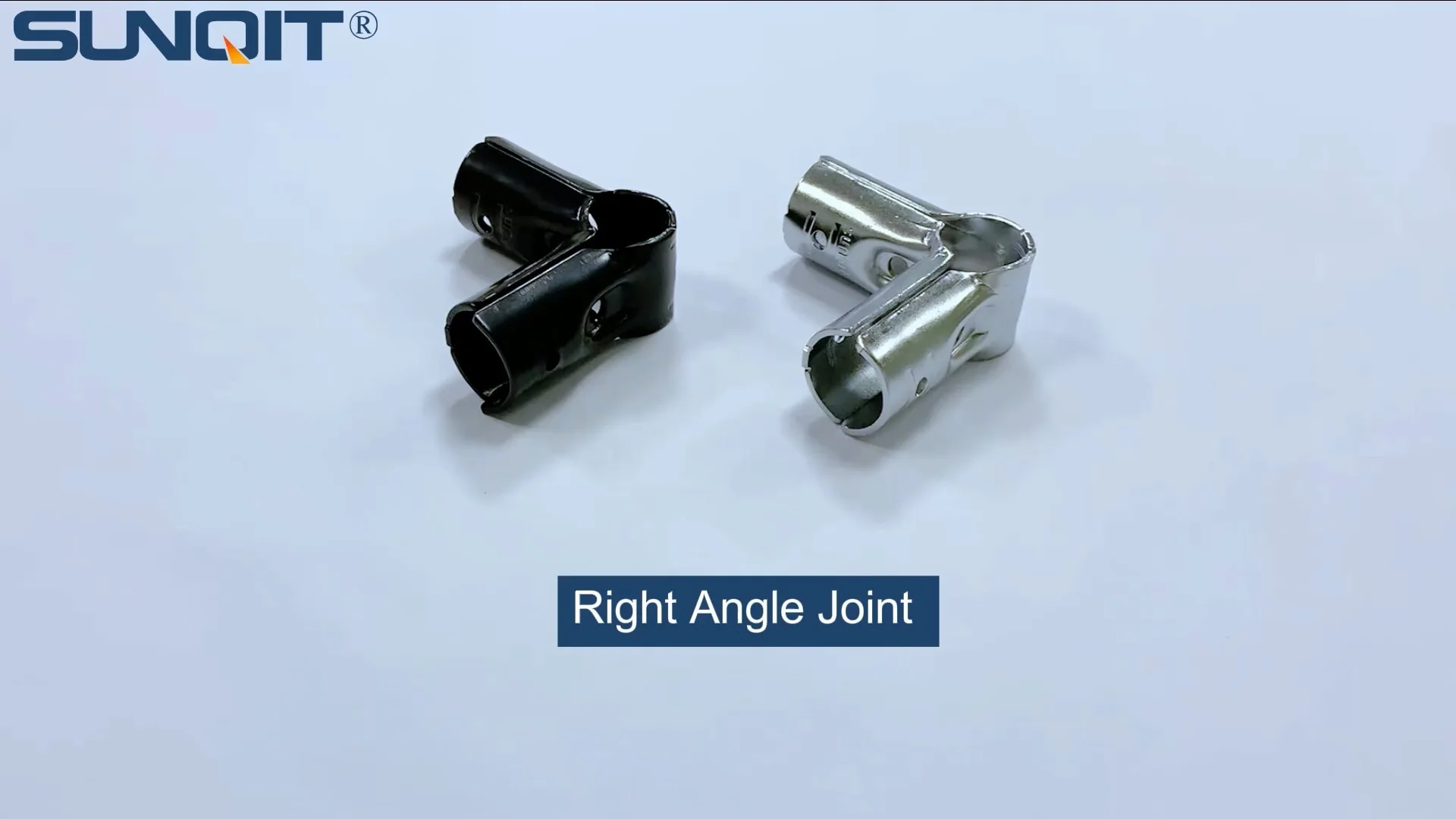
Three way lean pipe joint for 3 pcs 28MM lean pipe connection in straight angle, which used widely in workbench, flow rack, hand trolley frame connection.
In the fast-paced world of manufacturing and production, the ability to adapt quickly isn't just a luxury—it's a necessity. Picture this: a busy assembly line where every second counts, and a sudden change in product design requires reconfiguring workstations overnight. Or a warehouse where seasonal demand spikes mean rearranging flow racks to accommodate new inventory. In these moments, rigid, one-size-fits-all structures become more than just obstacles; they slow down progress, frustrate teams, and eat into profits. This is where lean pipe systems shine—and at the heart of their adaptability lies a small but mighty component: the three way lean pipe joint with inner rotation.
Lean manufacturing isn't just about cutting costs; it's about creating systems that work with your team, not against them. It's about flexibility, efficiency, and the freedom to evolve. And when it comes to building those systems, the joints that hold your lean pipes together are the unsung heroes. Today, we're diving deep into one joint that's revolutionizing how teams build, adapt, and thrive: the three way lean pipe joint with inner rotation. Whether you're a production manager tired of wrestling with fixed structures or a facility planner looking to future-proof your workspace, this is the component that might just change the way you think about modular design.
Lean Pipe Systems: The Backbone of Modern Manufacturing
Before we zoom in on the joint itself, let's take a step back and appreciate the bigger picture: lean pipe systems. Also known as "flexible pipe systems," these are modular frameworks built from lightweight, durable pipes (often steel, aluminum, or PE-coated) and connecting joints. They're the building blocks of workbenches, flow racks, turnover trolleys, and material handling equipment in factories, warehouses, and workshops worldwide.
What makes lean pipe systems so popular? Their modularity . Unlike fixed metal or wooden structures, lean pipe setups can be assembled, disassembled, and reconfigured in hours—no welding, no heavy tools, no permanent commitments. Need to adjust the height of a workbench? Swap out a few pipes. Want to add a new shelf to a flow rack? Attach a joint. This flexibility aligns perfectly with lean principles: eliminating waste, optimizing flow, and responding quickly to change.
But here's the thing: the magic of these systems doesn't lie in the pipes alone. It's the joints that turn a collection of tubes into a functional, adaptable structure. Joints are the connectors, the decision-makers that determine how pipes intersect, how much weight a structure can bear, and—crucially—how easily it can be reconfigured. And among all the joints available, the three way lean pipe joint with inner rotation stands out as a game-changer for flexibility.
The Star of the Show: Three Way Lean Pipe Joint with Inner Rotation
Let's break down the name first: "three way" means this joint connects three pipes at once (think of a T-shape or a Y-shape, depending on orientation). "Inner rotation" refers to its standout feature: the ability to rotate internally , allowing connected pipes to swivel, pivot, and adjust angles without disassembling the entire structure. This isn't just a minor tweak—it's a design innovation that transforms rigid frameworks into dynamic, responsive tools.
How It Works: Design & Mechanics
Traditional fixed joints lock pipes into place at a set angle (usually 90° or 180°). Once tightened, they're stuck—great for stability, terrible for adaptability. The three way inner rotation joint, by contrast, features a rotating core or sleeve that sits between the joint's arms. This core allows one or more of the joint's connection points to rotate 360°, while the others remain fixed or pivot independently. Picture a ball-and-socket joint in your shoulder: it lets your arm move in multiple directions without dislocating. That's the idea here, but for pipes.
Materials matter too. Most quality inner rotation joints are made from high-strength steel or aluminum, with a smooth, corrosion-resistant finish (like chrome plating) to ensure the rotation mechanism stays friction-free over time. The internal components—bearings, washers, or sleeves—are precision-engineered to handle repeated movement without wearing down, even under the weight of tools, materials, or finished products.
Why Flexibility Matters: Real-World Impact
So, what does this flexibility look like on the factory floor? Let's say you're running an electronics assembly line. Your workbench, built with traditional fixed joints, has a shelf above the workspace holding tools and components. But a new product comes in with taller parts, and suddenly that shelf is too low—it's blocking workers' access. With fixed joints, you'd have to take the entire shelf apart, adjust the pipes, and rebuild. With a three way inner rotation joint, you could simply loosen the joint, swivel the shelf upward, retighten, and be back to work in minutes.
Or consider a flow rack in a warehouse, used to move boxes from receiving to shipping. Traditional roller tracks are set at a fixed angle for gravity flow. But if you start handling lighter boxes that need a steeper incline, or heavier boxes that need a gentler slope, you'd normally have to rebuild sections of the rack. With inner rotation joints connecting the roller track supports, you can pivot the tracks to adjust the angle on the fly—no disassembly required. That's less downtime, less frustration, and more time spent on actual work.

How It Stacks Up: Inner Rotation vs. Traditional Joints
To truly appreciate the three way inner rotation joint, let's compare it to other common lean pipe joints. The table below highlights key differences in flexibility, functionality, and use cases:
| Joint Type | Rotation Capability | Number of Connections | Flexibility Level | Best For |
|---|---|---|---|---|
| Fixed Two-Way Joint | None (fixed angle) | 2 pipes | Low | Straight sections, rigid frames |
| Fixed Three-Way Joint | None (fixed angles) | 3 pipes | Low-Medium | Static T-shape or Y-shape structures |
| Rotating Two-Way Joint | 360° (one connection) | 2 pipes | Medium | Adjustable arms, single-pivot structures |
| Three Way Inner Rotation Joint | 360° (one or more connections) | 3 pipes | High | Dynamic workbenches, flow racks, adjustable trolleys |
The standout here is the "flexibility level." While rotating two-way joints offer some adjustability, they're limited to two pipes. The three way inner rotation joint, with its three connection points and multi-directional rotation, becomes the Swiss Army knife of lean pipe components. It's the difference between a tool that does one job and a tool that adapts to dozens.

Where It Shines: Practical Applications in the Workplace
Enough theory—let's talk about how the three way inner rotation joint transforms real-world workspaces. Here are three common scenarios where it makes a tangible difference:
1. Workbenches: Adapting to Workers, Not the Other Way Around
Workbenches are the heart of any assembly or packaging operation. But workers come in different heights, and tasks vary day to day. A workbench built with fixed joints forces everyone to adapt to its height and layout—leading to discomfort, fatigue, and even repetitive strain injuries. Enter the three way inner rotation joint.
Take the "Workbench E (single deck-without caster)" from many lean pipe suppliers' catalogs. Normally a simple, fixed-height bench, adding inner rotation joints to its frame lets you adjust the height of the deck, add pivoting tool holders, or even attach side shelves that swing out of the way when not needed. Imagine a worker assembling small electronics one day and larger machinery the next—with a flick of the wrist, their workbench reconfigures to fit the task, keeping them comfortable and productive.
2. Flow Racks: Smoothing Material Flow in Every Direction
Flow racks (or gravity racks) rely on angled roller tracks to move materials from the back to the front, ensuring first-in, first-out (FIFO) inventory management. But what if your materials come in different sizes, or you need to route them to different stations? Traditional flow racks with fixed-angle tracks can't keep up.
With three way inner rotation joints, you can build "Material Rack B (3 row and 3 floor)" (another common supplier offering) with tracks that pivot. Need to slow down heavy boxes? Tilt the track slightly upward. Receiving smaller parts that need a steeper angle? Rotate the joint to increase the slope. You can even split a single flow lane into two using a Y-shaped inner rotation joint, directing materials to two different workstations at once. It's like having a traffic controller for your materials—no roadblocks, just smooth, efficient flow.
3. Turnover Trolleys: Maneuvering Tight Spaces with Ease
Turnover trolleys are workhorses in warehouses, shuttling parts between stations. But their fixed frames can make navigating narrow aisles or tight corners a headache. Inner rotation joints solve this by letting the trolley's shelves or handles pivot.
For example, a trolley with inner rotation joints on its handle can fold the handle down when not in use, saving storage space. Or, if a trolley needs to carry awkwardly shaped items, the shelves can swivel to cradle the load, preventing shifting during transport. Workers no longer have to struggle with rigid trolleys that "fight" them—instead, the trolley adapts to the load, making every trip safer and easier.

From Box to Bench: Installing the Inner Rotation Joint
One of the best things about lean pipe systems is how user-friendly they are—and the three way inner rotation joint is no exception. You don't need to be a mechanic or have specialized tools to install it. Here's a quick step-by-step guide:
What You'll Need:
- Lean pipes (steel, aluminum, or PE-coated—ensure they're compatible with the joint size)
- Three way inner rotation joints (check for quality: smooth rotation, tight fittings)
- Hex key or wrench (most joints use standard hex bolts)
- Measuring tape and marker (to mark pipe lengths)
- Rubber mallet (optional, for gently tapping pipes into place)
Installation Steps:
- Measure and cut pipes: Determine the length of each pipe needed for your structure (e.g., workbench legs, shelf supports). Cut pipes to size (if using steel, a pipe cutter works; aluminum pipes often come pre-cut from suppliers).
- Prepare the joint: Loosen the joint's bolts slightly using the hex key—this creates space to insert the pipes. Don't fully remove the bolts; they'll hold the joint together during assembly.
- insert pipes: Slide one pipe into each of the joint's three connection points. Push firmly until the pipe hits the joint's internal stop (you'll feel a slight resistance).
- Tighten bolts (temporarily): Snug the bolts just enough to hold the pipes in place, but not so tight that the joint can't rotate. This is your "adjustment phase."
- Set angles and rotate: Swivel the joint's rotating arm(s) to your desired angle. For a workbench shelf, you might set it at 90° to the legs; for a flow rack track, a 15° incline. Take your time—this is where the flexibility shines!
- Fully tighten bolts: Once the angle is set, use the hex key to fully tighten the bolts. Ensure they're snug but not over-tightened (over-tightening can strip threads or damage the joint).
- Test rotation: Give the rotating arm a gentle push to ensure it stays in place when tightened and rotates smoothly when loosened. If it's stiff, check for debris in the joint or overtightened bolts.
Pro tip: If you're building a large structure (like a multi-shelf flow rack), assemble it in sections on the ground first, then lift it into place. This makes adjusting angles with the inner rotation joints much easier than working overhead!
Keeping It Rotating: Maintenance Tips
Like any tool, the three way inner rotation joint works best when cared for properly. Here's how to keep it rotating smoothly for years:
Regular Cleaning
Factories and warehouses are dusty places, and dust, grease, or debris can gunk up the joint's rotation mechanism. Every 2–4 weeks (or more often in dirty environments), wipe the joint with a clean, dry cloth. For stubborn grime, use a mild degreaser (avoid harsh chemicals that can corrode metal).
Lubrication
The internal bearings or sleeves in the joint need occasional lubrication to stay friction-free. Every 3–6 months, apply a small amount of lightweight machine oil or silicone spray to the rotating parts. Work the joint back and forth a few times to distribute the lubricant evenly.
Check for Wear
Over time, bolts can loosen, or the joint's metal parts can wear down. Inspect joints monthly for:
- Loose bolts (tighten them promptly—loose joints can compromise the structure's stability)
- Visible cracks or bending in the joint arms (replace damaged joints immediately)
- Stiff rotation (clean and lubricate first; if that doesn't work, the joint may need replacement)
Remember: A well-maintained joint isn't just about longevity—it's about safety. Loose or damaged joints can lead to collapsed structures, which put workers and materials at risk. A few minutes of maintenance today saves hours of headache (and potential injury) tomorrow.
Why Quality Matters: Choosing the Right Lean Pipe Supplier
You've heard the saying: "A chain is only as strong as its weakest link." In lean pipe systems, that link is often the joint—and the supplier behind it. Not all inner rotation joints are created equal. Cheap, poorly made joints might save you a few dollars upfront, but they'll cost you in the long run: stiff rotation, weak materials that bend under weight, or threads that strip after one use.
So, what should you look for in a lean pipe supplier? Here are a few key traits:
1. Quality Materials
Top suppliers use high-grade steel, aluminum, or stainless steel for joints, with precision machining to ensure smooth rotation. Avoid joints made from flimsy plastic or low-carbon steel—they won't stand up to daily use.
2. Testing and Certification
Reliable suppliers test their joints for load capacity, rotation durability, and corrosion resistance. Look for suppliers who share test results or certifications (like ISO standards) to back up their claims.
3. Range of Accessories
A good supplier doesn't just sell joints—they offer the full ecosystem: pipes, casters, roller tracks, and workbench accessories. This ensures compatibility; you won't end up with a joint that doesn't fit your pipes.
4. Customer Support
Even the best products need support. Choose suppliers who offer installation guides, troubleshooting tips, or responsive customer service. If you're unsure which joint is right for your project, a knowledgeable supplier can help you decide.
At the end of the day, investing in quality joints from a reputable lean pipe supplier isn't an expense—it's an investment in efficiency, safety, and peace of mind. When your joints work as hard as your team does, there's no limit to what you can build (and rebuild).
Flexibility That Fuels Success
In the world of lean manufacturing, adaptability isn't just a buzzword—it's the key to staying competitive. The three way lean pipe joint with inner rotation embodies this principle, turning static structures into dynamic tools that grow, change, and evolve with your business. It's more than a connector; it's a catalyst for efficiency, a problem-solver for workers, and a foundation for innovation.
Whether you're building a workbench that adjusts to every worker's height, a flow rack that keeps materials moving no matter the demand, or a trolley that navigates tight spaces with ease, this joint delivers the flexibility you need. And when paired with quality pipes, accessories, and a trusted lean pipe supplier, it becomes part of a system that doesn't just support your goals—it helps you exceed them.
So, the next time you look at your production floor, ask yourself: Are your structures holding you back, or lifting you up? With the three way lean pipe joint with inner rotation, the answer can be the latter. Because in manufacturing, the most powerful tool isn't the one that stays the same—it's the one that changes, adapts, and grows. And that's the power of flexibility.