- Company Articles
- Products and Technology
- Solution
- Time Efficiency: Four Way Straight Lean Pipe Joint for Rapid Line Setup & Changes

Time Efficiency: Four Way Straight Lean Pipe Joint for Rapid Line Setup & Changes
Related Product
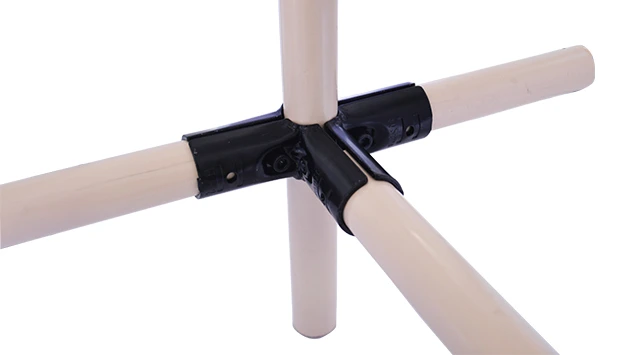
Four Way Straight Lean Pipe Joint
Four way lean pipe joint for 4 pcs 28MM lean pipe connection in straight angle, which used widely in workbench, flow rack, hand trolley frame connection.
In the world of manufacturing, where deadlines loom and customer demands shift overnight, time isn't just money—it's the difference between staying ahead of the competition and falling behind. Every minute spent waiting for production lines to be reconfigured, every hour wasted on rigid, unchangeable workstations, eats into profit margins and stifles innovation. That's where lean manufacturing steps in, not as a buzzword, but as a lifeline for agility. At the heart of this agility lies a small but mighty component: the four way straight lean pipe joint . This unassuming connector is changing the game, turning slow, static production setups into dynamic, adaptable systems that can keep pace with the fastest-moving industries.
The Hidden Cost of Rigid Production Lines
Think about the last time your production floor needed a tweak. Maybe a new product design required a wider workspace, or a sudden surge in demand meant rearranging material flow to speed up assembly. If your facility relies on traditional welded steel frames or fixed concrete workstations, that "tweak" likely meant calling in welders, renting heavy equipment, and shutting down operations for days. Welding torches, grinding tools, and the smell of metal fumes might be familiar sights, but they're also signs of a process stuck in the past.
Traditional setups come with hidden costs: labor hours spent on custom fabrication, downtime that halts production, and the inability to reuse materials when layouts change. A single reconfiguration could cost tens of thousands of dollars in lost productivity alone. Worse, by the time the line is finally ready, market demands might have shifted again, leaving you playing catch-up. This rigidity isn't just inefficient—it's a barrier to growth.
Lean Systems: Built for the Speed of Now
Lean manufacturing has always been about eliminating waste, and one of the biggest wastes in any operation is time wasted on inflexible processes. Lean systems solve this by prioritizing modularity, reusability, and simplicity. Instead of welding components together, they use lightweight, durable materials like lean pipe (also called lean tube) and easy-to-use connectors. These systems are designed to be assembled, disassembled, and reassembled in hours, not days—all without a single weld.
At the core of this modular revolution is the humble lean pipe joint. While there are dozens of joint types—from 90-degree elbows to 135-degree angles—the four way straight lean pipe joint stands out for its versatility. As the name suggests, it connects four lean pipes at a straight intersection, allowing for the creation of sturdy, multi-directional structures with minimal effort. Whether you're building a workbench, a flow rack, or an entire production line, this joint simplifies the process, turning a complex setup into a series of quick, tool-free connections.

Inside the Four Way Straight Lean Pipe Joint: Design That Delivers Speed
Let's take a closer look at what makes the four way straight lean pipe joint so effective. Unlike traditional connectors that require precise measurements or specialized tools, this joint is engineered for intuition. Most models feature a central body with four ports (one for each pipe) and a clamping mechanism—usually a hex bolt or a cam lever—that tightens around the lean pipe. To assemble, you simply slide the pipe into the port, tighten the clamp, and you're done. No welding, no drilling, no cutting (unless you need custom pipe lengths, which can be pre-cut by suppliers).
Materials matter here, too. Many four way joints are made from high-strength plastic, aluminum, or chrome-plated steel, balancing durability with lightweight handling. Aluminum options, in particular, pair well with aluminum profile systems, offering corrosion resistance and a sleek, modern look—ideal for cleanrooms or food processing facilities. Plastic-coated joints add grip and reduce noise, while chrome-plated steel provides extra strength for heavy-duty applications like automotive manufacturing.
The real magic, though, is in the speed. A team of two workers can assemble a basic lean pipe workbench using four way joints in under an hour. Compare that to the half-day (or more) it would take to weld a steel workbench, and the difference is staggering. And when it's time to reconfigure? Just loosen the clamps, disassemble the pipes, and rebuild—no waste, no extra materials, no downtime.

From Joint to System: Building Blocks of Agile Production
A single four way straight lean pipe joint is powerful, but its true potential shines when paired with other lean components. Let's break down how these pieces come together to create real-world solutions:
1. The Lean Pipe Workbench: Your Foundation for Flexibility
The lean pipe workbench is the workhorse of any lean production line, and it's a perfect showcase for the four way joint. Start with four vertical lean pipes (or aluminum tubes) as legs. Use four way straight joints to connect horizontal pipes at the top and bottom, creating a sturdy frame. Add a shelf halfway up using more four way joints for cross-bracing, and top it off with a durable tabletop—think aluminum honeycomb panels for lightweight strength or anti-static surfaces for ESD workstations (critical for electronics manufacturing).
Need to adjust the height? Swap out the vertical pipes for longer ones. Want to add casters for mobility? Attach caster wheels to the base using caster accessories and a few extra joints. The four way joint ensures every connection is secure, even with the added weight of tools, materials, or heavy components. And if you need a double-deck workbench later? Just add another layer of pipes and joints—no need to buy a whole new setup.
2. Flow Racks: Gravity-Fed Efficiency
Material handling is another area where time efficiency matters. Flow racks —gravity-fed shelving that uses roller tracks to move materials from the back to the front—are a staple in lean warehouses, but traditional welded flow racks are a nightmare to reconfigure. With lean pipe and four way joints, you can build a flow rack in hours and adjust it on the fly.
Here's how it works: Use vertical lean pipes as the rack's frame, connected with four way joints to create vertical supports every few feet. Attach horizontal pipes across the supports, then mount roller track (from the keyword list) to these horizontal pipes using roller track placon mounts. The roller track, with its plastic or steel wheels, lets boxes and bins glide smoothly to the front, reducing the need for manual lifting. Need to add a third row? Just insert more four way joints and horizontal pipes. Want to change the angle of the roller track for faster flow? Loosen the mounts, adjust, and retighten. It's that simple.
3. Aluminum Profile: The Lightweight Alternative
While lean pipe (often steel with a plastic coating) is the classic choice, aluminum profile is gaining popularity for its lightweight, corrosion-resistant properties. The good news? Most four way straight lean pipe joints are compatible with aluminum profiles, too. Aluminum's smooth, T-slot design makes it easy to attach accessories like tool holders, cable management clips, or even digital displays—all without drilling. For facilities where cleanliness or weight is a priority (like pharmaceutical labs or aerospace plants), aluminum profile systems with four way joints offer the same speed and flexibility as traditional lean pipe, with added benefits.
Time Savings in Action: A Real-World Example
Let's put this into perspective with a hypothetical (but realistic) scenario. Imagine a mid-sized electronics manufacturer that needs to reconfigure its assembly line to accommodate a new smartphone model. The old line uses welded steel workstations and fixed flow racks, and past reconfigurations have taken 2 full days of downtime, costing roughly $50,000 in lost production.
This time, the manufacturer switches to a lean pipe system with four way straight joints. Here's how the timeline plays out:
- Day 1, 8:00 AM: The old steel workstations are disassembled and removed (1 hour, thanks to no welding).
- 8:30 AM: Workers begin assembling new lean pipe workbenches using four way joints, pre-cut aluminum tubes, and ESD-safe tabletops. Each workbench takes 45 minutes to build (3 workstations total: 2.25 hours).
- 11:00 AM: Flow racks are next. Using roller track, lean pipes, and four way joints, the team builds a 3-row, 3-floor material rack (similar to the material rack B from the keyword list) in 1.5 hours.
- 12:30 PM: Final touches: adding casters to workstations for mobility, attaching tool hooks, and testing the flow of materials through the racks.
- 1:00 PM: The line is fully operational. Total downtime: 5 hours.
Instead of 2 days, the reconfiguration takes just 5 hours—saving over 40 hours of downtime and $43,750 in lost production. The new line is also more ergonomic: workbench heights are adjustable, and flow racks are positioned to reduce worker movement, cutting down on fatigue and errors. And if the next product change requires a different layout? The same lean pipe components can be disassembled and reused, with no waste.
To visualize the impact, here's a comparison of traditional vs. lean pipe setups:
| Metric | Traditional Welded Setup | Lean Pipe Setup with Four Way Joint |
|---|---|---|
| Setup/Reconfiguration Time | 2–3 days | 4–6 hours |
| Labor Required | Skilled welders, 2–3 workers | General labor, 2 workers |
| Reusability of Components | Low (welded parts are often damaged during disassembly) | High (components can be reused indefinitely) |
| Downtime Cost (Estimated) | $50,000+ per reconfiguration | $6,250+ per reconfiguration |
| Flexibility for Future Changes | Very low (requires full rebuilds) | Very high (easily adjustable with minimal tools) |
Beyond Speed: The Ripple Effects of Lean Pipe Systems
The time savings from using four way straight lean pipe joints are obvious, but the benefits don't stop there. These systems create a ripple effect of efficiency across your entire operation:
1. Scalability Without the Headache
As your business grows, so can your lean system. Need to add a new workbench? Order a few extra lean pipes and four way joints. Want to expand a flow rack to 5 floors instead of 3? Just loosen the joints, add more vertical pipes, and reconnect. There's no need to redesign from scratch—your existing components work with new ones, keeping costs low and setup times short.
2. Sustainability That Counts
In an era of increasing environmental awareness, lean pipe systems are a win for sustainability. Traditional welded setups generate waste from cutting and welding, and old components often end up in landfills. Lean pipe systems, by contrast, are 100% reusable. Even if a joint wears out, it can be replaced individually without scrapping the entire structure. This reduces your carbon footprint and aligns with circular economy principles—all while saving money.
3. Safety First, Always
Welding and grinding pose obvious safety risks: fire hazards, toxic fumes, and sharp metal edges. Lean pipe systems eliminate these dangers. Four way joints have smooth, rounded edges, and assembly requires nothing more than a hex key or a hand wrench. For industries like electronics, where static electricity is a threat, ESD workstations built with lean pipe and conductive joints protect sensitive components from damage—no extra setup required.
4. Empowering Your Team
Perhaps the most underrated benefit is how lean pipe systems empower workers. Traditional setups require specialized skills (like welding), but anyone can learn to assemble a lean pipe workbench with four way joints in minutes. This means your team can make small adjustments on the fly—like raising a shelf or adding a tool hook—without waiting for maintenance. It fosters a sense of ownership and agility, turning your workforce into active problem-solvers rather than passive operators.
Choosing the Right Supplier: Your Partner in Agility
To maximize the benefits of four way straight lean pipe joints, you need a reliable lean pipe supplier that offers quality components, a wide range of accessories, and responsive support. Here's what to look for:
- Quality Materials: Joints should be made from durable materials (steel, aluminum, or high-strength plastic) that can withstand industrial wear and tear. Ask about load ratings—most four way joints can handle 50–100 kg per connection, but verify for your specific needs.
- Compatibility: Ensure the supplier's joints work with standard lean pipe sizes (usually 28mm or 30mm diameter) and aluminum profiles. Mixing brands can lead to loose fits or weak connections.
- Accessory Range: Look for suppliers that offer everything from roller track and casters to ESD tabletops and aluminum honeycomb panels. A one-stop shop simplifies ordering and ensures compatibility.
- Technical Support: Even simple systems can benefit from expert advice. Choose a supplier that provides design guides, assembly videos, or on-site support for complex setups.
Many suppliers also offer wholesale options ( lean pipe wholesale , four way joint wholesale ), which can lower costs when scaling up. Don't hesitate to ask for samples—testing a joint's fit and durability before placing a large order can save headaches later.
The Future of Manufacturing: Fast, Flexible, and Lean
As customer demands grow more unpredictable and product lifecycles shorter, the ability to adapt quickly isn't just an advantage—it's essential. The four way straight lean pipe joint may seem like a small component, but it's a symbol of a larger shift in manufacturing: away from rigidity, toward agility; away from waste, toward efficiency; away from downtime, toward continuous production.
Whether you're building a single lean pipe workbench or an entire factory floor, the message is clear: time is too valuable to waste on outdated, inflexible systems. With lean pipe, four way joints, and a focus on modularity, you can cut setup times from days to hours, reduce costs, and empower your team to innovate. In the race to stay competitive, the fastest line wins—and the four way straight lean pipe joint is your secret weapon to crossing the finish line first.