- Company Articles
- Products and Technology
- Application Cases
- Top 10 Applications of 3030a EU Standard Aluminum Profile in Manufacturing

Top 10 Applications of 3030a EU Standard Aluminum Profile in Manufacturing
Related Product
3030A EU Standard Aluminum Profile
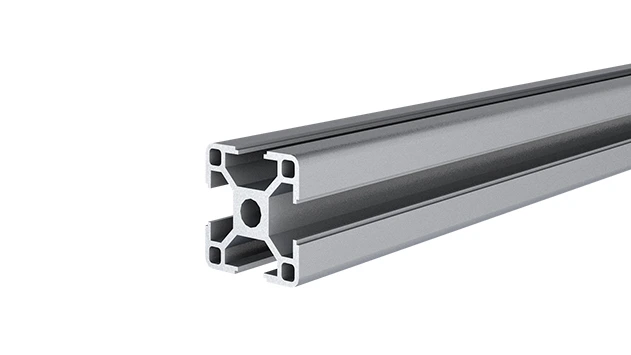
3030 is a 3.00 x 3.00CM fractional 30 series square extrusion T-slot profile with four open T-slots, each side with 3.00cm face. The profile has align-a-grooves to assist in aligning connecting profiles.
Walk into any modern manufacturing facility today, and you'll likely spot a common element tying together assembly lines, workstations, and material handling systems: sleek, silver-gray frames that seem to adapt effortlessly to every task. Chances are, those frames are made from 3030a EU standard aluminum profiles. Lightweight yet surprisingly strong, modular by design, and built to last, this material has become the unsung hero of factory floors worldwide. But what makes it so indispensable? And how exactly is it transforming the way manufacturers operate?
The 3030a profile—named for its 30mm x 30mm cross-section and adherence to strict EU quality standards—strikes a rare balance between rigidity and flexibility. Unlike traditional steel, it won't rust or weigh down equipment. Unlike plastic, it can support heavy loads without warping. And thanks to its T-slot design, it pairs seamlessly with hundreds of aluminum profile accessories, from joints and brackets to panels and wheels, letting teams build, modify, and rebuild structures in hours instead of weeks. For manufacturers chasing leaner operations, faster production cycles, and adaptability in a rapidly changing market, this profile isn't just a material—it's a strategic tool.
To truly grasp its impact, let's dive into the top 10 ways factories are putting 3030a aluminum profiles to work. From the workbenches where products take shape to the conveyor systems that keep materials moving, these applications highlight why this profile has become the backbone of modern manufacturing.
| Application | Key Benefit | Why 3030a Stands Out |
|---|---|---|
| Custom Workbenches | Adjustable heights, modular add-ons | Lightweight for mobility; T-slots accept accessories like tool holders |
| Flow Racks | Gravity-fed material flow, reduced picking time | Compatible with roller tracks; corrosion-resistant for long-term use |
| Conveyor Systems | Flexible routing, easy integration | Strong enough for heavy loads; quick to reconfigure for new layouts |
| Lean Manufacturing Cells | Minimized waste, 5S compliance | Rapid reconfiguration supports continuous improvement |
| Machine Guards | Safety compliance, visibility | Durable yet lightweight; easy to disassemble for maintenance |
1. Custom Workbenches: The Backbone of Assembly Lines
Every product, from a smartphone to a industrial sensor, starts on a workbench. But not all workbenches are created equal. In high-mix manufacturing environments, where teams switch between assembling circuit boards one hour and testing mechanical parts the next, rigidity is a liability. This is where 3030a aluminum profile workbenches shine.
Take a typical electronics plant, for example. A team assembling delicate components might need a bench with an ESD (electrostatic discharge) top to protect sensitive parts. Using 3030a profiles, they can build a frame that adjusts from 75cm to 90cm in height with a few turns of a wrench, thanks to adjustable feet and internal rotary aluminum joints. Add a shelf for tools using aluminum profile accessories like right-angle brackets, and a pegboard for cables using T-slot hooks, and suddenly the bench adapts to the task at hand.
What makes these workbenches truly special is their longevity. Unlike wooden benches that warp or chip, or steel ones that rust, 3030a profiles resist corrosion—even in factories with high humidity or chemical exposure. And when the product line changes? Instead of buying a new bench, teams can simply unbolt the old configuration and rebuild. A manufacturer we worked with recently reported cutting workbench replacement costs by 60% after switching to aluminum profiles. "We used to throw out benches every two years," their operations manager noted. "Now we just rearrange them. It's like having a workbench that grows with us."
2. Flow Racks: Making Material Picking Effortless
Picture a warehouse where workers spend hours walking back and forth to retrieve parts, or a production line where components pile up because they're hard to reach. These are classic signs of inefficient material flow—and they're exactly what flow racks built with 3030a profiles aim to solve. Designed to let materials "flow" to the point of use via gravity, these racks turn passive storage into an active part of the production process.
Here's how they work: 3030a profiles form the frame, while plastic or aluminum roller tracks (often in yellow or grey, to match facility color-coding) are mounted at a slight angle. Boxes or bins loaded with parts at the top glide down to the picking end, ensuring the next needed part is always within arm's reach. In automotive plants, for instance, flow racks stocked with screws, washers, and gaskets have cut picking time by 35% in some cases—meaning assemblers spend less time hunting for parts and more time building.
The secret to their success lies in modularity. A 3030a flow rack can be built with 3 rows and 3 floors (like Material Rack B, a common configuration) or scaled up to 5 floors for high-volume items. Need to add a new SKU? Just insert a new divider using aluminum guide rails. Concerned about heavy loads? Reinforce the frame with parallel aluminum joints. And because the profiles are lightweight, even large racks can be moved with a pallet jack if the production layout shifts. One food packaging plant we visited had reconfigured their flow racks three times in a year to accommodate new product sizes—without calling in contractors.

3. Conveyor Systems: Keeping Production Moving
Conveyors are the arteries of manufacturing, moving materials from one station to the next. But traditional steel conveyors are bulky, expensive to install, and nearly impossible to reconfigure. Enter 3030a aluminum profile conveyors: lightweight, modular, and surprisingly robust.
Whether it's a small 2-meter belt conveyor for moving circuit boards or a 20-meter roller conveyor for heavy automotive parts, 3030a profiles form the perfect frame. The T-slot design lets teams mount motors, rollers, and guides with precision—no drilling or welding required. For example, a beverage bottling plant used 3030a to build a curved conveyor that navigates tight corners, using swivel roller balls and aluminum guide rails to keep bottles stable. Because the profile is corrosion-resistant, it handles the occasional spill without rusting, unlike steel.
What really sets these conveyors apart is their adaptability. In a contract manufacturing facility that produces everything from medical devices to consumer appliances, changeovers are constant. With 3030a conveyors, teams can add or remove sections in under an hour using roller track placon mount connectors. "Last month, we switched from assembling blenders to assembling air purifiers," their production supervisor told us. "We took apart 20 meters of conveyor, reconfigured it, and were running again by lunch. With steel, that would have taken a week and a welding crew."
4. Lean Manufacturing Cells: Building Efficiency Into Every Process
Lean manufacturing isn't just a buzzword—it's a commitment to eliminating waste, whether that's time, materials, or space. And 3030a aluminum profiles are the perfect enablers of lean systems. By allowing teams to build compact, focused work cells, they turn abstract lean principles into tangible results.
Consider a typical lean cell for assembling small electrical components. The goal: minimize movement, so operators don't walk more than a few steps to get tools or materials. Using 3030a profiles, teams can build a U-shaped cell with a workbench, flow rack, and tool storage all within arm's reach. Add a turnover trolley (built, of course, with 3030a) for moving finished goods, and suddenly the cell is a self-contained unit that produces more with less. One automotive supplier we worked with reduced operator walking time by 45% after implementing these cells, freeing up 10 hours per operator per week for value-added tasks.
But lean isn't just about layout—it's about continuous improvement. 3030a profiles make it easy to experiment. Want to test a new workflow? Unbolt the current cell and rearrange it. Need to add a quality check station? Screw on a new section of profile. This flexibility aligns perfectly with the PDCA (Plan-Do-Check-Act) cycle, letting teams iterate quickly. As one lean coordinator put it: "With steel, you design once and hope for the best. With aluminum profiles, you design, test, and adapt—because change is cheap."
5. Material Handling Trolleys: Durable, Lightweight, and Customizable
From moving raw materials to shipping finished products, material handling is a daily challenge in manufacturing. Heavy steel trolleys can cause operator fatigue, while plastic ones lack durability. 3030a aluminum profile trolleys strike the ideal balance: strong enough to carry 200kg loads, light enough for one person to push, and customizable to fit any need.
Take a typical warehouse trolley. Built with 3030a profiles, it can have shelves at variable heights (adjusted using multi-angle fixed aluminum joints), a push handle shaped for ergonomics, and casters with brakes for stability. For fragile items like glass panels, add a foam-lined aluminum honeycomb panel shelf. For ESD-sensitive electronics, use conductive casters and an ESD top. The possibilities are endless, thanks to aluminum profile accessories like caster installation bases and plastic pipe sleeves for protection.
Durability is another win. A logistics company we partnered with replaced their steel trolleys with 3030a versions and saw a 70% drop in maintenance costs. "Steel trolleys would rust, and the welds would crack after a year," their warehouse manager explained. "These aluminum ones? We've had them for three years, and they still look new. Even when they bump into walls—which happens more than I'd like—they just scuff, not bend."
6. Machine Guards: Safety Without Sacrificing Visibility
Safety is non-negotiable in manufacturing, but traditional machine guards—often made of thick steel mesh or opaque plastic—can block visibility and make maintenance a hassle. 3030a aluminum profile guards offer a better solution: strong enough to protect operators, yet transparent enough to monitor machines.
Using 3030a frames and polycarbonate panels, teams can build guards that enclose moving parts without blocking light or sightlines. The T-slot design makes it easy to add hinges for quick access during maintenance, and magnetic latches that trigger machine shutdowns if the guard is opened. In a metal stamping plant, for example, guards built with aluminum profiles reduced "blind spots" around presses, letting supervisors spot jams faster. And because the profiles are lightweight, operators can remove and reinstall guards in minutes—no need for a crane or two-person lift.
Regulatory compliance is another key benefit. EU safety standards (like EN ISO 14120) require guards to withstand impact and prevent access to hazards. 3030a profiles, tested to meet these standards, give manufacturers peace of mind. One aerospace supplier noted: "We used to get cited for guards that were too heavy to open, so operators would prop them open. With aluminum, the guards are light enough to open easily, so compliance went up—and so did safety."
7. Assembly Line Structures: Supporting Complex Production Flows
Modern assembly lines are marvels of complexity, with robots, sensors, and operators working in harmony. But they need a sturdy, flexible framework to hold it all together. 3030a aluminum profiles provide just that, serving as the "skeleton" for everything from overhead track systems to robot mounting frames.
Consider a automotive assembly line where robots weld car bodies. The frames that hold the robots in place must be rock-solid to ensure precision, yet light enough to allow for adjustments. 3030a profiles, when bolted together with reinforced joints, provide the rigidity needed for robot accuracy (some systems can maintain tolerances within 0.1mm). And if the production model changes? The robot can be repositioned by unbolting the profile frame and moving it—no welding required.
Even smaller lines benefit. A toy manufacturer we worked with used 3030a to build a modular assembly line that expands from 5 stations to 10 during peak season. Using aluminum guide rails and roller tracks, they added conveyors and workbenches in a weekend, doubling capacity without shutting down production. "We used to rent extra space for peak season," their operations director said. "Now we just expand the line into the adjacent area. The profiles make it possible."
8. Storage Solutions: Maximizing Space, Minimizing Clutter
Warehouse space is expensive, and cluttered storage areas slow down operations. 3030a aluminum profile storage systems—from shelving units to vertical racks—help manufacturers make the most of every square meter.
Unlike traditional steel shelving, which is fixed in place, 3030a storage systems are adjustable. Need to store taller boxes? Remove a shelf and reposition the brackets. Need to add dividers for small parts? Slide aluminum profile accessories like slot dividers into the T-slots. A pharmaceutical distributor used this flexibility to organize vials by expiration date, reducing picking errors by 40%. "With fixed steel shelves, we had to stack boxes on top of each other," their warehouse manager noted. "Now every vial has its own spot, and we can see everything at a glance."
For specialized storage, like ESD-sensitive materials or temperature-controlled environments, 3030a profiles excel. Their corrosion resistance makes them ideal for cleanrooms, and their non-conductive properties (when paired with ESD accessories) protect sensitive electronics. One semiconductor plant even uses 3030a to build storage racks in their nitrogen-filled dry rooms—where steel would corrode and plastic would off-gas.
9. Testing Stations: Precision for Quality Control
Quality control is the final gate before products reach customers, and testing stations need to be precise, stable, and adaptable. 3030a aluminum profiles provide the perfect platform for everything from stress testing to calibration.
Imagine a station where sensors are tested for accuracy. The frame must hold the sensor and testing equipment in perfect alignment, even as operators load and unload parts. 3030a profiles, with their rigid construction and precise aluminum profile accessories (like end supports and center brackets), ensure minimal vibration and maximum stability. Add a workbench with a non-slip surface (using suction cup anti-slip feet) and integrated cable management (via T-slot cable carriers), and the station becomes a hub of efficiency.
Adaptability is key here, too. As products evolve, testing requirements change. A medical device manufacturer used 3030a to build a testing station that can switch between testing heart monitors and insulin pumps by swapping out fixtures—all in under 30 minutes. "With our old steel station, we'd have to buy a new one for each product," their QA manager said. "Now we just reconfigure. It's saved us over $50,000 in equipment costs in a year."
10. Custom Automation Frames: Powering the Future of Manufacturing
Automation is transforming manufacturing, but custom automation systems often require unique frames to hold cameras, grippers, and conveyors. 3030a aluminum profiles are the go-to choice for these one-of-a-kind projects, thanks to their design flexibility and strength-to-weight ratio.
Take a vision inspection system, for example. Cameras and lighting need to be positioned at exact angles to scan products for defects. Using 3030a profiles, engineers can build a frame that adjusts in millimeters, with brackets that hold components securely. For a packaging line automation project, a manufacturer used 3030a to build a robotic palletizer frame that can reach 3 meters high—all while weighing 40% less than a steel equivalent, reducing the load on the factory floor.
The speed of design and assembly is another advantage. With 3030a, engineers can prototype a frame in CAD, order the profiles and accessories, and have it built in days. A startup building collaborative robots (cobots) used this to their advantage, reducing prototype lead times from 8 weeks (with steel) to 2 weeks (with aluminum profiles). "We're iterating so fast, we can't wait for custom steel fabrication," their lead engineer explained. "Aluminum profiles let us test ideas in days, not months."
From workbenches to automation frames, 3030a EU standard aluminum profiles are redefining what's possible in manufacturing. They're not just a material—they're a catalyst for flexibility, efficiency, and innovation. In a world where production demands change overnight, where customization is king, and where every second of downtime costs money, their ability to adapt, endure, and empower teams is invaluable.
So the next time you walk through a factory, take a closer look at those silver-gray frames. They're more than just metal—they're the backbone of modern manufacturing. And for manufacturers willing to embrace them, the payoff is clear: lower costs, faster production, and a workforce equipped to tackle whatever the future brings.