- Company Articles
- Products and Technology
- Application Cases
- Top 10 Applications of Aluminum Pipe with Tray Holder in 3C Assembly Lines

Top 10 Applications of Aluminum Pipe with Tray Holder in 3C Assembly Lines
Related Product
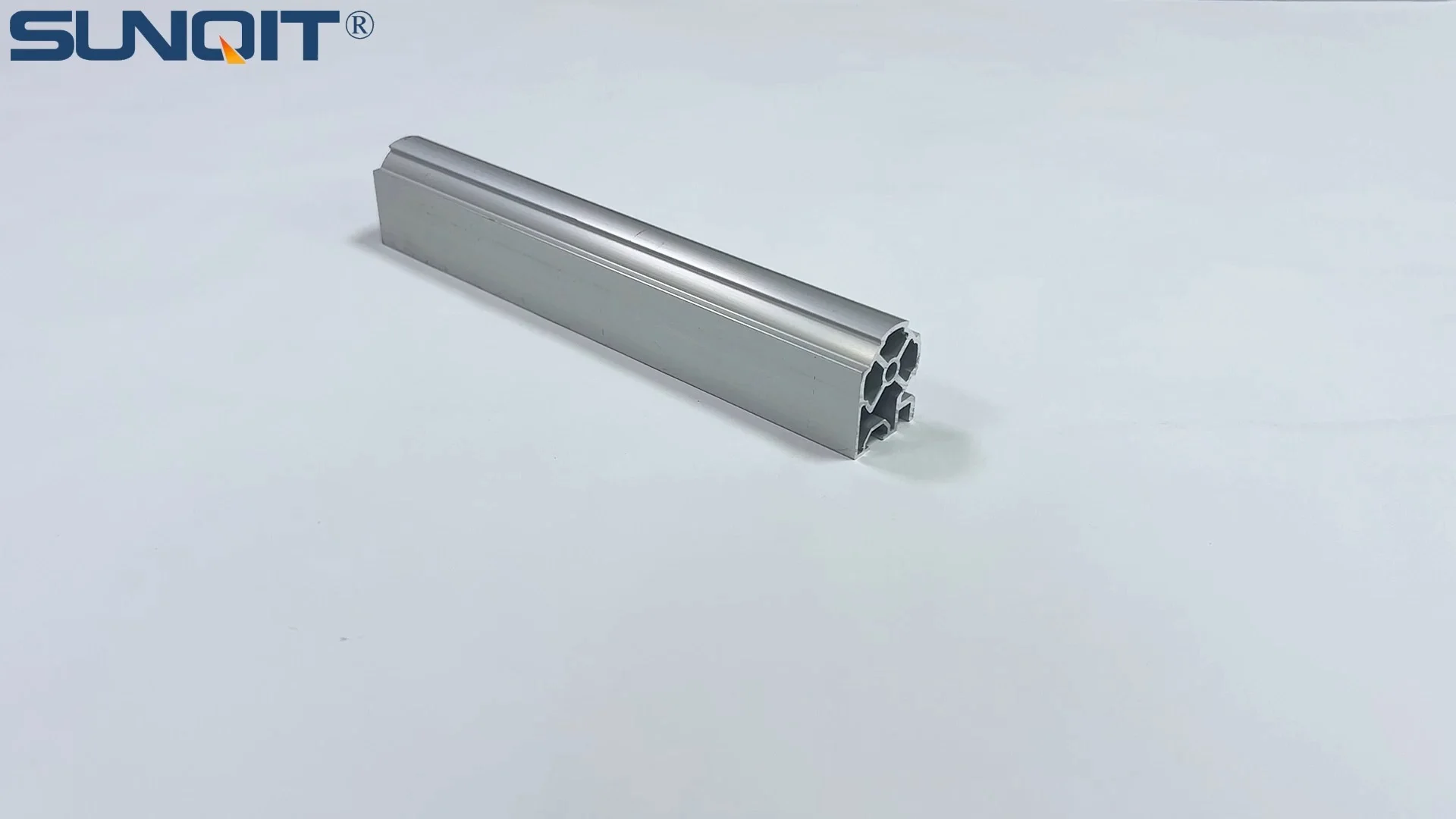
Aluminum Pipe with Tray Holder
Aluminum pipe with tray holder,the pipe one side connected by a joint, the other side with a slot which can hold a tray or a aluminum pannel.
The 3C industry—encompassing computers, communications, and consumer electronics—thrives on speed, precision, and adaptability. From sleek smartphones to lightweight laptops, every product demands a manufacturing process that can keep up with rapid design changes, shrinking component sizes, and ever-growing production volumes. In this high-stakes environment, the assembly line isn't just a series of workstations; it's a ecosystem where organization, accessibility, and flexibility can make or break efficiency. Enter aluminum pipe with tray holder: a humble yet transformative solution that's quietly revolutionizing how 3C manufacturers handle materials, streamline workflows, and reduce waste. Lightweight, customizable, and built to evolve with shifting needs, this combination of aluminum lean pipe and tray holders is becoming the backbone of modern 3C assembly lines. Let's dive into the top 10 ways it's making a difference.
1. Component Storage Racks: Taming the Tiny Parts That Power 3C Products
Walk into any 3C assembly facility, and you'll quickly realize the industry runs on tiny components: microchips smaller than a fingernail, screws no wider than a pinhead, connectors thinner than a strand of hair. These parts are the building blocks of every smartphone, tablet, and smartwatch, but their size makes them notoriously hard to manage. Traditional storage solutions—think bulky steel shelves or static plastic bins—often lead to chaos: parts get mixed up, operators waste minutes rummaging for the right component, and valuable floor space is eaten up by inflexible furniture that can't adapt to new part sizes or production needs.
Aluminum pipe with tray holder changes the game here. By combining lightweight aluminum lean pipe with modular tray holders, manufacturers can build custom storage racks tailored to their exact component lineup. Need a rack for 0.5mm screws? Mount shallow, narrow trays at eye level for quick access. Storing delicate circuit boards? Use deeper, padded trays with dividers to prevent damage. The magic lies in the system's flexibility: aluminum lean pipe joints and connectors (key aluminum pipe accessories) let teams adjust shelf heights, add new trays, or reconfigure the entire rack in hours, not days. Unlike steel, aluminum won't rust or add unnecessary weight, making the racks easy to move or expand as production scales.
A Real-World Example: Smartphone Motherboard Assembly
Consider a smartphone motherboard assembly line, where operators install over 50 unique components—from resistors to camera modules—in under 2 minutes per board. Before aluminum pipe racks, operators relied on plastic bins stacked on steel shelves, often bending or stretching to reach parts. This led to fatigue, slower assembly times, and occasional mix-ups (installing a 1k resistor instead of a 10k resistor, for example). After switching to aluminum lean pipe racks with labeled tray holders, each component got its own color-coded tray, positioned at shoulder height. Search time dropped from 45 seconds to 10 seconds per component, and errors decreased by 32% in the first month. The racks, built with standard aluminum pipe accessories, were even reconfigured 3 times that year to accommodate new motherboard designs—no need for expensive new furniture.
2. Workbench Material Stations: Putting Tools and Parts Right Where Operators Need Them
A 3C assembly workbench is an operator's command center. It's where screens are bonded to frames, batteries are installed, and final quality checks happen. But a cluttered workbench—with tools scattered, parts rolling off edges, and cables tangling—is a productivity killer. Traditional setups often bolt tools to the bench or rely on static bins that can't keep up with the fast pace of 3C assembly. Aluminum pipe with tray holder transforms these workbenches into organized, efficient hubs by bringing materials and tools directly to the operator's fingertips.
Here's how it works: Mount aluminum lean pipe frames above or beside the workbench, then attach tray holders at arm level. These trays can hold everything from daily-use tools (screwdrivers, tweezers, anti-static wristbands) to frequently accessed parts (adhesive strips, SIM card trays). For larger items like testing probes or cable harnesses, use deeper trays with lids to keep dust out. The system integrates seamlessly with existing workbenches—aluminum pipe accessories like clamp-on joints mean no drilling or permanent modifications. Best of all, if an operator switches tasks (e.g., from assembling laptop keyboards to tablet screens), the tray holders can be repositioned or swapped out in minutes.
Ergonomics Matter: Reducing Fatigue, Boosting Focus
3C assembly is repetitive work, and even small inefficiencies add up. An operator reaching 12 inches to grab a tool 500 times a day will end up with strained shoulders; a tray that's too low forces them to hunch, leading to back pain. Aluminum pipe with tray holder solves this by letting teams design for ergonomics. Trays can be tilted at 15-degree angles to reduce wrist strain when picking up parts, or mounted on sliding rails to move with the operator's dominant hand. At a leading tablet manufacturer, this simple adjustment cut reported operator fatigue by 28% and reduced breaks by 15 minutes per shift—adding up to 2,400 more assembly minutes per line per month.

3. Turnover Trolley and Rack Integration: Streamlining Material Flow Between Stations
In 3C manufacturing, materials rarely stay in one place. Partially assembled units move from soldering to testing, finished screens go from bonding to final assembly, and packaging materials are shuttled from storage to the end of the line. Traditional material transport often relies on heavy steel carts or static racks that are hard to maneuver and even harder to customize. This leads to bottlenecks: a cart loaded with circuit boards might get stuck in a narrow aisle, or a rack might be too tall to fit under a conveyor, causing delays.
Aluminum pipe with tray holder transforms turnover trolley and rack systems into agile, line-friendly solutions. By building trolleys with aluminum lean pipe frames and mounting tray holders on all sides, manufacturers create lightweight yet sturdy transport units that glide through tight spaces. The trays keep parts secure during movement—no more spilled screws or scratched screens—and can be removed individually, so operators at the next station only take what they need. For example, a turnover trolley used to transport smartphone screens might have 10 vertical tray holders, each padded to protect the glass, and casters (another key aluminum pipe accessory) that swivel 360 degrees for easy navigation around conveyor belts or workbench legs.
From Batch Transport to Just-In-Time Delivery
Lean manufacturing principles emphasize "just-in-time" material delivery—getting parts to the line exactly when they're needed, not before. Aluminum pipe trolley systems excel here. At a smartwatch factory, teams replaced large steel racks (which held 500 units at a time) with smaller aluminum lean pipe trolleys, each holding 50 units in labeled tray holders. These trolleys now circle the line continuously, delivering parts to operators as they near empty trays. This cut inventory buildup by 45% and freed up 1,200 square feet of floor space—enough for a new assembly line. The trolleys, built with standard aluminum pipe and accessories, were even repurposed 6 months later to transport a new smartwatch model with larger screens, simply by adjusting the tray holder spacing.

4. In-Line Buffer Stations: Smoothing Out Production Peaks and Valleys
3C assembly lines are rarely perfectly balanced. One station might assemble 100 units per hour (e.g., attaching batteries), while the next (e.g., software flashing) can only handle 80. This mismatch creates bottlenecks: units pile up at the slower station, and operators at the faster station either wait or overproduce, leading to excess inventory. Buffer stations—temporary storage areas between stations—are the solution, but traditional buffers (like static shelves or plastic bins) often become disorganized, with units getting jumbled or damaged.
Aluminum pipe with tray holder turns buffer stations into controlled, efficient queues. By building sloped racks with tray holders, manufacturers create gravity-fed systems where units slide gently from the fast station to the slow one. Each tray holder can be sized to fit a specific unit (e.g., a 6-inch tablet or a 15-inch laptop), and dividers prevent units from colliding. The aluminum lean pipe frame is lightweight enough to be moved if the line is rebalanced, and aluminum pipe accessories like stop tabs at the end of trays prevent units from sliding off. For example, at a laptop assembly plant, a buffer station between the keyboard installation and screen attachment stations uses 3-tiered aluminum lean pipe racks with sloped tray holders. Each tray holds 10 partially assembled laptops, and as the screen station operator takes one, the next slides forward automatically. This cut wait time at the keyboard station by 67% and reduced unit damage (from falls) to zero.
5. Testing Station Tool and Fixture Storage: Keeping Test Kits Organized and Accessible
Testing is a critical step in 3C manufacturing—ensuring screens light up, cameras focus, and batteries hold charge. But testing stations are often a jumble of cables, probes, and fixtures, with different test kits for different product models. A technician testing a new smartphone model might need to dig through drawers to find the right charging cable or alignment fixture, wasting precious time. Aluminum pipe with tray holder brings order here by creating dedicated storage for test tools, right at the testing bench.
Imagine a testing station for wireless earbuds. Technicians need to test Bluetooth connectivity, battery life, and sound quality—each requiring different tools: a Bluetooth signal tester, a micro-USB charger, foam ear tips for fit testing. With aluminum lean pipe mounted above the test bench, tray holders can be divided into zones: one for chargers, one for probes, one for replacement ear tips. Clear plastic lids on the trays keep dust off sensitive electronics, and labels ensure tools are returned to the right spot. When a new earbud model launches with a USB-C port, the tray holder can be modified with new dividers (using aluminum pipe accessories like plastic inserts) to fit the new charger—no need for a whole new storage system. This reduces test setup time by 40% and ensures technicians always have the right tool, first time.
| Feature | Traditional Storage/Workbench Solutions | Aluminum Pipe with Tray Holder |
|---|---|---|
| Customization | Low—fixed sizes; hard to modify for new parts/tools. | High—adjustable tray heights, widths, and angles via aluminum pipe accessories. |
| Setup/Modification Time | High—requires tools, welding, or professional installation. | Low—assembled with hand-tightened joints; reconfigurable in hours. |
| Weight & Mobility | Heavy—steel racks/carts are hard to move; risk of floor damage. | Lightweight—aluminum frames are easy to reposition; casters (aluminum pipe accessories) add mobility. |
| Cost Over Time | High—needs replacement when production lines change. | Low—reusable for new products; only new trays/accessories needed. |
| Ergonomics | Poor—often fixed at non-ideal heights; causes operator strain. | Excellent—trays positioned at shoulder/arm level; tiltable for reduced fatigue. |
6. Packaging Line Tray Systems: Speeding Up the Final Step Before Shipping
After assembly and testing, 3C products head to packaging—where they're placed in boxes, surrounded by foam inserts, and sealed for shipping. This step is often overlooked, but inefficiencies here can delay shipments and increase costs. Traditional packaging lines rely on operators reaching into large bins for boxes, inserts, and labels, leading to wasted motion and occasional mix-ups (e.g., putting a 6.7-inch phone into a 6.1-inch box). Aluminum pipe with tray holder streamlines this by bringing packaging materials directly to the packaging station, in the order they're needed.
For example, a packaging line for wireless speakers might use aluminum lean pipe racks with three levels of tray holders: top for boxes (sloped forward for easy grabbing), middle for foam inserts (divided by speaker size), and bottom for labels (sorted by region: EU, US, Asia). As operators place a speaker into a box, the next box slides forward in the top tray, and the correct foam insert is right below. This "pick-to-light" style system (enhanced with simple LED labels on the tray holders) reduces packaging time by 25% and eliminates box-size errors entirely. And when a new speaker model with a larger box is launched, the tray holders can be adjusted by loosening a few aluminum pipe joints—no need for new racks.
7. Maintenance Tool Carts: Keeping Repair Kits Mobile and Organized
Even the most advanced 3C assembly lines break down: a conveyor belt jams, a screwdriver stops working, a sensor malfunctions. When this happens, maintenance crews need to act fast to avoid costly downtime. But traditional maintenance tool storage—often a single room with tools scattered in drawers—means crews waste time hunting for the right wrench or replacement part. Aluminum pipe with tray holder solves this with mobile maintenance carts, built from aluminum lean pipe and loaded with organized tray holders for tools and spares.
A typical maintenance cart might have: shallow tray holders for screwdrivers and pliers, deep trays for replacement conveyor rollers, and small bins (attached to the aluminum pipe frame) for nuts and bolts. The cart, mounted on lockable casters (key aluminum pipe accessories), can be wheeled directly to the breakdown site, so technicians have everything they need at their fingertips. When a new type of caster is added to the assembly line, the cart's tray holders can be modified to fit the new caster size—no need for a second cart. At one tablet factory, these carts reduced maintenance response time by 50% and cut downtime from 2 hours to 45 minutes per breakdown.
8. ESD-Safe Storage for Sensitive Components: Protecting Against Static Damage
Static electricity is a silent killer in 3C manufacturing. A single electrostatic discharge (ESD) can fry a $500 circuit board or render a microchip useless. That's why ESD-safe storage is non-negotiable for components like CPUs, memory chips, and LCD panels. Traditional ESD storage often involves expensive, fixed steel racks with ESD mats—a solution that's effective but inflexible. Aluminum lean pipe with ESD-compliant tray holders offers a budget-friendly, adaptable alternative.
Aluminum is naturally conductive, and when paired with ESD-safe tray holders (made from carbon-filled plastic) and ESD grounding cables (aluminum pipe accessories), it creates a continuous path to ground, dissipating static charges safely. Unlike steel, aluminum lean pipe is lightweight, so ESD racks can be moved near the assembly line, reducing the distance sensitive components are carried (and the risk of ESD during transport). For example, a semiconductor manufacturer storing CPU chips uses aluminum lean pipe racks with ESD tray holders, each connected to the building's ground via a small cable. The racks are positioned 10 feet from the assembly line, cutting component carry time by 30% and eliminating ESD-related defects (which had cost the company $120,000 annually). When production expands, new sections of rack are added using standard aluminum pipe joints—no need for expensive ESD-certified installers.
9. Kitting Station Organization: Ensuring Assembly Kits Have the Right Parts, Every Time
Kitting is a pre-assembly step where all the parts needed for a specific product (e.g., a smartphone) are grouped into a single "kit"—so assembly line operators don't have to gather parts themselves. But kitting is error-prone: miss a single screw, and the assembly line grinds to a halt. Aluminum pipe with tray holder brings order to kitting stations by creating dedicated slots for each part in the kit, with visual cues to ensure nothing is missed.
Imagine a kitting station for a smartwatch. Each kit needs: a case, a screen, a battery, 4 screws, and a charging port. With aluminum lean pipe racks, tray holders are arranged in the order parts are added to the kit: first the case (in a large, padded tray), then the screen (in a shallow, labeled tray), then the battery (in a tray with a weight sensor to ensure the right battery is added). Smaller trays hold the screws and charging port, with color-coded dividers matching the kit's checklist. As a kitter assembles the kit, they simply move from tray to tray, ensuring each part is included. If a new smartwatch model adds a heart rate sensor, a new tray holder is added to the rack (using aluminum pipe accessories like T-joints) in minutes. This reduces kitting errors by 90% and ensures assembly line operators always have complete kits, ready to go.
10. Lean System Integration: Supporting 5S and Continuous Improvement
Lean manufacturing—focused on eliminating waste and improving efficiency—is the backbone of modern 3C production. At the heart of lean is 5S: Sort, Set in Order, Shine, Standardize, Sustain. Aluminum pipe with tray holder isn't just a storage solution; it's a lean system enabler, making it easy for teams to implement and maintain 5S principles.
"Sort" (removing unnecessary items) is simplified by tray holders that only have space for essential parts—no room for extra screws or outdated tools. "Set in Order" (organizing what's left) is built into the system, with labeled, dedicated spots for every item. "Shine" (cleaning) is easier because aluminum lean pipe is smooth and easy to wipe down, and tray holders can be removed for deep cleaning. "Standardize" (making the system consistent) is possible because aluminum pipe accessories are universal—every rack or cart is built the same way, so operators know exactly where to find things. Finally, "Sustain" (maintaining the system) is achievable because the setup is so flexible: if a new waste is identified (e.g., too much space between trays), the system can be reconfigured in hours to fix it. At one laptop manufacturer, integrating aluminum pipe with tray holder into their lean system reduced waste (in the form of excess inventory, search time, and errors) by 38% in the first year—directly boosting profitability.
In the fast-paced world of 3C manufacturing, success hinges on the details—the ability to adapt quickly, reduce waste, and keep operators focused on what they do best: building high-quality products. Aluminum pipe with tray holder may not grab headlines, but its impact is undeniable. From taming tiny components to streamlining testing stations, from supporting lean principles to enabling just-in-time production, this simple yet versatile system is proving to be a cornerstone of modern assembly lines. As 3C products continue to evolve—becoming smaller, smarter, and more complex—aluminum lean pipe and its tray holders will undoubtedly evolve with them, ensuring manufacturers stay efficient, flexible, and ready for whatever comes next. After all, in a industry where every second counts, the right tool (or tray holder) can make all the difference.