- Company Articles
- Products and Technology
- Application Cases
- Top 5 Applications of One Way Rotatory Straight Lean Pipe Joint Chrome in 3C Assembly

Top 5 Applications of One Way Rotatory Straight Lean Pipe Joint Chrome in 3C Assembly
Related Product
One Way Rotatory Straight Lean Pipe Joint Chrome
Two way lean pipe joint for 2 pcs 28MM lean pipe connection in straight angle with rotatory fucntion, which used widely in workbench, flow rack, hand trolley frame connection.
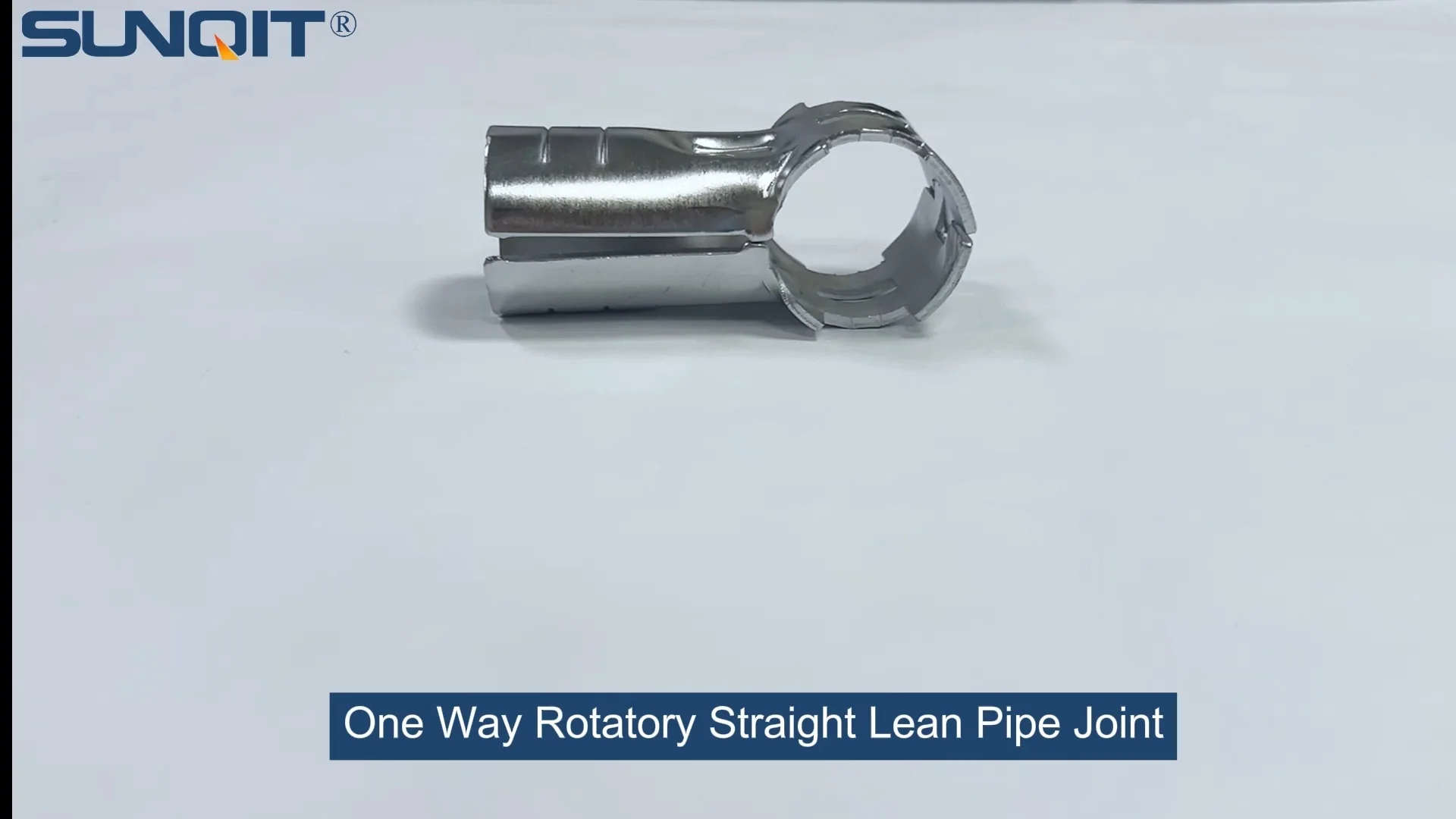
In the fast-paced world of 3C manufacturing—where smartphones, laptops, and smartwatches fly off production lines at breakneck speed—efficiency isn't just a buzzword; it's the backbone of success. Every tool, every component, and every inch of the assembly line matters. That's where yet powerful parts like the One Way Rotatory Straight Lean Pipe Joint Chrome come into play. Designed for flexibility, durability, and precision, this small but mighty joint has become a quiet hero in modern 3C factories, transforming rigid workspaces into adaptable hubs that keep up with evolving product designs and tight deadlines. Let's dive into five key ways this joint is reshaping how 3C products are built, from component assembly to final quality checks.
1. Adjustable Lean Pipe Workbenches: Tailoring Workspaces for Precision Tasks
Walk into any 3C assembly plant, and you'll notice one thing immediately: workbenches are the heart of the operation. This is where technicians spend hours soldering tiny circuit boards, attaching delicate screens, or testing button functionality—tasks that demand both stability and adaptability. Enter the lean pipe workbench, a staple in modern manufacturing, and the One Way Rotatory Straight Lean Pipe Joint Chrome is its secret weapon for versatility.
Traditional workbenches are often fixed, limiting how workers can position tools, materials, or even the work surface itself. But with this joint, lean pipe workbenches become dynamic. Imagine a technician assembling a smartphone's motherboard. One minute, they need the bench surface flat to lay out components; the next, they might tilt it slightly to get a better angle for soldering a hard-to-reach connector. The one-way rotatory joint makes this possible. Its chrome-plated finish ensures smooth movement, while the one-way lock prevents accidental shifts mid-task—critical when working with components smaller than a grain of rice.
But the benefits go beyond adjustability. 3C products evolve constantly; a workbench set up for last year's smartphone model might need a complete overhaul for the latest release. With lean pipe workbenches and these joints, reconfiguration is a breeze. No need for welding or heavy tools—simply loosen the joint, adjust the pipe angle, and lock it back in place. This saves hours of downtime and allows factories to switch between product lines with minimal hassle. For example, when a new laptop model with a slimmer chassis hits the production floor, technicians can quickly lower the workbench height or add side extensions to accommodate new assembly jigs—all thanks to the joint's flexibility.
Durability is another win. The chrome plating resists corrosion from the oils, cleaning agents, and occasional spills common in assembly environments, ensuring the joint lasts for years even with daily use. And because lean pipe systems are modular, damaged parts can be swapped out individually, reducing replacement costs. For factory managers, this means lower long-term expenses and fewer disruptions to production schedules.
| Task | How the Joint Enhances Performance |
|---|---|
| Soldering circuit boards | One-way rotation allows tilting the bench surface to reduce neck strain; lock feature prevents movement during precise soldering. |
| Screen attachment | Adjustable angles let workers align screens with chassis without repositioning the entire device. |
| Tool storage | Side racks built with the joint can rotate to keep frequently used tools within arm's reach. |
In short, when paired with lean pipe workbenches, the One Way Rotatory Straight Lean Pipe Joint Chrome turns static workspaces into adaptable hubs that grow with a factory's needs—making it indispensable in 3C assembly.
2. Streamlining Material Flow with Dynamic Roller Track Systems
In 3C manufacturing, time is measured in seconds. When components like phone casings, batteries, or camera modules take too long to move from one station to the next, production bottlenecks form, and deadlines slip. That's why roller track systems are so critical—they keep materials flowing smoothly, reducing wait times and keeping assembly lines humming. And the One Way Rotatory Straight Lean Pipe Joint Chrome? It's the unsung hero that ensures these roller tracks work smarter, not harder.
Roller tracks rely on precision alignment to function. Even a slight misangle can cause jams, damaging delicate components or bringing the line to a halt. Traditional fixed joints make adjusting track angles a tedious process, often requiring tools and multiple workers. But with the one-way rotatory joint, aligning roller tracks becomes a one-person job. Its smooth rotation lets technicians fine-tune the track's slope to match the weight and size of the materials being transported. For instance, lightweight items like SIM card trays might need a gentle incline, while heavier battery packs require a steeper angle to maintain momentum—all adjustable in minutes with a simple twist of the joint.
Consider a typical smartphone assembly line: after the casing is molded, it needs to move to the next station for screen attachment. The roller track here must be perfectly aligned to prevent the casing from tipping or scratching. With the one-way joint, technicians can tilt the track slightly upward at the end to slow the casing down, ensuring it arrives gently at the next worker's station. No more fumbling with shims or hammering adjustments—just precise, repeatable alignment.
Another advantage is adaptability to space constraints. 3C factories are often packed with equipment, leaving little room for wide, straight roller tracks. The joint's compact design allows for tight turns and custom layouts. For example, a track might need to curve around a large testing machine; by using multiple one-way rotatory joints, the track can be bent at precise angles without sacrificing flow. This flexibility lets factories maximize every inch of floor space, a critical factor in high-density manufacturing environments.
Maintenance is also simplified. Over time, roller tracks can loosen or shift due to vibrations from nearby machinery. With these joints, inspectors can quickly check alignment and readjust as needed—no disassembly required. The chrome finish resists rust, even in humid factory settings, so the joints stay smooth and functional without frequent lubrication. This reduces downtime and keeps the material flow consistent, a must when producing hundreds of devices per hour.
Whether it's moving circuit boards through soldering stations or transporting finished devices to packaging, roller track systems with One Way Rotatory Straight Lean Pipe Joint Chrome ensure materials get where they need to go—fast, safely, and without fuss. In 3C manufacturing, where every second counts, that's a game-changer.
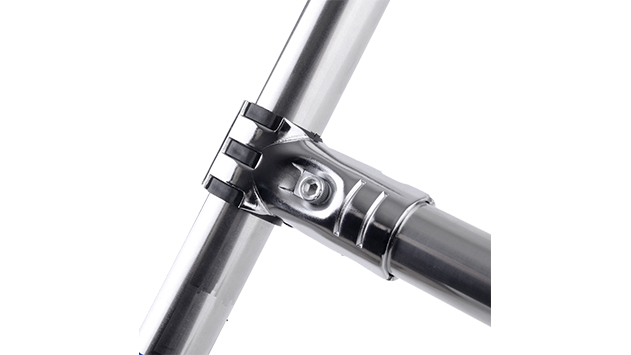
3. Building Safe and Flexible ESD Workstations for Sensitive Electronics
Static electricity is the silent enemy of 3C manufacturing. A single electrostatic discharge (ESD) can fry a microchip, render a circuit board useless, or cause invisible damage that leads to product failures down the line. That's why ESD workstations are non-negotiable in electronics assembly—they ground workers and equipment, preventing static buildup. But ESD protection shouldn't mean sacrificing flexibility, and the One Way Rotatory Straight Lean Pipe Joint Chrome ensures it doesn't.
ESD workstations are more than just tables with grounding mats; they often include shelves for tools, bins for components, and adjustable arms for magnifying glasses or testing equipment. All these elements need to be positioned precisely to keep workers comfortable and materials within reach—without compromising the workstation's grounding integrity. The one-way rotatory joint excels here. Its metal construction conducts electricity, maintaining the workstation's ground path even when adjusted. This means workers can rotate shelves, tilt tool holders, or reposition armrests without breaking the ESD protection chain.
Take, for example, a technician testing a smartwatch's touchscreen. They need the testing device at eye level to check for dead pixels, but also need quick access to a bin of replacement screens below. With a traditional ESD workstation, the shelf might be fixed, forcing the technician to lean awkwardly or waste time reaching. With the one-way rotatory joint, the shelf can be rotated upward when not in use, then lowered back into place with a simple push—all while staying grounded. The one-way lock ensures it stays put, so the bin doesn't swing open unexpectedly during testing.
3C components come in all shapes and sizes, and ESD workstations must adapt. A workstation used for assembling small sensors might need narrow shelves, while one for laptop motherboards requires wider surfaces. The joint's compatibility with lean pipes and aluminum profiles makes customization easy. Factories can add or remove shelves, adjust heights, or reconfigure layouts to match the task at hand. For instance, during peak production of a new tablet, a workstation can be expanded with side arms to hold extra tools, then scaled back when production slows—no need to invest in entirely new workstations.
Safety is another priority. The chrome plating not only resists corrosion but also prevents sharp edges, reducing the risk of cuts when adjusting the workstation. The joint's smooth rotation minimizes friction, so workers don't need to exert force to move components—lowering the risk of repetitive strain injuries. And because the joint locks securely, there's no danger of shelves or tool holders suddenly collapsing, even when loaded with heavy equipment like oscilloscopes or testing fixtures.
For factories that deal with both ESD-sensitive and non-sensitive tasks, the joint's versatility shines. A single workstation can be reconfigured for ESD work in the morning (with grounded shelves and mats) and then adjusted for packaging tasks in the afternoon (with higher shelves for boxes)—all without compromising safety or efficiency. This adaptability reduces the need for multiple specialized workstations, saving space and costs.
In the world of 3C manufacturing, where a single static spark can cost thousands of dollars, ESD workstations are lifesavers. The One Way Rotatory Straight Lean Pipe Joint Chrome makes them even better—safe, flexible, and built to keep up with the demands of modern electronics assembly.

4. Integrating Modular Conveyors for Seamless Assembly Line Continuity
3C assembly lines are complex ecosystems, with products passing through dozens of stations—from component insertion to testing, packaging, and shipping. Conveyors are the arteries that connect these stations, moving products efficiently through each stage. But with so many variables—different product sizes, varying assembly speeds, and ever-changing line layouts—conveyors need to be as adaptable as the products they carry. The One Way Rotatory Straight Lean Pipe Joint Chrome makes modular conveyor systems possible, turning rigid lines into flexible networks that can be reconfigured on the fly.
Modular conveyors use lightweight aluminum or steel pipes connected by joints, allowing for custom layouts without the cost of permanent installations. The one-way rotatory joint is a key part of this system, enabling conveyors to turn, tilt, or adjust height to match the needs of each station. For example, after a smartphone is assembled, it might need to move up to a testing station on a mezzanine, then down to packaging. The joint allows the conveyor to angle upward at a precise slope, ensuring the phone doesn't slide backward, then angle downward gently to avoid damage—all with minimal space usage.
Speed control is another critical factor. Different assembly stages require different conveyor speeds: slower for intricate tasks like camera installation, faster for simple steps like barcode scanning. The one-way joint helps here by allowing technicians to adjust the conveyor's incline. A steeper slope increases speed, while a gentler slope slows it down—no need for complex motor adjustments. This is especially useful in small-batch production runs, where line speeds might change multiple times a day.
Space is always at a premium in 3C factories, and modular conveyors with these joints excel at fitting into tight spots. Need a conveyor to snake around a large testing machine? Use multiple one-way joints to create a custom curve. Want to add a side branch for defective products? Simply attach a new conveyor segment with a few joints. This flexibility lets factories adapt to new equipment or production processes without major renovations. For instance, when a factory adds a robotic arm for automated screw driving, the conveyor can be quickly repositioned to feed components directly into the arm's reach—all thanks to the joint's easy adjustability.
Durability is equally important. Conveyors run 24/7 in many 3C plants, and joints take a lot of wear and tear. The chrome plating on the One Way Rotatory Straight Lean Pipe Joint Chrome resists scratches and corrosion, even when exposed to the dust and debris of manufacturing. The joint's metal construction also handles heavy loads, from stacks of circuit boards to fully assembled laptops, without bending or breaking. This reliability ensures the conveyor system stays up and running, minimizing unplanned downtime.
From small component transport to full product movement, modular conveyors integrated with these joints keep 3C assembly lines flowing smoothly, adaptably, and efficiently.
5. Crafting Custom Equipment Racks with Aluminum Profiles
Behind every efficient 3C assembly line is a mountain of supporting equipment: tool racks, parts bins, testing fixtures, and storage shelves. These items need to be sturdy enough to hold heavy tools, flexible enough to adapt to changing needs, and lightweight enough to move when necessary. Aluminum profiles are the go-to solution for building these structures—they're strong, lightweight, and easy to work with. And when paired with the One Way Rotatory Straight Lean Pipe Joint Chrome, they become even more versatile, enabling the creation of custom equipment racks that fit any factory's unique needs.
Aluminum profiles are like industrial Erector sets—long, extruded beams with T-slots that accept various connectors and accessories. The One Way Rotatory Straight Lean Pipe Joint Chrome fits into these slots, allowing profiles to be joined at precise angles. This opens up endless design possibilities. Need a tool rack with adjustable shelves for different-sized screwdrivers and pliers? Use the joint to create shelves that rotate up when not in use, saving space. Building a parts bin holder that tilts forward for easy access? The one-way lock ensures the bins stay in place, even when jostled.
Consider a factory storing jigs for smartphone assembly. Jigs are custom-made for each phone model, and with new models launching every few months, storage can get chaotic. An aluminum profile rack with one-way rotatory joints solves this. Each shelf can be adjusted to fit the jigs' height, and the shelves can be rotated outward for easy retrieval. When a new jig arrives, simply loosen the joint, adjust the shelf, and lock it back—no need to rebuild the entire rack. This not only saves space but also reduces the time workers spend searching for tools, boosting overall productivity.
Testing equipment is another area where these racks shine. 3C products require rigorous testing—drop tests, water resistance checks, signal strength evaluations—and the equipment for these tests is often bulky and expensive. An aluminum profile rack with one-way joints can be built around the equipment, with adjustable arms to hold cables, probes, or calibration tools. Technicians can rotate the arms to access hard-to-reach ports or reposition tools for different tests, all without moving the main equipment. This stability is crucial for accurate testing results.
Portability is a bonus. Aluminum profiles are lightweight, so racks built with them can be mounted on casters for easy movement. The one-way rotatory joints ensure that even when the rack is moved, shelves and accessories stay locked in place, preventing tools or parts from falling off. For example, a mobile tool rack can be wheeled directly to the assembly line during peak hours, then stored away when not needed—all while keeping tools organized and accessible.
Cost-effectiveness rounds out the benefits. Aluminum profiles and lean pipe joints are affordable compared to custom-built steel racks, and their modular design means components can be reused. A rack built for one purpose can be disassembled and rebuilt into something entirely different when needs change. This reduces waste and keeps long-term costs low, a key consideration for factories operating on tight margins.
Whether it's storing tools, organizing parts, or supporting testing equipment, aluminum profile racks with One Way Rotatory Straight Lean Pipe Joint Chrome offer the perfect blend of strength, flexibility, and affordability—making them a staple in modern 3C manufacturing.
In the high-stakes world of 3C assembly, where precision, speed, and adaptability determine success, the One Way Rotatory Straight Lean Pipe Joint Chrome proves that even the smallest components can make a big impact. From adjustable lean pipe workbenches to dynamic roller tracks, ESD workstations, modular conveyors, and custom aluminum profile racks, this joint brings flexibility, durability, and efficiency to every corner of the factory floor. As 3C products continue to evolve, so too will the demands on manufacturing equipment—and with tools like this joint, factories are ready to meet the challenge head-on. It's not just about building better products; it's about building better ways to build—one joint at a time.