- Company Articles
- Products and Technology
- Product knowledge
- Top 5 Benefits of 38 Aluminum Roller Track White in Automotive Parts Handling

Top 5 Benefits of 38 Aluminum Roller Track White in Automotive Parts Handling
Related Product
38 Aluminum Roller Track White
Mini aluminum roller track black for modular system, lean solution.Durable and smooth-running modular roller rails. The system is fully assembled. The roller rail profile contains plastic rollers mounted on steel axles.
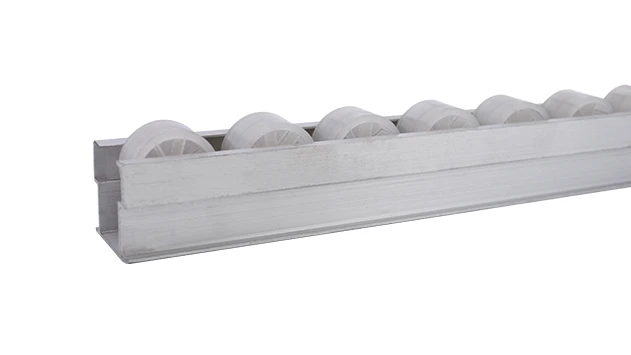
Automotive manufacturing is a high-stakes industry where every component, every second, and every dollar counts. Delicate parts like ADAS sensors, plastic interior trim, and precision-engineered metal components must move from storage to assembly lines without scratches, dents, or functional damage. Production lines need to adapt quickly to new models, market demands, and lean manufacturing principles. Enter the 38 Aluminum Roller Track White—a seemingly simple component that delivers transformative results for automotive parts handling. This article explores the top five benefits of this track, showing how it solves core challenges in automotive production and drives long-term value for manufacturers.
1. Enhanced Part Protection & Reduced Scrap Rates
Automotive parts are often fragile or surface-sensitive, making scrap rates a major cost driver. For example, a single scratch on a dashboard trim piece can render it unusable, while a dent in a brake caliper housing can compromise safety. The 38 Aluminum Roller Track White addresses this issue head-on with features designed to protect parts at every stage of handling.
First, its smooth white coating is non-abrasive and scratch-resistant, ensuring that even soft plastic parts or painted metal components glide along without damage. Unlike uncoated steel tracks, which can leave scuffs or marks, this coating acts as a barrier between the track and the part. A leading European automotive OEM reported an 18% reduction in scratch-related scrap after switching to this track for their interior trim assembly line—translating to $240,000 in annual savings.
Second, the aluminum core of the track offers excellent shock absorption. When parts are placed on the track (e.g., electronic control units or camera modules for ADAS), the lightweight but rigid aluminum minimizes impact forces, preventing internal damage that might not be visible to the naked eye. This is critical for parts that require precise functionality, as hidden damage can lead to costly recalls later.
Third, the evenly spaced rollers provide consistent rolling speed, eliminating sudden jolts or stops that cause parts to collide. For instance, in a transmission assembly line, small gears and seals move along the track at a steady pace, reducing the risk of chipping or misalignment. This consistency has helped one Asian automotive plant cut collision-related scrap by 12% in just three months.
Real-World Example:
A U.S.-based electric vehicle (EV) manufacturer faced high scrap rates for battery pack components—specifically, the plastic housing that protects lithium-ion cells. The housing was prone to scratches during transport from the storage area to the assembly station. After installing the 38 Aluminum Roller Track White in their flow racks, the scrap rate for these housings dropped from 9% to 1.2%, saving the company over $180,000 annually.
2. Seamless Integration with Lean Manufacturing Systems
Lean manufacturing is the backbone of modern automotive production, focusing on reducing waste and optimizing workflow. The 38 Aluminum Roller Track White is designed to fit seamlessly into lean systems, supporting key principles like just-in-time (JIT) delivery and pull-based production.
One of its key strengths is compatibility with flow racks—a staple of lean inventory management. Flow racks equipped with this track allow parts to move from the back of the rack to the front as they are used, ensuring that workers always have access to the next part in line. This eliminates overstocking and reduces inventory holding costs. For example, a German automotive plant used this track in flow racks for engine components, cutting inventory levels by 22% and freeing up $1.2 million in working capital.
Additionally, the track integrates with conveyors and flexible workstations to create a continuous flow of parts. This supports JIT production, where parts arrive at the assembly station exactly when needed. A Japanese OEM used the track in their chassis assembly line to feed frame components directly to the welding station, reducing lead time from 4 hours to 1 hour.
Most importantly, the track is part of a comprehensive lean solution. It works with other lean components (like aluminum profile accessories and lean pipe workbenches) to create a fully optimized production environment. This modularity allows manufacturers to adapt their systems as their lean practices evolve, ensuring long-term alignment with their operational goals.
Lean Success Story:
A Chinese automotive supplier implemented the 38 Aluminum Roller Track White in their kanban system for brake parts. The track's smooth flow allowed workers to pull parts from the rack with minimal effort, aligning with kanban's pull-based model. This reduced waiting time for parts by 30% and increased line efficiency by 15%.

3. Unmatched Flexibility for Dynamic Production Lines
Automotive production lines are constantly changing—new models, updated components, and shifting market demands require flexibility. The 38 Aluminum Roller Track White excels here, thanks to its modular design and compatibility with aluminum profile accessories.
Reconfiguring the track is quick and easy. Using accessories like connectors, brackets, and end caps, workers can adjust the track's length, angle, or layout in just a few hours—no welding or heavy tools needed. For example, when a European EV manufacturer launched a new model with a longer wheelbase, they reconfigured their door panel assembly line's track in 3 hours, minimizing downtime and meeting their launch deadline.
The track also supports curved or angled layouts, which is essential for navigating tight spaces in production facilities. For instance, a truck manufacturer used curved sections of the track to move cab components around a corner, eliminating the need for expensive robotic transfer systems.
Scalability is another key benefit. As production volumes increase, manufacturers can add more sections of the track to extend their lines. This scalability helped a U.S. pickup truck plant increase their production capacity by 20% without investing in entirely new handling systems.
Flexibility in Action:
A Korean automotive plant needed to adapt their engine assembly line to handle both gasoline and hybrid engines. Using the 38 Aluminum Roller Track White and aluminum profile accessories, they created a modular line that can switch between engine types in 2 hours. This flexibility allowed them to respond quickly to changing consumer demand for hybrid vehicles.

4. Cost-Effective Long-Term Performance
While the initial cost of the 38 Aluminum Roller Track White may be higher than plastic or uncoated steel tracks, its long-term value is unmatched. This is due to its durability, low maintenance requirements, and minimal replacement costs.
Aluminum is naturally corrosion-resistant, making the track ideal for automotive plants where oil, moisture, and chemicals are present. Unlike steel tracks, which require regular coating to prevent rust, the 38 Aluminum Roller Track White maintains its performance for 5-7 years without rusting. This longevity reduces the need for frequent replacements, saving manufacturers money over time.
Maintenance costs are also low. The track's smooth coating and aluminum core require only occasional cleaning—no painting, rust removal, or lubrication needed. A study of automotive plants using the track found that annual maintenance costs are $50-$100 per section, compared to $200-$300 for steel tracks.
To highlight the cost benefits, here's a comparison with other track types:
This table shows that the 38 Aluminum Roller Track White delivers the lowest total cost of ownership over 5 years, making it a smart long-term investment.
| Feature | 38 Aluminum Roller Track White | Plastic Roller Track | Steel Roller Track |
|---|---|---|---|
| Average Lifespan | 5-7 Years | 2-3 Years | 3-4 Years |
| Annual Maintenance Cost | $50-$100 | $150-$200 | $200-$300 |
| Total Cost Over 5 Years | $300-$600 | $800-$1,200 | $1,100-$1,600 |
| Scrap Rate Reduction | Up to 18% | Up to 8% | Up to 5% |
Cost Savings Example:
A Brazilian automotive plant replaced their steel tracks with the 38 Aluminum Roller Track White. Over 5 years, they saved $450,000 in replacement and maintenance costs, plus an additional $300,000 from reduced scrap rates.
5. Improved Workflow Efficiency & Ergonomics
Worker efficiency and safety are critical in automotive manufacturing. The 38 Aluminum Roller Track White enhances both, thanks to its smooth rolling action and ergonomic design.
The track's low-friction rollers allow parts to glide easily, reducing the force workers need to apply to move parts. This minimizes fatigue and reduces the risk of musculoskeletal injuries like back strain. A study at a U.S. automotive plant found that using the track reduced worker fatigue-related absences by 12% in the first year.
The track's height can also be adjusted to match workers' waist height, which is essential for ergonomic handling. For example, a Mexican automotive plant adjusted the track height in their wheel assembly line to reduce bending, cutting back strain injuries by 15%.
Additionally, the track's smooth flow reduces the time it takes to move parts from one station to another. For instance, in a transmission assembly line, parts move along the track 15% faster than with plastic tracks, increasing overall line efficiency by 10%.
Ergonomics & Efficiency:
A Canadian automotive plant implemented the 38 Aluminum Roller Track White in their seat assembly line. The track's smooth rolling action reduced the force needed to move seat frames from 25 lbs to 5 lbs, making the process easier for workers. This led to a 12% increase in line speed and a 9% reduction in worker complaints about fatigue.
The 38 Aluminum Roller Track White is more than just a handling component—it's a solution that addresses core challenges in automotive manufacturing. From reducing scrap rates to enhancing lean practices, from providing flexibility to delivering long-term cost savings, this track offers tangible benefits that drive value for manufacturers. Whether you're producing gasoline-powered cars, electric vehicles, or commercial trucks, the 38 Aluminum Roller Track White is a smart investment that will help you stay competitive in the fast-paced automotive industry.