- Company Articles
- Products and Technology
- Product knowledge
- Top 5 Benefits of Using Parallel Lean Pipe Joint One Side Rotatory Chrome

Top 5 Benefits of Using Parallel Lean Pipe Joint One Side Rotatory Chrome
Related Product
Parallel Lean Pipe Joint One Side Rotatory Chrome
Parallel rotatory lean pipe joint, for 2 pcs 28mm pipe conenction in parallel direction with one side rotatory function.
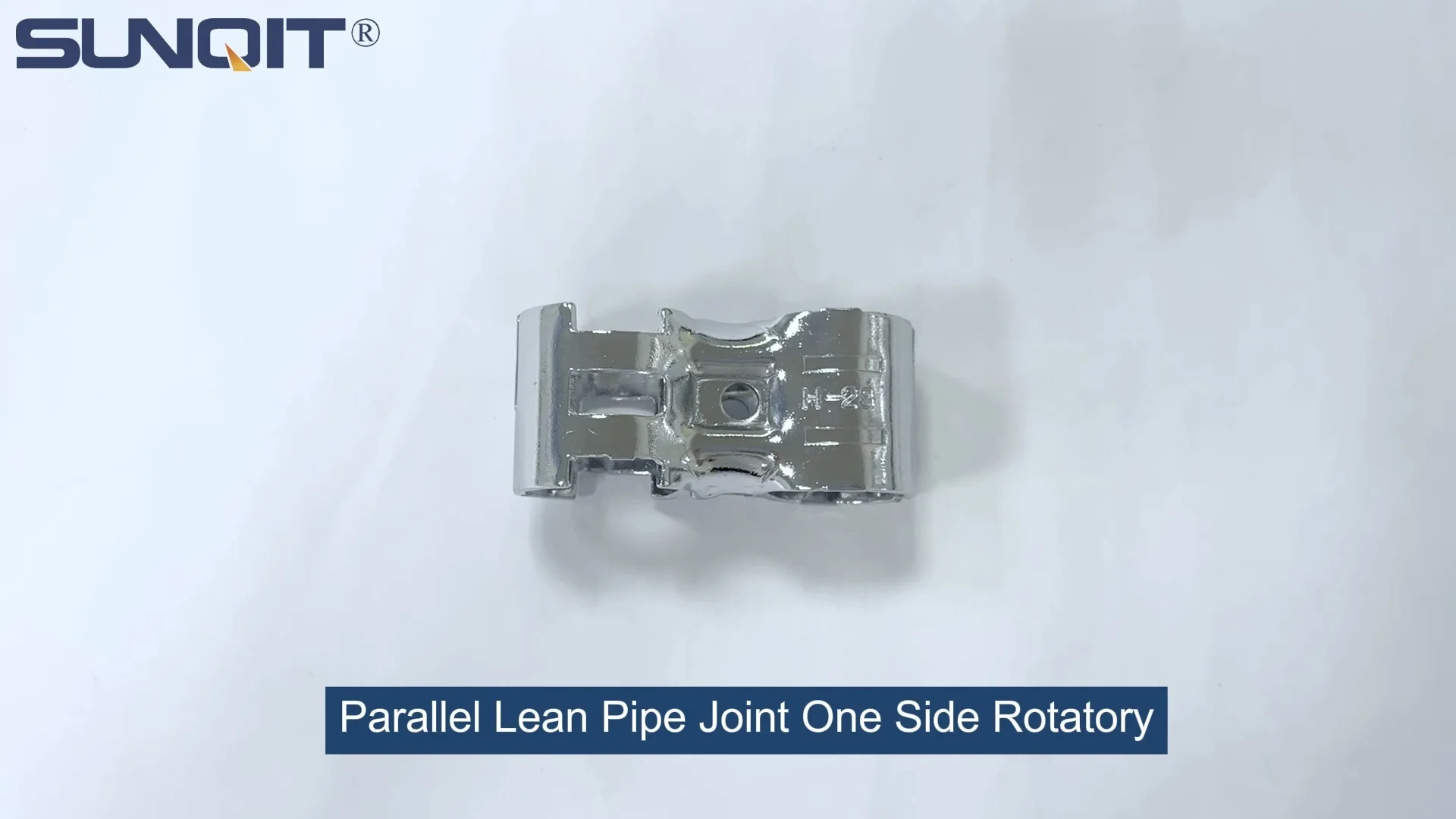
In the fast-paced world of manufacturing, where efficiency and adaptability reign supreme, the smallest components often hold the power to transform entire workflows. Today, we're diving into a unsung hero of lean systems: the parallel lean pipe joint one side rotatory chrome . This unassuming yet critical piece of hardware is more than just a connector—it's a catalyst for smoother operations, happier workers, and bottom-line success. Let's explore why it deserves a spot in your production line.
The Backbone of Lean Manufacturing: Why Joints Matter
Lean manufacturing isn't just a buzzword—it's a philosophy centered on eliminating waste, streamlining processes, and maximizing value. At its core are the physical systems that bring this philosophy to life: workbenches, turnover trolleys, material racks, and flow racks. These structures rely on lean pipe joints to hold them together, and not all joints are created equal.
Imagine a workbench that takes hours to reconfigure when a new product line launches. Or a turnover trolley that jams because its joints are stiff and unforgiving. These are the kinds of inefficiencies that erode productivity and frustrate teams. The parallel lean pipe joint one side rotatory chrome is designed to solve exactly these problems. Its unique combination of rotation, durability, and compatibility makes it a standout choice for modern factories aiming to stay agile.
In the sections below, we'll break down the top five benefits of integrating this joint into your lean pipe and accessories setup. From flexibility to cost savings, each advantage ties back to the ultimate goal of lean manufacturing: doing more with less, without sacrificing quality or worker well-being.
Benefit 1: Unmatched Flexibility for Dynamic Production Lines
The phrase "the only constant is change" rings especially true in manufacturing. Product designs evolve, order volumes fluctuate, and new regulations demand adjustments to workflows. In such an environment, rigidity is the enemy—and flexibility is gold. This is where the "one side rotatory" feature of the parallel lean pipe joint truly shines.
Unlike fixed lean pipe joints (which lock pipes into a static angle), this joint allows for 180-degree rotation on one side while keeping the other side fixed. Picture this: a team on the factory floor needs to reposition a section of their workbench to accommodate a taller component. With a fixed joint, they'd need tools, time, and possibly even a second worker to disassemble and rebuild the structure. With the parallel lean pipe joint one side rotatory chrome? A single worker can simply rotate the joint, adjust the pipe to the desired angle, and lock it back in place—all in under a minute.
This flexibility isn't just about speed; it's about adaptability. Consider a small electronics manufacturer that produces both smartphones and tablets. Their assembly line for smartphones uses a low-profile workbench, while tablets require a higher surface to accommodate larger screens. Instead of investing in two separate workbenches, they use a single setup with rotatory joints. At the flip of a switch (or, in this case, a twist of a joint), the workbench transforms from one configuration to the other. No extra equipment, no wasted space, no downtime.
Even turnover trolley and rack systems benefit immensely. Trolleys often need to navigate tight corners or carry irregularly shaped items. A rotatory joint allows the trolley's frame to "flex" slightly, making it easier to maneuver without compromising stability. For example, a warehouse team moving bulky raw materials can adjust the angle of the trolley's side rails to prevent items from shifting—all without stopping to retape or restack.
| Joint Type | Rotation Range | Time to Reconfigure (Avg.) | Best For |
|---|---|---|---|
| Parallel Lean Pipe Joint One Side Rotatory Chrome | 180° (one side) | 30–60 seconds | Dynamic setups, workbenches, turnover trolleys |
| Fixed Lean Pipe Joint (e.g., 90° Fixed) | 0° (static) | 15–30 minutes | Permanent structures, low-change environments |
In a world where production cycles grow shorter and customer demands more varied, this level of flexibility isn't just a luxury—it's a competitive advantage. Factories that can reconfigure their setups in minutes instead of hours can take on more orders, pivot faster, and stay ahead of the curve.

Benefit 2: Chrome Coating Ensures Durability in Harsh Environments
Flexibility is useless if a component can't withstand the daily grind of industrial use. Manufacturing floors are tough places: dust, moisture, chemicals, and constant physical stress all take a toll on equipment. This is why the parallel lean pipe joint one side rotatory chrome's chrome coating isn't just a cosmetic choice—it's a durability essential.
Chrome plating is renowned for its resistance to corrosion, abrasion, and impact. Unlike bare metal joints that rust when exposed to humidity or oil, chrome creates a barrier that locks out moisture and chemicals. This is particularly valuable in environments like automotive plants, where oil spills are common, or food processing facilities, where frequent washdowns are necessary. Even in dry, dusty warehouses, chrome prevents the buildup of grime that can jam moving parts—ensuring the joint's rotation remains smooth for years.
Let's put this into perspective. An uncoated steel lean pipe joint might last 1–2 years in a busy factory before showing signs of rust or wear. A chrome-plated joint, by contrast, can easily last 5–7 years under the same conditions. That's a 250% increase in lifespan—translating to fewer replacements, less downtime, and lower maintenance costs over time.
But durability isn't just about longevity; it's about consistent performance. A rusted joint becomes stiff, making rotation difficult or impossible. This turns a "flexible" component into a liability, forcing workers to use brute force or tools to adjust setups—undoing all the ergonomic benefits we'll discuss later. Chrome-plated joints maintain their smooth rotation even after years of use, ensuring that the flexibility you rely on today is still there tomorrow.
Compare this to other coatings or materials. While stainless steel pipe series products are also corrosion-resistant, they often come with a higher price tag. Chrome plating offers similar durability at a more accessible cost, making it an ideal choice for budget-conscious operations that refuse to compromise on quality. It's the sweet spot between performance and affordability—a rare combination in industrial hardware.

Benefit 3: Ergonomic Design Reduces Worker Strain and Boosts Morale
In the quest for efficiency, it's easy to overlook the human element. But workers are the heart of any production line—and their comfort and safety directly impact productivity. The parallel lean pipe joint one side rotatory chrome isn't just a tool for machines; it's a tool for people, designed to reduce physical strain and make daily tasks easier.
Consider the typical factory worker's day: hours spent standing, bending, lifting, and adjusting equipment. Repetitive motions or awkward postures can lead to musculoskeletal disorders (MSDs), such as back pain or carpal tunnel syndrome. In fact, the Bureau of Labor Statistics reports that MSDs account for 30% of all workplace injuries—and many of these are preventable with ergonomic design.
The rotatory feature of this joint directly addresses this issue. Adjusting a fixed joint often requires twisting, pulling, or using a wrench—movements that strain the wrists, shoulders, and back. With a rotatory joint, the motion is simple: a gentle twist with one hand. No tools, no force, no strain. This might seem like a small change, but over a 40-hour workweek, it adds up to hundreds of fewer stressful movements per worker.
Take the example of a worker responsible for maintaining a turnover trolley and rack system. Each day, they might need to adjust the trolley's height, width, or angle multiple times to accommodate different loads. With fixed joints, each adjustment could take 2–3 minutes and involve crouching or reaching awkwardly. With rotatory joints, each adjustment takes 20–30 seconds and requires minimal effort. Over a week, that's hours saved—and far less physical fatigue.
But the benefits go beyond physical health. When workers feel that their employer cares about their comfort, morale improves. A study by the Society for Human Resource Management found that companies with ergonomic workplaces report 18% higher employee engagement and 12% lower turnover. Engaged workers are more productive, more attentive to quality, and less likely to call in sick—creating a positive feedback loop that benefits the entire operation.
In short, the parallel lean pipe joint one side rotatory chrome doesn't just make your production line more efficient—it makes it more human. And in lean manufacturing, happy, healthy workers are the most valuable resource of all.
Benefit 4: Seamless Compatibility with Standard Lean Pipe and Accessories
In manufacturing, "custom" often means "complicated." Custom parts are expensive, hard to replace, and can derail entire projects if they're out of stock. That's why compatibility with standard components is a make-or-break feature for any industrial hardware—and the parallel lean pipe joint one side rotatory chrome excels here.
This joint is designed to work seamlessly with standard lean pipes (both steel and aluminum), as well as the full range of lean pipe and accessories —from end caps to clamps to caster wheels. It fits the same pipe diameters, uses the same locking mechanisms, and integrates with the same tools as other lean pipe joints. This means you don't need to overhaul your existing setup to adopt it; you can simply swap out fixed joints for rotatory ones, one at a time if needed.
Consider a factory that already uses aluminum lean pipes for its workbenches and trolleys. They want to add rotatory joints to improve flexibility, but they're worried about compatibility. With this joint, there's no need to switch to steel pipes or buy special adapters. The joint slides right onto their existing aluminum pipes, locks securely, and works with their existing tools. It's a plug-and-play upgrade—no retooling, no retraining, no headaches.
This compatibility also extends to future expansion. Suppose the factory decides to add a new flow rack system next year. They can use the same rotatory joints they already have, ensuring consistency across their lean systems. This reduces the complexity of inventory management—instead of stocking 5 different joint types, they stock 1—and makes it easier for workers to move between stations, since the tools and techniques for adjusting joints are the same everywhere.
Even third-party accessories work without issue. Need to attach a tool holder to your workbench? The joint's design leaves room for standard clamps. Want to add a caster wheel to a trolley? The base plate fits standard caster mounts. This versatility means the joint adapts to your needs, not the other way around.
Compare this to niche or proprietary joints, which often require custom pipes, special tools, or exclusive accessories. A single custom joint might cost 2–3 times more than a standard one, and if the supplier discontinues it, you're stuck with obsolete equipment. The parallel lean pipe joint one side rotatory chrome avoids this risk by adhering to industry standards, ensuring that replacements and upgrades are always available and affordable.
In a lean system, waste comes in many forms—including the waste of complexity. By choosing a compatible, standard component like this rotatory joint, you eliminate that waste, keeping your operations streamlined and your costs predictable.
Benefit 5: Long-Term Cost Savings That Impact Your Bottom Line
At first glance, a chrome-plated rotatory joint might cost slightly more than a basic fixed joint. It's a natural instinct to focus on that upfront price tag—but lean manufacturing teaches us to look at the bigger picture: total cost of ownership (TCO). When you factor in all the benefits we've discussed—flexibility, durability, ergonomics, compatibility—the parallel lean pipe joint one side rotatory chrome isn't just an expense; it's an investment that pays dividends for years.
Let's break down the numbers. Suppose a basic fixed lean pipe joint costs $5, while a parallel lean pipe joint one side rotatory chrome costs $8—a $3 difference. At first glance, that's a 60% premium. But let's look at TCO over 5 years:
- Replacement Costs: Fixed joints last ~2 years, so you'll need 3 replacements ($5 x 3 = $15). Rotatory joints last ~7 years, so you'll need 1 replacement ($8 x 1 = $8). Savings: $7.
- Downtime Costs: Each joint replacement takes 30 minutes (labor cost: $25/hour = $12.50 per replacement). Fixed joints: 3 replacements x $12.50 = $37.50. Rotatory joints: 1 replacement x $12.50 = $12.50. Savings: $25.
- Productivity Gains: Rotatory joints save 5 minutes per adjustment vs. fixed joints. If a workbench is adjusted 10 times/week, that's 50 minutes/week = ~35 hours/year. At $25/hour, that's $875/year in labor savings. Over 5 years: $4,375. Savings: $4,375.
Total 5-year savings per joint: $7 (replacements) + $25 (downtime) + $4,375 (productivity) = $4,407. That's a return on investment (ROI) of over 17,000%—an almost unheard-of number in manufacturing.
But these are just the quantifiable savings. There are also intangible benefits that impact your bottom line: lower worker turnover (due to better ergonomics), fewer quality issues (due to more consistent setups), and the ability to take on rush orders (due to faster reconfiguration). These can't be measured in dollars and cents, but they're just as valuable.
For small to medium-sized manufacturers, these savings can be transformative. A factory with 50 workbenches and trolleys, each using 10 joints, would see 5-year savings of $4,407 x 500 joints = $2,203,500. That's enough to hire new workers, invest in new technology, or expand operations—all from a simple upgrade to a better joint.
In lean manufacturing, every dollar counts. The parallel lean pipe joint one side rotatory chrome isn't just a better joint—it's a smarter investment. It turns a small upfront cost into years of savings, all while making your operation more flexible, efficient, and worker-friendly.
Conclusion: The Small Component That Drives Big Change
In the grand scheme of manufacturing, a lean pipe joint might seem insignificant. It's small, often overlooked, and rarely the star of the show. But as we've explored, it's precisely these small components that build the foundation of a truly lean operation. The parallel lean pipe joint one side rotatory chrome is more than just a connector—it's a catalyst for flexibility, durability, ergonomics, compatibility, and cost savings.
Whether you're building a new workbench , upgrading a turnover trolley and rack system, or revamping your entire lean setup, this joint delivers value at every turn. It adapts to your changing needs, stands up to industrial abuse, makes workers' lives easier, plays well with your existing tools, and saves you money—now and for years to come.
In a world where manufacturing excellence is measured by the ability to do more with less, the parallel lean pipe joint one side rotatory chrome isn't just a choice—it's a no-brainer. It's the kind of innovation that reminds us: sometimes, the biggest improvements come from reimagining the smallest parts.
So why wait? Start swapping out those fixed joints today. Your workers will thank you, your bottom line will thank you, and your lean journey will take a giant leap forward—one rotatory joint at a time.