- Company Articles
- Products and Technology
- Product knowledge
- Top 5 Factors to Consider When Choosing Lean Pipe Clamp Chrome

Top 5 Factors to Consider When Choosing Lean Pipe Clamp Chrome
Related Product
Lean Pipe Clamp Chrome
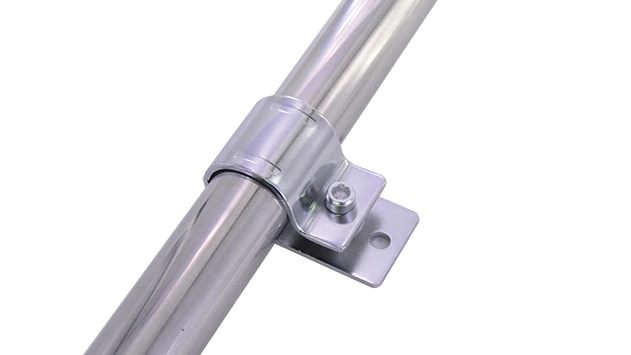
Lean pipe clamp is used for rack system hang monitor or other panel for workbenck, flowrack in production daily use.
Walk into any modern manufacturing facility, warehouse, or assembly line, and you'll likely spot a network of sleek, modular structures: workbenches tailored to specific tasks, material racks that glide with ease, and flow systems that keep production moving like a well-choreographed dance. Behind these setups lies a unsung hero: the lean pipe system. And at the heart of that system—holding everything together, ensuring stability, and enabling flexibility—is the humble yet critical lean pipe clamp chrome.
If you've ever been tasked with setting up or upgrading a lean workspace, you know the frustration of sifting through endless options. A clamp might look sturdy in the catalog, but on the factory floor, it wobbles under pressure. Or maybe it's a nightmare to install, eating up hours of your team's time that could've been spent on actual production. The wrong clamp doesn't just slow you down; it undermines the entire purpose of lean systems—efficiency, adaptability, and waste reduction.
That's why choosing the right lean pipe clamp chrome isn't just about picking a part off a shelf. It's about understanding how that small component fits into your bigger operational goals. To help you navigate this decision, we've broken down the top 5 factors you need to consider. Whether you're building a new workbench, revamping a material flow line, or scaling up your production setup, these insights will ensure you invest in clamps that deliver durability, safety, and long-term value.
1. Material Compatibility: Ensuring a Secure, Long-Lasting Fit
The first question to ask when evaluating a lean pipe clamp chrome is simple:
What will it be clamping?
Lean systems rely on a variety of pipe materials—from traditional steel lean pipes to lightweight aluminum pipes and corrosion-resistant stainless steel. Not all clamps play nice with all pipes, and mismatched materials can lead to loose connections, premature wear, or even system failure.
Chrome-plated clamps are prized for their smooth finish and resistance to rust, but their compatibility depends on the pipe's material and surface texture. Let's break down the most common scenarios:
Lean Pipes (Steel with PE Coating):
These are the workhorses of many lean setups. The PE (polyethylene) coating adds a layer of protection against scratches and corrosion, but it's softer than metal. A well-designed lean pipe clamp chrome will have a grip that's firm enough to hold the pipe securely without digging into or damaging the PE layer. Look for clamps with rounded edges or rubberized inserts—these prevent the chrome plating from wearing away the coating over time, which could expose the steel pipe to rust.
Aluminum Pipes and Aluminum Profiles:
Aluminum is lightweight and ideal for setups where mobility or frequent reconfiguration is key (think portable workbenches or temporary assembly stations). However, aluminum has a smooth surface that can be slippery, especially when paired with chrome. Clamps designed for aluminum should have a tighter tolerance or serrated inner surfaces to bite into the metal without marring it. If your setup uses aluminum profiles—common in high-precision workbenches—ensure the clamp's design aligns with the profile's T-slot or groove patterns. A clamp that's too loose on aluminum won't just slide; it could compromise the entire structure's stability.
Stainless Steel Pipes:
In environments where hygiene is critical (like food processing or pharmaceutical manufacturing), stainless steel pipes are non-negotiable. Chrome-plated clamps work well here, but pay attention to the clamp's plating thickness. Thin plating may chip or wear when tightened against stainless steel, leaving the underlying metal vulnerable to corrosion. Opt for clamps with a heavy-duty chrome finish (at least 0.0005 inches thick) to ensure they stand up to the rigidity of stainless steel.
Real-World Scenario:
A electronics manufacturer switched from steel lean pipes to aluminum pipes to reduce the weight of their assembly workbenches. They reused their old chrome clamps, assuming they'd work. Within weeks, the clamps began slipping on the smooth aluminum surface, causing workbenches to wobble during delicate component installation. The fix? Upgrading to clamps with serrated jaws designed specifically for aluminum. The new clamps bit into the aluminum securely, eliminating the wobble and reducing the risk of product damage.
Don't forget to consider the lean pipe joint as part of this equation. Clamps and joints work in tandem to connect pipes at angles or intersections. A clamp that's compatible with your pipe but not with your joint style (e.g., a fixed 90° joint vs. a swivel joint) will limit your system's flexibility. Always check that the clamp's design—whether it's a two-piece bolt-on style or a one-handed lever clamp—complements the joints you're using. When in doubt, ask your supplier for compatibility charts or sample kits to test fits before committing to a bulk order.
2. Load Capacity: Matching the Clamp to Your Workload
"It looks strong enough" is a risky mindset when it comes to lean pipe clamps. A clamp that works for a lightweight tool rack might crumble under the weight of heavy machinery parts. Load capacity—the maximum weight a clamp can safely hold without deforming or failing—is non-negotiable. Underestimating this factor isn't just about inefficiency; it's a safety hazard. A clamp that gives way could lead to falling materials, damaged equipment, or even workplace injuries.
So, how do you determine the right load capacity? Start by calculating the
total weight
the clamp will bear. This includes not just the static weight of the structure itself (pipes, joints, and the clamp) but also the dynamic loads—materials being placed on or removed from the system, vibrations from nearby machinery, or even accidental bumps from forklifts or workers.
Most manufacturers list load capacities for their clamps, but these numbers can be misleading. Some specify "vertical load" (weight hanging straight down), while others list "horizontal load" (weight pulling sideways). For example, a clamp rated for 500 lbs vertically might only handle 200 lbs horizontally, since sideways force puts more stress on the clamp's grip and joint. Always clarify which type of load the rating refers to, and err on the side of overestimating. A good rule of thumb: aim for a clamp with a load capacity that's 20-30% higher than your expected maximum load. This buffer accounts for unexpected stressors and extends the clamp's lifespan.
| Clamp Size (Diameter) | Typical Vertical Load Capacity | Typical Horizontal Load Capacity | Best For |
|---|---|---|---|
| 28mm (Standard Lean Pipe) | 300-500 lbs | 150-250 lbs | Light workbenches, tool racks, small turnover trolleys |
| 30mm (Heavy-Duty Steel Pipe) | 600-800 lbs | 300-400 lbs | Material racks, flow racks with medium-weight parts |
| 40mm (Aluminum Profile or Stainless Steel) | 900-1200 lbs | 450-600 lbs | Industrial workbenches, heavy-duty assembly lines, pallet flow systems |
Let's put this into context with a common application: the workbench. A typical assembly workbench might hold tools (10-20 lbs), a laptop (5-10 lbs), and parts bins (20-30 lbs), totaling around 60 lbs. But if you're using the same workbench for kitting—stacking boxes of components on it—the load could jump to 200 lbs or more. A 28mm clamp with a 300-lb vertical capacity would work here, but if you later add a shelf underneath for additional storage, that load creeps closer to the clamp's limit. Choosing a clamp with a higher capacity upfront (say, 500 lbs) gives you room to grow without rebuilding the entire bench.
Another angle to consider:
point load vs. distributed load
. A clamp holding a single heavy object (like a 100-lb tool) in one spot experiences more stress than a clamp supporting the same weight spread evenly across a shelf. If your setup involves concentrated weights, look for clamps with reinforced jaws or dual-bolt designs that distribute pressure more evenly. Some manufacturers even offer "overload testing" data—ask for it. Knowing that a clamp can withstand 150% of its rated load for short periods (like during peak production) adds an extra layer of confidence.

3. Flexibility and Adjustability: Adapting to Changing Needs
Lean manufacturing isn't just about efficiency—it's about adaptability. Your production line today might look very different six months from now as you introduce new products, scale up output, or shift to shorter runs. A rigid clamp that's permanently fixed in place undermines this flexibility. The best lean pipe clamp chrome should let you reconfigure your setup quickly, without having to replace parts or bring in specialized tools.
So, what makes a clamp "flexible"? Start with the
adjustment mechanism
. Traditional clamps require a wrench or hex key to tighten or loosen, which isn't a dealbreaker for static setups but becomes a hassle when you need to reposition a workbench or re-route a flow rack. Look for clamps with tool-free adjustments—like lever-style or cam-action designs—that can be tightened or released with a simple flip or twist. These save precious time during reconfigurations and reduce the risk of stripped bolts from over-tightening with tools.
Next, consider
angular adjustability
. Not all connections are straight lines. If you're building a workbench with a sloped top (to prevent parts from sliding off) or a material rack with angled shelves, you need clamps that can handle non-90° angles. Some chrome clamps come with swivel joints or multi-position jaws that lock into place at 30°, 45°, or 135°, giving you more design freedom. Others use "universal" joints that rotate 360°, letting you fine-tune angles on the fly.
Pro Tip:
If you frequently reconfigure your space, invest in "quick-disconnect" clamps. These feature a spring-loaded pin or snap-lock mechanism that releases the clamp from the pipe with a pull, no tools required. One manufacturer reported that their clients using quick-disconnect clamps reduced reconfiguration time by 60% compared to traditional bolted clamps—time that translated directly to more production hours.
Compatibility with aluminum profiles is another flexibility booster. Aluminum profiles, with their T-slot designs, are popular for custom workbenches and machine guards because they allow for easy attachment of accessories (shelves, lights, tool holders). A lean pipe clamp chrome that can connect steel lean pipes to aluminum profiles opens up a world of possibilities. For example, you could build a hybrid structure: a steel frame for strength, with aluminum profile shelves for lightweight adjustability. Look for clamps with T-slot adapters or removable inserts that bridge the gap between pipe and profile.
Don't overlook
reusability
either. A high-quality clamp should survive multiple disassembly and reassembly cycles without losing its grip. Cheap chrome plating can chip off after repeated adjustments, leaving the underlying metal exposed to rust. Inspect the clamp's plating for thickness and uniformity—run a fingernail gently across the surface; if it feels rough or uneven, it's likely low-quality. Also, check the jaw teeth (if present). Sharp, well-defined teeth will bite into the pipe consistently, even after several adjustments, while dull or worn teeth will slip over time.
4. Durability and Environmental Resistance: Thriving in Tough Conditions
A clamp that works perfectly in a clean, climate-controlled lab might fail miserably in a busy factory with oil, moisture, and temperature swings. The durability of your lean pipe clamp chrome depends largely on its ability to withstand your specific work environment. Let's break down the key environmental factors to consider:
Corrosion Resistance:
Chrome plating is naturally resistant to rust, but not all chrome is created equal. "Decorative chrome" (found on cheaper clamps) is thin and prone to flaking, especially in humid or damp environments (like food processing plants or outdoor warehouses). "Hard chrome" plating, on the other hand, is thicker (0.001–0.005 inches) and bonded more tightly to the base metal, making it ideal for wet or corrosive settings. If your facility uses coolants, cleaning agents, or is located near the coast (salt air), hard chrome is a must. Some manufacturers also offer "passivated" chrome clamps, which add a chemical layer that further slows corrosion—ask about this if rust is a top concern.
Chemical Exposure:
Factories often use solvents, oils, or lubricants that can eat away at metal or degrade plating. A clamp that holds up fine in a dry electronics plant might dissolve in a automotive shop where oil drips are common. Check the clamp's material specs: the base metal (steel vs. stainless steel) and the plating type (chrome vs. zinc-chrome) play big roles here. Stainless steel clamps with chrome plating offer the best chemical resistance, but they come at a premium. For budget-friendly options, look for clamps with "oil-resistant" seals or gaskets that prevent fluids from seeping into the joint.
Temperature Extremes:
Clamps in freezers, foundries, or outdoor storage areas face temperature swings that cause metal to expand and contract. Over time, this can loosen connections or crack plating. If your facility experiences temperatures below 32°F (0°C) or above 120°F (49°C), opt for clamps with high-temperature rated plating and heat-treated steel components. Avoid plastic parts (like lever handles) in extreme heat—they can warp or become brittle.
Let's not forget about
wear and tear from friction
. In flow systems, where parts slide along roller tracks or conveyors, nearby clamps might rub against moving components. A clamp with a smooth chrome finish reduces friction, but if contact is unavoidable, look for clamps with reinforced edges or plastic guards that absorb impact. Some manufacturers even offer "wear indicators"—small notches or color changes on the clamp that signal when it's time to replace it before it fails.
To test durability, ask for samples and simulate your worst-case scenario. Leave a clamp in a bucket of water with a splash of your factory's cleaning solution for a week—does the chrome pit or rust? Tighten and loosen it 50 times with a tool—do the threads strip? These simple tests can save you from costly replacements down the line.
5. Ease of Installation and Maintenance: Saving Time and Effort
In lean systems, time is currency. A clamp that takes 5 minutes to install per joint might not seem like a big deal for a small workbench, but multiply that by 50 joints for a large material rack, and suddenly you're looking at 4+ hours of labor. Add in maintenance—tightening loose clamps, cleaning corrosion, replacing worn parts—and that time adds up fast. The fifth factor to prioritize is
ease of installation and ongoing care
.
Installation Time:
Start by counting the steps. Does the clamp require two people to hold in place while tightening? Does it need specialized tools (like a torque wrench) to avoid over-tightening? Look for clamps with "one-person installation" features: pre-threaded holes, self-aligning jaws, or magnetic bases that hold the clamp in place while you secure it. Some clamps even come with color-coded parts or numbered instructions to eliminate guesswork—handy for teams with high turnover or temporary workers.
For example, a two-piece clamp with a single bolt is quicker to install than a three-piece clamp with multiple fasteners. A clamp with a "click-lock" mechanism (it audibly clicks when fully tightened) takes the guesswork out of whether it's secure. And if you're installing clamps overhead or in tight spaces, lightweight clamps (aluminum vs. steel) reduce fatigue and make positioning easier.
Maintenance Requirements:
The best clamps are "set it and forget it," but all clamps need occasional check-ups. Chrome plating resists rust, but it's not maintenance-free. Dust, grease, and debris can build up in the clamp's jaws, weakening the grip over time. Look for clamps with smooth, crevice-free designs that are easy to wipe clean with a rag or brush. Avoid clamps with hidden recesses where debris can hide—these become breeding grounds for corrosion.
When maintenance is needed, simplicity is key. Clamps with standard-sized bolts (like M6 or M8) are easier to repair since replacement parts are readily available. Avoid proprietary fasteners that require ordering from the manufacturer—if a bolt strips, you don't want to wait a week for a replacement. Some clamps even feature "self-locking" nuts or thread-locking coatings that prevent loosening from vibration, reducing the need for frequent retightening.
Case Study:
A automotive parts supplier was struggling with high turnover in their assembly line setup team. New workers took hours to install traditional clamps, often making mistakes that led to loose connections. They switched to a lever-action lean pipe clamp chrome that required no tools—just position, flip the lever, and go. Installation time dropped by 70%, and errors (like over-tightened bolts) nearly disappeared. The team now reconfigures lines in hours instead of days, and maintenance checks are faster since workers can quickly inspect and re-tighten clamps during downtime.
Finally, consider the total cost of ownership , not just the upfront price. A cheaper clamp might save you money today, but if it takes twice as long to install and needs replacing every six months, it's more expensive in the long run. Look for clamps with warranties—most reputable manufacturers offer 1-5 year warranties against defects. A warranty isn't just a safety net; it's a sign the manufacturer stands behind their product's durability and performance.
Conclusion: Investing in Clamps That Grow With Your Business
Choosing the right lean pipe clamp chrome is about more than checking boxes on a spec sheet. It's about aligning that small component with your big-picture goals: safer workspaces, faster production, and the flexibility to adapt as your business evolves. By prioritizing material compatibility, load capacity, flexibility, durability, and ease of use, you'll select clamps that don't just hold your system together—they strengthen it.
Remember, the best clamp for you isn't necessarily the most expensive or the fanciest. It's the one that fits your unique environment, workload, and workflow. Take the time to test samples, ask tough questions of suppliers, and involve your team in the decision—they're the ones who'll be using and maintaining these clamps daily. With the right clamps in place, your lean system will run smoother, last longer, and deliver the efficiency gains that make lean manufacturing worth the effort.