- Company Articles
- Products and Technology
- Product knowledge
- Top 5 Types of Aluminum Pipe Clamps for Lean Manufacturing

Top 5 Types of Aluminum Pipe Clamps for Lean Manufacturing
Related Product
Aluminum Pipe Clamp
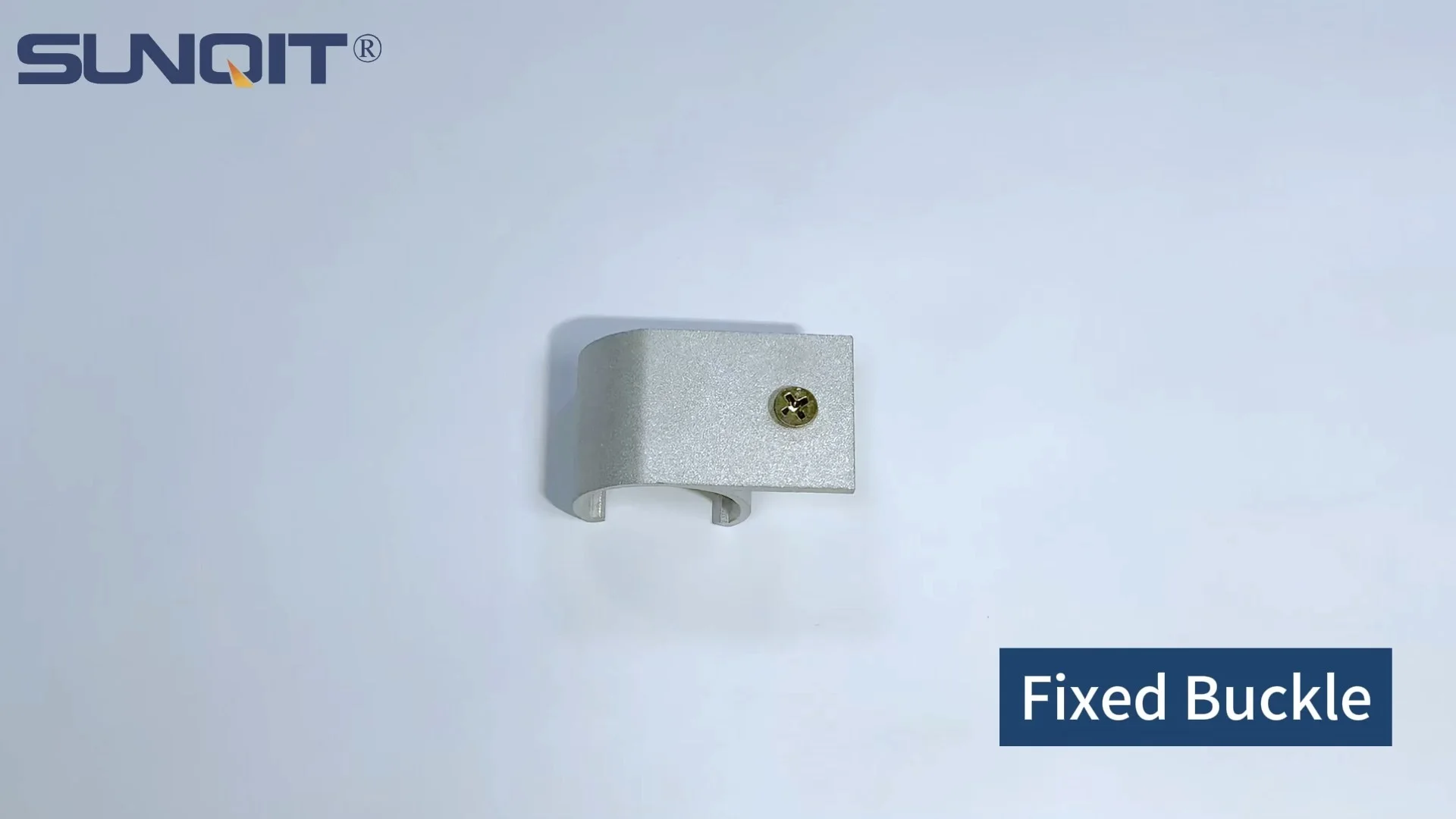
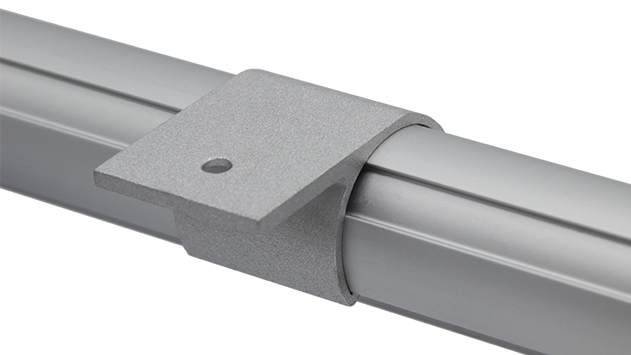
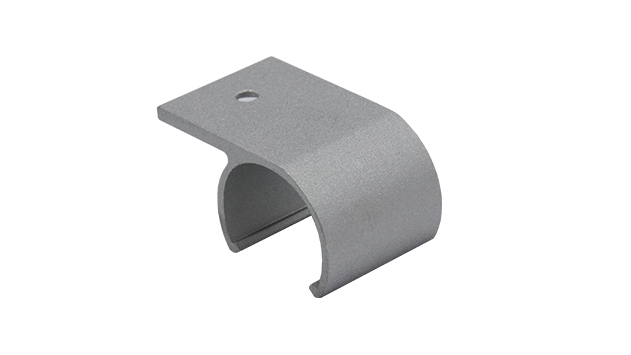
Aluminum pipe side clamp used for 28mm aluminum pipe connect with table top, or other accessories.
In the world of lean manufacturing, where efficiency and waste reduction are more than just buzzwords—they're the backbone of profitable operations—every component in your workflow matters. From the layout of your production floor to the tools on your workbench, each element is designed to keep materials moving, minimize downtime, and eliminate unnecessary steps. But if there's one unsung hero in this ecosystem, it's the humble aluminum pipe clamp. These small, unassuming devices are the glue that holds your lean systems together, turning simple aluminum pipes into robust workbenches, flexible flow racks, and dynamic material handling setups. Without reliable clamps, even the sturdiest aluminum lean pipe would be little more than a loose collection of parts.
Aluminum pipe clamps are far more than just "connectors." They're engineered to balance strength and flexibility—two traits that define lean manufacturing. Unlike rigid steel fasteners that lock systems into permanent configurations, aluminum clamps allow for adjustments, reconfigurations, and scalability, all while maintaining the stability needed to keep production running smoothly. Whether you're building a lightweight assembly station for small electronics or a heavy-duty conveyor system for automotive parts, the right clamp can mean the difference between a setup that adapts to your needs and one that becomes a costly bottleneck.
In this article, we'll dive into the top 5 types of aluminum pipe clamps that are revolutionizing lean manufacturing floors worldwide. We'll explore their designs, applications, and unique benefits, helping you understand which clamp is right for your specific needs. By the end, you'll see why these tools are more than just hardware—they're essential to building a lean system that grows with your business.
1. Fixed Aluminum Pipe Clamps: The Foundation of Static Structures
Let's start with the basics: fixed aluminum pipe clamps. As the name suggests, these clamps are designed for permanent connections—think of them as the "set-it-and-forget-it" option in the clamp family. They create a rock-solid bond between aluminum pipes and profiles, ensuring that once installed, the structure stays in place, even under constant stress or vibration. If you've ever worked at a steady workbench or loaded materials onto a stationary flow rack, chances are it was held together by fixed clamps.
Most fixed clamps feature a two-piece design: a base that attaches to an aluminum profile (like a 4040 or 3030 aluminum extrusion profile) and a top clamp that wraps around the pipe. The two pieces are tightened with bolts—often stainless steel to resist rust—creating a grip that won't loosen over time. Some models even include rubber or plastic liners to protect the pipe's surface from scratches, which is especially useful if you're working with anodized or painted aluminum lean pipe.
So, when should you choose fixed clamps? They shine in static environments where the structure won't need to change. For example, in an automotive assembly line, the workbenches where workers install door panels are rarely reconfigured. A fixed clamp here ensures the bench stays level and stable, even when technicians lean on it or tools are dropped onto the surface. Similarly, in a warehouse, fixed flow racks that hold bulk inventory (like stacks of cardboard boxes or plastic bins) benefit from the stability of fixed clamps—you don't want those racks shifting when a forklift operator bumps into them.
One of the biggest advantages of fixed aluminum clamps is their durability. Made from high-grade aluminum alloys (often 6061 or 6063), they're resistant to corrosion, rust, and wear, even in harsh factory environments. Unlike plastic clamps that can crack under pressure or steel clamps that rust in damp conditions, aluminum fixed clamps hold up in everything from food processing plants (where moisture is constant) to automotive facilities (where oil and coolants are part of daily life). And because they have no moving parts, there's little to break or wear out—making them a low-maintenance choice for long-term setups.
That said, fixed clamps aren't for every situation. If you anticipate needing to adjust your setup—say, raising a workbench height or reconfiguring a flow rack to accommodate larger parts—fixed clamps will only slow you down. You'll need to unscrew them, possibly drill new holes, and risk damaging the pipes or profiles in the process. But for static structures that need to stay put for months (or years), fixed clamps are the most reliable, cost-effective option.
2. Adjustable Aluminum Pipe Clamps: Flexibility for Dynamic Workflows
If fixed clamps are the "steady hands" of lean systems, adjustable aluminum pipe clamps are the "adaptable problem-solvers." In lean manufacturing, where change is constant—new product lines, shifting demand, or updated safety regulations—rigid setups quickly become liabilities. Adjustable clamps solve this by letting you reposition pipes, alter heights, or reconfigure entire structures without replacing components. They're the reason why a single modular workstation can go from assembling smartphones to packaging tablets with just a few tweaks.
The magic of adjustable clamps lies in their design. Unlike fixed clamps, which have pre-drilled holes for bolts, adjustable models feature elongated slots or sliding mechanisms that allow the clamp to move along the pipe or profile. Some use thumb screws for quick adjustments, while others rely on hex bolts for a tighter, more secure fit. The result? A connection that can be loosened, repositioned, and retightened in minutes—no power tools required.
Take, for example, a small electronics manufacturer that produces both smartwatches and fitness trackers. The smartwatch assembly line needs a lower workbench (to handle tiny components), while the fitness tracker line requires a higher surface (to accommodate larger displays). With adjustable clamps, the same base frame can be modified to fit both needs. Loosen the clamps, slide the tabletop up or down the aluminum pipes, retighten, and you're ready to go. This kind of flexibility not only saves money on new equipment but also reduces downtime between product runs—a critical win in lean manufacturing.
Adjustable clamps also shine in environments where teams experiment with workflows. In a startup that's still refining its production process, or a R&D lab testing new assembly methods, the ability to tweak a setup on the fly is invaluable. Maybe you need to angle a conveyor track slightly to reduce jams, or raise a material rack to make room for a new machine. Adjustable clamps let you test these changes without committing to a permanent design, helping you iterate until you find the most efficient layout.
But don't mistake "adjustable" for "weak." Modern adjustable aluminum clamps are built to handle significant loads. Many can support up to 150kg per connection, making them suitable for everything from lightweight turnover trolleys to mid-sized flow racks. They're also compatible with a wide range of aluminum pipe accessories, including elbows, tees, and flanges, giving you even more design flexibility. Just be sure to check the load rating before installing—overloading an adjustable clamp can lead to slippage, which is a safety hazard.
3. Swivel Aluminum Pipe Clamps: Rotation for Smooth Material Flow
Next up: swivel aluminum pipe clamps. These specialized clamps add a new dimension to lean systems—rotation. Unlike fixed or adjustable clamps, which keep pipes in a fixed plane, swivel clamps allow pipes (or the structures they support) to rotate 360 degrees, making them ideal for dynamic material handling setups where goods need to glide, turn, or pivot.
Imagine a warehouse where workers need to move boxes from a conveyor belt to a packing station. Without swivel clamps, the transition might require manually lifting the boxes—a time-consuming, error-prone step that introduces waste (in lean terms, "motion waste"). But with a swivel clamp connecting a roller track to the conveyor, the boxes can rotate smoothly, sliding directly onto the packing table with minimal effort. That's the power of swivel clamps: they turn rigid structures into fluid, movement-friendly systems.
Swivel clamps are built with a rotating joint at their core. The base attaches to a fixed structure (like an aluminum profile), while the top clamp—connected via a ball bearing or pivot mechanism—holds the pipe. This design allows the pipe to spin freely, either horizontally, vertically, or both, depending on the model. Some swivel clamps even include a locking feature, letting you fix the rotation at a specific angle when needed. For example, in a parts distribution center, you might lock a swivel clamp at 45 degrees to direct parts into a specific bin, then unlock it to reposition for a different part type.
One of the most common applications for swivel clamps is roller track systems. Roller tracks (also known as gravity conveyors) use wheels or balls to move materials along a path, and swivel clamps help align these tracks with other equipment. For instance, a roller track leading from a storage rack to an assembly line might need to swivel to avoid obstacles on the floor, or to connect with a conveyor that's positioned at an angle. Swivel clamps make these alignments possible, ensuring materials flow seamlessly without getting stuck.
Swivel clamps are also popular in ergonomic workstations. Consider a assembly line where workers need to access parts from multiple directions. A tool rack mounted on a swivel clamp can rotate, bringing tools directly to the worker instead of forcing them to reach or walk around the station. This reduces motion waste and fatigue, leading to faster, more accurate work. Similarly, in a hospital supply room, swivel clamps on medication carts allow nurses to rotate shelves for easy access, even in tight spaces.
When choosing a swivel clamp, pay attention to the rotation range and load capacity. Most standard models offer 360-degree horizontal rotation but limited vertical movement, while heavy-duty versions might include both. Load capacities typically range from 50kg to 100kg, so they're best for lightweight to medium-weight applications. They're also often paired with swivel roller balls (a keyword from our list!)—small, rotating balls embedded in workbench surfaces or conveyor tracks—to further enhance material flow. Together, swivel clamps and roller balls create a system where materials seem to "float" from one step to the next, minimizing friction and effort.
4. Heavy-Duty Aluminum Pipe Clamps: Strength for Industrial-Grade Loads
Not all lean systems are created equal. While some handle small components like circuit boards or screws, others need to support massive loads—think engine blocks, steel sheets, or pallets of raw materials. For these heavy-duty applications, standard clamps just won't cut it. Enter heavy-duty aluminum pipe clamps: the workhorses of industrial lean setups.
Heavy-duty clamps are engineered for one thing: strength. They're built with thicker walls, reinforced stress points, and larger fasteners than their standard counterparts. Many feature a "wrap-around" design, where the clamp encircles more of the pipe's circumference, distributing the load evenly to prevent bending or crushing. Some even use dual bolts or locking nuts to ensure the connection stays tight, even under constant vibration from nearby machinery.
Take the aerospace industry, for example. When assembling airplane wings or landing gear, workers rely on sturdy workbenches that can support thousands of pounds of metal. A standard clamp might fail under that weight, leading to collapse and potential injury. But a heavy-duty aluminum clamp—with a load capacity of 500kg or more—provides the stability needed to keep the bench secure, even when technicians are leaning on it or tools are being dropped. Similarly, in a steel mill, heavy-duty clamps hold together roller tracks that move red-hot metal slabs, withstanding extreme temperatures and weight without warping.
What makes these clamps so strong? It starts with the material. Most heavy-duty clamps are made from high-strength aluminum alloys, like 7075, which is known for its tensile strength (similar to steel but much lighter). Some are even anodized—a process that adds a protective layer to the aluminum, enhancing corrosion resistance and durability. This is crucial in industrial environments where clamps might be exposed to chemicals, moisture, or abrasive debris.
Another key feature is compatibility with large-diameter pipes. Heavy-duty clamps are designed to fit pipes up to 50mm in diameter (or more), which are thicker and stronger than standard 28mm lean pipes. When paired with a sturdy aluminum profile—like a 4080 or 6060 extrusion—they create a framework that can support entire production lines. For example, a material rack B (3 row and 3 floor) setup, which is common in warehouses for storing bulk inventory, relies on heavy-duty clamps to keep its shelves from sagging under the weight of stacked boxes.
Of course, all this strength comes with a tradeoff: flexibility. Heavy-duty clamps are often bulkier and less adjustable than standard models, making them better suited for permanent or rarely changed setups. If you need to reconfigure a heavy-duty system, you'll likely need tools (and possibly extra hands) to loosen the large bolts. But for applications where strength is non-negotiable, this is a small price to pay.

5. ESD-Safe Aluminum Pipe Clamps: Protection for Sensitive Electronics
Last but certainly not least, we have ESD-safe aluminum pipe clamps. In industries where electrostatic discharge (ESD) can ruin products worth thousands of dollars—like semiconductor manufacturing, medical device production, or electronics assembly—these clamps are nothing short of essential. ESD-safe clamps prevent static electricity from building up on aluminum pipes and workbenches, protecting sensitive components from damage.
Static electricity might seem harmless, but in a factory setting, it's a silent killer. A single spark—caused by a buildup of static on a workbench or conveyor—can fry a microchip, render a pacemaker useless, or destroy a batch of circuit boards. In lean terms, this is "defect waste," and it's one of the costliest forms of waste there is. ESD-safe clamps help eliminate this risk by grounding static charges before they can damage products.
How do they work? Most ESD-safe clamps are made with conductive materials, like carbon-infused aluminum or aluminum coated in a static-dissipative plastic. These materials allow static electricity to flow through the clamp and into the facility's grounding system, rather than building up on the surface of the pipe. Some clamps even include a built-in grounding wire or terminal, making it easy to connect them to an ESD mat or grounding strap.
Imagine a semiconductor plant where workers are assembling microprocessors smaller than a grain of rice. Even the static from a worker's shirt can damage these tiny components. But with an ESD workstation—equipped with ESD-safe clamps, anti-static mats, and wrist straps—the risk is eliminated. The clamps ensure that the aluminum lean pipe frame of the workstation is grounded, so any static charge is safely dissipated, keeping the microprocessors intact. Similarly, in a medical device lab, ESD-safe clamps on material racks prevent static from damaging delicate sensors or pacemaker components during storage and transport.
ESD-safe clamps aren't just about protecting products—they're also about compliance. Many industries (like aerospace and healthcare) have strict regulations for ESD protection, and using non-compliant clamps can lead to failed audits, fines, or lost contracts. Look for clamps that meet standards like ANSI/ESD S20.20, which sets guidelines for controlling static in electronics manufacturing. These clamps are tested to ensure they dissipate static at a safe rate (typically between 10^6 and 10^9 ohms), preventing both damage and electric shock to workers.
While ESD-safe clamps are most common in electronics and medical fields, they're also useful in any environment where static could cause issues. For example, in a printing plant, static can make paper sheets stick together, causing jams. ESD-safe clamps on conveyor tracks help reduce this problem, keeping the production line running smoothly.
Comparing the Top 5 Clamps: Which One is Right for You?
With so many options, choosing the right aluminum pipe clamp can feel overwhelming. To simplify, let's compare the key features of each type in the table below:
| Clamp Type | Primary Use | Load Capacity (Approx.) | Adjustability | Best For Industries |
|---|---|---|---|---|
| Fixed | Static structures (permanent setups) | Up to 200kg | None (permanent connection) | Automotive, Food Processing |
| Adjustable | Modular/dynamic setups (frequent reconfigurations) | Up to 150kg | High (slotted design for repositioning) | Electronics, Small Batch Production |
| Swivel | Rotating components (material flow systems) | Up to 100kg | 360° rotation (some with locking angles) | Warehousing, Logistics |
| Heavy-Duty | Heavy load support (industrial applications) | Up to 500kg+ | Low (bulky, tools required for adjustments) | Aerospace, Heavy Machinery |
| ESD-Safe | Sensitive electronics (static protection) | Up to 180kg | Moderate (some adjustable models available) | Semiconductor, Medical Devices |
As you can see, each clamp type serves a unique purpose. Fixed clamps are best for static setups, adjustable clamps for flexibility, swivel clamps for movement, heavy-duty clamps for strength, and ESD-safe clamps for sensitive products. In many cases, the best lean systems use a mix of these clamps—for example, a workbench might have fixed clamps for the frame, adjustable clamps for the tabletop height, and swivel clamps for a rotating tool rack.
Key Considerations When Choosing Aluminum Pipe Clamps
Now that you know the types of clamps available, let's cover some key factors to keep in mind when making a purchase:
Load Capacity: Always start with the weight. Calculate the maximum load your structure will need to support (including dynamic loads, like materials being dropped or moved) and choose a clamp with a rating that exceeds this by at least 20% (a safety buffer). Underestimating load capacity is the #1 cause of clamp failure.
Environment: Where will the clamp be used? If it's in a damp or corrosive environment (like a seafood processing plant), look for anodized or stainless steel clamps. In cleanrooms, opt for smooth, non-shedding designs to avoid contamination. For high temperatures (like near ovens or furnaces), choose heat-resistant aluminum alloys.
Adjustability Needs: Be honest about how often you'll reconfigure your system. If you're building a prototype or a short-term setup, adjustable clamps are worth the investment. If the system will stay the same for years, fixed clamps are more cost-effective.
Compatibility: Ensure the clamp fits your pipes and profiles. Most clamps are designed for specific pipe diameters (28mm, 40mm, etc.) and profile types (T-slot, square, round). Mismatched components will lead to loose connections and instability.
ESD Requirements: If you work with electronics, medical devices, or other static-sensitive products, don't skip ESD-safe clamps. Even if you think static isn't an issue, the cost of damaged products far outweighs the price of ESD protection.
Conclusion: Clamps as the Heart of Lean Systems
Aluminum pipe clamps may not be the most glamorous part of your lean manufacturing setup, but they're undeniably one of the most important. They're the connectors that turn simple aluminum pipes into powerful tools for efficiency, flexibility, and growth. Whether you need a fixed clamp for a steady workbench, an adjustable clamp for a dynamic assembly line, or an ESD-safe clamp for sensitive electronics, there's a clamp designed to meet your needs.
The key takeaway? Don't overlook the small components. In lean manufacturing, success lies in the details—and a well-chosen clamp can transform a good system into a great one. By understanding the types of clamps available and matching them to your specific application, you'll build a setup that not only eliminates waste but also adapts to your changing needs, keeping your business competitive in a fast-paced world.
So, the next time you walk through your production floor, take a moment to look at the clamps holding your workbenches, racks, and conveyors together. You'll see them for what they are: the unsung heroes of lean manufacturing, working tirelessly to keep your operations running smoothly, efficiently, and profitably.