- Company Articles
- Products and Technology
- Application Cases
- Top Applications of 40 Steel Roller Track Yellow Wheels in Automotive Manufacturing

Top Applications of 40 Steel Roller Track Yellow Wheels in Automotive Manufacturing
Related Product
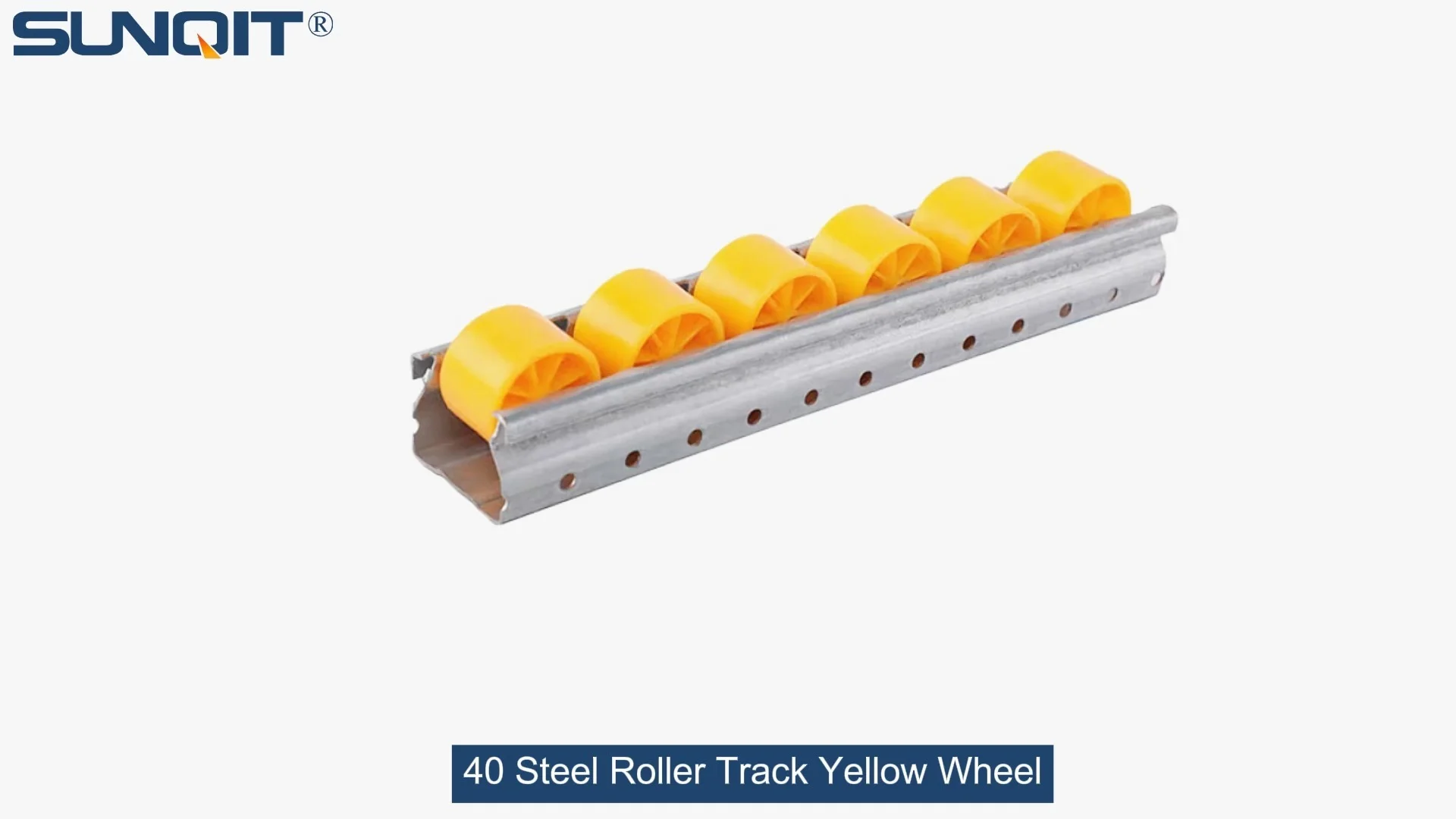
40 Steel Roller Track Yellow Wheel
The roller track can be installed with multiple accessories to create different slopes and configurations of flow racks.All steel conveyor 40 roller track accessories are engineered to perfectly fit the sliding rail.
How a Simple Component Drives Efficiency, Safety, and Lean Excellence on the Factory Floor
The automotive manufacturing industry is a symphony of precision, speed, and reliability. Every second counts when assembling thousands of components into a single vehicle, and every inch of the factory floor must be optimized to eliminate waste. In this high-stakes environment, tools often play the most critical roles. One such unsung hero? The 40 Steel Roller Track Yellow Wheels – a component that might seem simple at first glance but has become a cornerstone of modern automotive production lines.
Designed to seamlessly integrate with lean manufacturing systems, these roller tracks are more than just "conveyors with wheels." They're engineered to address the unique challenges of automotive plants: heavy loads, constant motion, strict safety standards, and the need for flexible adaptation to evolving production needs. In this article, we'll dive into the top applications of 40 Steel Roller Track Yellow Wheels in automotive manufacturing, exploring how they transform workflows, boost productivity, and align with the industry's relentless pursuit of excellence.
What Makes 40 Steel Roller Track Yellow Wheels Stand Out?
Before we jump into applications, let's break down why these roller tracks have become a favorite in automotive plants worldwide. Unlike generic conveyor components, 40 Steel Roller Track Yellow Wheels are built with automotive-specific demands in mind:
- Durability: Made from high-grade steel, they withstand the weight of engine blocks, transmission parts, and heavy tooling – often up to 500kg per linear meter.
- Visibility: The bright yellow wheels aren't just for aesthetics. In noisy, fast-paced factories, their high-visibility color reduces the risk of collisions and helps workers quickly identify workflow paths.
- Smooth Motion: Precision-engineered bearings ensure minimal friction, allowing even heavy loads to glide with minimal effort – critical for reducing operator fatigue.
- Flexibility: As part of a lean system , they're modular and reconfigurable. Need to adjust your assembly line for a new car model? These tracks can be disassembled, moved, and reassembled in hours, not days.
- Cost-Efficiency: Their robust design minimizes maintenance (no frequent wheel replacements!) and their reusability aligns with lean principles of waste reduction.
Now, let's explore where these features shine brightest on the factory floor.
Top 5 Applications in Automotive Manufacturing
1. Engine and Transmission Assembly Lines
Assembling an engine is like solving a 3D puzzle with hundreds of parts – and every piece must be in the right place at the right time. Traditional assembly lines often rely on fixed conveyors that limit flexibility, but 40 Steel Roller Track Yellow Wheels are changing the game here.
At major automotive plants, you'll find these roller tracks integrated into "pulse lines" for engine assembly. Here's how it works: Workstations are arranged in a U-shape, with roller tracks connecting each station. As operators complete their tasks (installing pistons, attaching wiring harnesses, testing sensors), they push the engine cradle along the yellow-wheel tracks to the next station. The smooth motion ensures the heavy cradle (often 200-300kg) moves effortlessly, reducing the risk of strain injuries.
The yellow wheels also play a safety role here. In environments where oil, grease, and coolant are common, the high-visibility color makes the track edges stand out, preventing trips and falls. Plus, the steel construction resists corrosion from fluids, ensuring the tracks stay functional even in messy conditions.
One European automaker reported a 15% increase in assembly speed after switching to 40 Steel Roller Track systems for their hybrid engine lines, citing reduced downtime from jams and easier reconfiguration for new engine variants.
2. Material Handling for Work-in-Progress (WIP) Parts
Automotive plants are vast – some span over 1 million square feet. Moving parts from storage to the production line (and between lines) is a logistical challenge that can eat up valuable time if not optimized. This is where 40 Steel Roller Track Yellow Wheels excel as a conveyor solution for WIP material handling.
Consider door panels: They're bulky, fragile (due to paint and electronics), and need to be delivered to the final assembly line exactly when the chassis arrives. Instead of using forklifts (which risk damage and create traffic), plants use gravity-fed roller tracks with yellow wheels. These tracks are installed at a slight incline, allowing door panels (loaded onto custom racks) to roll gently from the paint shop to the assembly line. The yellow wheels ensure the racks move at a controlled speed, preventing collisions and scratches.
Another example is fastener distribution. Nuts, bolts, and screws for different vehicle sections (interior, exterior, undercarriage) are stored in bins on roller track systems. When an operator needs a refill, they simply slide the bin along the yellow wheels – no more walking to distant storage areas. This "point-of-use" material delivery cuts down on walking time by up to 25% , according to lean manufacturing studies.
| Traditional Material Handling | 40 Steel Roller Track Yellow Wheels |
|---|---|
| Forklifts required for heavy loads | Manual or gravity-fed movement (no forklifts needed for most WIP parts) |
| Risk of part damage during transport | Smooth, controlled motion reduces scratches and dents |
| Fixed routes (hard to adjust for new models) | Modular tracks – reconfigure in hours, not weeks |
| High labor costs (operators needed to move parts) | Self-service for operators – reduces dependency on material handlers |
3. Quality Inspection and Testing Stations
Quality is non-negotiable in automotive manufacturing. A single faulty part can lead to recalls, safety risks, and reputational damage. That's why inspection stations are critical – and they demand precision, ergonomics, and reliability from their equipment. 40 Steel Roller Track Yellow Wheels deliver on all three.
Take brake system testing: After assembly, brake calipers and rotors are tested for alignment, pressure resistance, and noise. These components are mounted on fixtures that slide along roller tracks with yellow wheels. The smooth motion allows inspectors to position the parts at multiple angles (0°, 45°, 90°) without lifting, ensuring thorough testing. The steel tracks also dampen vibrations, preventing false readings from shaky work surfaces.
For sensitive electronics (like ADAS sensors or infotainment systems), some automotive plants pair these roller tracks with ESD workbench setups. The steel tracks are grounded to dissipate static electricity, protecting delicate circuit boards from damage during inspection. This integration of lean material handling and ESD protection is a game-changer for modern vehicle electronics production.
One U.S.-based automaker even uses yellow-wheel roller tracks in their "light tunnel" inspection areas, where finished vehicles are checked for paint defects. The tracks allow the car to be moved incrementally (by hand) under high-intensity lights, giving inspectors precise control over positioning – a task that would be impossible with rigid conveyors.
4. Kanban and Just-In-Time (JIT) Inventory Systems
Automotive manufacturing thrives on JIT inventory – delivering parts to the line exactly when they're needed, no earlier, no later. This minimizes storage costs and reduces waste, but it requires a hyper-efficient way to signal when parts are low. Enter 40 Steel Roller Track Yellow Wheels as the backbone of Kanban systems.
Kanban (Japanese for "signboard") uses visual cues to trigger material replenishment. In many plants, empty bins are placed on roller tracks with yellow wheels. When a bin is empty, the operator pushes it along the track to a "return" area, where it signals the warehouse to restock. The bright yellow wheels make these empty bins highly visible, ensuring the signal isn't missed – even in busy environments.
For example, a transmission assembly line uses 20 bins of gear teeth. Each bin sits on a small roller track section with yellow wheels. When Bin 1 is empty, the operator slides it to the end of the track, which activates a light (thanks to a sensor under the track). The warehouse team sees the light, refills the bin, and sends it back along the track to the line. This closed-loop system ensures no production delays due to missing parts.
As part of a lean solution , these tracks also support "milk runs" – scheduled material deliveries from the warehouse to the line. Forklifts drop off full bins on the roller tracks, and pick up empty ones, creating a seamless flow that aligns with JIT principles.
5. Custom Lean Workstations for Specialized Tasks
Not all automotive assembly tasks fit into standard workflows. Some, like wiring harness assembly or dashboard customization, require specialized workstations that adapt to the task's unique needs. 40 Steel Roller Track Yellow Wheels are a key component of these custom lean pipe workbench setups.
Wiring harnesses are a perfect example: They're intricate (some have over 1000 wires) and vary by vehicle trim level (base, premium, hybrid). To build them efficiently, operators use U-shaped workstations with roller tracks along the perimeter. The harnesses are laid out on the bench, and tools (crimpers, testers, label printers) are mounted on carts that slide along the yellow-wheel tracks. This way, tools are always within arm's reach, and the operator can rotate around the bench without wasted movement.
Another specialized task is battery pack assembly for electric vehicles (EVs). Battery modules are heavy (up to 100kg each) and require precise alignment. Workstations here use roller tracks with yellow wheels to slide modules into place. The tracks are equipped with locking mechanisms, allowing operators to secure the module during wiring and testing – then release it to roll to the next station. This flexibility is crucial, as EV battery designs evolve rapidly, and fixed workstations would quickly become obsolete.
These custom setups embody the "sustainable improvement" ethos of lean manufacturing. When a new task or part is introduced, the roller tracks can be repositioned, extended, or combined with other components (like adjustable shelves or lighting) – no need to replace the entire workstation.

The ROI of Investing in 40 Steel Roller Track Yellow Wheels
At this point, you might be wondering: Are these roller tracks worth the investment? For automotive manufacturers, the answer is a resounding yes. Let's break down the return on investment (ROI) across key metrics:
- Productivity Gains: By reducing manual handling, streamlining material flow, and minimizing downtime, plants typically see a 10-20% increase in line throughput within the first 6 months.
- Labor Savings: Fewer forklift operators, material handlers, and walking time for assembly line workers translate to lower labor costs – often enough to recoup the investment in 1-2 years.
- Reduced Waste: JIT integration and Kanban systems cut inventory holding costs by up to 30%, while smoother material flow reduces part damage (saving on scrap and rework).
- Safety Improvements: Fewer forklifts mean fewer accidents, and the high-visibility yellow wheels reduce trips and falls. This lowers workers' compensation claims and improves morale.
- Future-Proofing: As automotive plants shift to EVs, autonomous vehicles, and smart manufacturing, the modularity of these tracks ensures they can adapt to new production needs – avoiding costly overhauls.
One global automotive supplier summed it up best: "We used to view conveyor components as a necessary expense. Now, with 40 Steel Roller Track Yellow Wheels, we see them as a strategic investment in our ability to compete in a fast-changing industry."

Conclusion: More Than Wheels – A Catalyst for Lean Excellence
40 Steel Roller Track Yellow Wheels may not grab headlines like robotic arms or AI-powered quality systems, but they're the quiet force driving efficiency in automotive manufacturing. From engine assembly to JIT inventory, from safety to sustainability, these components embody the principles of lean pipe systems: eliminate waste, empower workers, and build for continuous improvement.
As automotive plants embrace digitalization and flexibility, the demand for modular, durable, and user-centric material handling solutions will only grow. 40 Steel Roller Track Yellow Wheels are ready to meet that demand – proving that sometimes, the smallest components make the biggest impact on the factory floor.
So, the next time you see a car on the road, remember: behind its sleek design and powerful engine, there's a network of yellow wheels working tirelessly to bring it to life – one smooth roll at a time.