- Company Articles
- Products and Technology
- Application Cases
- Top Applications of Multi-Angle Fixed Aluminum Joints in 3C Assembly Lines

Top Applications of Multi-Angle Fixed Aluminum Joints in 3C Assembly Lines
Related Product
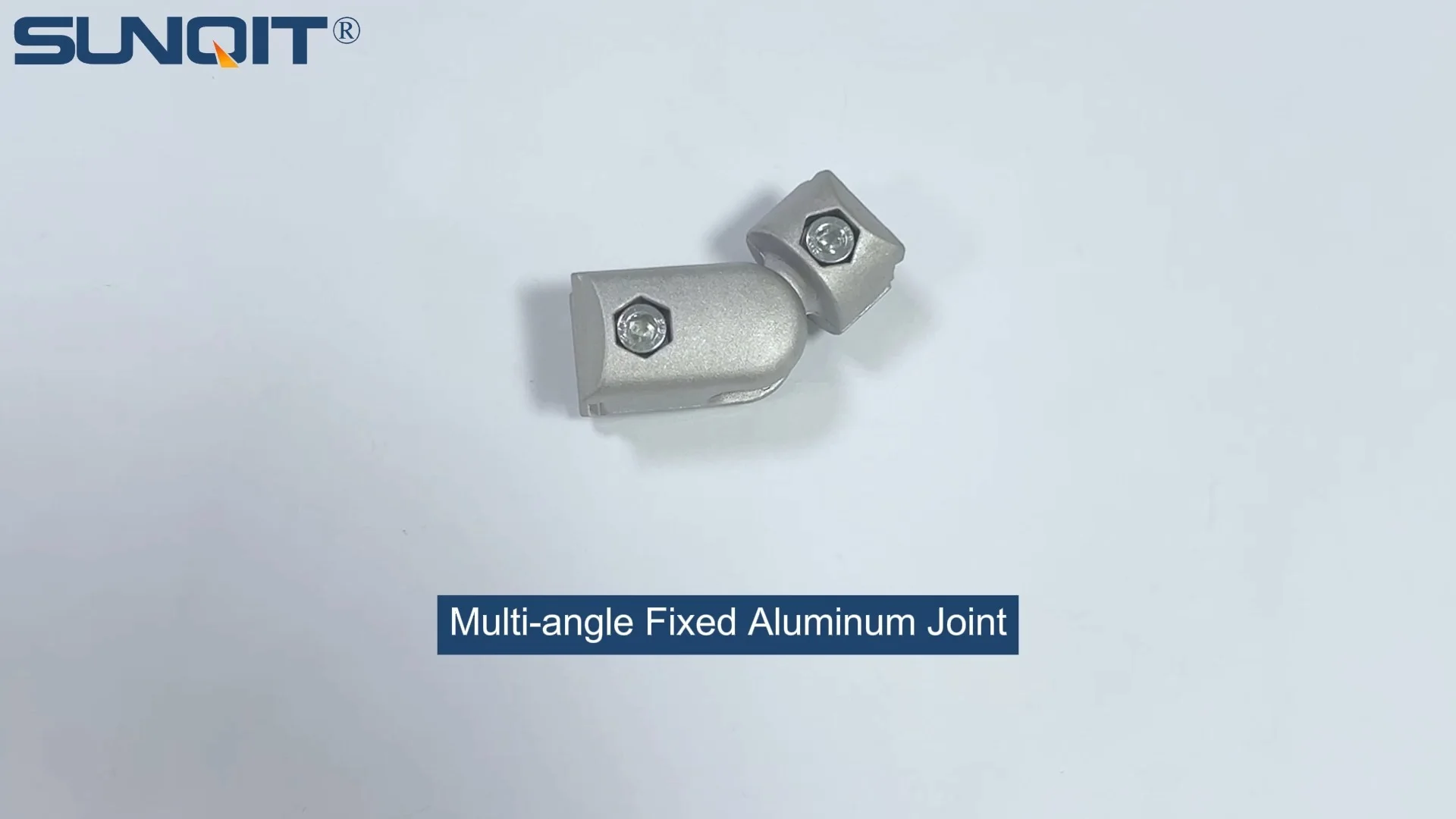
Multi-angle Fixed Aluminum Joint
Aluminum joint pipe connection for two pipe connection and work in mutiple angle.
Empowering agility in consumer electronics manufacturing
The Need for Agility in 3C Manufacturing
Walk into any modern 3C (Consumer Electronics, Communication, Computer) factory, and you'll notice a common rhythm: speed, precision, and constant change. A smartphone model launched today might be redesigned in six months; a new laptop chassis could require entirely different assembly steps. In this world of short product lifecycles, rigid, one-size-fits-all manufacturing setups are relics of the past. What factories need now is flexibility—the ability to reconfigure workstations, reroute material flows, and adapt to new designs without halting production for weeks.
At the heart of this flexibility lies modularity. And when it comes to modular systems that balance strength, adaptability, and cost-effectiveness, few components are as critical as multi-angle fixed aluminum joints . Paired with aluminum extrusion profiles and other accessories, these joints transform static factory floors into dynamic spaces where change is not just possible, but seamless.
What Are Multi-Angle Fixed Aluminum Joints?
Think of them as the "building blocks" of modular manufacturing. Multi-angle fixed aluminum joints are precision-engineered connectors designed to join aluminum profiles (hollow, T-slot extrusions) at various angles—90°, 45°, 135°, or even custom configurations—without the need for welding, drilling, or specialized tools. Made from high-grade aluminum alloy, they're lightweight yet strong enough to support the rigors of daily production, from holding circuit boards to bearing the weight of heavy component trays.
Key Features That Make Them Indispensable
- Angle Versatility: Unlike fixed 90° joints, multi-angle designs let you create slopes, curves, or offset structures—perfect for guiding materials along a roller track or building ergonomic workbench extensions.
- Tool-Free Assembly: Most joints secure with simple hand-tightened bolts, meaning a team can reconfigure a workstation in minutes, not hours.
- Compatibility: Designed to fit standard aluminum extrusion profiles (like 2020, 3030, or 4040 series), they work seamlessly with other accessories: casters, roller tracks, aluminum guide rails, and even ESD-safe components.
- Durability: Aluminum resists corrosion and wear, ensuring joints maintain their grip even after repeated disassembly and reassembly—critical for factories with frequent line changes.

Top 5 Applications in 3C Assembly Lines
In 3C manufacturing, where every second and every square inch of space counts, these joints shine in specific, high-impact roles. Let's explore how they're transforming real-world production floors.
1. Custom Ergonomic Workbenches: Where Precision Meets Comfort
A 3C assembly line is only as efficient as its workbenches. Soldering tiny microchips, testing touchscreens, or packaging finished devices—each task demands a station tailored to the worker's height, reach, and tool placement. This is where multi-angle fixed aluminum joints turn a basic aluminum profile frame into a customized workspace.
Take, for example, a Workbench E (single deck-without caster) —a common starting point. With multi-angle joints, a factory can:
- Add a 45° angled shelf above the main deck to hold LED magnifying lamps, keeping the workspace below clear for the product.
- Attach side rails at 30° angles to corral small screws or connectors, preventing them from rolling off the bench.
- Install a vertical pole with a 135° joint to hang anti-static wristband hooks, ensuring ESD safety without cluttering the surface.
The result? Workers spend less time reaching, bending, or searching for tools—and more time focused on precise assembly. In one smartphone factory we worked with, this simple customization cut task completion times by 12% and reduced worker fatigue complaints by nearly a third.
2. Roller Track Systems: Smoothing Material Flow
In 3C manufacturing, materials—from circuit board panels to finished displays—need to glide smoothly from one station to the next. Roller tracks are the backbone of this flow, but their effectiveness depends on how well they're integrated into the line. Multi-angle fixed aluminum joints solve the biggest roller track challenge: adapting to the line's layout.
Imagine a laptop assembly line where screens need to move from the testing station to packaging. The path isn't straight—it has to navigate around a soldering area and dip slightly to meet the packaging table's height. With standard fixed joints, this would require custom-cut tracks or clunky adapters. But with multi-angle joints:
- Aluminum guide rails (like Aluminum Guide Rail A or B) can be joined at a 10° downward slope using a 170° joint (essentially a reverse 10° angle), letting gravity gently pull screens forward without jostling.
- A 90° crossing joint can split the track, sending some screens to the "QC hold" area and others straight to packaging—no need for separate track systems.
- Roller track placon mounts (used to connect rails to aluminum profiles) can be angled to align with uneven floor surfaces, ensuring the track stays level and materials don't get stuck.
One tablet manufacturer reported a 40% reduction in material jams after switching to multi-angle joint-based roller tracks, simply because the system could "bend" to the line's unique needs.
3. Material Handling Trolleys: From Rigid Carts to Flexible Haulers
Between assembly stations, raw materials and semi-finished products move on trolleys. But in 3C plants, these trolleys can't be one-size-fits-all: a cart carrying fragile LCD screens needs soft, padded rails, while one hauling metal chassis parts requires rugged, high-capacity shelves. Multi-angle fixed aluminum joints turn generic turnover trolleys into mission-specific haulers.
For instance, a basic trolley frame can be modified with joints to:
- Add adjustable dividers at 45° angles to separate individual circuit boards, preventing scratches during transport.
- Attach a fold-down shelf using a 180° swivel joint—stowed when moving, deployed as a temporary work surface at the destination.
- Install caster wheels with locking brakes at the corners, and a push handle at a 15° angle for ergonomic pulling (reducing strain on workers' wrists).
The best part? When a new product line launches, the same trolley can be disassembled and rebuilt—no need to buy new carts. A wearable tech company we advised saved over $15,000 in equipment costs by reusing 70% of their trolley fleet with joint-based modifications.
4. Modular Production Cells: Adapting to New Products Overnight
3C manufacturers rarely produce one product for years. A factory might assemble smartwatches in Q1, switch to fitness trackers in Q2, and then to Bluetooth earbuds in Q3. Each switch demands a new production layout. Multi-angle fixed aluminum joints make these transitions possible in hours, not days.
Consider a modular cell built with aluminum profiles and joints. It might start as a smartwatch line: a U-shaped arrangement of workbenches, with a roller track feeding components into the center. When switching to earbuds—smaller, lighter, with more delicate parts—the cell can be reconfigured by:
- Breaking down the U-shape into three linear workbenches using 90° joints, freeing up floor space for smaller, more stations.
- Lowering roller track heights with 30° angled supports to better suit the smaller earbud cases.
- Adding mini aluminum roller tracks (like 38mm or mini aluminum roller track yellow) between stations, replacing bulkier systems that are overkill for tiny components.
In practice, this means a factory can shut down a line at the end of a shift and restart with a new product layout the next morning. One major electronics brand used this approach to reduce changeover time from 3 days to just 8 hours when launching their latest wireless headphone model.
5. Ergonomic Accessory Integration: Small Adjustments, Big Impact
It's the little things that often slow down 3C assembly: a tool that's an inch too far, a cable that tangles, a bin that's hard to reach. Multi-angle fixed aluminum joints excel at fixing these micro-inefficiencies by letting factories add or reposition accessories with pinpoint precision.
Examples include:
- Tool Holders: A 45° joint can angle a screwdriver rack toward the worker, so tools are always within thumb's reach.
- Cable Management: Vertical poles with 90° joints hold cable clips, keeping power cords and data lines off the floor and out of the way.
- Bin Racks: Multi-angle joints let bins tilt forward at 10°, making it easier to see and grab small components like resistors or capacitors.
These tweaks might seem minor, but they add up. A study by the Manufacturing Ergonomics Institute found that workers at stations with optimized accessory placement were 18% more productive and reported 23% fewer repetitive strain injuries.

Why 3C Factories Can't Afford to Ignore Them
In an industry where profit margins are tight and competition is fierce, multi-angle fixed aluminum joints deliver tangible ROI. Here's how:
| Benefit | Impact on 3C Manufacturing |
|---|---|
| Reduced Downtime | Reconfiguring a line takes hours, not weeks, minimizing lost production during product switches. |
| Lower Tooling Costs | No need to buy new workbenches or carts for each product—modify existing ones with joints. |
| Improved Quality | Ergonomic workstations reduce human error; smoother roller tracks prevent component damage. |
| Scalability | Easily expand or shrink production cells as demand spikes or dips, without overinvesting in fixed infrastructure. |

Choosing the Right Partner: Beyond the Joints
To fully leverage multi-angle fixed aluminum joints, 3C manufacturers need more than just quality connectors—they need a supplier who understands their unique challenges. Look for a partner that offers:
- Complete Systems: Not just joints, but matching aluminum extrusion profiles, roller tracks, casters, and ESD-safe accessories—ensuring compatibility and consistent quality.
- Custom Solutions: The ability to design bespoke joint angles or profile lengths for specialized applications (e.g., extra-narrow roller tracks for tiny wearables).
- Technical Support: Engineers who can help optimize your layout, from workbench ergonomics to roller track flow dynamics.
After all, in 3C manufacturing, the goal isn't just to build products—it's to build the flexibility to adapt, innovate, and stay ahead. And with multi-angle fixed aluminum joints as your foundation, that flexibility is within reach.